This exhibition is the newly installed permanent display at The Wellcome Collection in London, subtitled “exploring trust, identity and health in a changing world”.
It is divided into four loose categories – Genetics, Minds and Bodies, Infection, and Environmental Breakdown. Thought-provoking and varied work, by artists reflecting on the human condition and raising questions about the future, is interspersed with scientific objects.
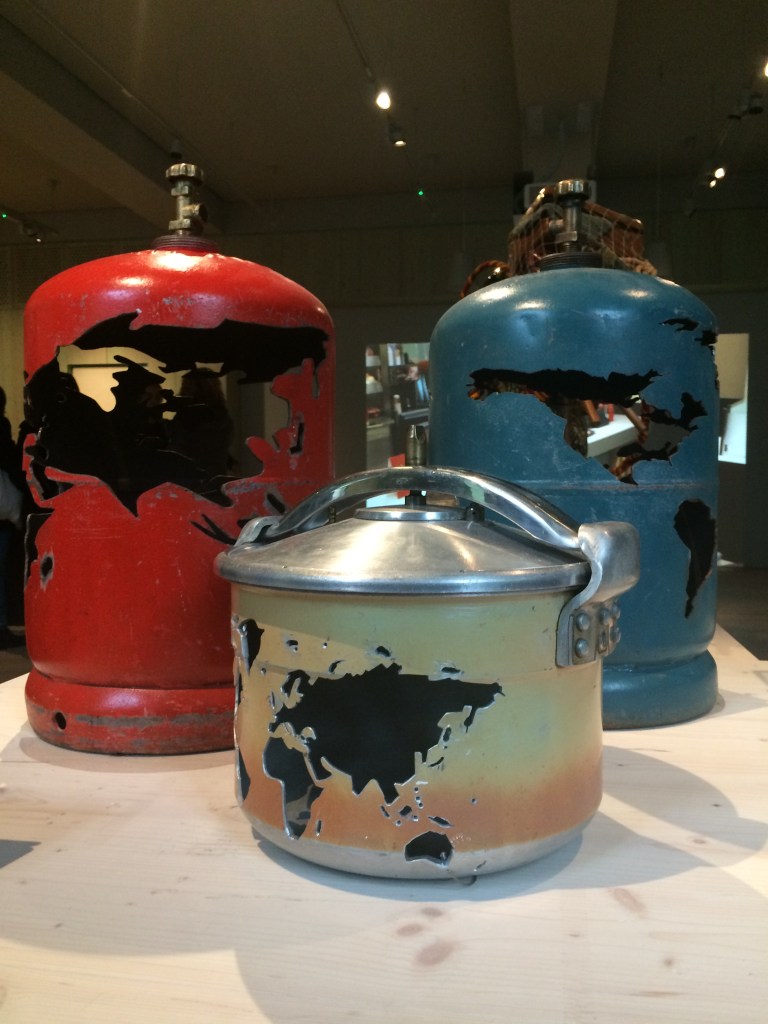
Photo by Liz Clifford
I was initially drawn to the Environmental Breakdown section where three works in particular stood out for me. Moroccan artist Batoul S’Himi’s “Un Monde Sous Pression” translates as A World Under Pressure and uses two empty gas cylinders and a pressure cooker cut through with a map of the world. These items are dangerous but are common domestic cooking apparatus in Morocco. By this choice of materials and the use of the map, the artist alludes to the fact that those most vulnerable to climate change are those from the developing world, especially women and children.
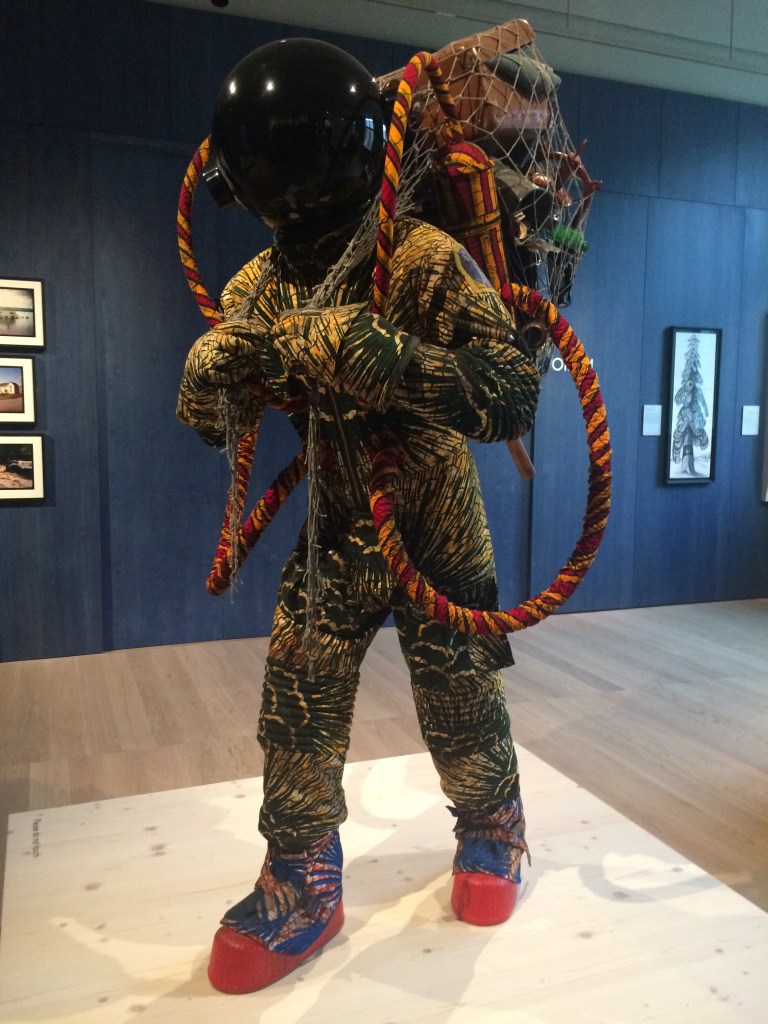
Photo by Liz Clifford
Yinka Shonibare’s Astronaut is well over life-size. We are forced to wonder who they are, why they are travelling with an assorted array of domestic equipment slung into a net on their back. This would appear to be a forced exile rather than heroic exploration, as it has a distinctly unscientific feel. Antique, or simply just old, domestic objects are being carried and Shonibare uses his signature printed fabric for the “suit” and “air tanks”. The work asks us to consider how many of us will become refugees as environmental breakdown displaces populations. The Wellcome has published an interview with the artist on their website which makes really interesting reading. Here’s the link. https://wellcomecollection.org/articles/XYofFREAACQAp-Vl
“No Human Being is Illegal (in all our glory)” 2014 – 18
Photo by Liz Clifford
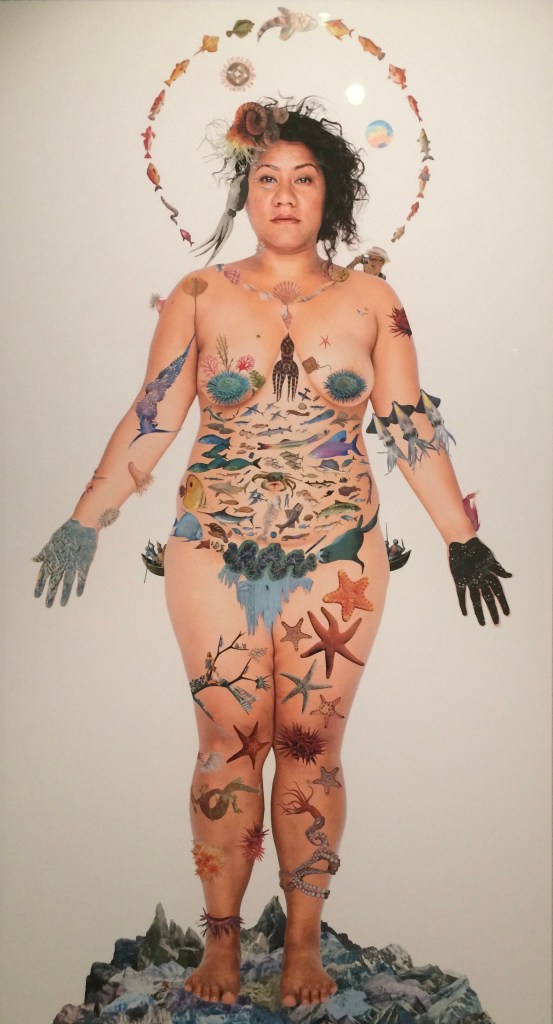
Australian artist Deborah Kelly works collaboratively in open workshops. In 2014 she produced a series of collaged portraits that reflect the subject’s identity, concerns, dreams or life story. In this portrait, Sydney-based Tongan artist, Latai Taumoepeau wanted her body collaged to highlight the effects of climate change on small island nations. In particular, to reflect the realities of climate change on vulnerable Pacific Island communities, including her relatives in Tonga, who are already living with the devastating impacts of king tides, contaminated water tables, degraded reef systems, tsunamis and hurricanes. By collaging with images of marine life and island geology she also draws attention to the fact that many islanders will refuse to leave both their sovereignty and the bones of their ancestors, and will therefore perish.
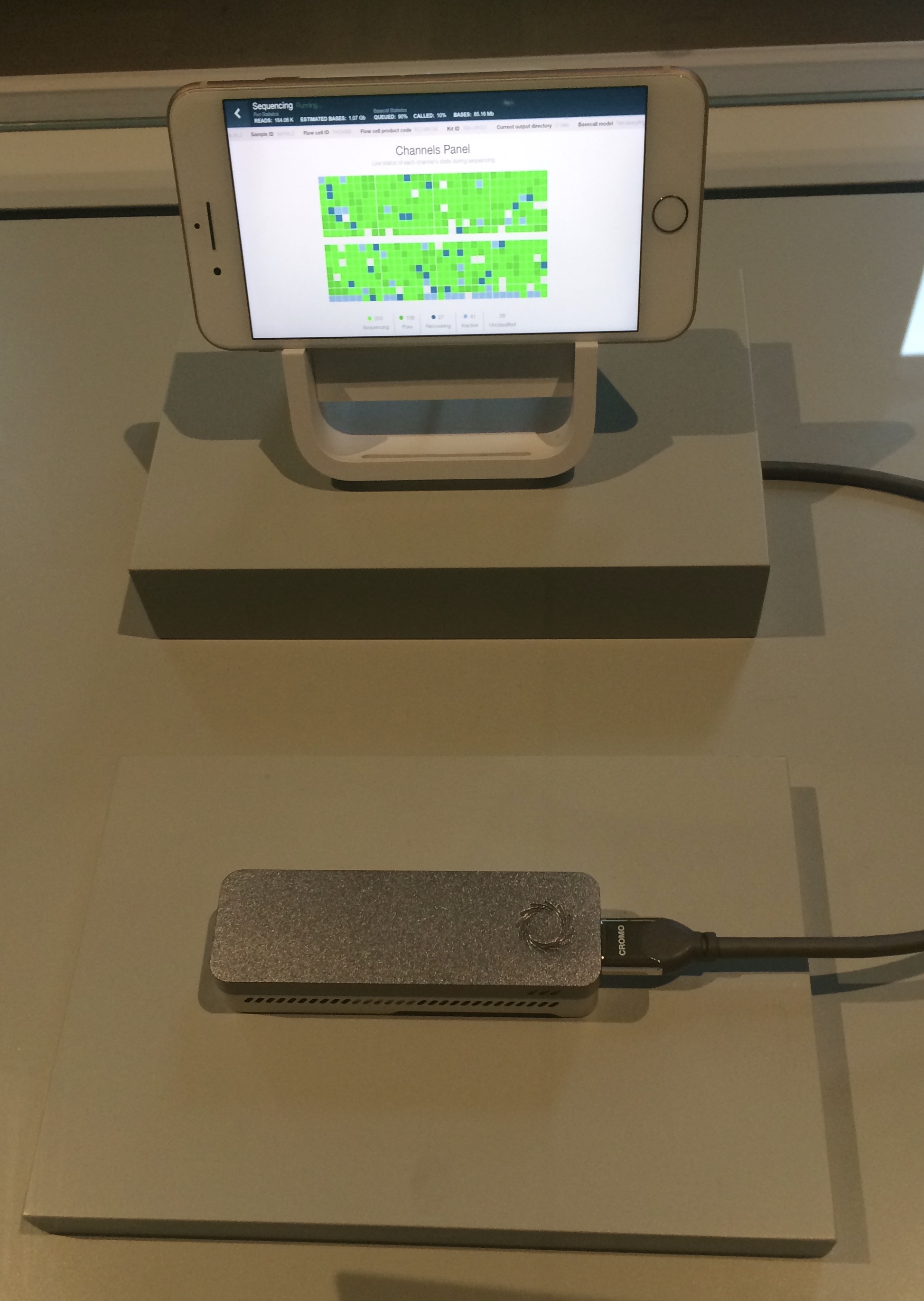
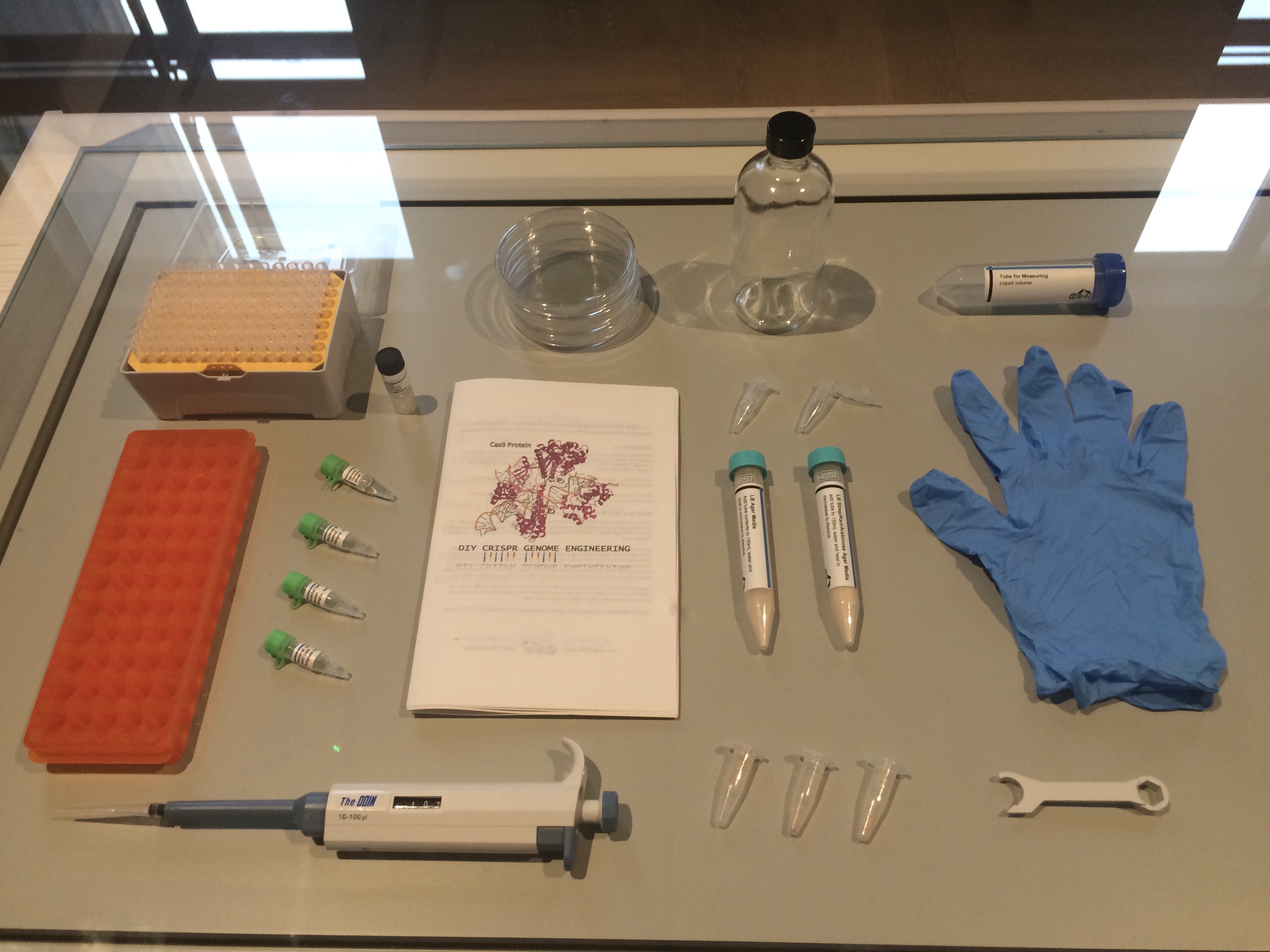
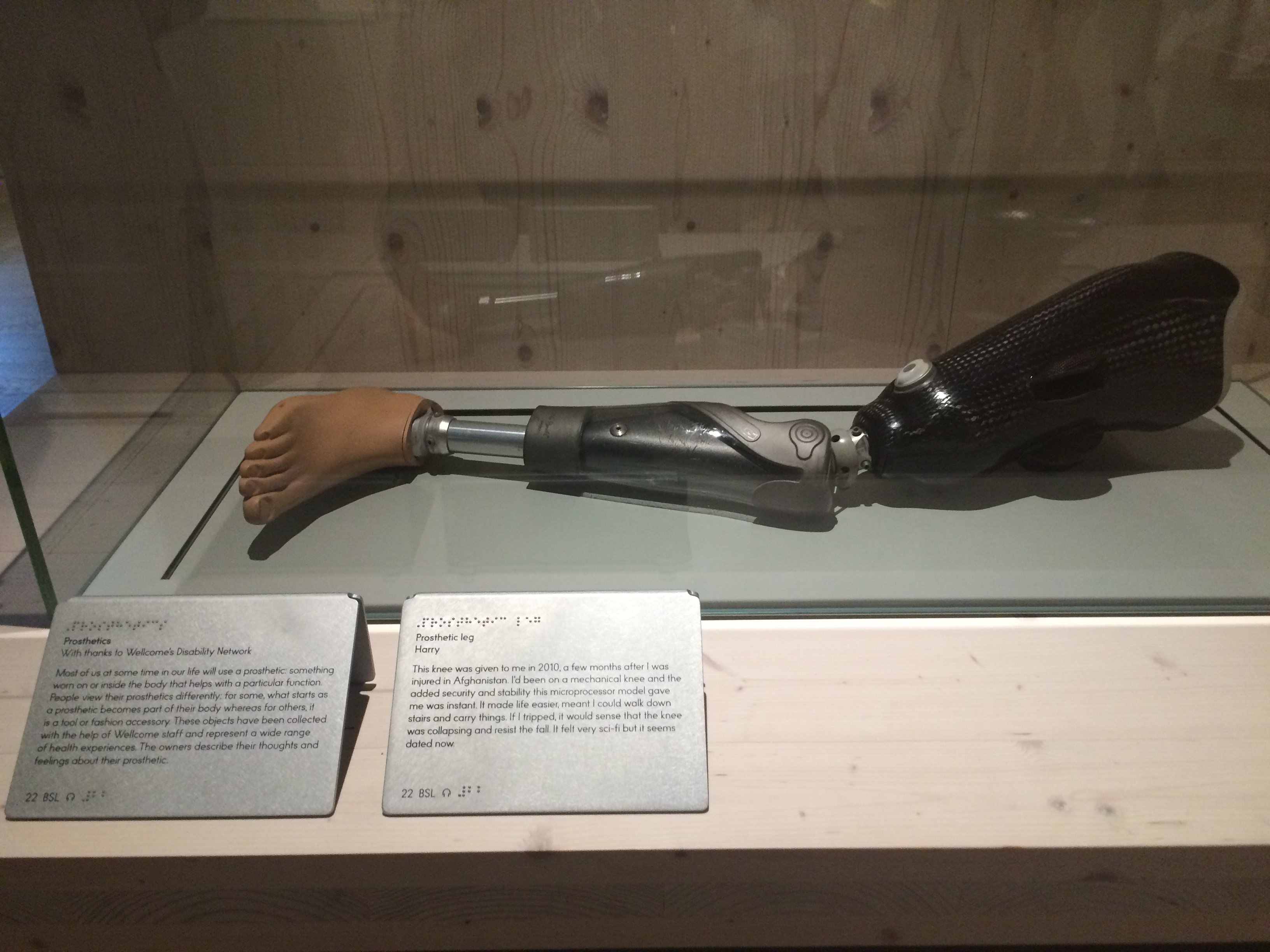
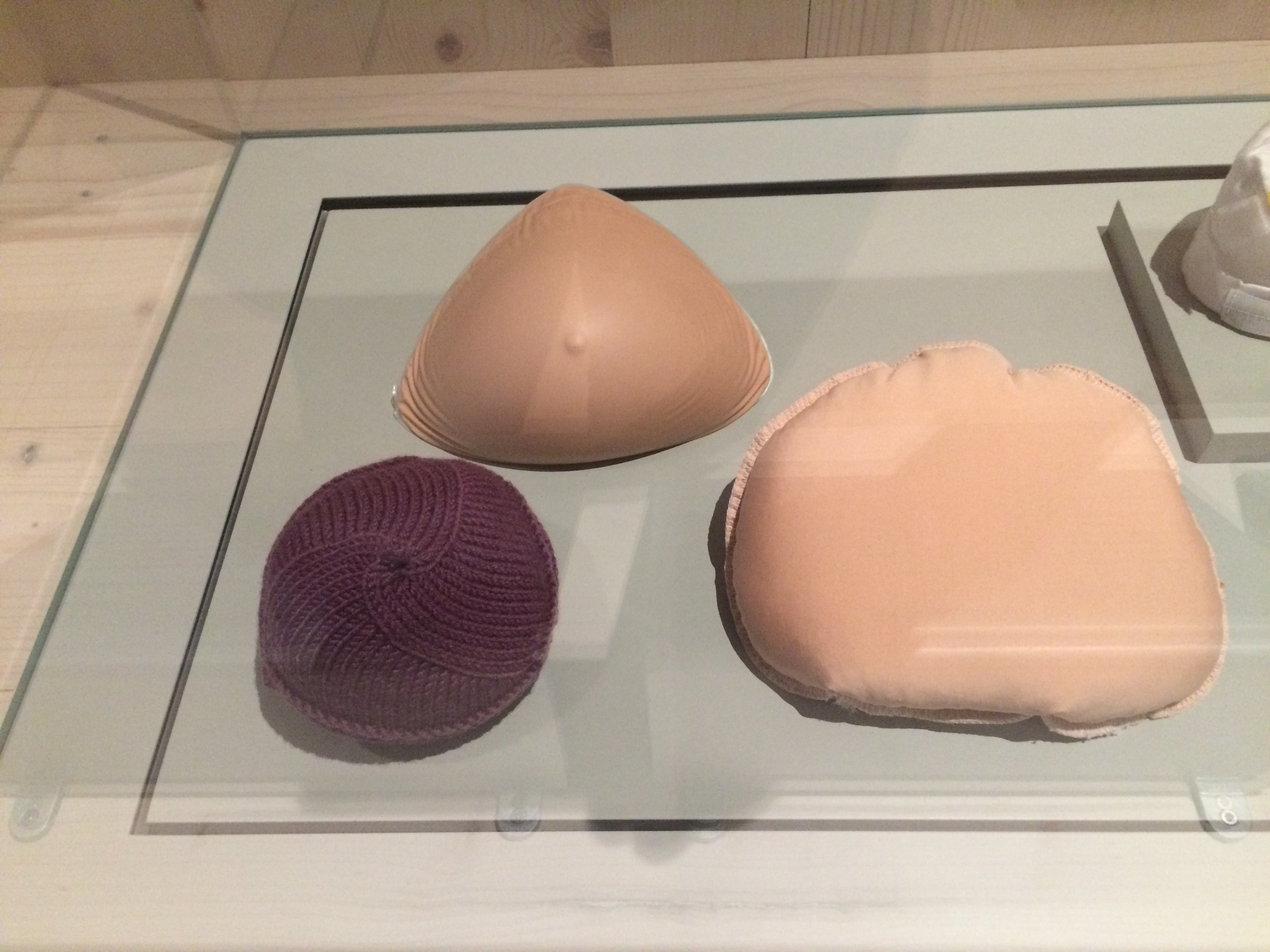
The placing of scientific instruments and prosthetics in the display alongside the work of artists adds depth to the show and poses questions as well as providing insights. The prosthetics are displayed with labels that use quotes from their users which allow us to connect with real lives. The ultraportable genetic sequencer used by the NHS, on the left, is displayed in the same case as a DIY biohacking kit that is available for sale on the internet, raising uncomfortable questions about trust and accessibility. Who will purchase this kit and what will they use it for?
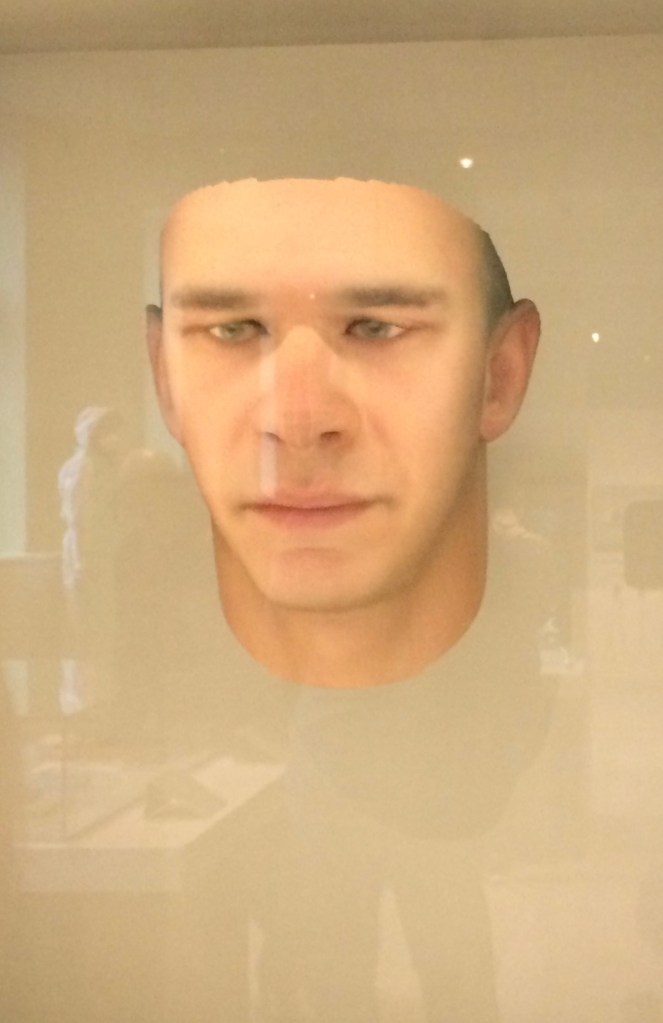
Artworks in the Genetics section tend to explore our wonder at what is possible as well as our wariness of the technology. To make her fictional 3D printed portrait, above, Heather Dewey-Haborg sequenced DNA from discarded cigarette butts, hair and gum to find genetic markers that influence physical appearance. How much of our identity do we carelessly give away everyday?
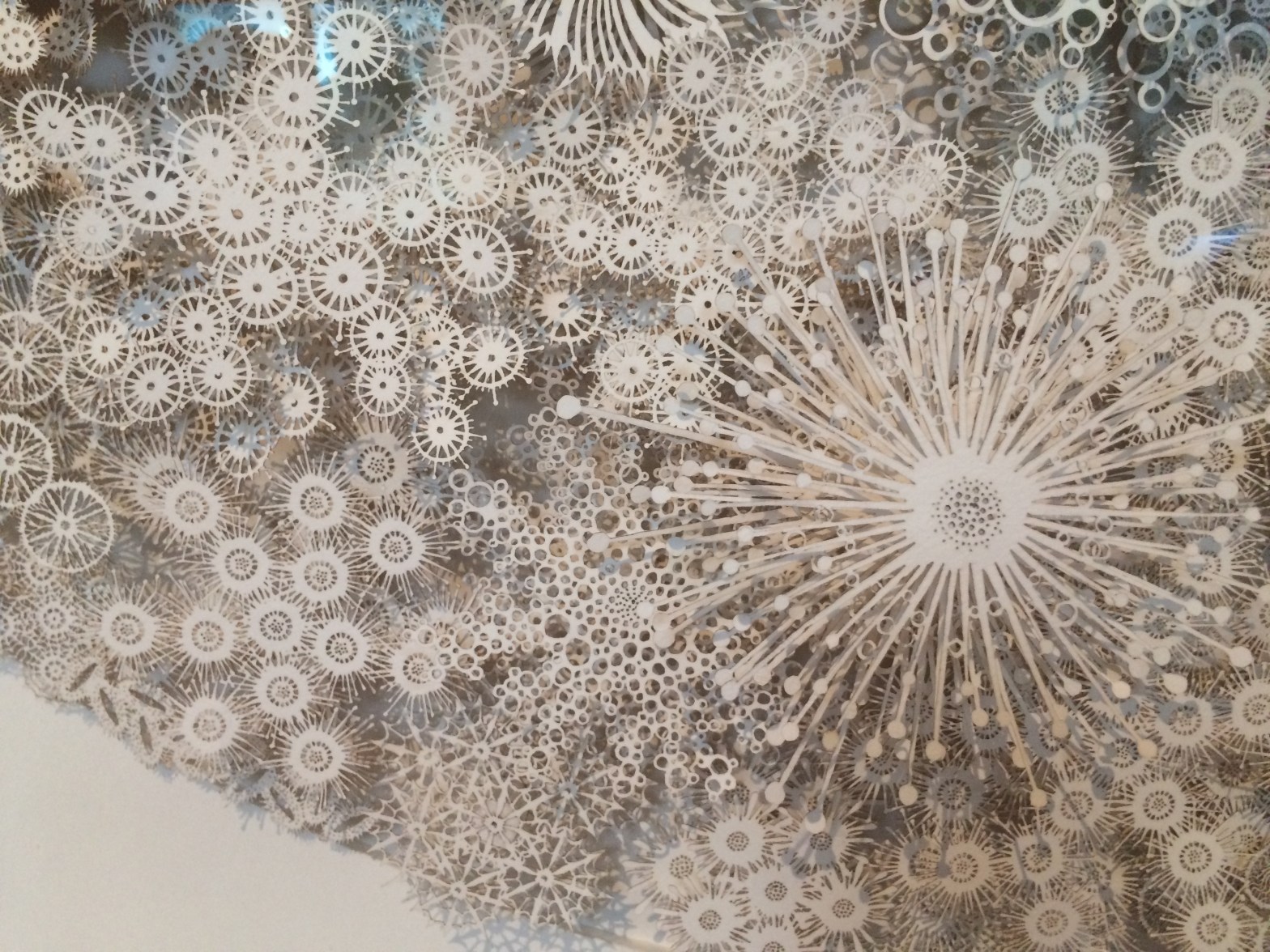
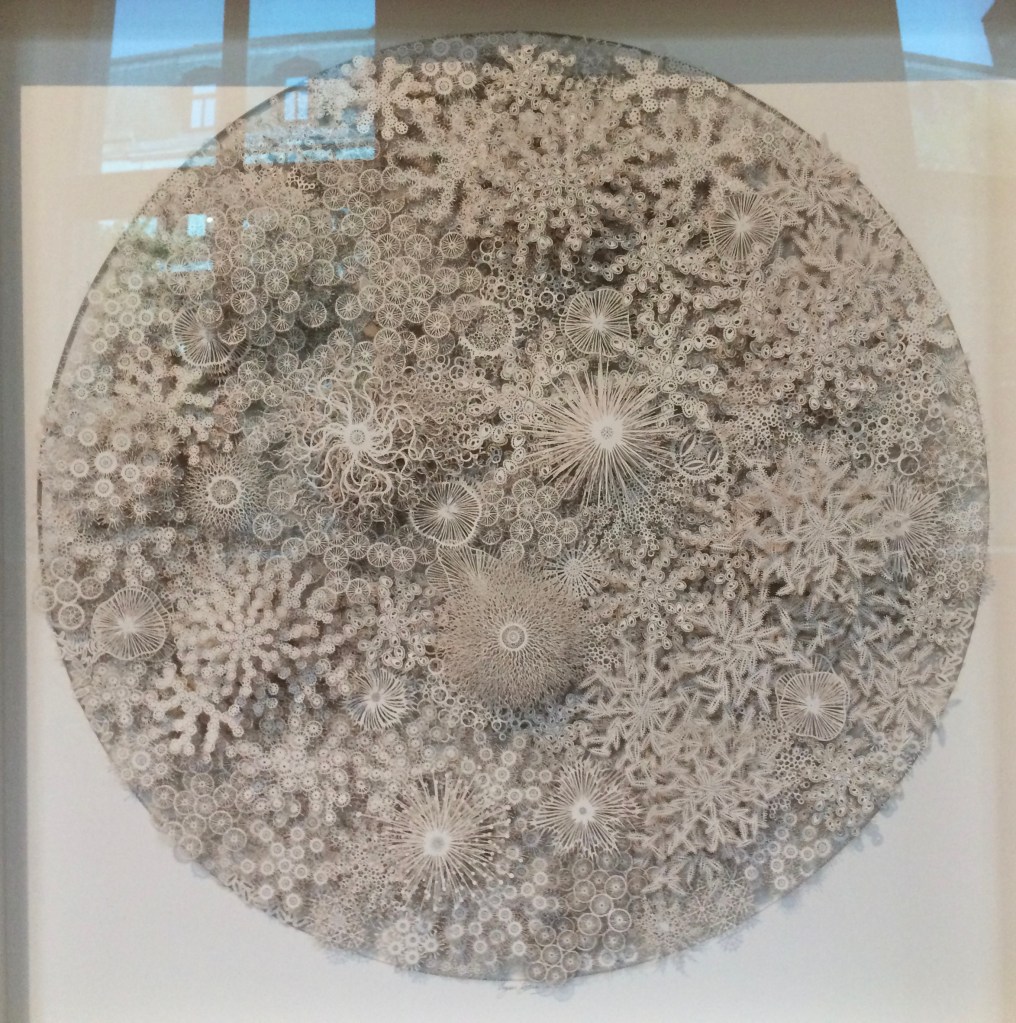
One of the most beautiful works in the Infection section is Rogan Brown’s Magic Circle Variation 2018, below. Made from layers of laser cut paper the work uses imagery of the microscopic fungal, bacterial and viral forms that make up our microbiome.
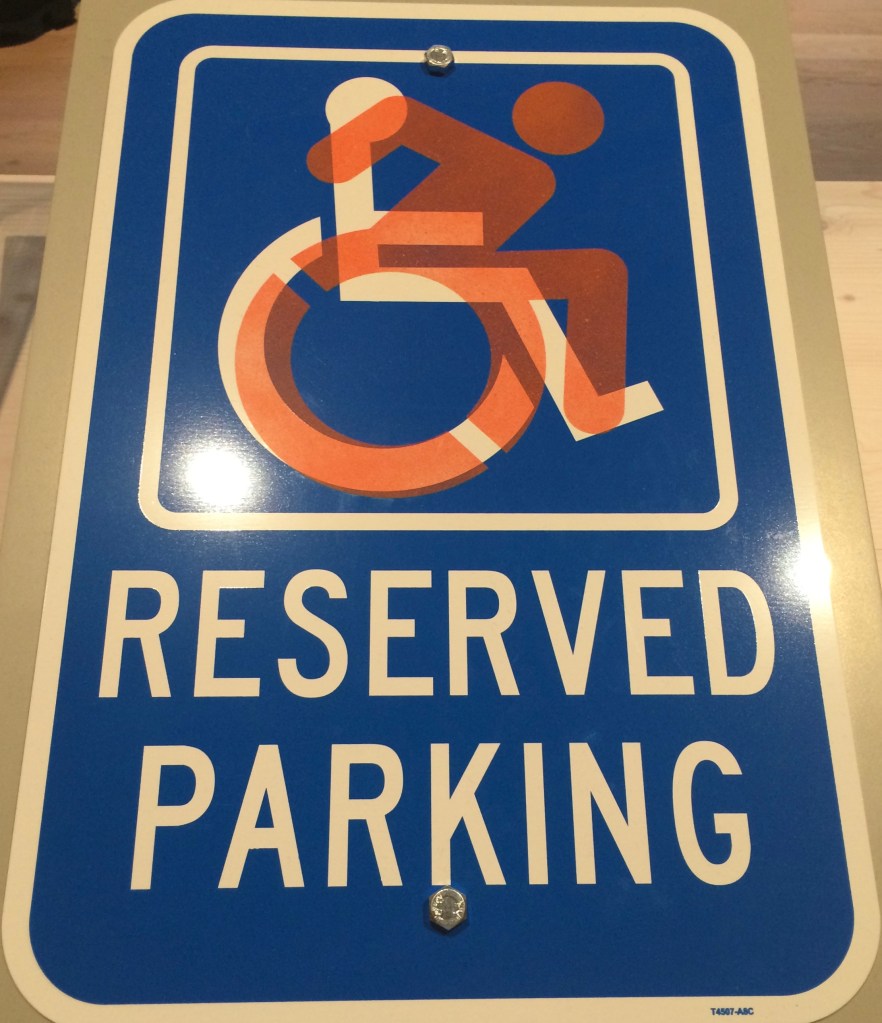
In the Minds and Bodies section preconceptions around physical disability and mental health are challenged. Below is “Accessible Icon” by design activists Brian Glenny, Sara Hendren and Tim Ferguson Saunder. Originally they stencilled their dynamic version over existing static ones as an act of protest in Boston, USA. Then they released their icon free of charge and it is now used officially across the world.
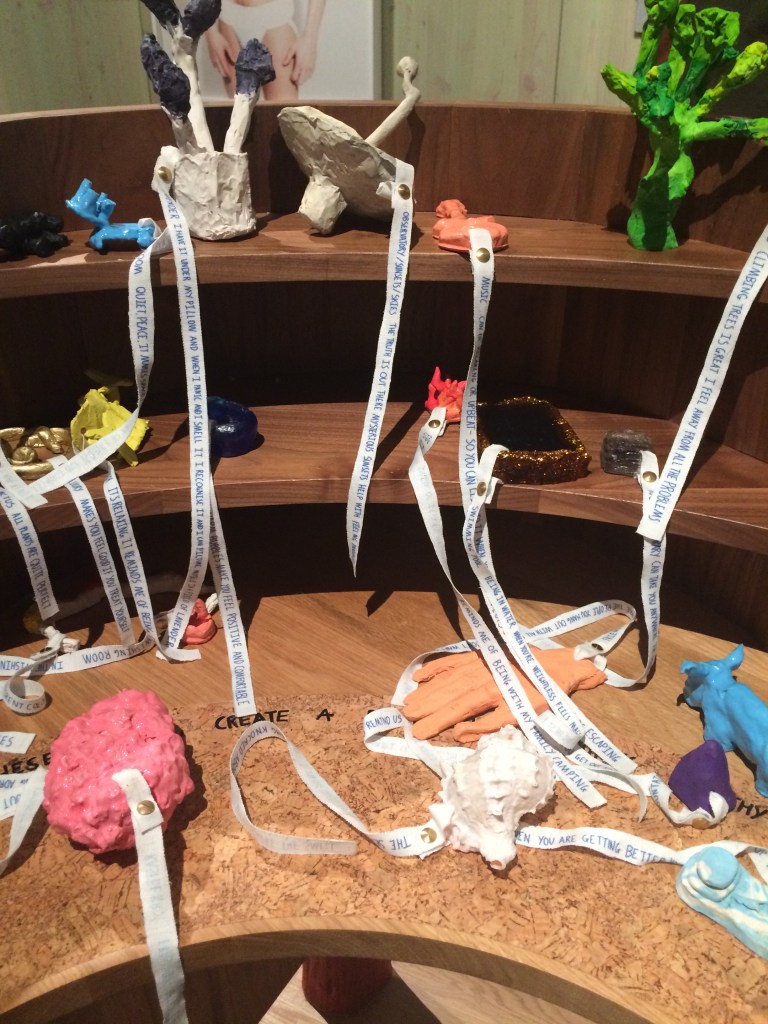
This section also includes another collaborative project. Over 6 months, 15 young people with staff from the Mildred Creak Unit, Great Ormond Street Hospital, imagined how different experiences and environments could support healthy minds. Their resulting installation titled “Oh My Gosh, You’re Wellcome…Kitten the vacuum cleaner with muf architecture/art” is a form of writing desk populated with votive objects and inscribed with hopes, dreams and wishes. It is full of imaginings of a place that would create better mental health for us all.

Being Human is a carefully curated and thought-provoking show in a non art gallery venue that aims to engage a wide audience. It was certainly buzzing with visitors while I was there. Entry is free and the Wellcome puts on tours of the show for groups.
The Wellcome Collection is a free museum and library that aims to challenge how we all think and feel about health.
It is at 183 Euston Rd, London NW1 2BE. It is open Tuesdays to Sundays 10am to 6pm. The nearest tube is Euston.
All photographs by Liz Clifford.
 Liz Clifford