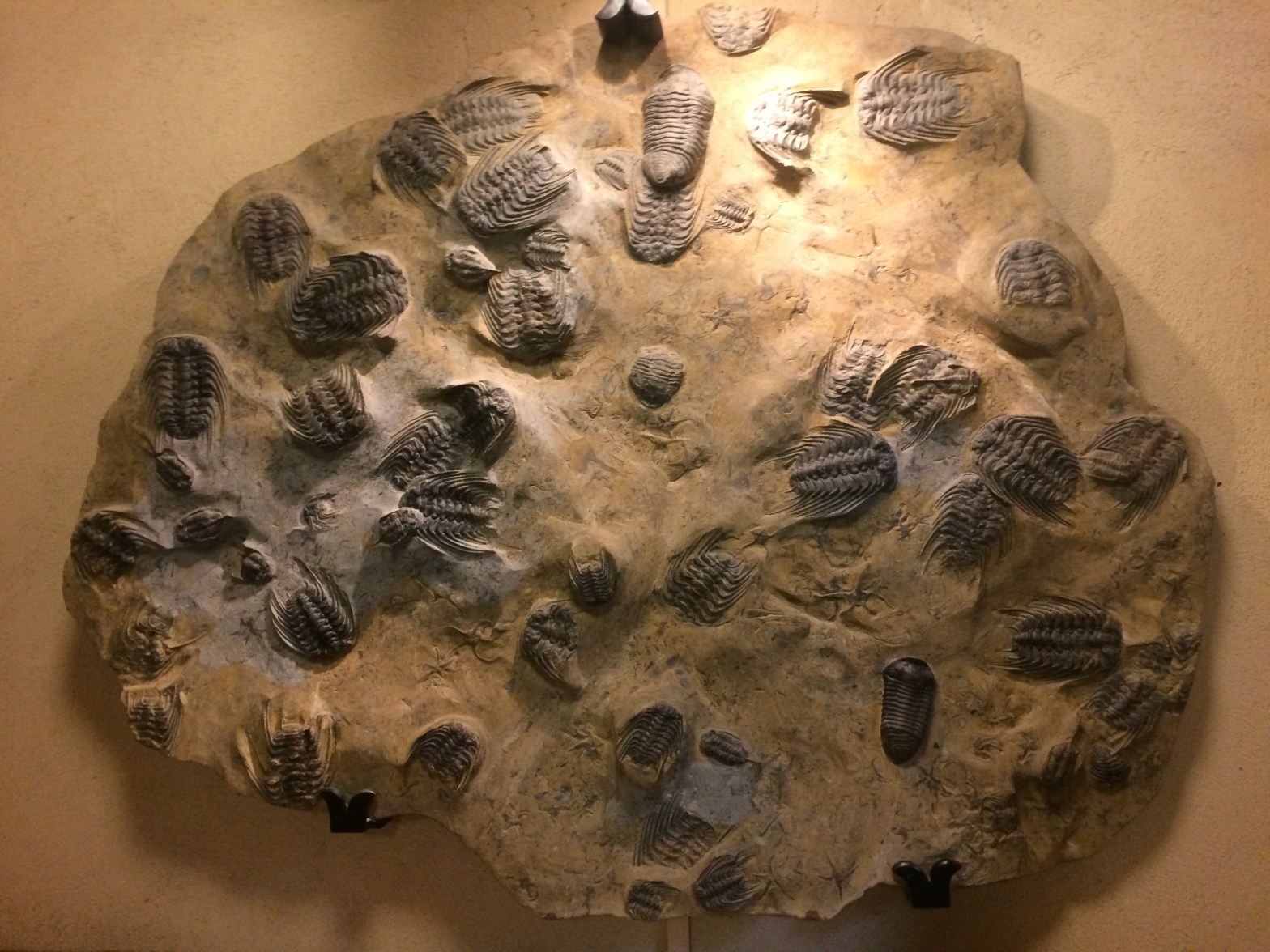
The UCA MA Fine Art group made a visit to Oxford this week. First port of call was the Museum of Natural History where I was bowled over by the vast collection of fossils. There was time to make drawings and have a really good look at the exhibits. What I found immediately striking was the fact that these were all slabs of stone rather than deeper blocks. They are displayed wall-mounted with metal brackets. The surface texture is picked out by oblique lighting as with the 513 million year old trilobite slab above.
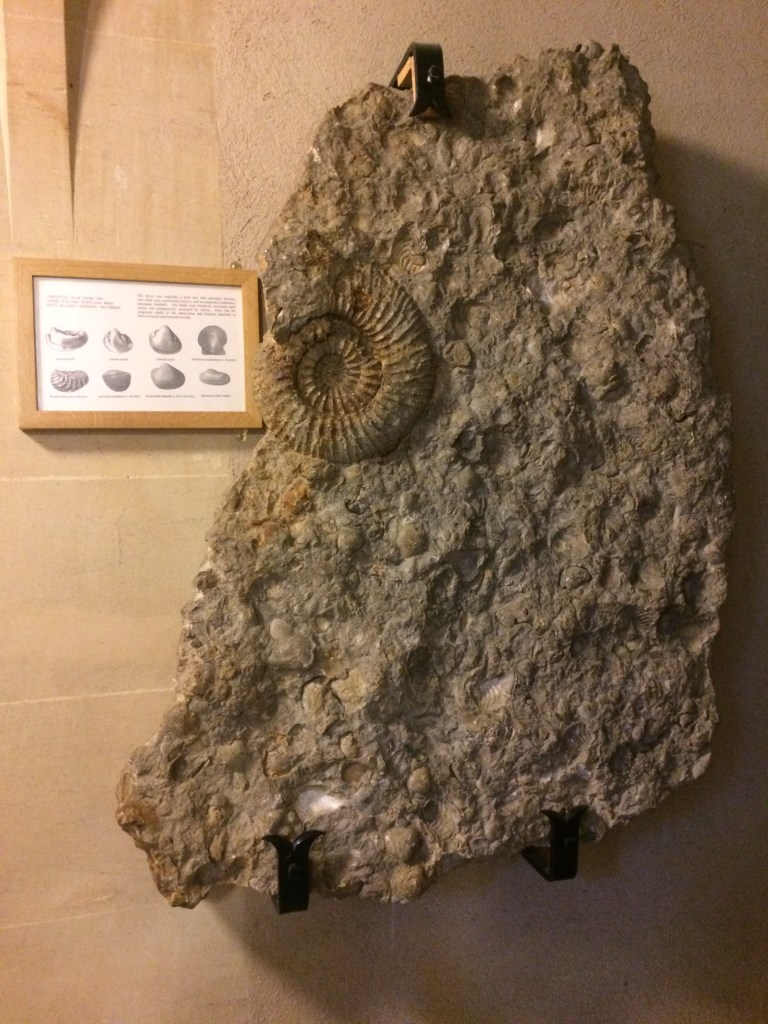
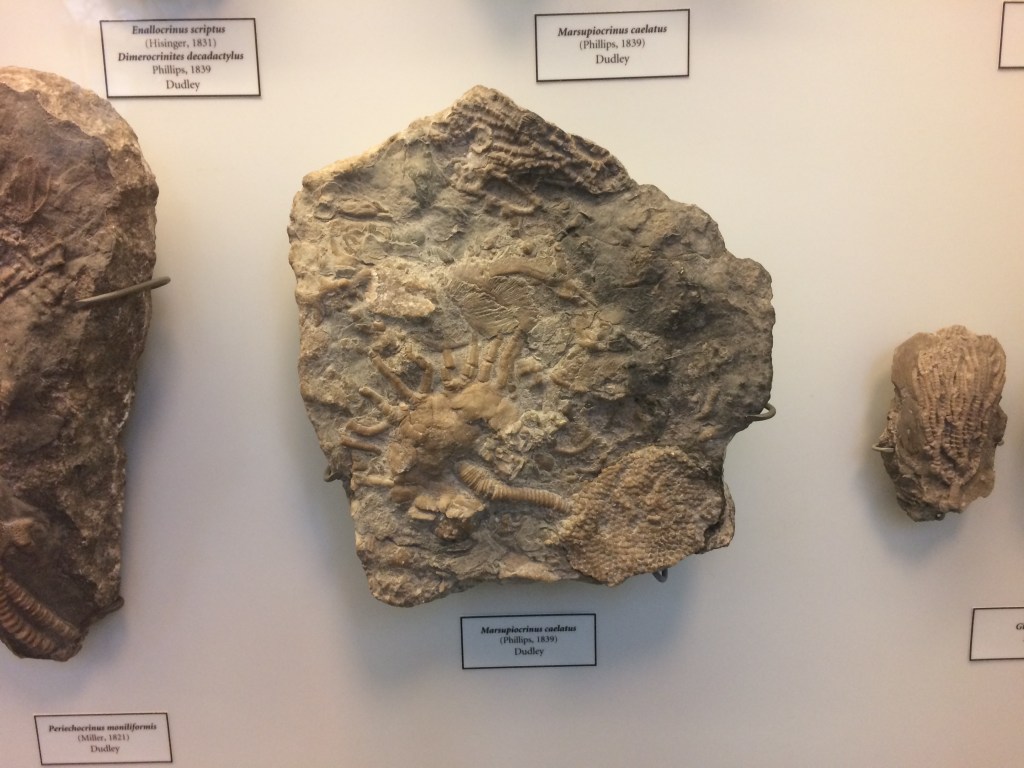
The slabs are fragments of much larger pieces. Fossils are broken off with the stone. The fossilised material is sometimes exactly the same colour as the stone and at other times it contrasts in texture and colour.
Liz Clifford
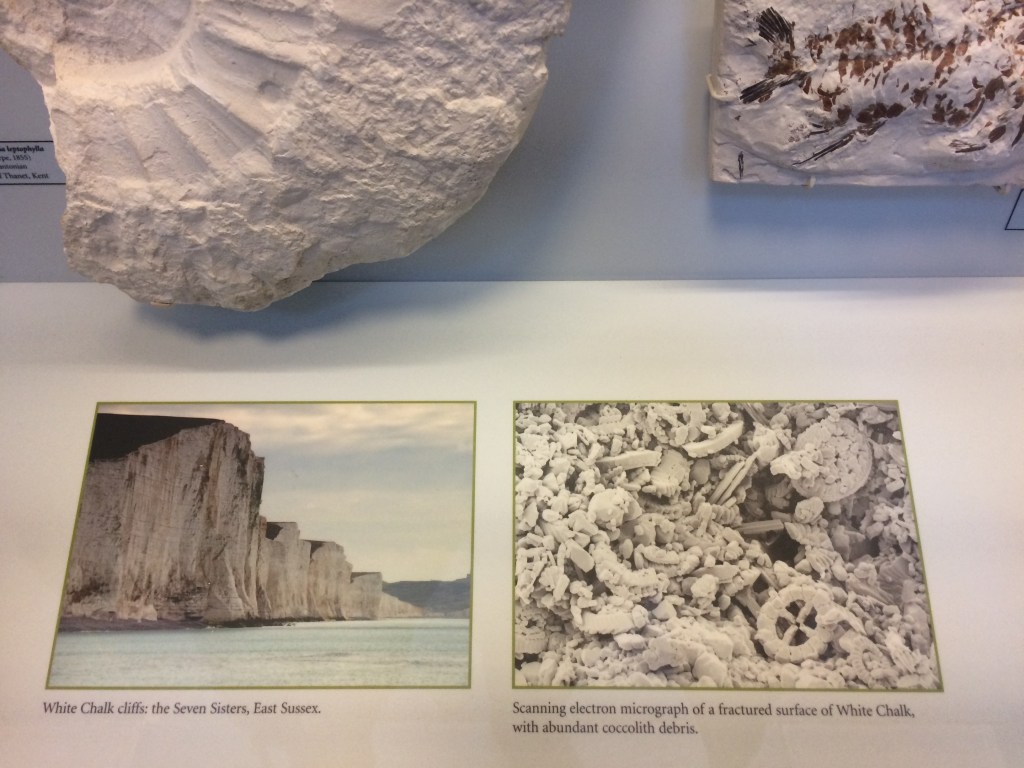
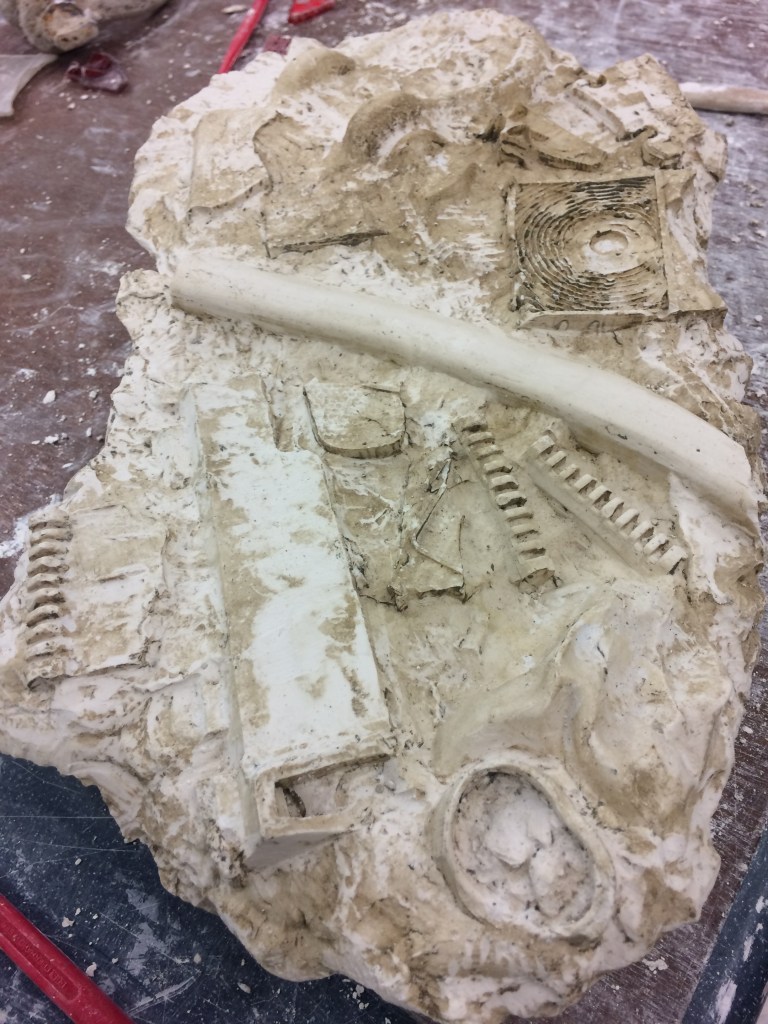
Fossils are found in chalk but tend to be limited in variety, although chalk is itself made up of micro-fossils – planktonic skeletons. It was fascinating to see this exhibit from the Seven Sisters chalk cliffs in East Sussex. I feel really encouraged to push forward with my work in plaster, in which I use the metaphor of fossilised remains of vehicle parts to present a fictional palaeontolgy. Our legacy locked into the earth’s surface. A fossil cycle to be uncovered in 513 million years?
Liz Clifford
I came away with plenty of ideas as to how I would develop these “fossil” hash plates. To start with I will work on slabs rather than deeper blocks and consider making the impressions cropped by the edge of the slab, as if broken off. Larger pieces will need to be reinforced. Wall mounting and lighting needs to be thought through. Perhaps labelling to suggest a museum aesthetic. The aesthetic of ancient remains…
 Liz Clifford