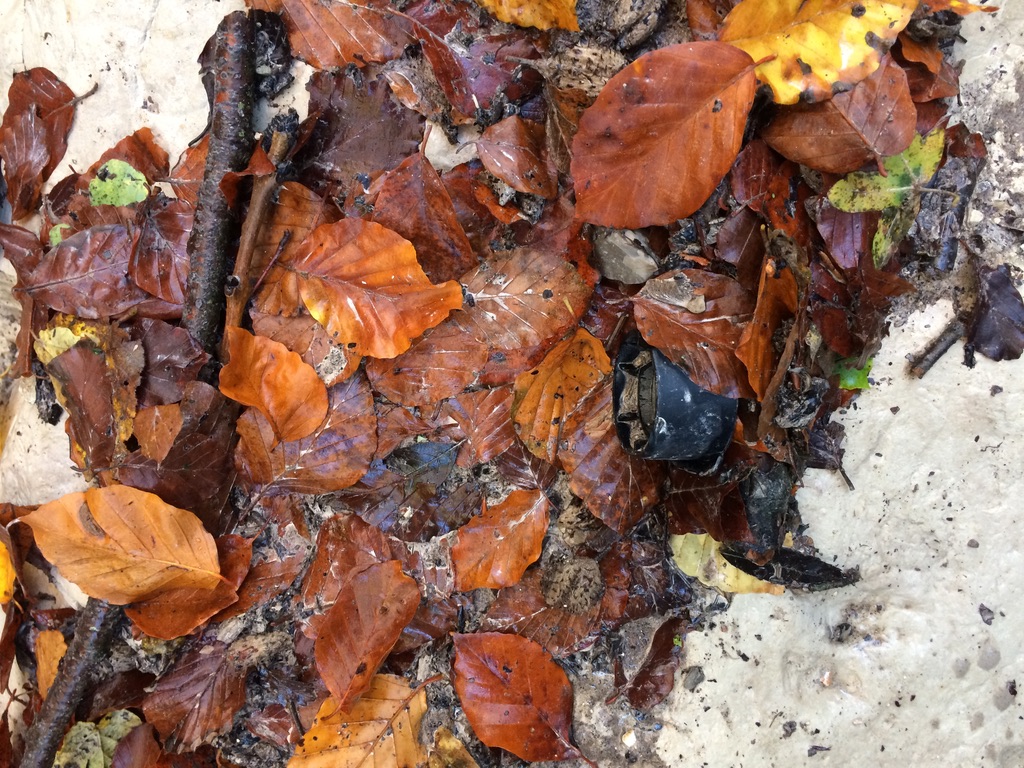
Throughout the Autumn I have continued adding to the collections of plastic waste as I walk on Byway 745 – the Rubbish Cairns I started building in August 2019. Torrential rain has scoured the chalk ruts which are repeatedly attacked by off-road vehicles. Churned up mud and fallen leaves then re-cover the chalk. Detritus is buried in the mud and revealed later with the next scouring.
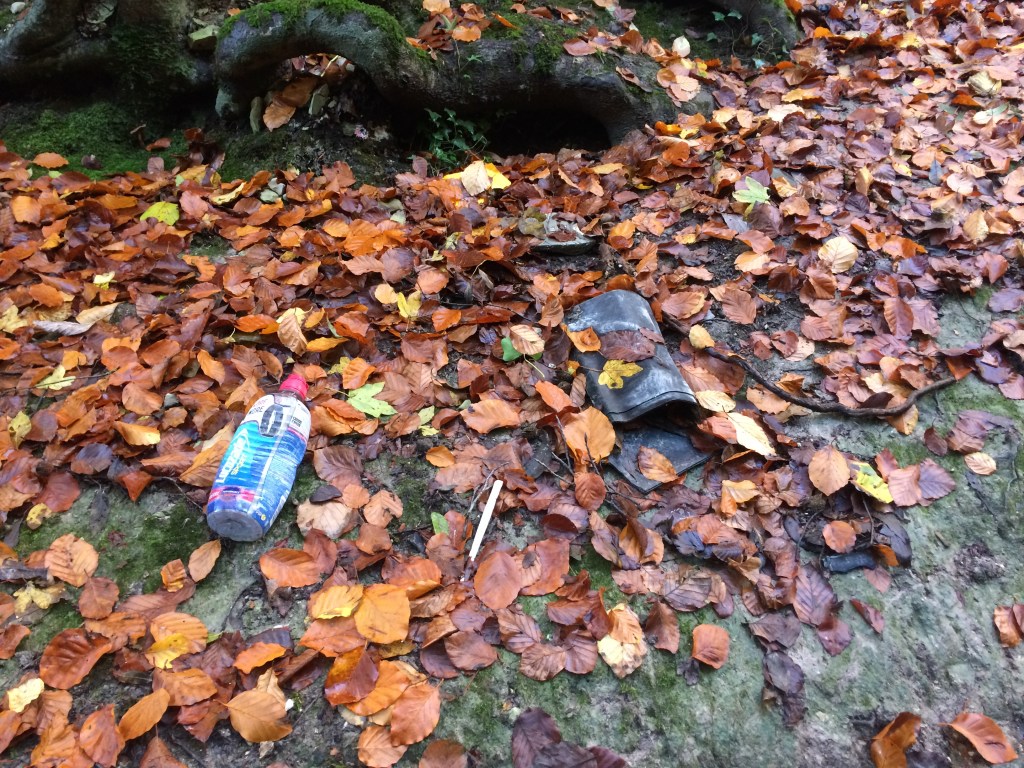
07.11.19
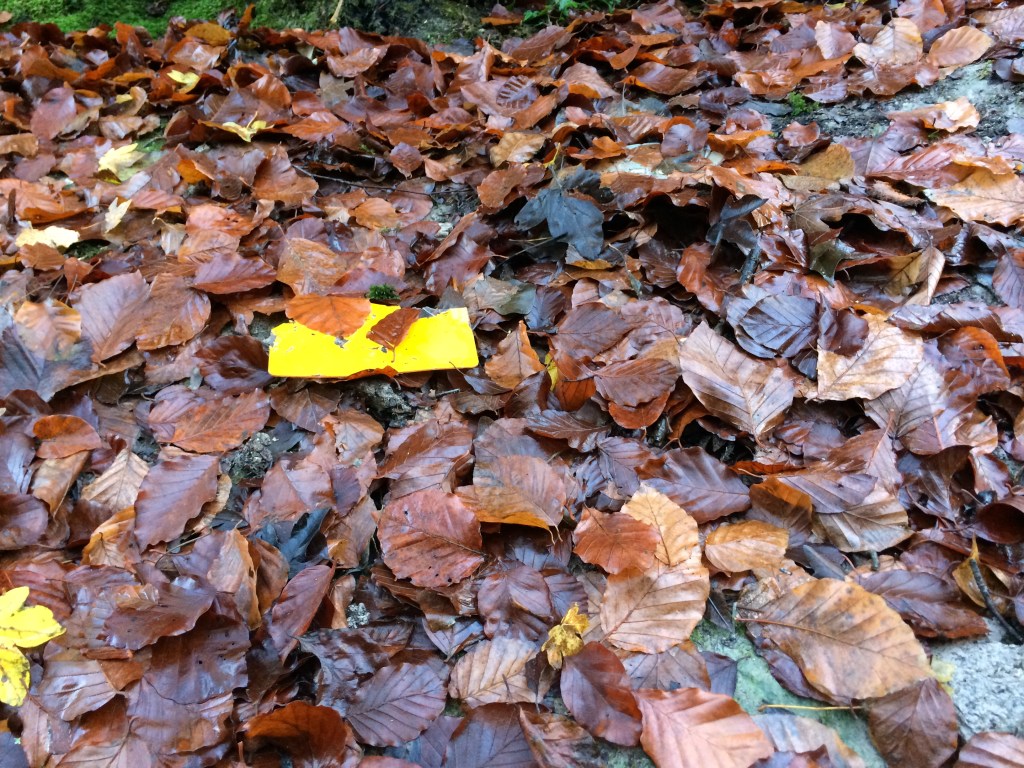
28.11.19
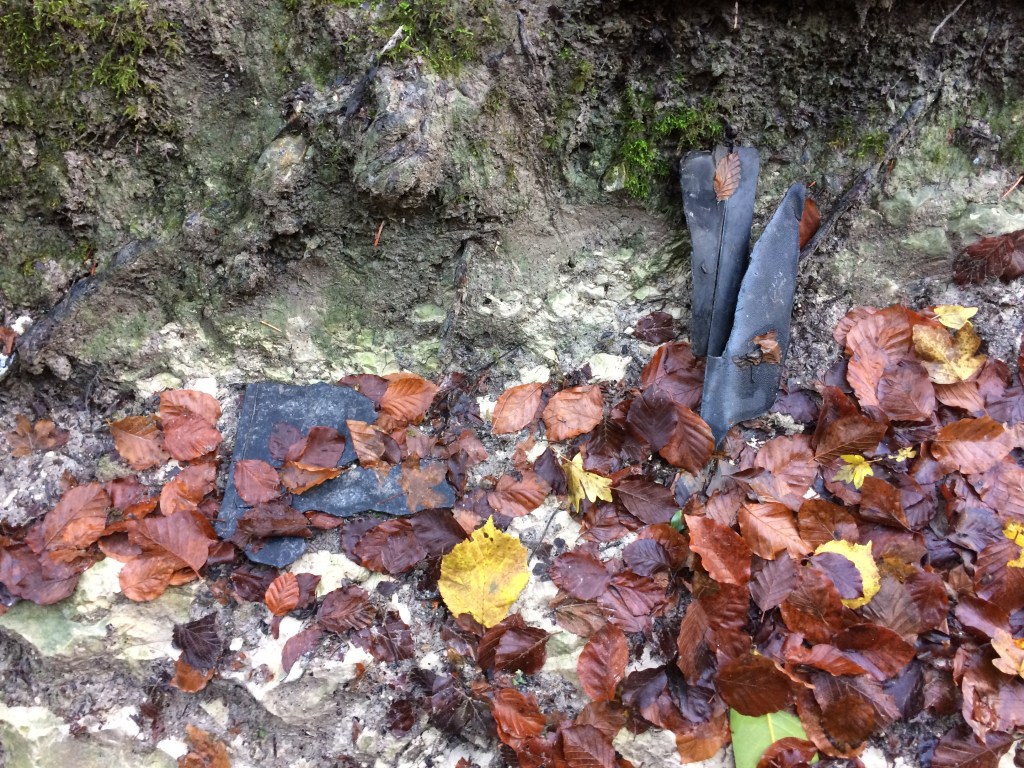
28.11.19
The images above show Rubbish Cairn No 2 that has slipped away completely. Gravity, wind, rain and then more vehicle activity has dragged the pieces down hill to be re-found and re-formed as a new Cairn – Rubbish Cairn No 3. See below.
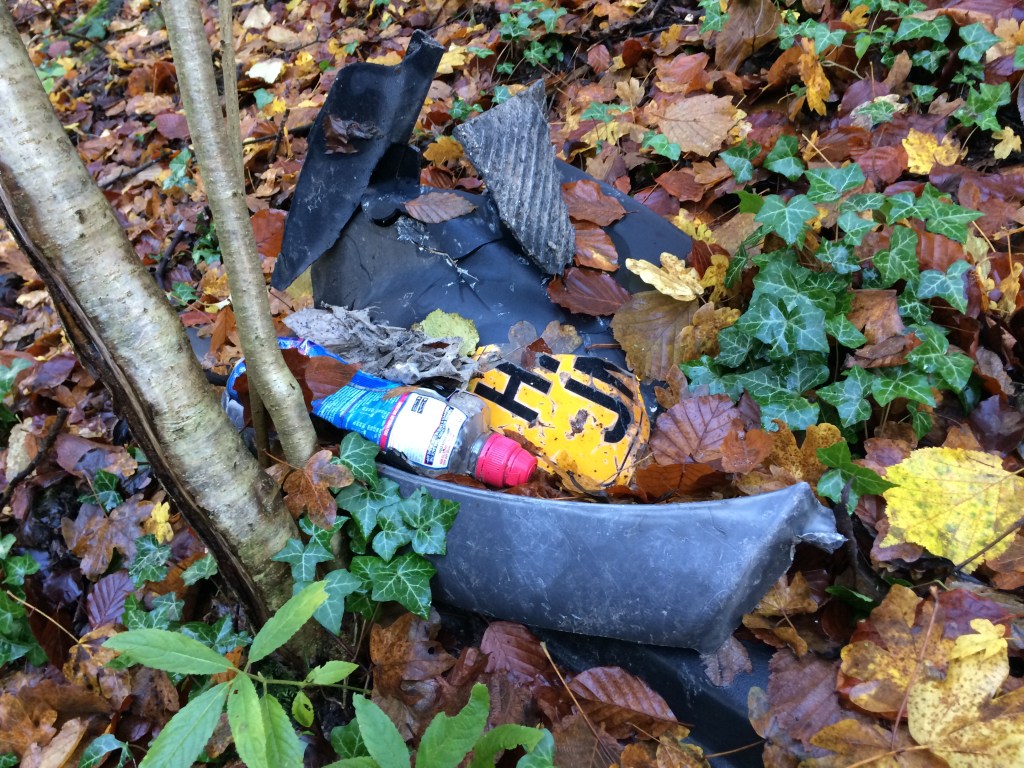
28.11.19
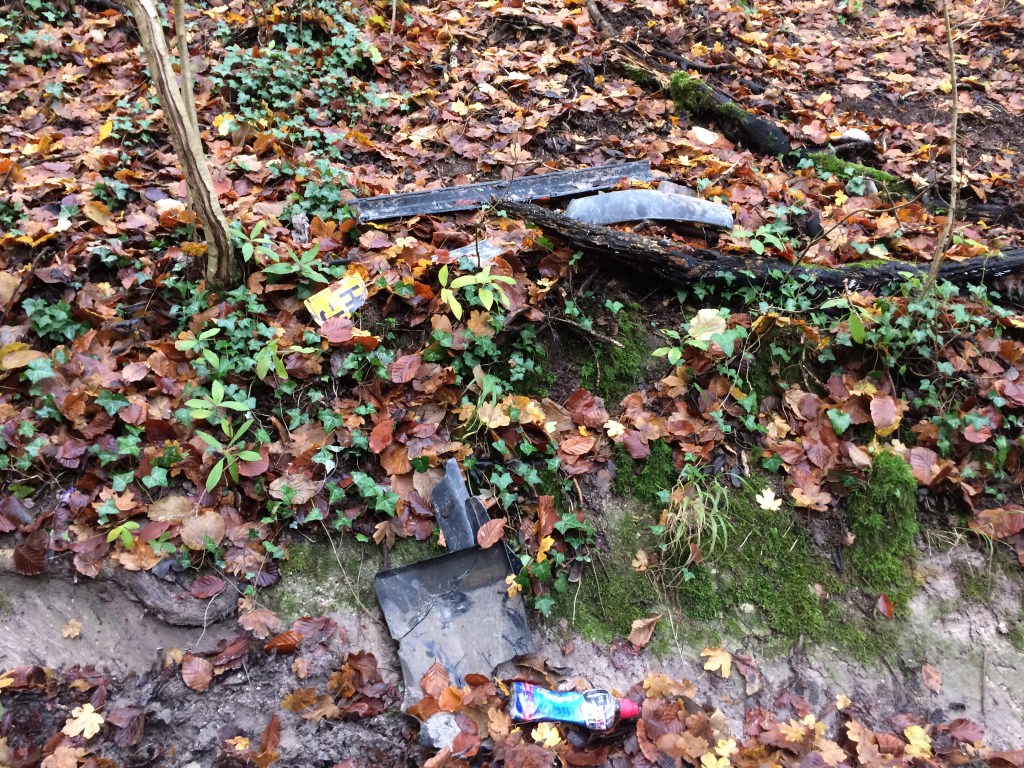
30.11.19
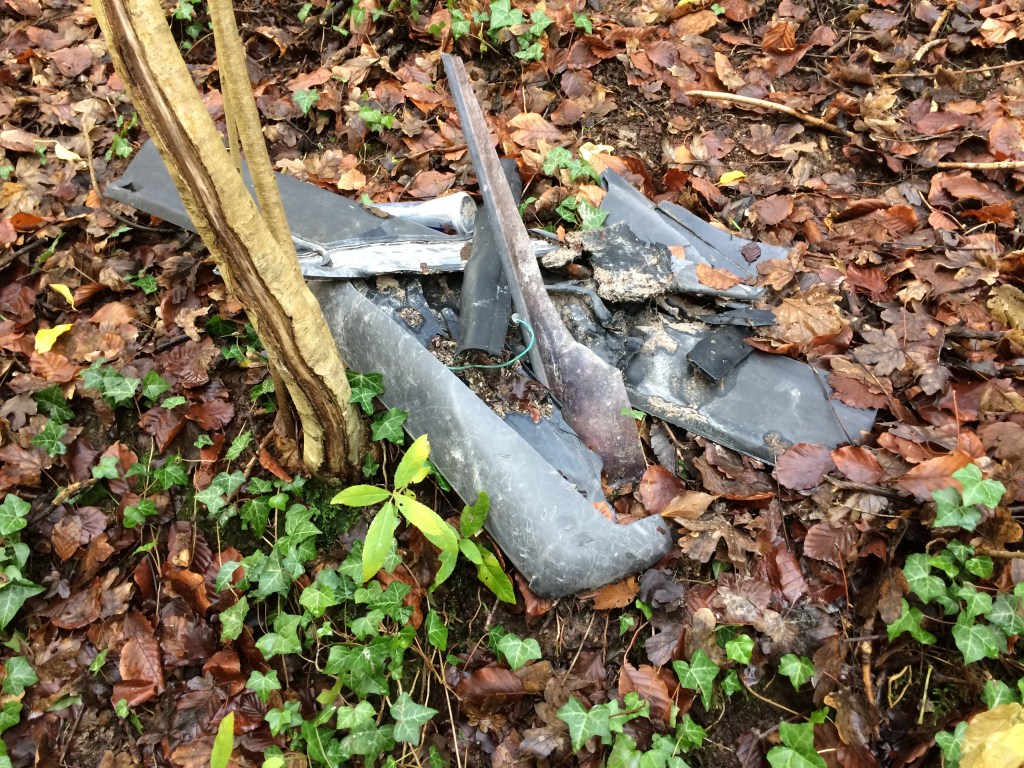
03.01.20
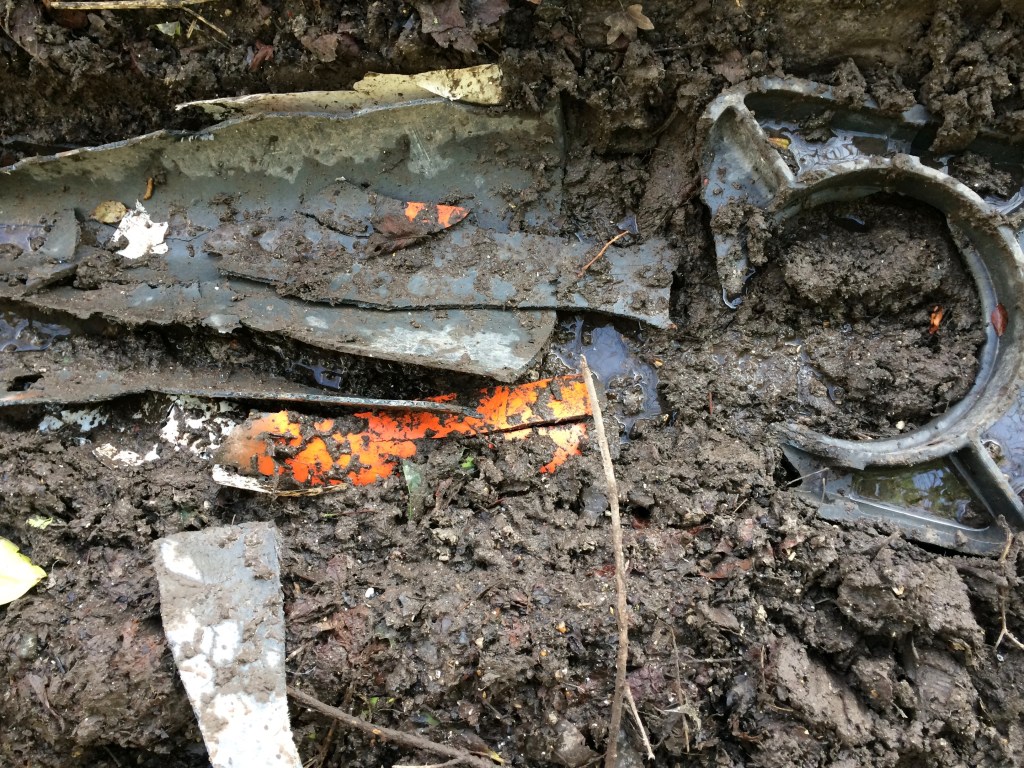
Human intervention, beyond my own, has reconfigured the original pile, Rubbish Cairn No 1. The images below show how the traffic cone has travelled off the pile during the month to end up crushed into the muddy rut lower down the hill.

28.11.19
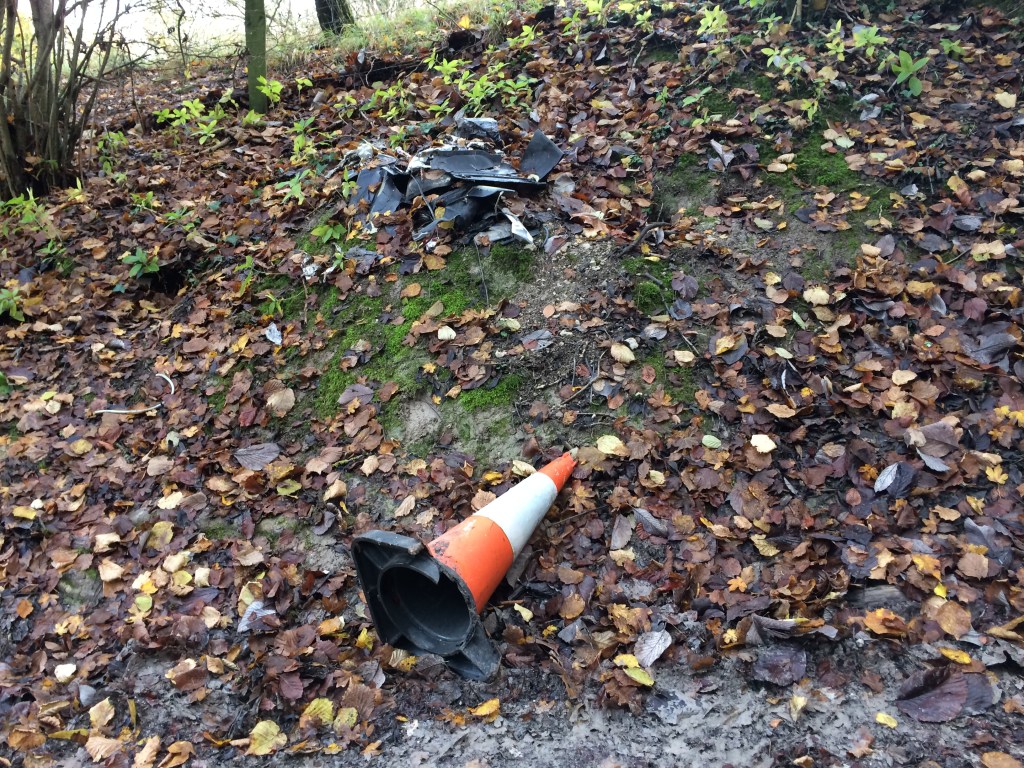
30.11.19
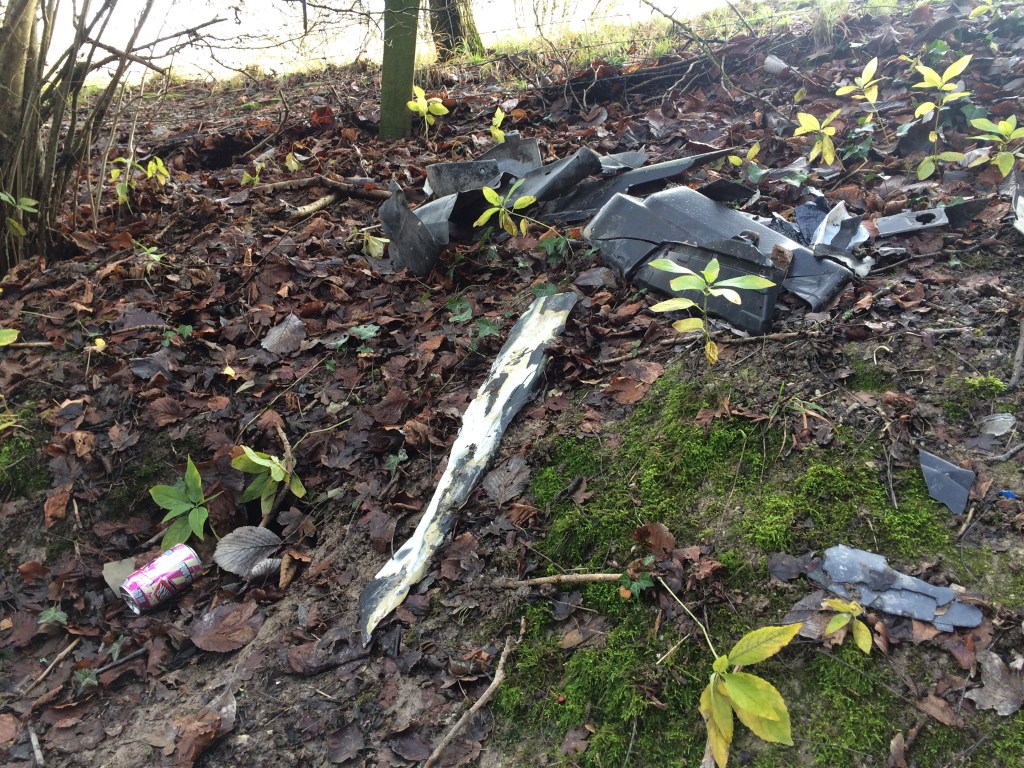
03.01.20
On a rare occasion, at the end of November, I met a group of off-roaders who had just finished winching a Land Rover out of the deeper mud. They were keen to tell us that they encourage the teenagers with them to collect up the plastic bottles to recycle. I mentioned collecting up bigger pieces of plastic but the conversation didn’t go further, perhaps because I was taken by surprise to meet them at all. We were very outnumbered, the light was fading and they were just moving on. Undoubtedly a missed opportunity to engage with audience/participants/contributors and an area of practice that needs a lot of further research.
Reading the new Whitechapel Documents of Contemporary Art issue, “The Rural”, edited by the Myvillages collective, I have come across an essay on litter by the rural sociologist, Rosemary Shirley – “Keeping Britain Tidy: Litter and Anxiety” 2016. She looks at 1940’s Litter Trails, Anti-litter Campaigns and two works by artist Stephen Willats that investigate the dynamics and meanings of litter in specific public semi-rural locations – The Lurkey Place 1978 and Dangerous Pathway 1999. Shirley is interested in our attitude to litter in a rural setting, its provenance, symbolism and the conflicts it causes and reflects. This is an area of resonance for my work, in addition to its primary concern with the ubiquitous use of plastic and fossil fuelled recreation.
The Whitechapel publication is a rich source of essays discussing Art in a rural context, rural concerns and definitions of what might even be meant by the term ‘rural’. It has helped me identify debate and conversations to follow within contemporary art practice as well as rural arts organisations like Grizedale Arts, Wysing Arts Centre and the new organisation More Than Ponies.
All photographs by Liz Clifford.
 Liz Clifford
I enjoyed reading this post a great combination of your interactions with the environment and public and your daily walks together with the reading that runs alongside it.
LikeLike