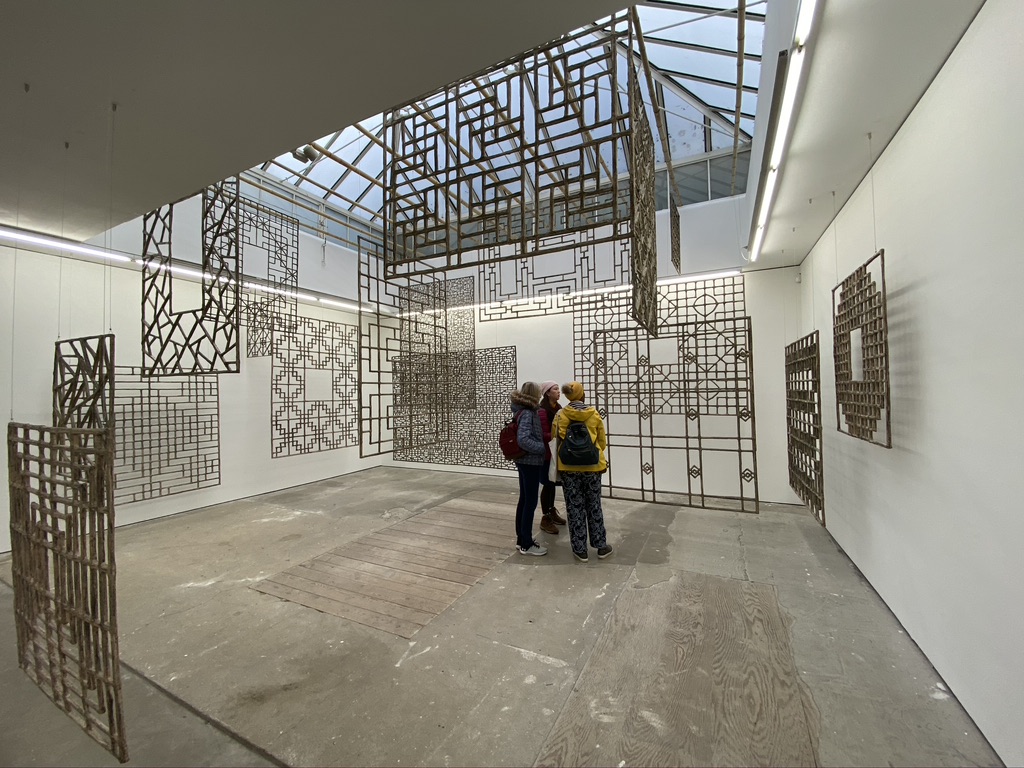
In this show of paintings and an installation, it was the installation that I was most drawn to. The work, titled “Home”, was originally shown in Hong Kong in 2018 and comprises eighteen screens hanging perpendicular to each other.
The screens are lattices made of bamboo and newspaper. In this gallery they are suspended partly beneath a glass roof on chunky bamboo poles by elegant wire fixings. They hang at varied heights, some hovering just above the floor and others well above head height.
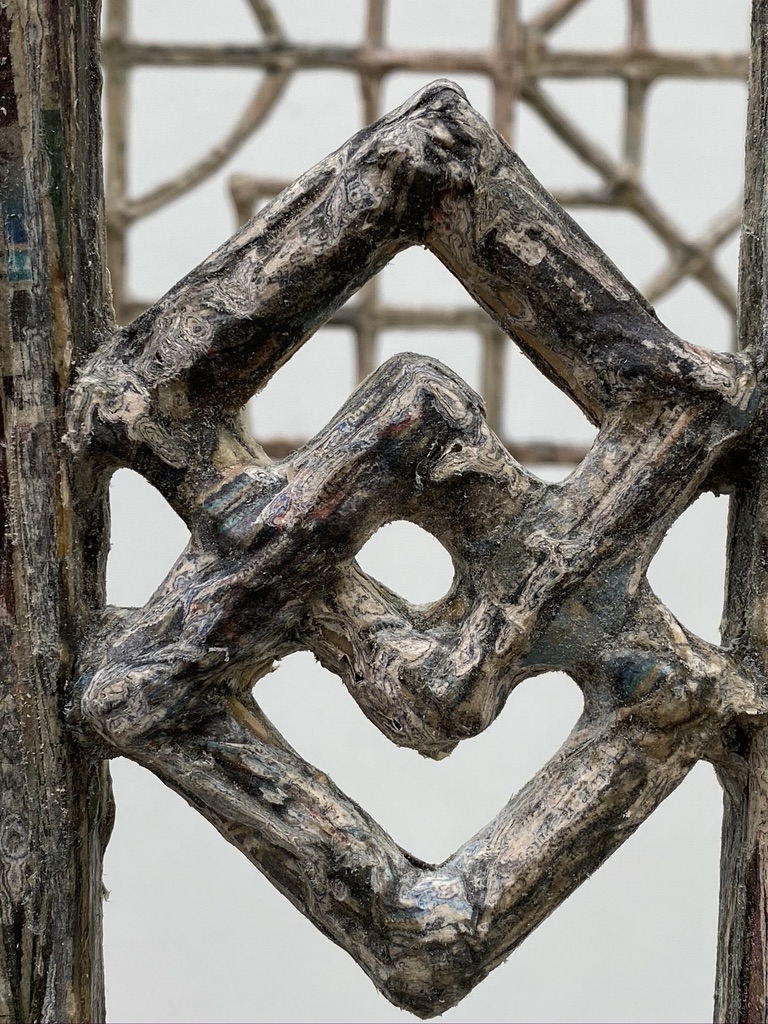
The lattice forms are derived from traditional Chinese window designs used in buildings that are being demolished to make way for rapid urbanisation and expansion of Chinese cities. The artist visits this issue repeatedly in his paintings of “nail houses” – the houses that get marooned by development as the city grows around them. In the paintings the traditional house is picked out like an island. Here it is symbolized by the lattice window form that is suspended without its walls, like a ghost window.
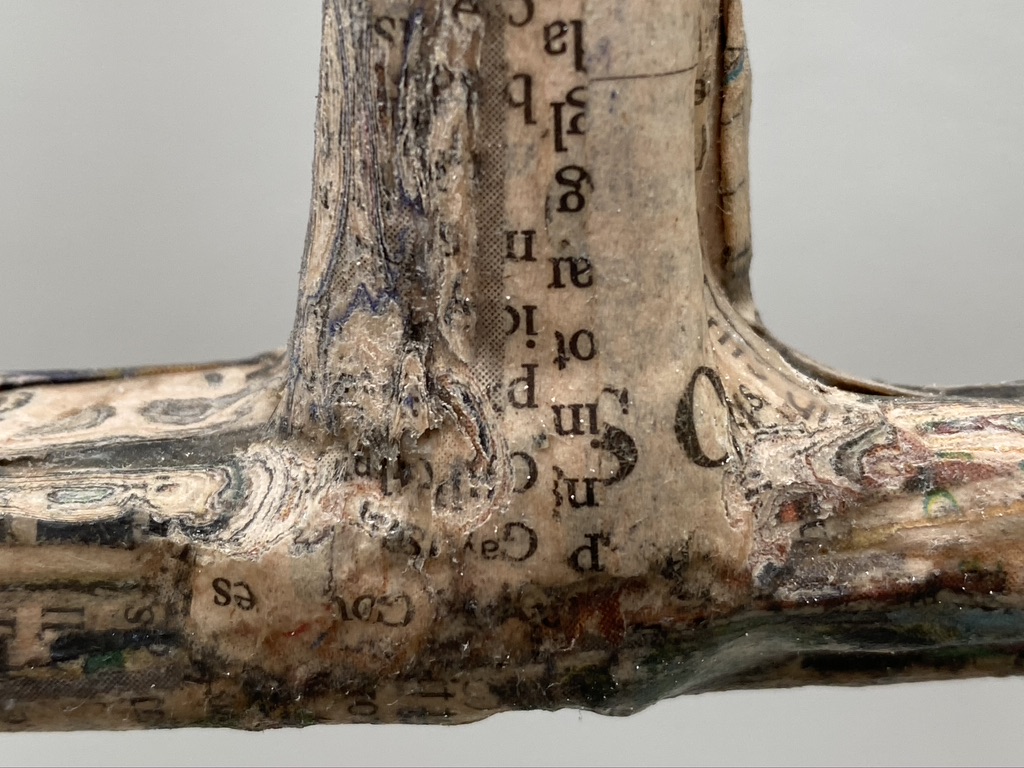
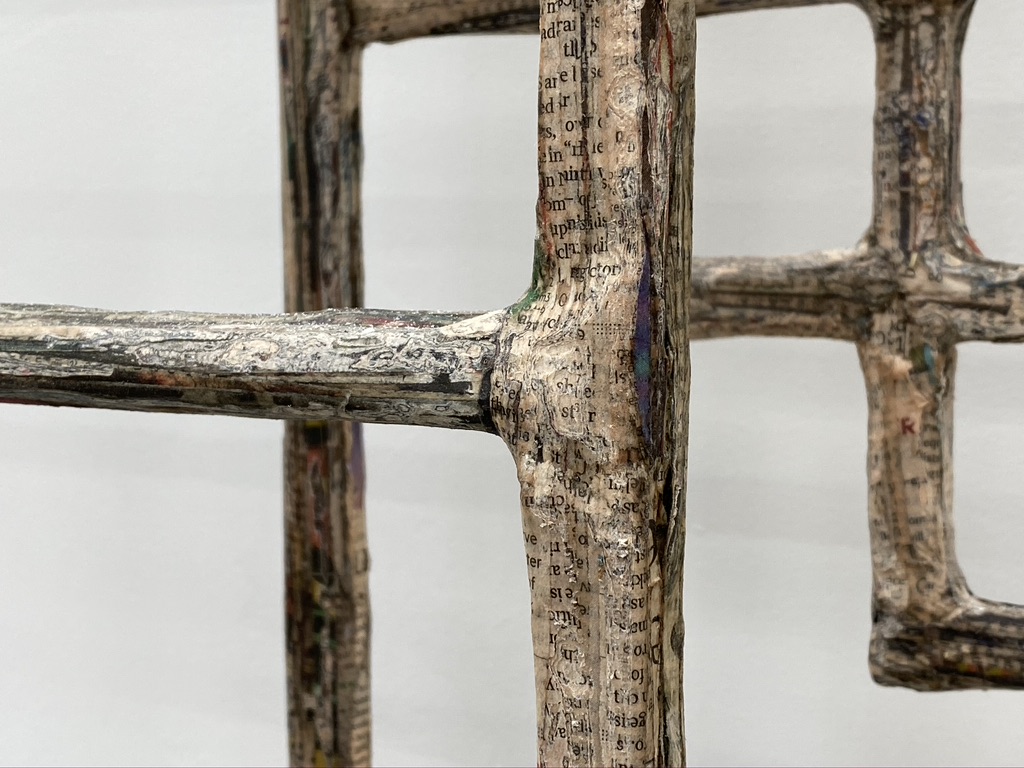
The eighteen lattices are all different but constructed with the same bamboo, paper and glue method. The artist has glued layers of financial newspapers over the bamboo structure and then carved it back in places to make an ancient, distressed aesthetic. He also uses financial newspapers in his paintings as a collage material citing its reference to capitalism. He talks of making the choice of material as part of his critique of the tearing down of traditional Chinese homes in the name of Communist Capitalism. (1) Here the text and numbers show through and the unmistakable pink of the Financial Times is clearly recognisable.
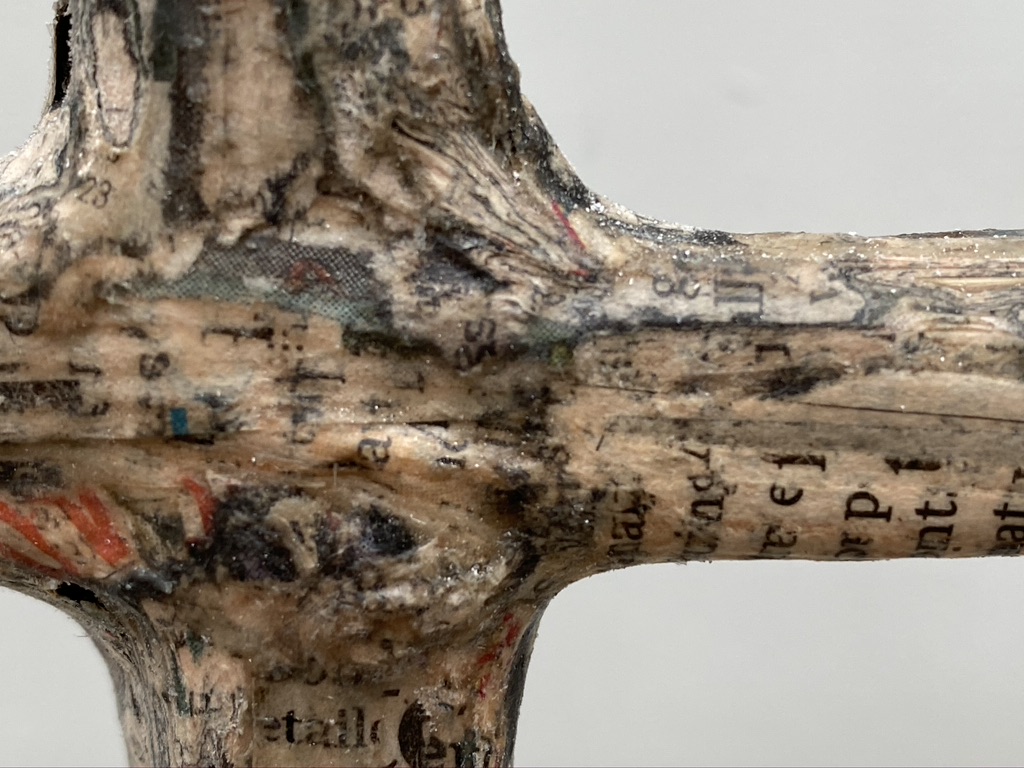
The audience can wander through “Home”, between the suspended windows. You can view each other through the piece. As if glancing into each other’s homes. It invites you to think about inside and outside, public and private space. Some of the panels are suspended just in front of the white walls of the gallery and so have no view through them whilst others allow a view of the rest of the gallery and the street. If you look up, you are looking through the higher panels towards the glass roof and the city sky. The glass roof has its own simple lattice structure, the glass is frosted so that external architecture is not visible. This allows the piece to feel timeless for a moment.
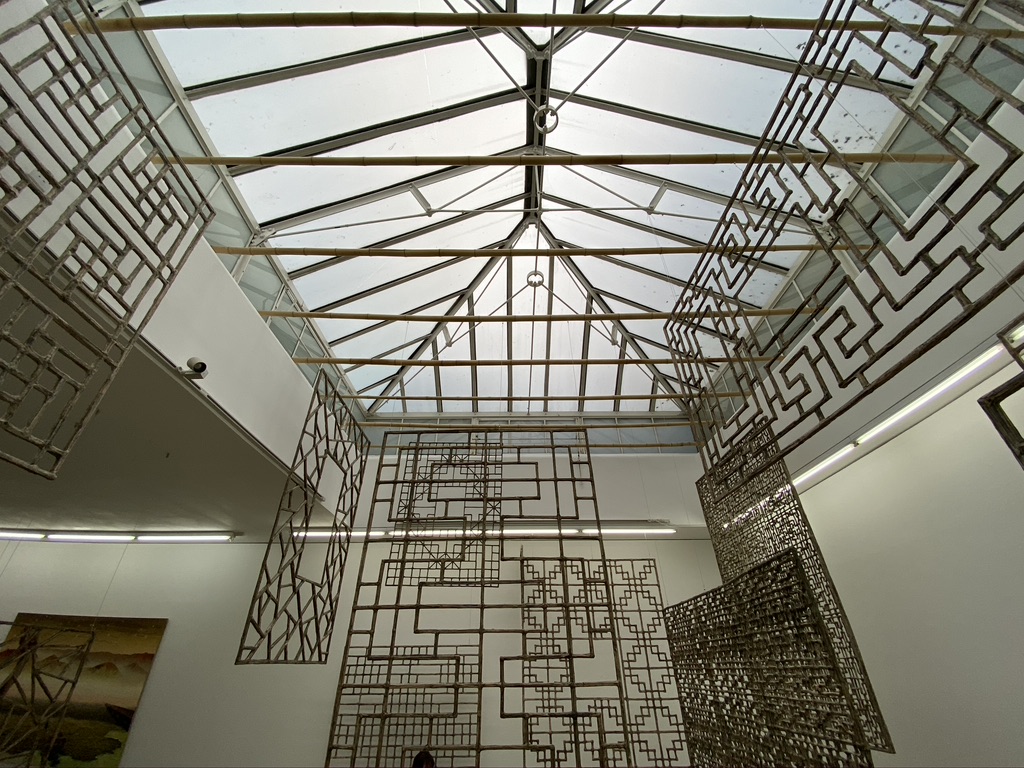
The varied sizes and hanging heights of the different panels, as well as their perpendicular and overlapping proximity to each other evokes a feeling of an ancient and crowded city street with centuries of history embedded in its decorative elements. This is enhanced by the presence of old exposed floorboards on the gallery floor. However, the floating, lightweight and disembodied nature of these panels, with the emptiness either side of them really does make them ghostly memories of something that has been lost for ever.
Photographs by Liz Clifford
- Gordon Cheung’s talk at UCA Farnham 4/11/19
 Liz Clifford