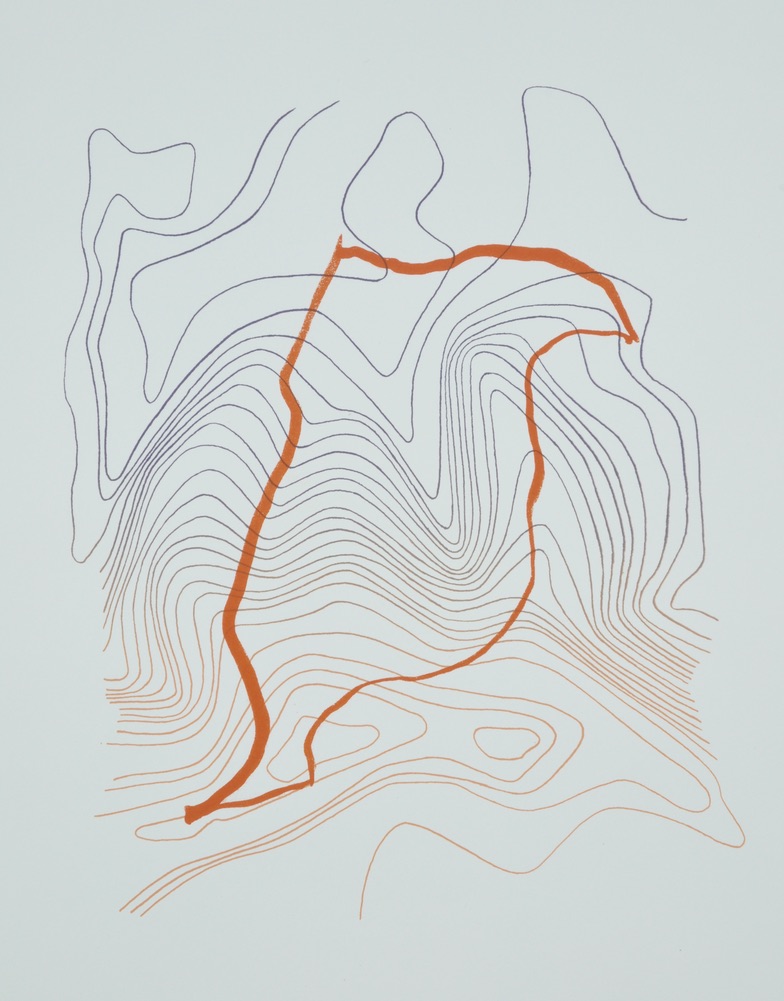
Circular Walk 2019 screen print. Liz Clifford.
This is the starting point for the various strands of my current work. A circular walk I’ve been making almost daily for 24 years. In the screen print below, the orange line represents the trace of the walk across the contours of the landscape.
That landscape is in the very beautiful, chalk hills of the UK’s South Downs National Park. Part of the circular walk is on a 4000 year old track. Over those thousands of years it has eroded to become a hollow lane 30 foot deep in places. Originally used by Bronze Age humans, then coppicers, farmers and travellers, it is now a place for recreation. Off-road 4×4 drivers and dirt-bike riders share it with cyclists, horse riders and walkers.
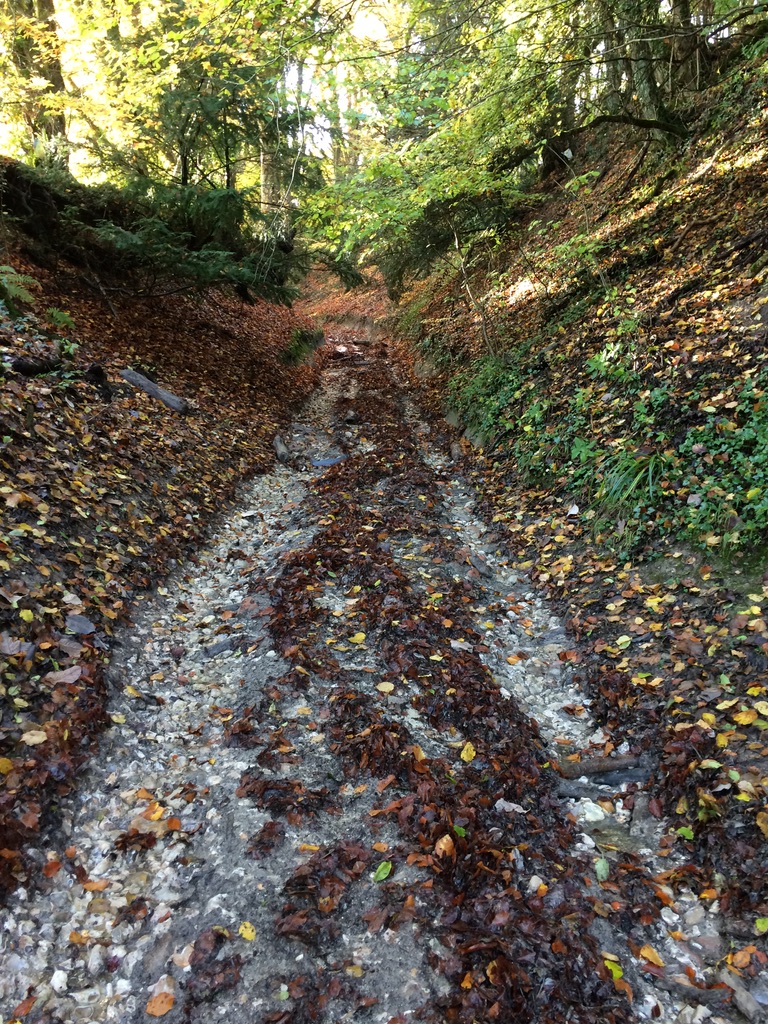
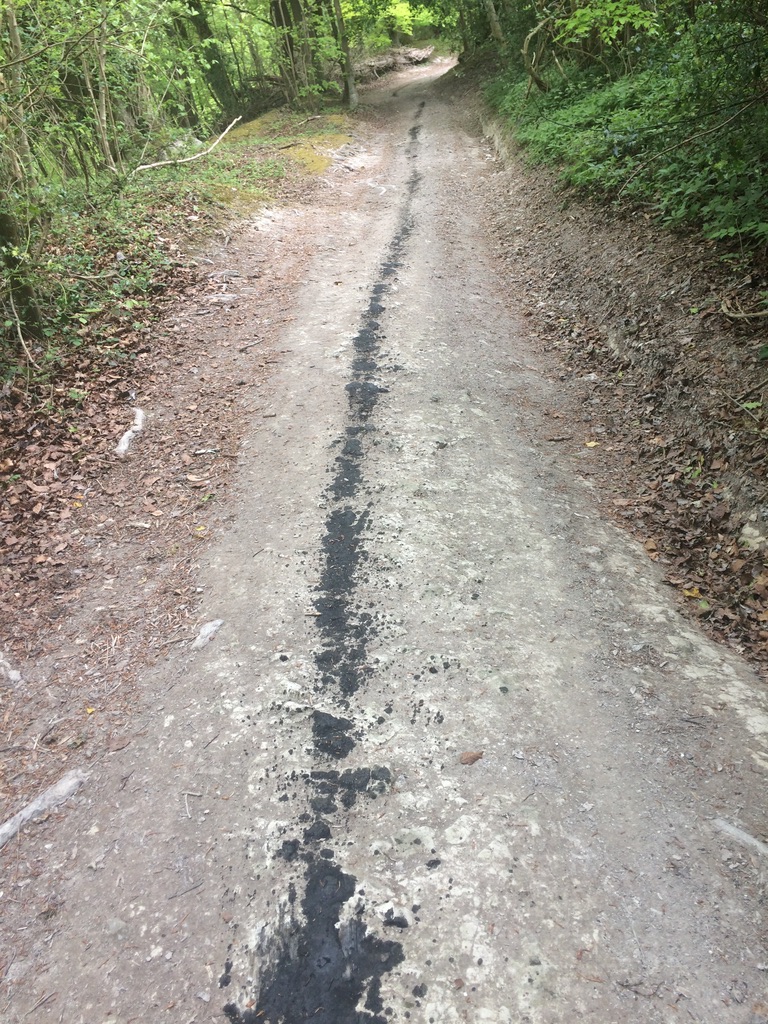
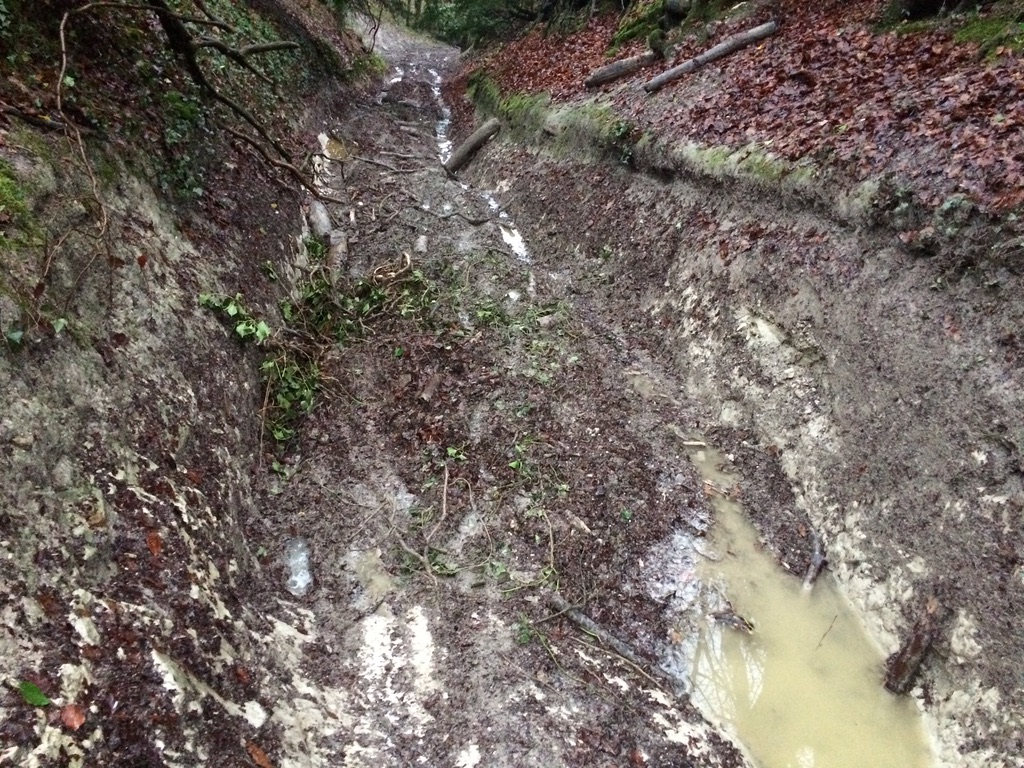
The erosion caused by these humans is accelerating due to vehicle use. The image below shows the muddy ruts in winter. The hollow lane is becoming deeper faster.
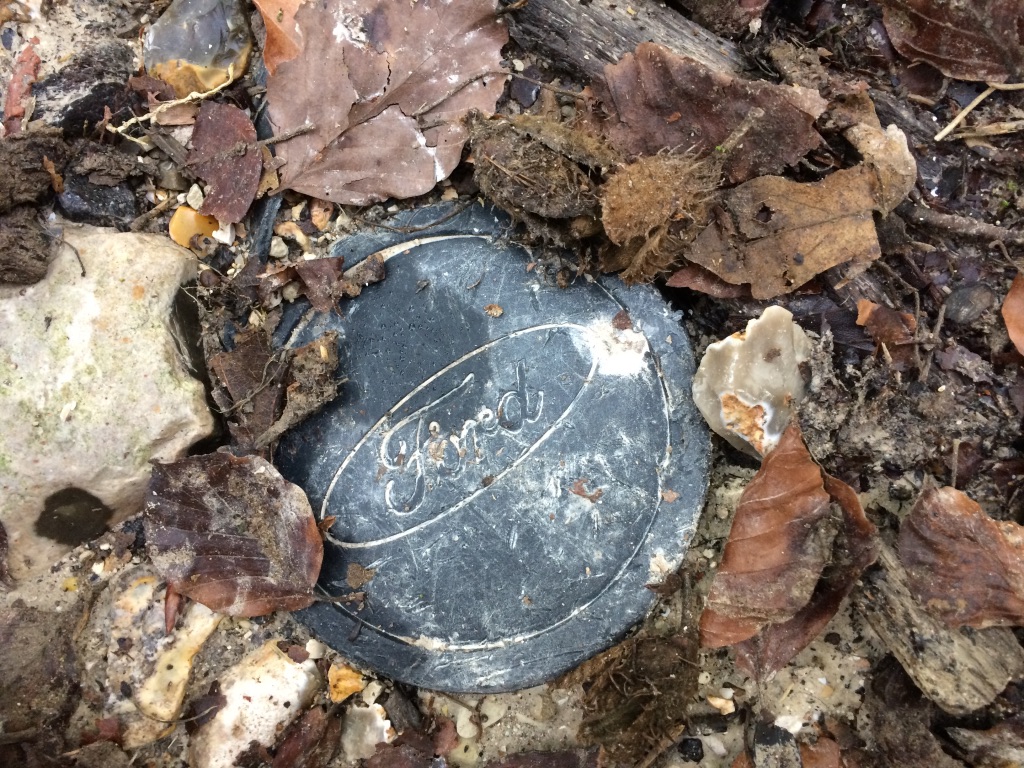

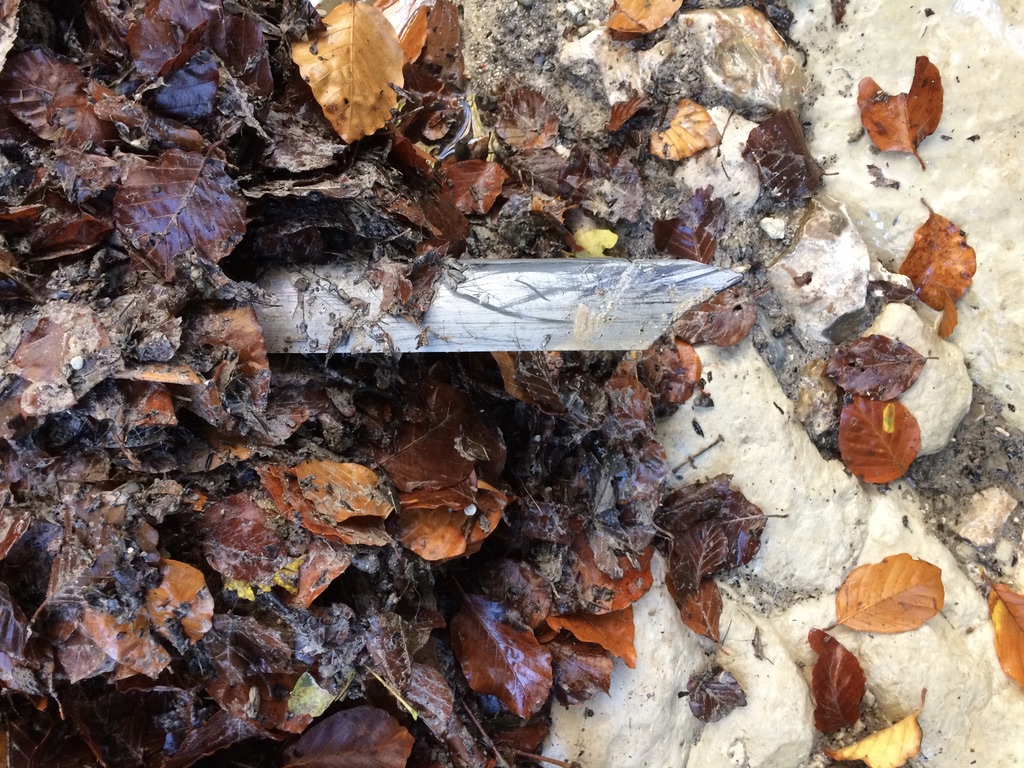

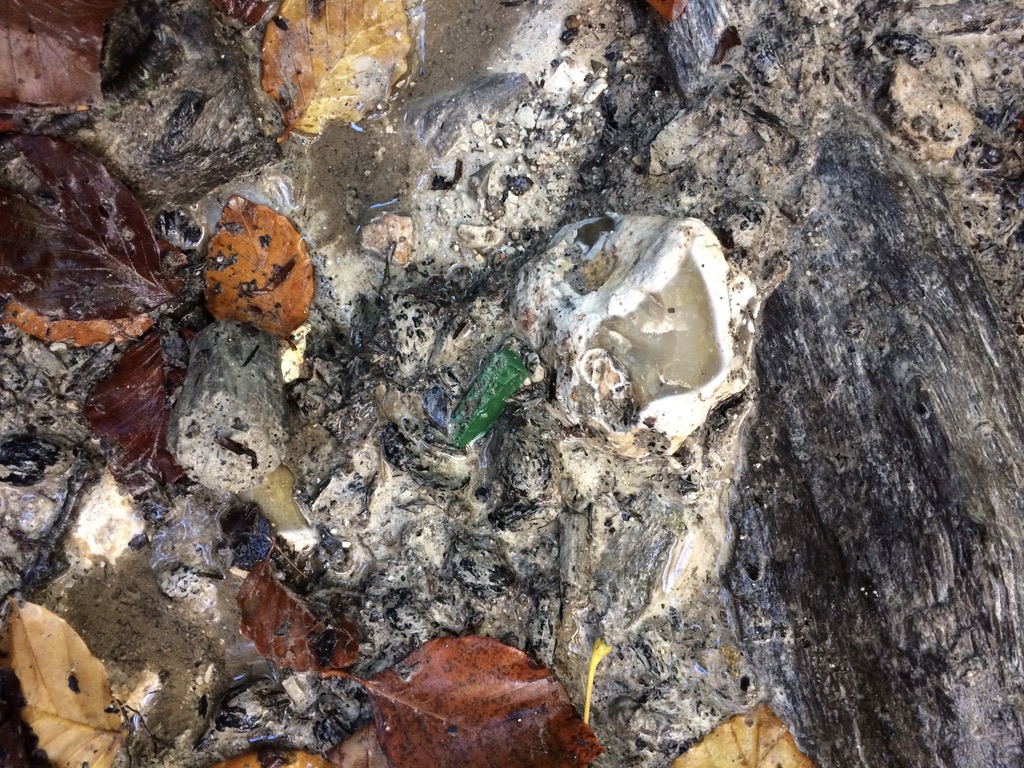
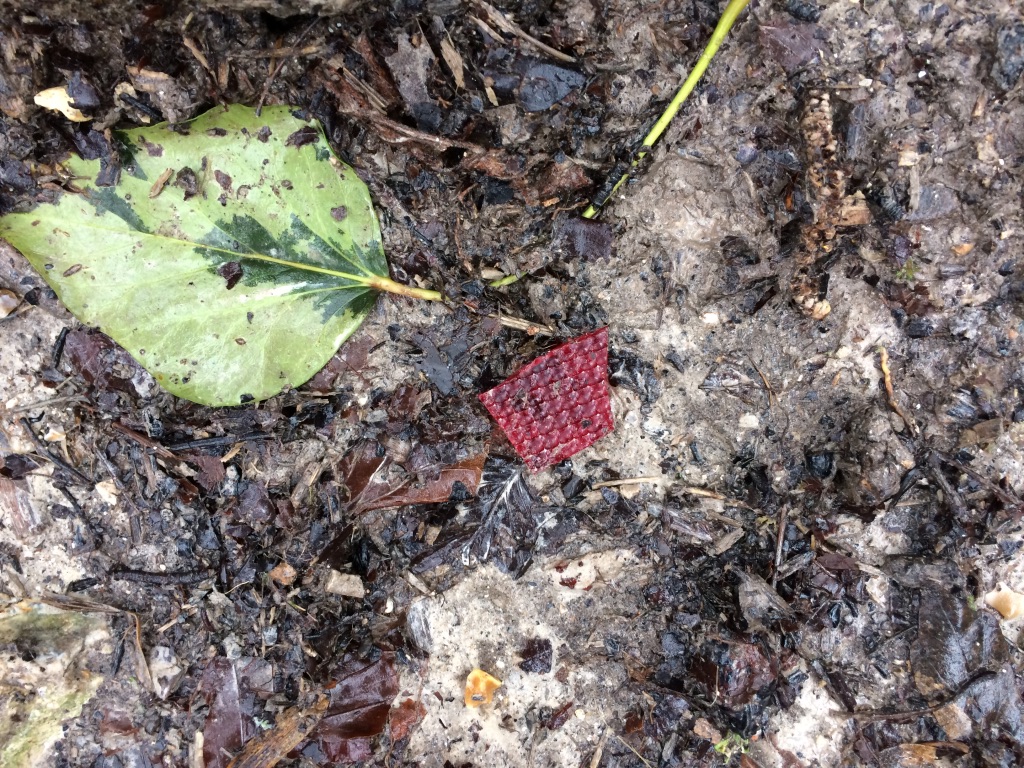


Whilst I walk I collect the plastic waste I find on the track. Most of these objects are parts smashed off the 4x4s and dirt-bikes. I document them where I find them. I’m struck by the way the objects get embedded in the ground, looking ancient and sometimes gem-like, reminiscent of archaeological finds or proto-fossils. This chalk hill contains fossils 150 million years old, from a time when the area was a shallow sea. Not all those fossils are body fossils. Some are trace fossils. Trace fossils are not the remains of a species itself, but rather the remains of the trace left by that species – impressions, footprints, worm casts. Human artefacts also form trace fossils and are called technofossils by geologists. Since the middle of the 20th century human artefacts have spread over the entire globe, forming a technosphere, the preserved remains of which may be used to help date extinctions, including our own.
I have made a video about this walk and the objects I find. You can view it here.
“Fossil burning human beings seem intent on making as many new fossils as possible, as fast as possible.” Donna J Haraway. Staying with the Trouble: Making Kin in the Chthulucene. 2016
 Liz Clifford