How to curate living elements in sculpture is a challenge Danh Vo has risen to in his current show at White Cube, Bermondsey. The visitor is greeted in the space outside the gallery by a pavilion bedecked in makeshift wooden planters while in one room of the interior space plants dominate the display, grow-lights suspended over the works. In the video interview and gallery tour on the White Cube website the artist talks about his recent discovery of gardening and his desire to do more “gardening with sculpture”. The show owes its title to time recently spent in Mexico – Chicxulub is the name of a crater and area of the country where an asteroid struck Earth 66 million years ago and is believed to have set off the chain of climate events that lead to mass extinctions, including that of the dinosaurs. The nasturtiums and other fast growing plants that inhabit the works in this room trail across fragments of ancient stone carvings acquired by the artist, fixed in juxtaposition with banal everyday materials and repurposed utilitarian machines, notably fridge units. The clean aesthetic achieved allows the work to breathe although there is a huge amount going on. It is the lighting that, to a great extent, allows this. The grow lights hang low over the works, isolating them, the wires descending from the ceiling, rather than trailing across the floor in most cases.
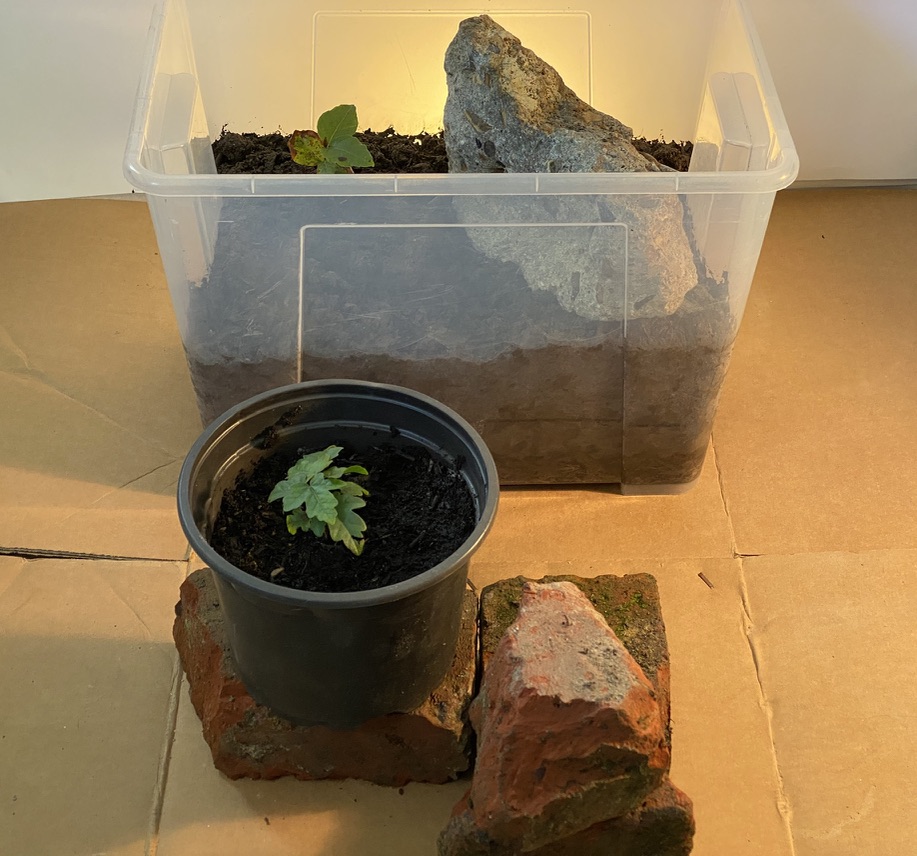
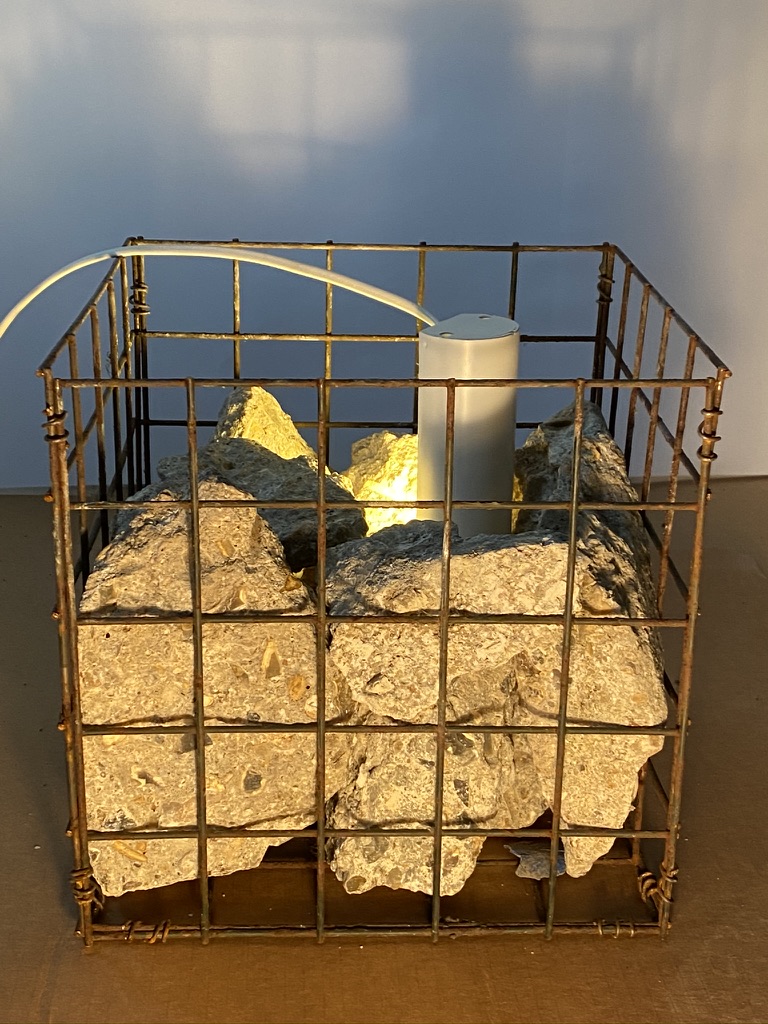
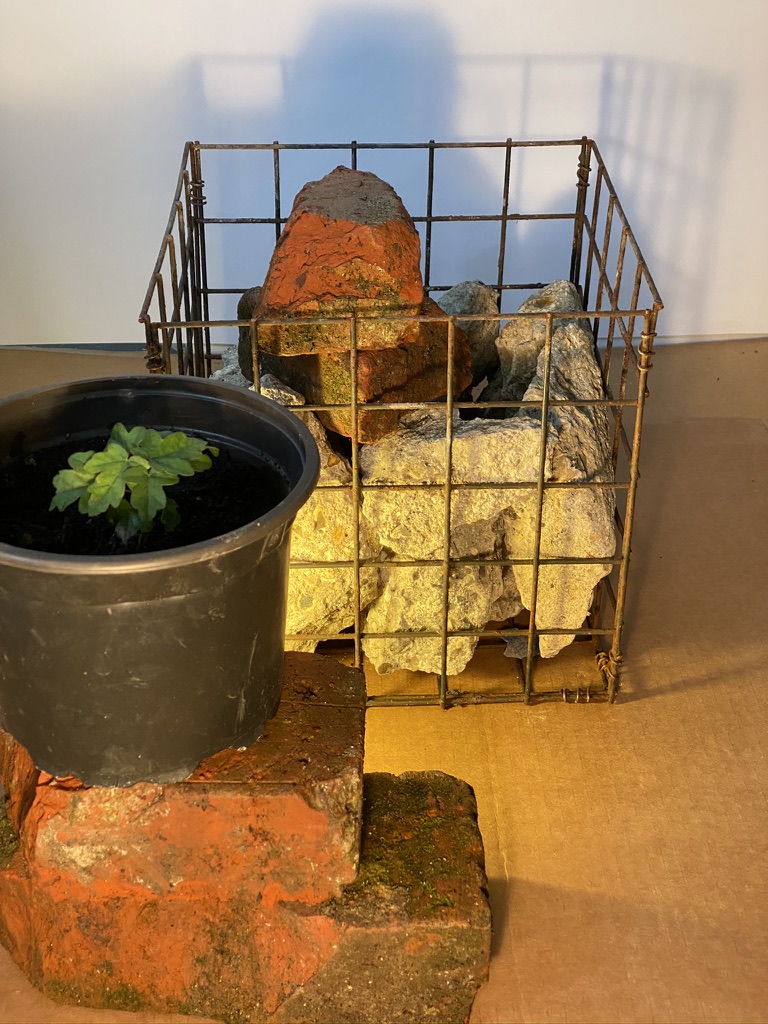
I have been prompted by seeing this work to try out some different juxtapositions of materials, as explored in the images above, along with the placing of objects and light sources. In the images below, the light source has been placed within the structure to produce a steady glow through some of the more transparent materials.


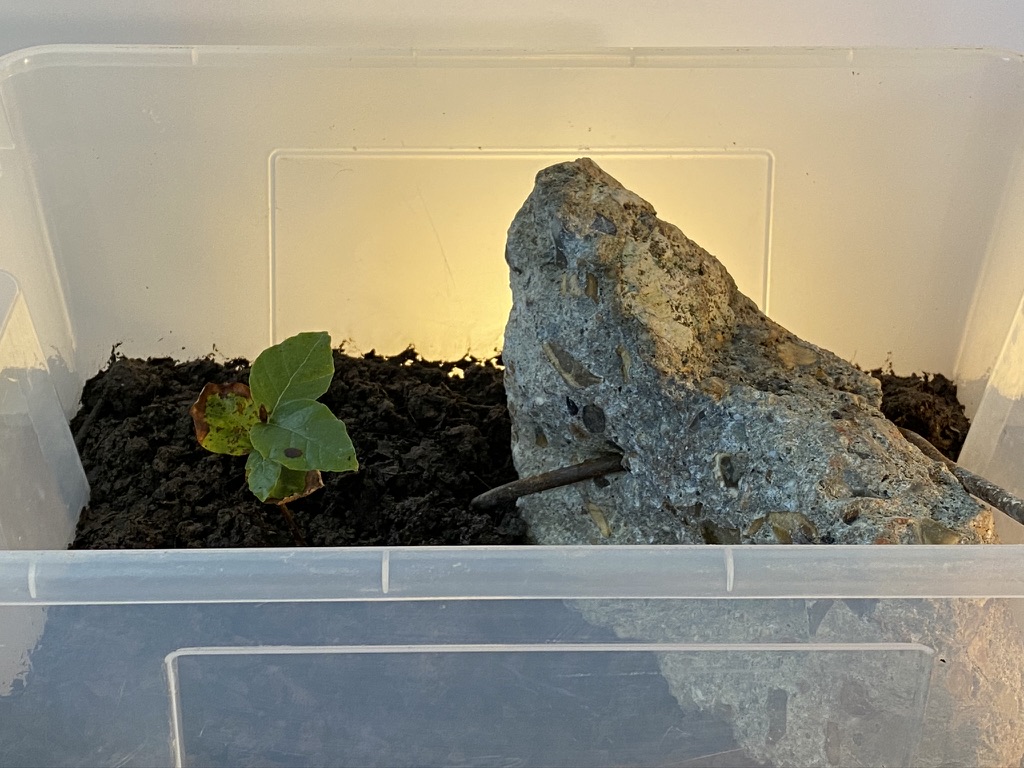
The tree seedlings nurtured since the spring, my Covid-trees, rescued during lockdown are making appearances within my current work. For that work to be viable indoors, I need to experiment with grow lights as I do for the pieces that include terraria and moss.
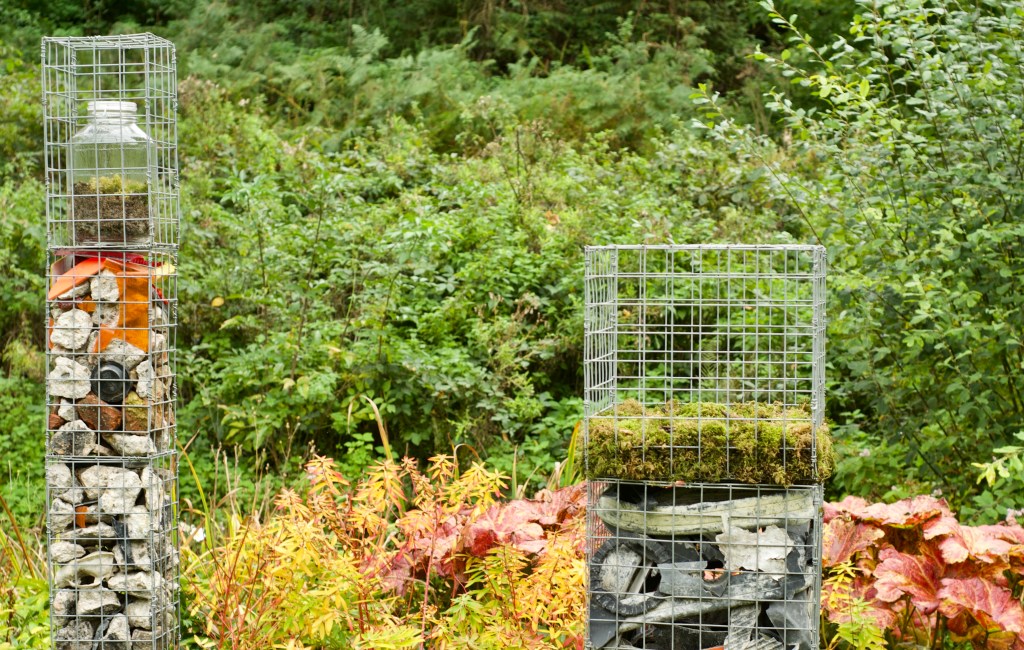
Seeing Danh Vo’s work with plants has encouraged me to pursue this strand in mine. The living plants connect directly to the provenance of the other materials I use, in that they have inhabited the same space in nature completely by chance. Taken out of that space, each element continues to grow and be reconfigured. The ephemeral could be encouraged to take over the concrete, literally.
“Nature in time takes over” says Danh Vo when describing the beautiful triangular shaped mountains he had seen in Mexico, that are in fact pre-Columbian pyramids that have not been excavated. The traces of a lost civilisation.
All photographs and works by Liz Clifford.
 Liz Clifford
The new work in the Gabion baskets looks like stained glass windows. The experiments with lighting works really well.
LikeLike