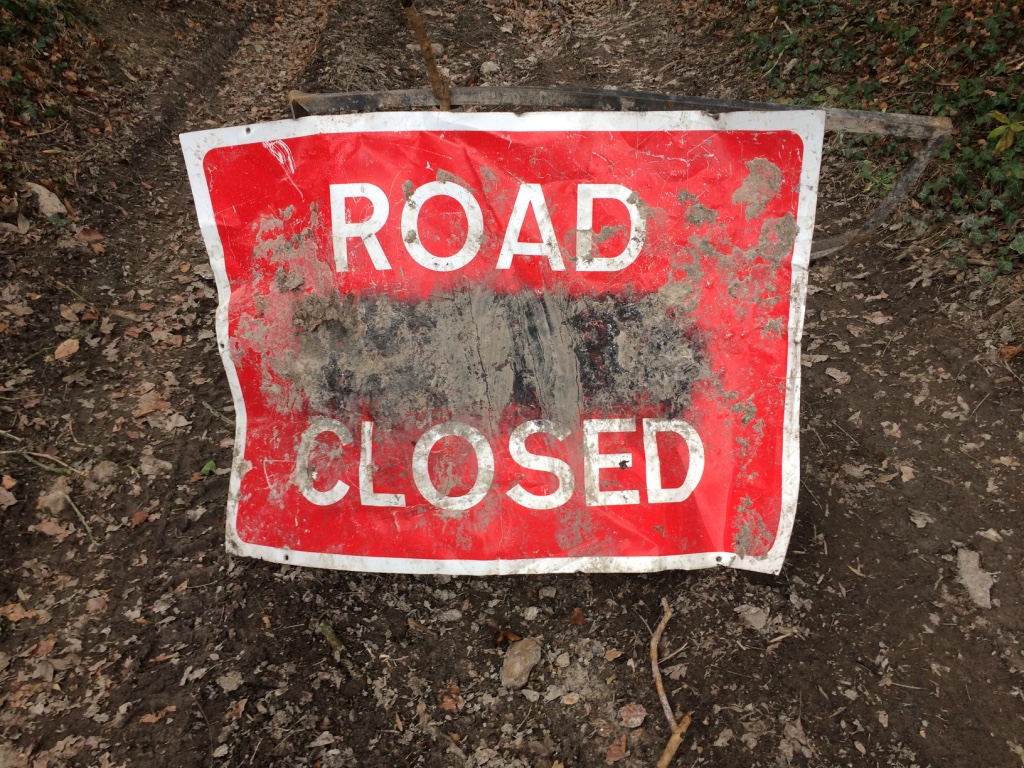
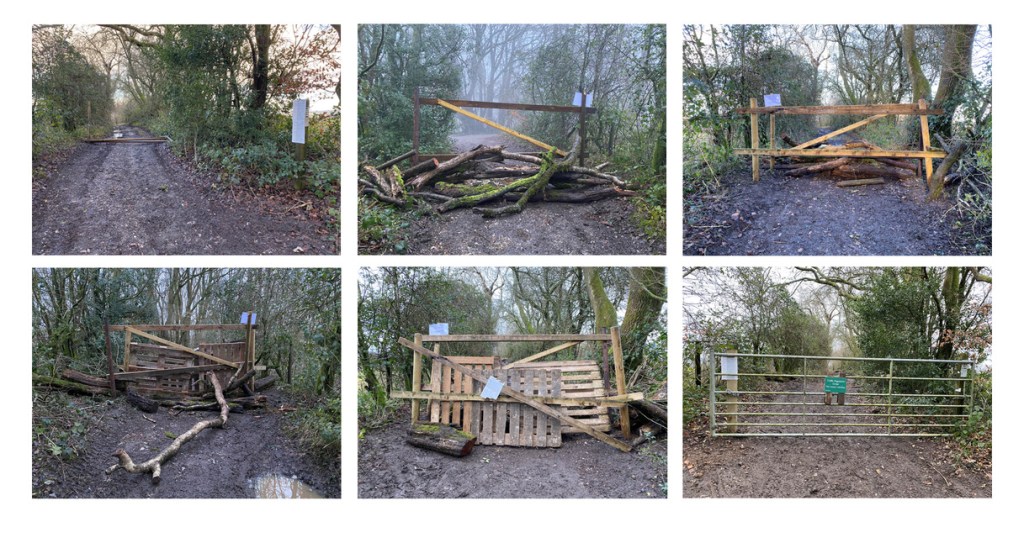
Notice has been given that Hampshire County Council’s Countryside Access Team is going to ‘repair’ Byway 745. Only walkers and cyclists are allowed to use it until the work has been completed. To allow this to happen it has been closed by a barrier at either end. Over the past month I have witnessed a war of attrition between those whose job it is to keep the lane accessible to all and those who particularly relish rough terrain for their leisure pursuit. As the images below show, barriers have been repeatedly erected and broken down, becoming more substantial each time.
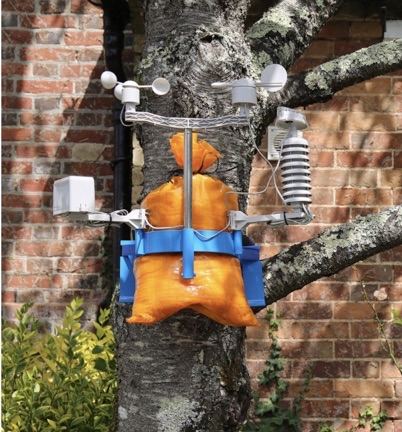
Witnessing this stand-off has led me to think back to a conference I attended in summer 2020 keen to discover a network of artists working in a rural context. More Than Ponies is an artist led programme that seeks to invigorate the New Forest as a site for contemporary art engagement, discourse and practice. Their conference Art and The Rural Imagination was convened by Dr Colin Perry of Arts University Bournemouth. Speakers were both academics and artists, with some artists commissioned to make work for the event. Delegates were also from both communities and largely operating outside London. Papers debating what can be defined as ‘The Rural’ were presented alongside specific projects by practising artists. Artist Adam Chodzko’s paper The Hostile Environment pointed to the term being required to be understood by those applying for permanent residence in the UK. It is, however, very difficult to define as it means so many different things to the different communities who inhabit it. Writer Rosemary Shirley prefers to use the term ‘non metropolitan’ to counter the nostalgic idea of the countryside. Julian Stallabrass from The Courtauld Institute talked about his project in Epping Forest examining that edge of the city. The Forest is urban, suburban and rural all at once. It harbours rubbish dumps, fly tipping and crimes as well as grazing animals and is a public recreational space. He created a photographic slide show called Borders in 2016 mapping the 12 square miles of forest that he described as mapping Brexit at the same time, Epping Forest creating the border between Remain London and Leave Essex. Amongst the artists commissioned to make work for the MTP event was Harry Meadows, whose work Parasite was installed on a roadside tree at South Baddesley in the New Forest. His work uses the data and aesthetics of roadside weather station instruments to critique the way we engage with our environment via that network of roads and comments on the loop created by climate agent and climate sensor in the microclimate of the road.
In the plenary session it was acknowledged that many more artists are based outside the cities now but it is a very slow process changing the way contemporary art is received with there still being a perception amongst ‘local’ artists that urban artists are helicoptered in for more prestigious projects. Some of this hostility even showed itself during the Q & A at the end of the conference, the perception being that the more academic approach to the subject of The Rural Imagination was also the more metropolitan.
Rosemary Shirley’s statement that ‘The ancient and modern are simultaneously experienced aspects of the non-metropolitan everyday’ (Shirley, 2015:19) very much chimes with my own experience as an artist living and working for many years outside the city. Byway 745 is both an ancient Bronze Age right of way and also a track used for 21st century fossil-fuelled leisure pursuits. The very contemporary phenomenon of plastic waste is abundantly evident beneath the line of undercut beech trees that around 100 years ago formed a pristine laid hedge marking the boundary between public and private access.
Shirley, R. (2015). Rural Modernity, Everyday Life and Visual Culture (1st ed.). Routledge. https://doi-org.ucreative.idm.oclc.org/10.4324/9781315607184
 Liz Clifford