Last month I was lucky to catch this set of immersive installations at Proposition Studios on London’s Southbank, in the old London Studios building, where they have had their base until very recently. The labyrinth of eighteen interconnected ‘worlds’, questioning the role of humans as part of ecology was curated by Gabriella Sonabend, co-founder of Proposition Studios.
The artists had been selected from an open call and in preparation for this project they took part in an intensive research residency, visiting sites where human intervention has dramatically increased biodiversity while providing for human needs: Martin Crawford’s Forest Garden in Devon, Knepp Rewilding in Sussex and Prof. Wolfe’s Wakelyns Agroforestry in Suffolk while also meeting the science writer and food campaigner Colin Tudge in Oxford.
The resulting works explored a wide range of aspects of the theme – from the threat of impending extinctions, to ways of reconnecting with nature – the future of cities, and how humans will live within them. My own research into ways of connecting artworks together through their curation, as well as interest in the themes, had pointed me towards this exhibition. I was after tips for curating my own work that keeps revolving around one starting point but varies in outcome.
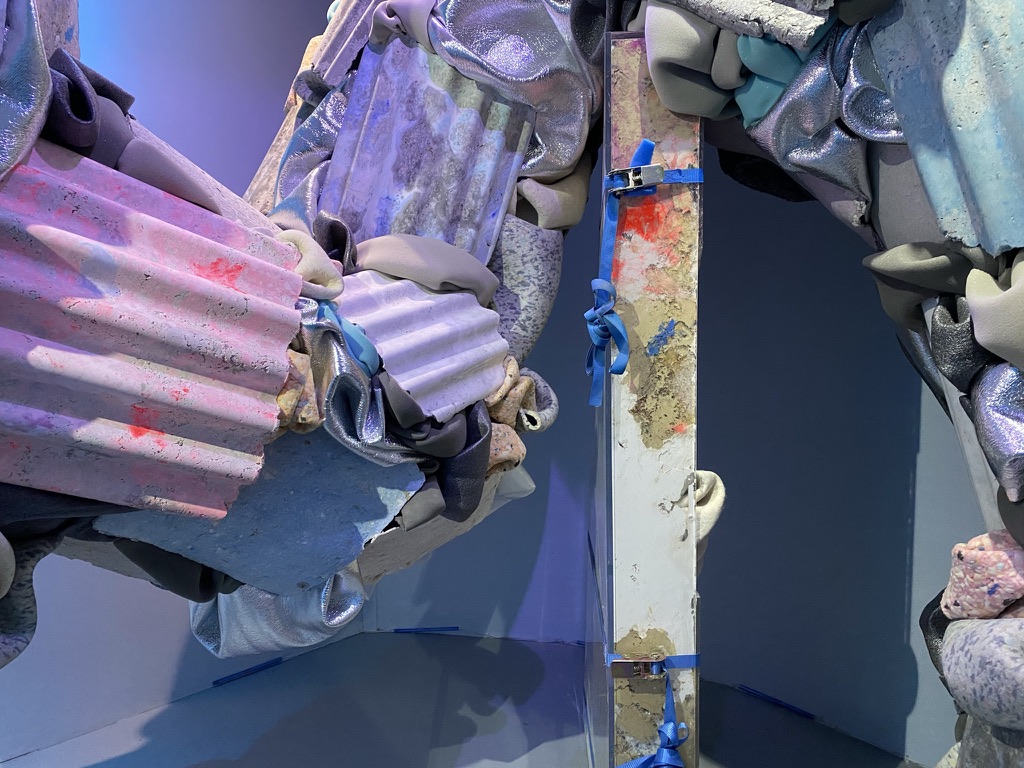
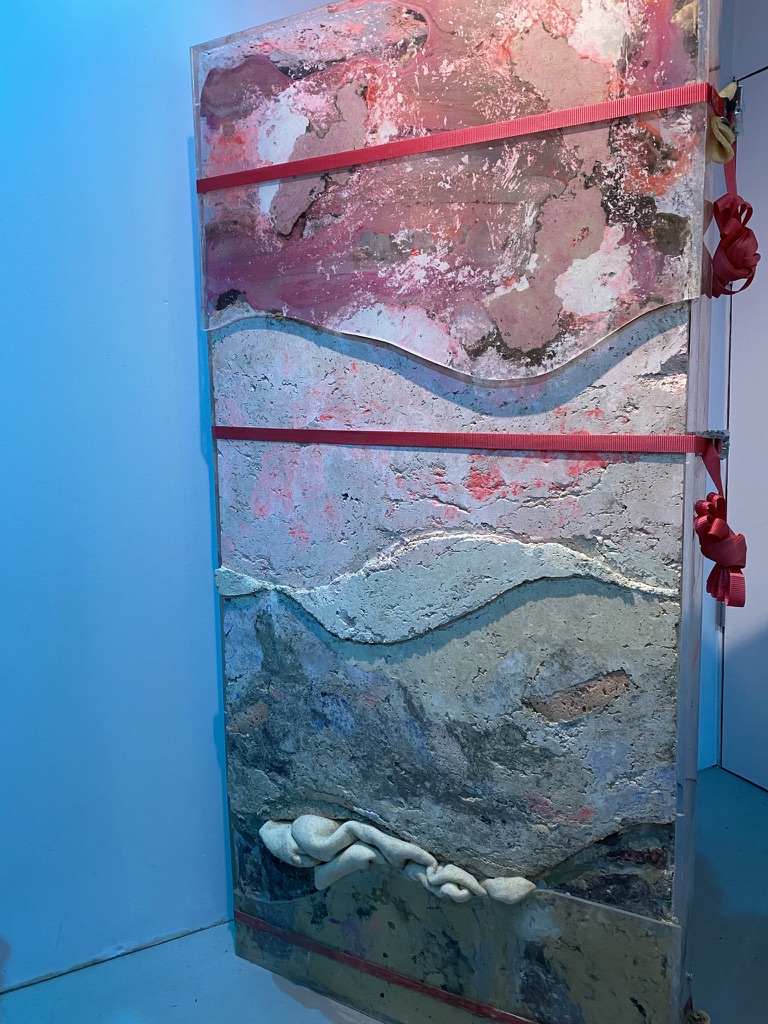
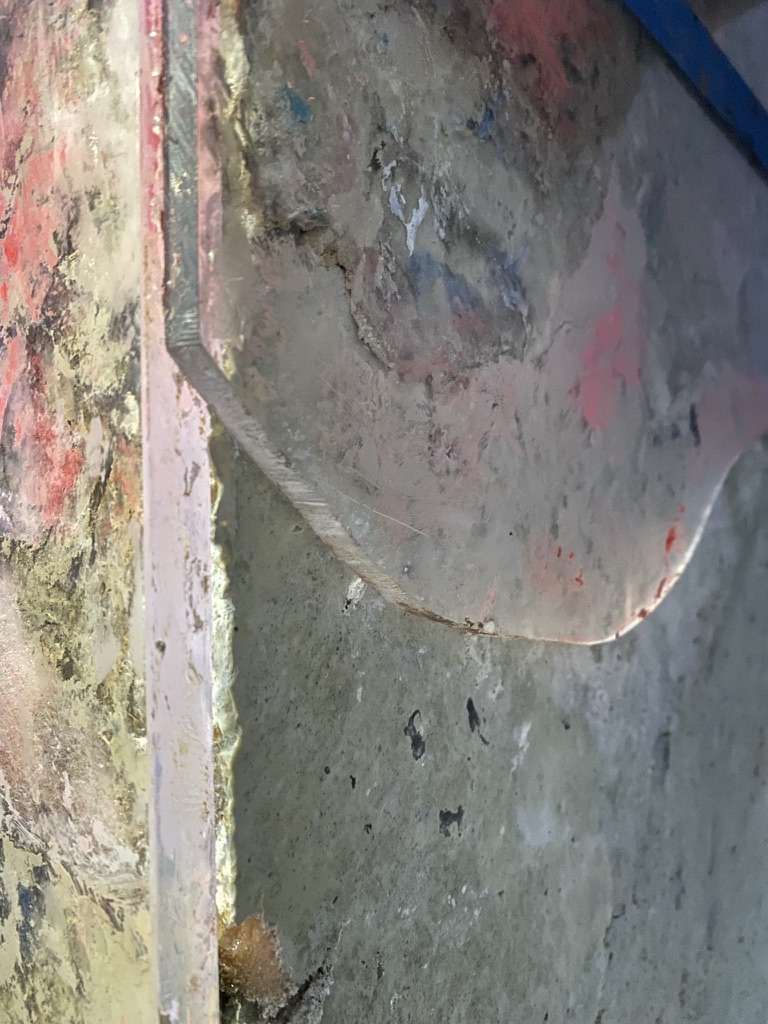
One standout contribution for me was Catriona Robertson’s WYRM Deep Time Concrete in which collapsing classical columns and slices of urban geology crammed a tiny, vivid space, making for a convincing monumentality despite using relatively lightweight materials.
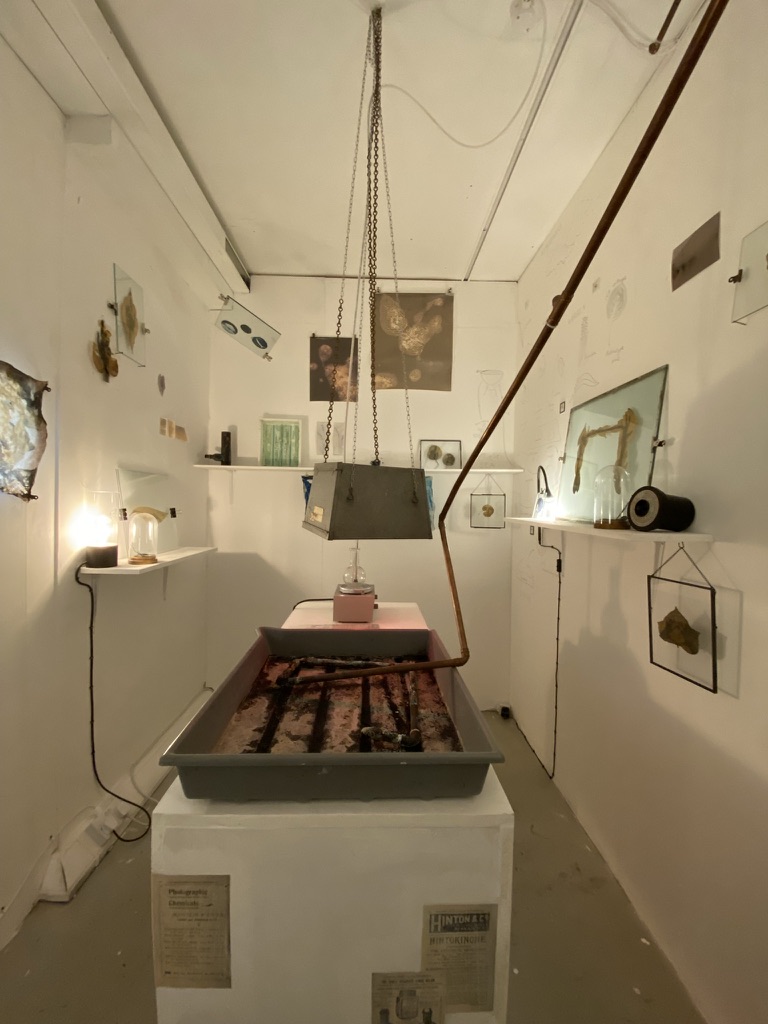
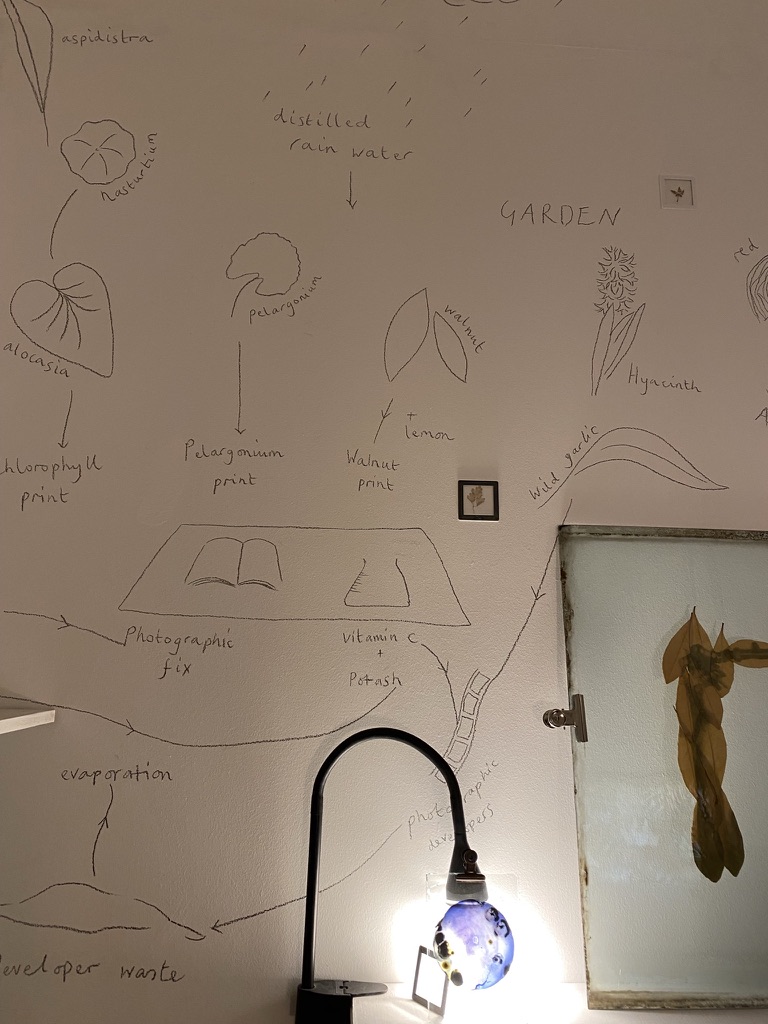
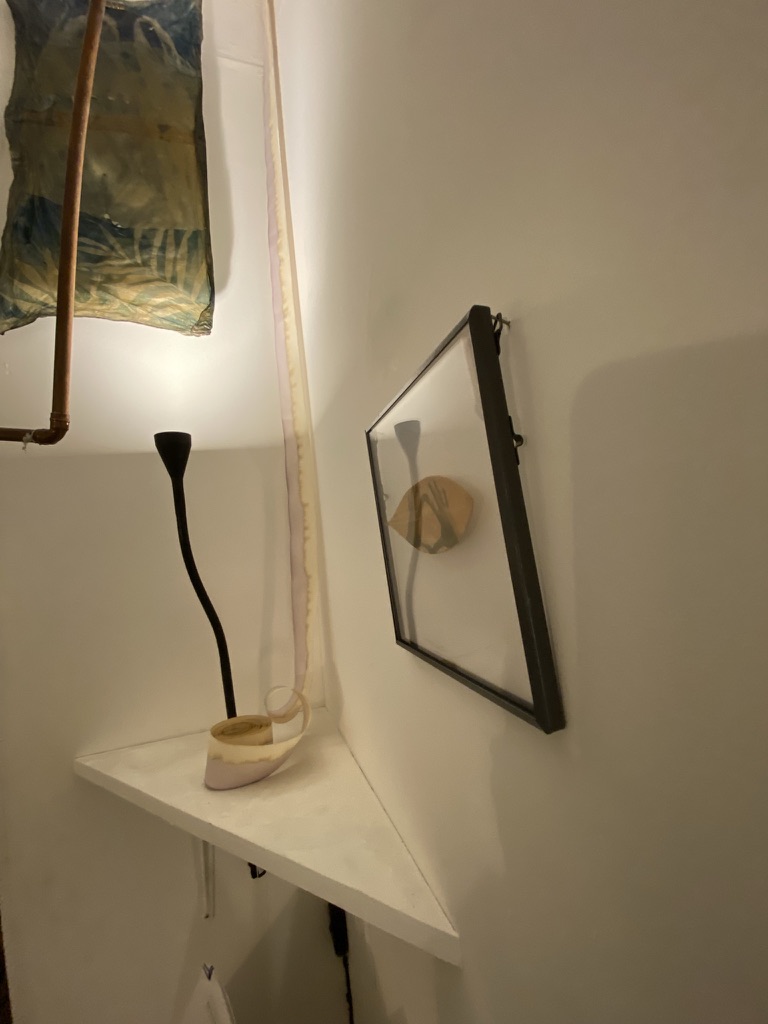
The research of Alice Cazenave and Hannah Fletcher into chemical free photography was presented as a laboratory of curiosities with diagrams, research papers and experiments in progress. The feeling was that the workers had just popped out for a few minutes. The use of lamps to light the space and drawings made directly on the walls enabled this installation to work somewhere between stage set and studio.
Charlotte Osborne’s wonderfully exuberant Harvest Womb used forms made from sugar presented in specimen jars, suspended and dramatically lit. They are intestinal in form, evoking associations to cell structures seen through microscopes – of the biosphere. The space itself was enclosed and narrow with warm pink walls, giving the feeling of a bodily interior place.

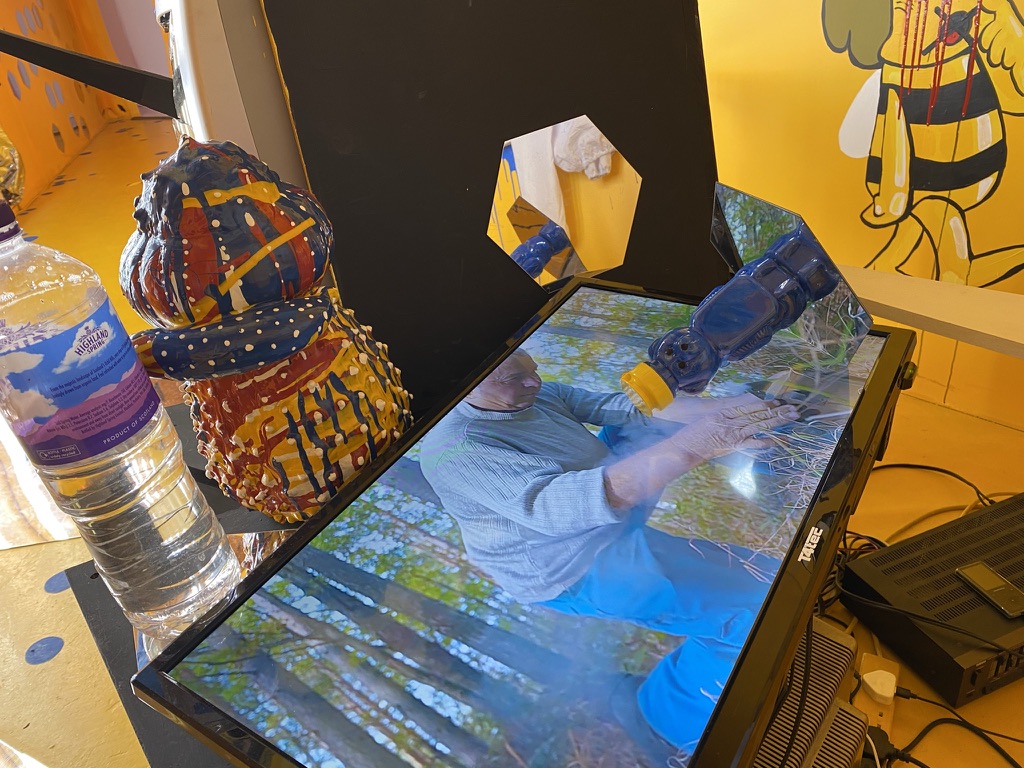
This work and that of Food of War collective in their piece, Colony Collapse Disorder, also had a strong olfactory element. The latter was concerned with the phenomenon of disruption to beehives known as CCD that has been increasing since 2006 and is widely thought to be linked to pesticide use, loss of habitat and changing beekeeping practices. The smells of sugar and honey pervaded both spaces. The use of video in Colony Collapse Disorder (see first image) is an important element of the work, both for the content conveyed and in the way the screen is placed horizontally, amongst a jumble of related objects, as part of that upheaval and disorder of the beehive.
I had the labyrinth to myself which may have made the experience more intense, and for some reason, I kept my face-mask on throughout, which certainly added to the claustrophobic affect of some of the spaces.
All photographs by Liz Clifford
 Liz Clifford