I have the exciting prospect of an opportunity for screening my video works alongside sculpture, print and drawing in my presentation for the final major project of my MA.
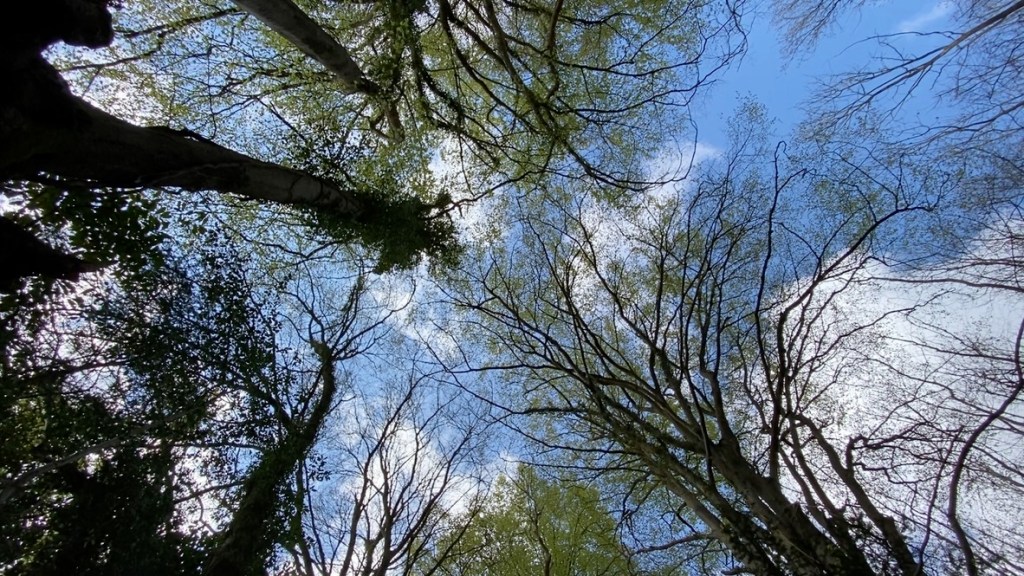
I have three pieces to present, two videos and a slideshow, all of which are made from my observations on Byway 745. One of those started last year, but only realised now, is the video of the seasonal changes to the beech canopy. The camera was set up for a few minutes weekly in the same spot throughout the year. The viewpoint is straight up from the ground and the shots I’ve decided to use are all wide angle. By using this view point rather than the traditional fixed vertical perspective of landscape painting, I’m aiming to place the viewer within the Critical Zone – that place between lower atmosphere and the bedrock, within which life on earth happens. I’m also engaging with Hito Steyerl’s essay In Free Fall: A Thought Experiment on Vertical Perspective in which she charts the rise of linear perspective as the dominant tradition in Western Art and the triumph of today’s ubiquitous aerial view. The view from above has become a norm of the 21st Century thanks in part to Google Earth, Google Maps, drone footage, computer games and feature films. In my own practice I use contours taken from the Ordnance Survey map to help contextualise work made about a specific landscape. In this particular work the view from above flips to become the view from below.
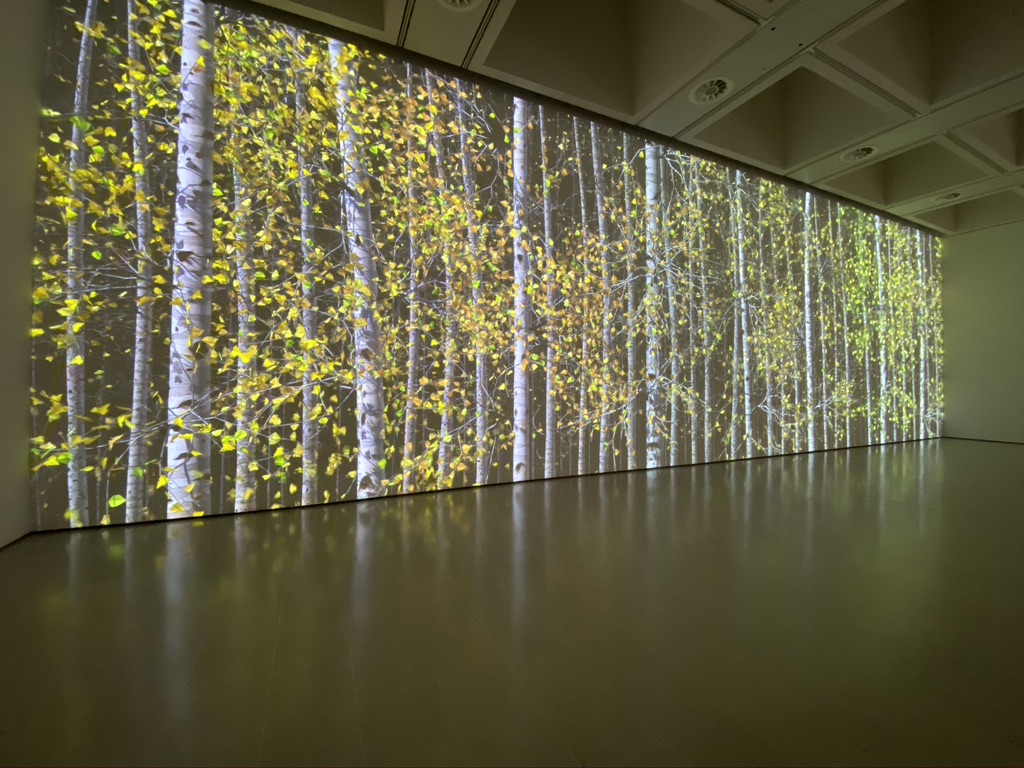
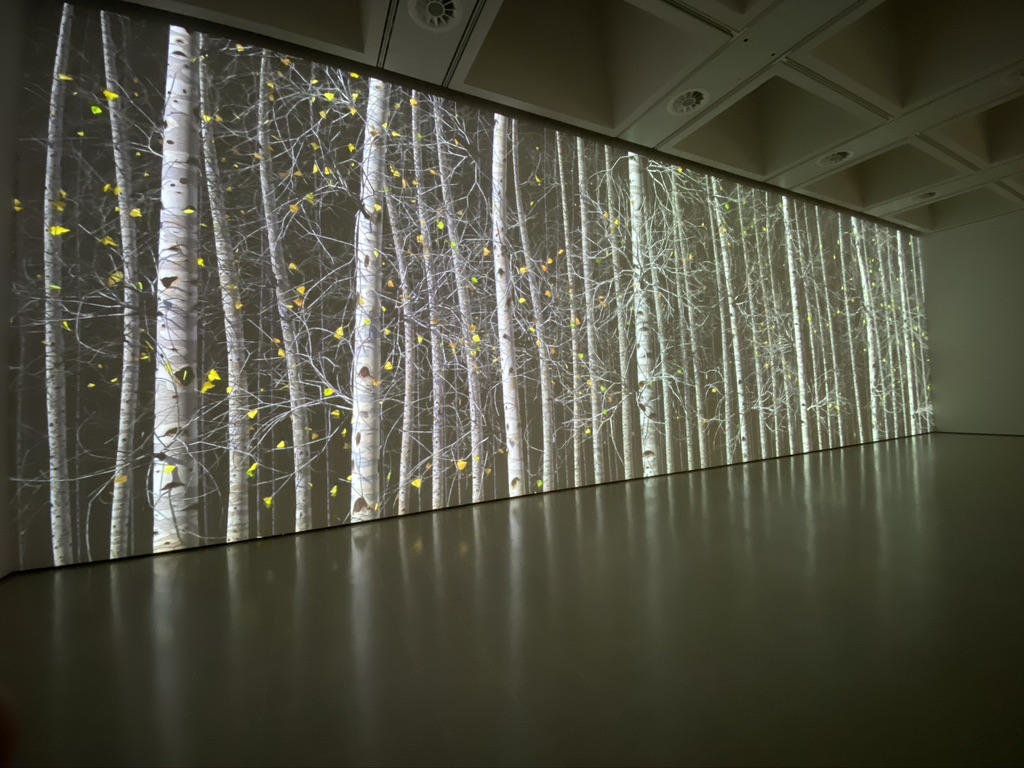
The work owes much to Jennifer Steinkamp’s Blind Eye 1, shown at Among The Trees in the Hayward Gallery last summer. Her piece is a 3 minute computer generated video projection of the seasonal phases of a fictional a birch grove. The viewpoint is looking straight into the trunks, not taking in the tops or the roots of the trees. There is no sense of what is beyond and any movement comes from a gentle swaying of the trunks and a suggested breeze that ruffles the leaves. My work runs for 11 minutes to coincide with the two other pieces screened in the same space. The piece starts and finishes with a moving camera shot, up from the track and down again at the end.
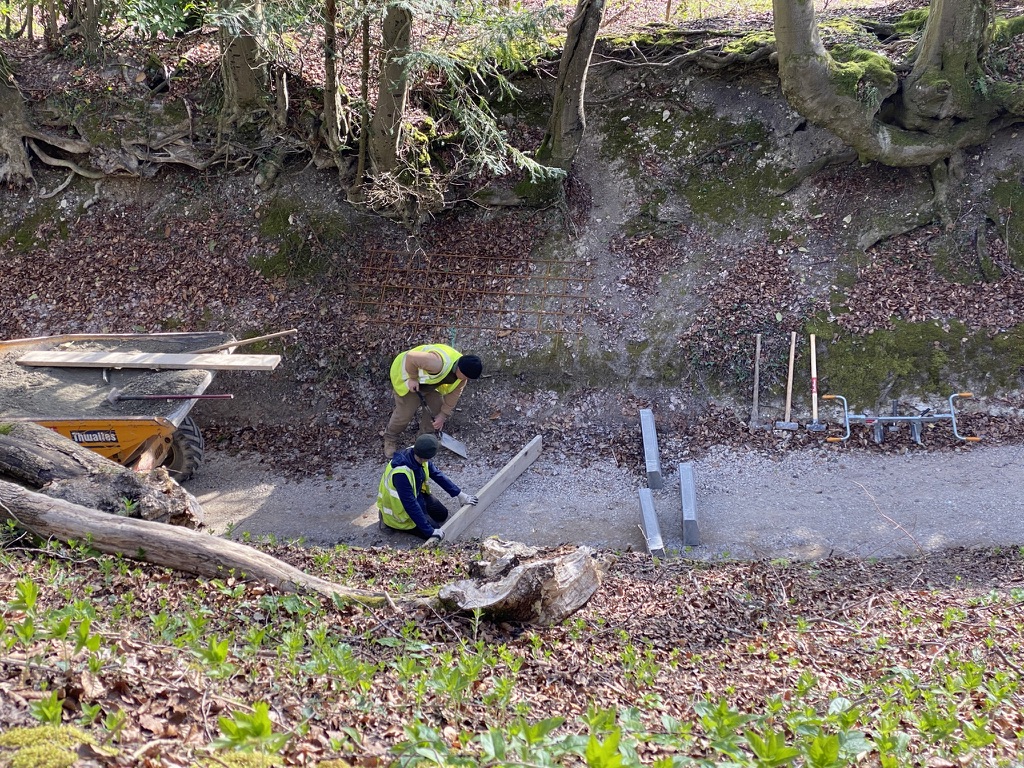
That end shot brings the viewer down to a changed surface. The second video project concentrates on the changes witnessed on the ground over the year. It presents discoveries and juxtapositions along with observational documentary footage of work undertaken by contractors for Hampshire County Council’s Countryside Access Team.
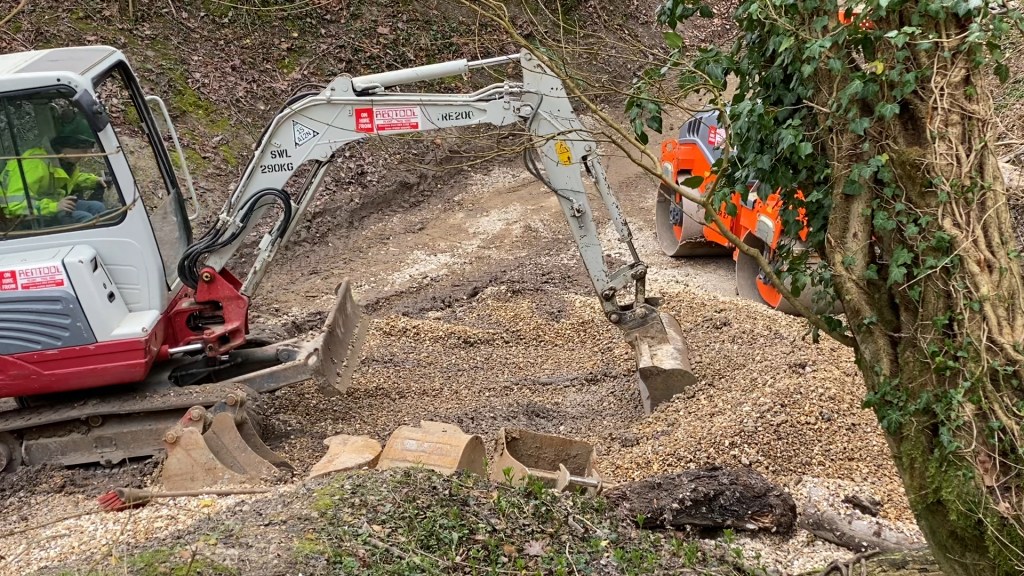
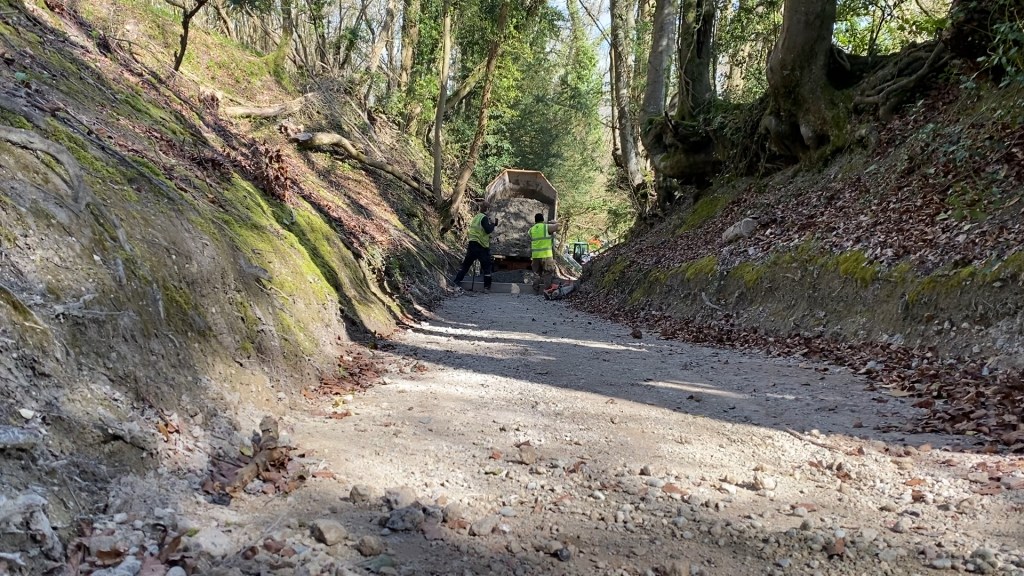
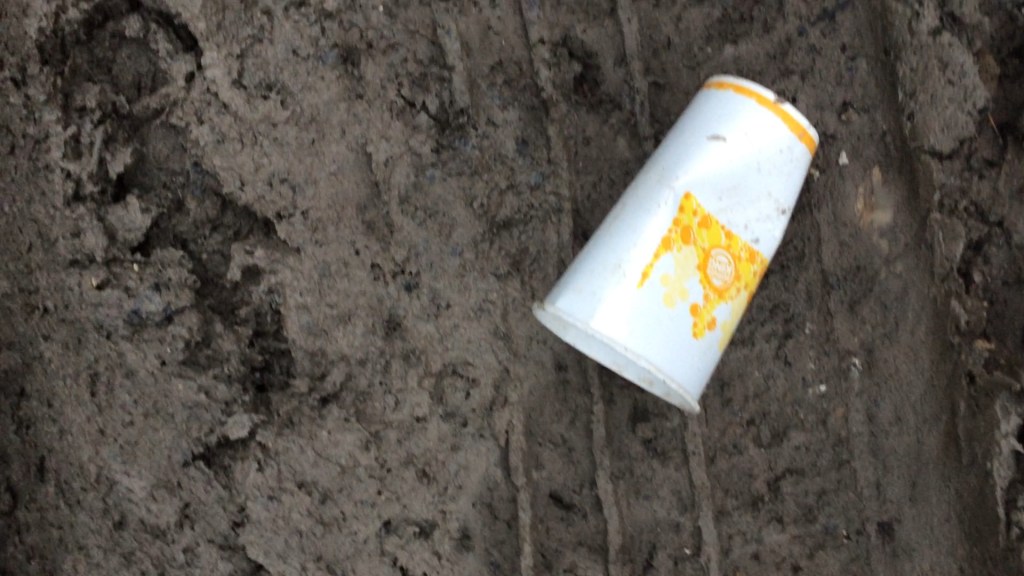

The soundtracks of both videos are mixed and audible in the space. The role of these videos is partly to establish the geographical context for all the elements of the work, and to provide evidence of the provenance of many of the objects used in the sculptures and represented in the drawing on display. The approach is that of the ‘fly-on-the-wall’. The camera is the silent observer. It is sometimes locked off and sometimes moving. The sound track is entirely made those field recordings and does not contain narrative voice over. The process of filming the workers on the track took place over a period of 4 weeks in April/May 2021. I had sought permission from HCC to officially document the process, sending them a CV and proposal early in the year when the notice went up and the Byway was closed pending the start of work. I heard nothing until suddenly a reply came rejecting the idea on the grounds of health and safety concerns. In the event, I introduced myself to the contractors, who had been made aware of my request, and we came to an agreement that I could film the works, so long as I stayed well out of the way of the diggers and dumper truck. Over the weeks, I was actually able to build a rapport and get close-up shots and snippets of dialogue as well as wide shots from a safe distance. This change over the year on the surface of the Byway is as dramatic as the trees losing their leaves. By the time the leaves have grown back, the surface of the track has changed completely, the deep ruts in the chalk have been filled in with plastic drainage piping and hardcore, and concrete thresholds have been built at regular intervals to prevent the top material being eroded away. I was witnessing the laying down of part of the Quaternary layer of geology – made ground.
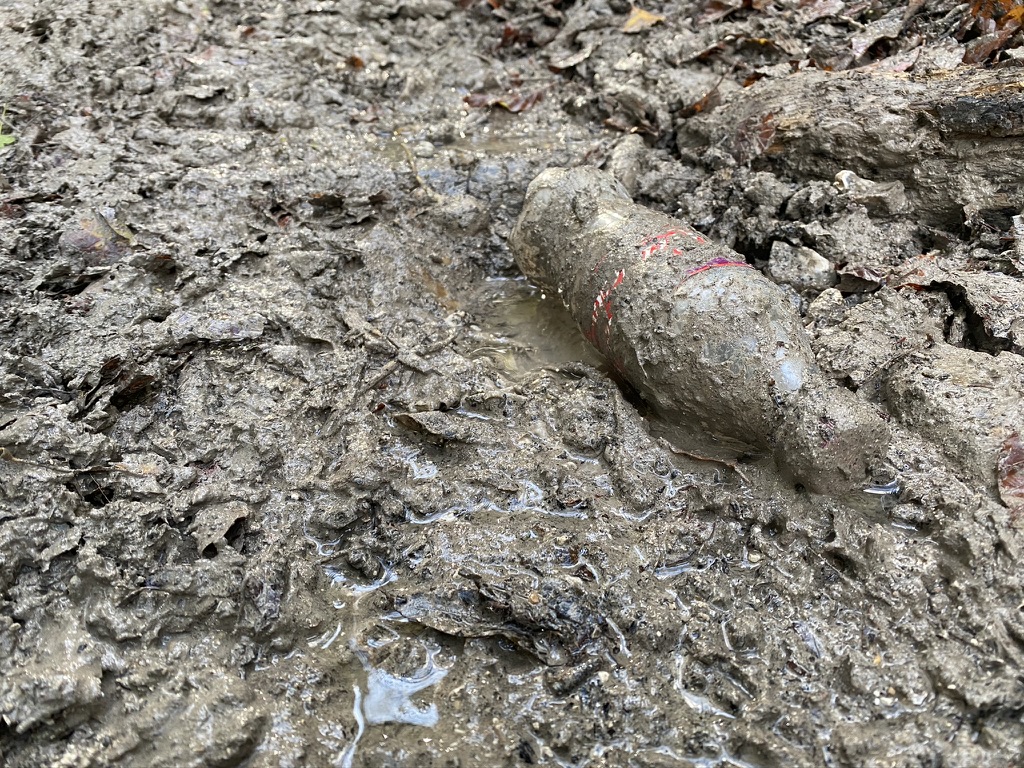
The slideshow is made up from the collection of still photographs taken during the year. Each image is visible for 15 seconds on a continuous loop. The shots are of the spot on the track chosen for the Observatory and objects that have been found there and are lurking in the sculptures. All 3 screens are running simultaneously for their 11 minute duration, the slide show being screened on the wall perpendicular to the two videos. A Year Above Byway 745 is screened high up on the wall above Byway 745 Observatory, which is screened at eye level. The audio is only emitted from that one screen. As a result, the viewer will be drawn to that one but will have the other two in their peripheral vision. If they glance away at the other screens they will catch glimpses of objects that are present in the exhibition space as well as recurring references to the geography of the landscape. Whilst editing these works, I’ve been forced to look harder at the place I’ve been working with. New connections have been thrown up and overlooked materials have been thrown to the fore. Previous work has used moss as the element of biomass, but when confronted with these images I see that the beech leaf is the most common form of biomass in all of them. This raises the question of why they are not present in the sculptural work and prompts me to make use of them.



All photographs by Liz Clifford.
 Liz Clifford
I find it so interesting reading your project plans and involvement with Byway 745 Are you going to include any of the writing/text in your piece? It’s almost like an ode to the Byway.
LikeLike