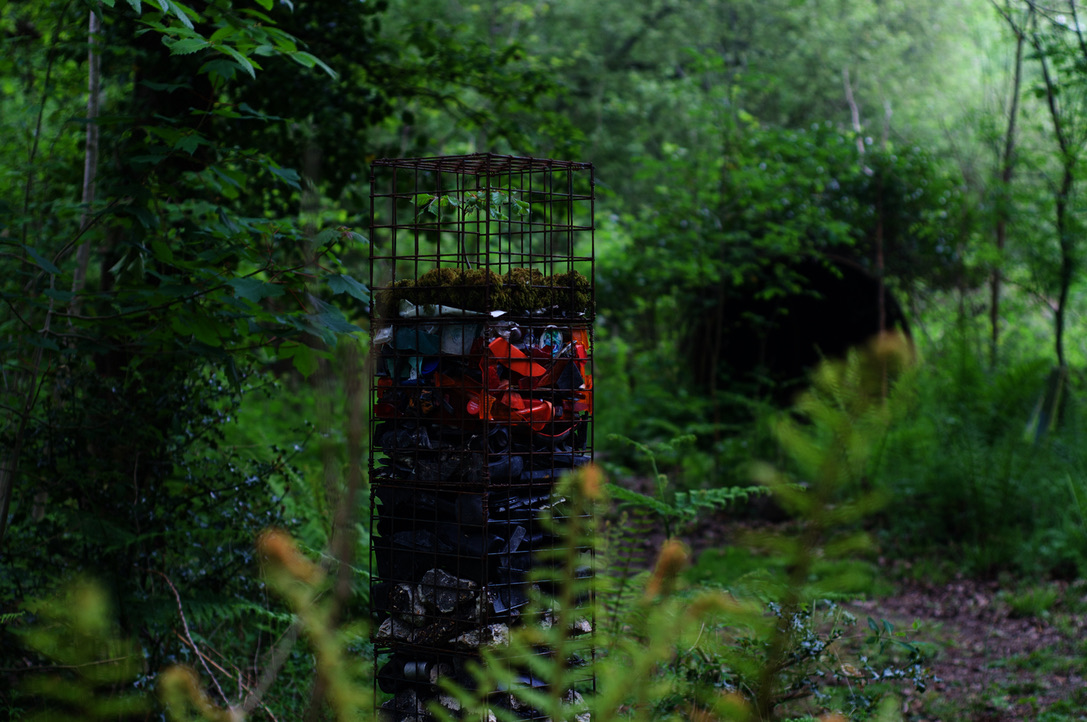
Earlier in the year I answered an open call and had my proposal accepted for a site specific work as part of an artist-run competition run by Little Forest Land Art. The site is one of ancient woodland, on the edge of a meadow, on what was once a pig farm.
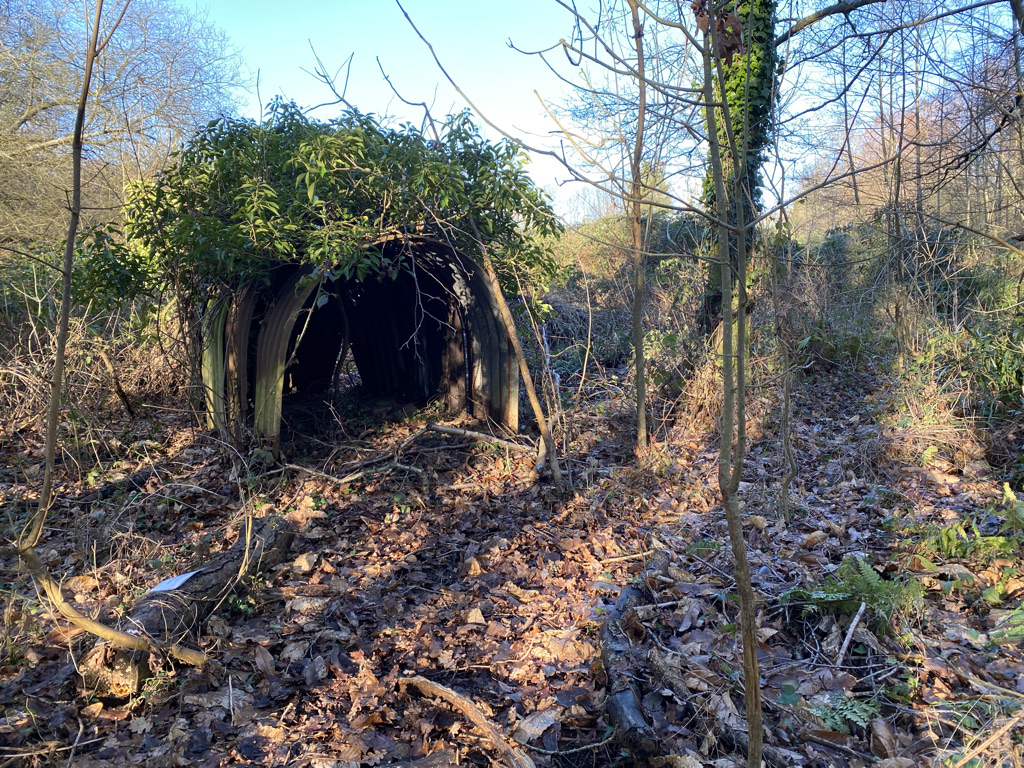
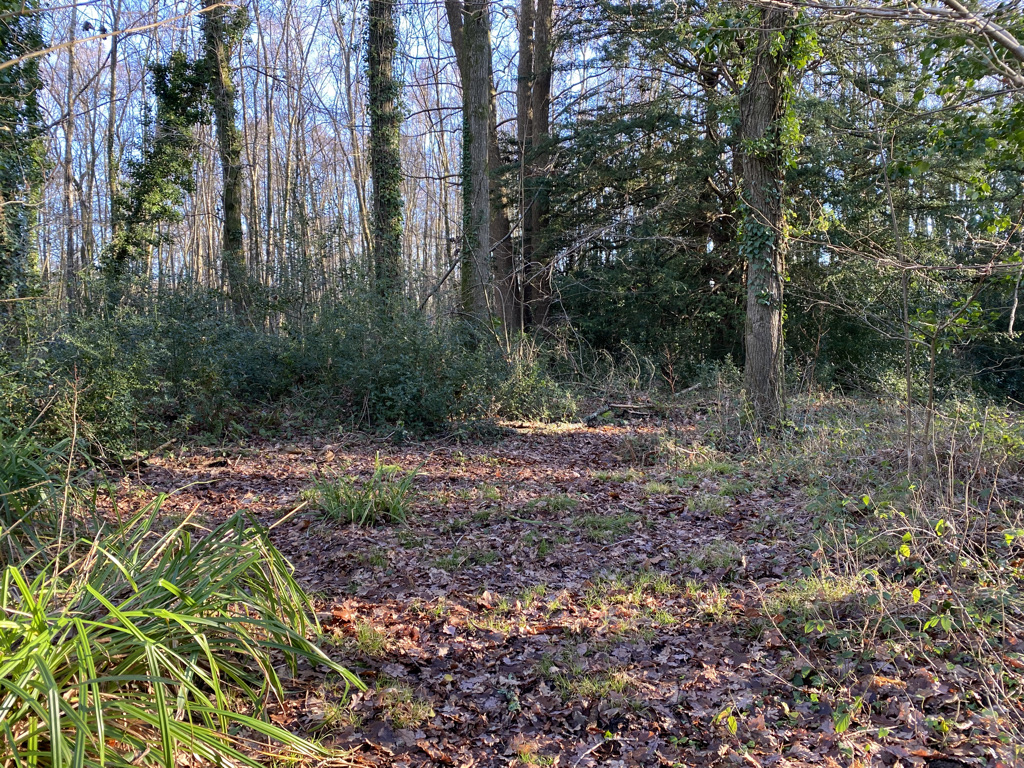
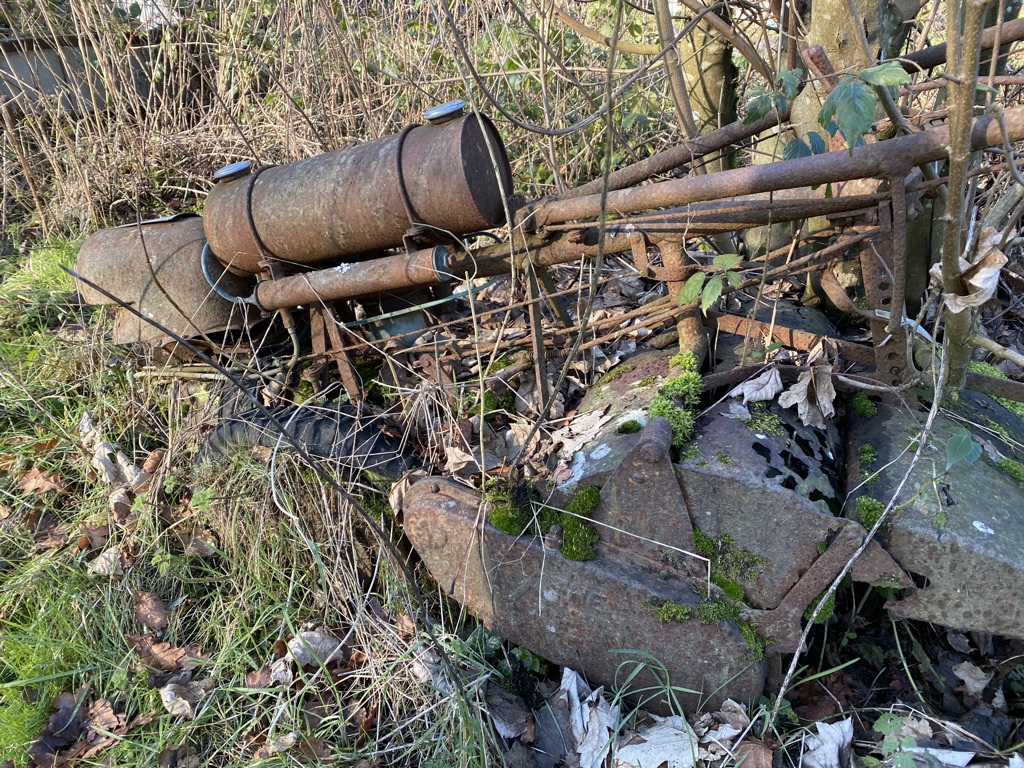

A woodland path has been created and artists have worked directly with materials found on location as well as installing pieces made elsewhere. My proposal was to build my sculpture On Thin Soil in the area of the woodland that still has evidence of the farming activities. A series of derelict pig shelters are being gradually reclaimed by trees, as the images above show. The work had previously been sited during the Autumn in an urban park with a completely different feel to this tranquil rural setting. However, I was keen to juxtapose my piece, a third of which consists of plastic and other industrial waste materials that I have found in a protected area of The South Downs National Park, with this verdant location knowing that the owner of the site keeps finding vast hoards of rubbish buried there.
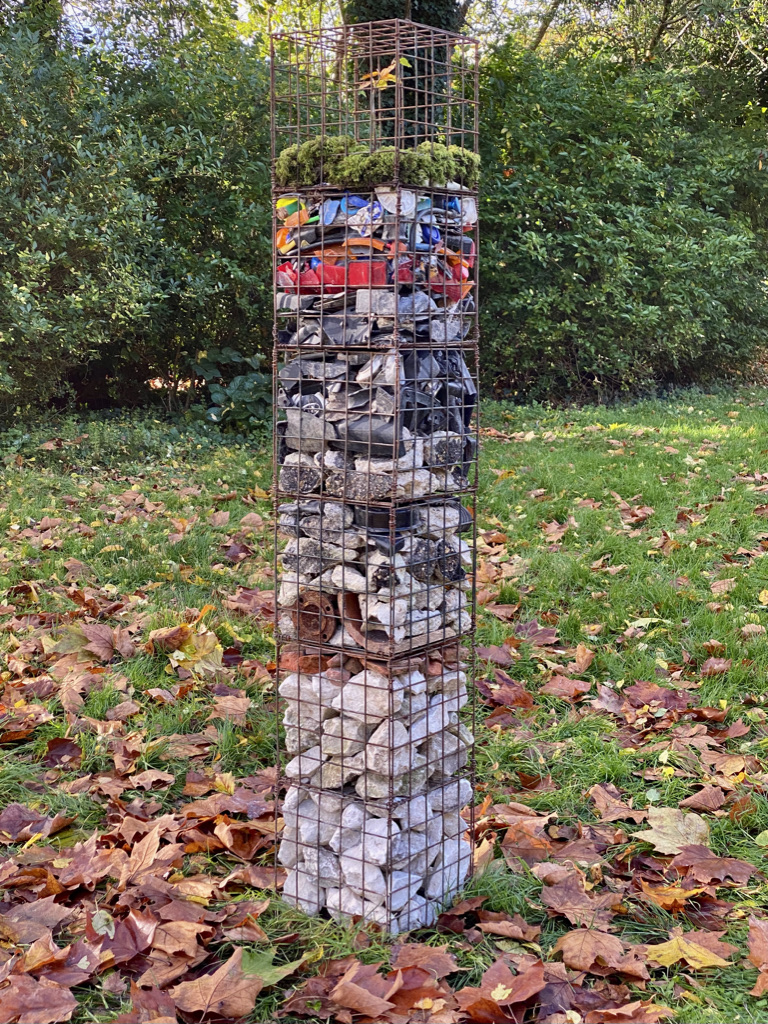
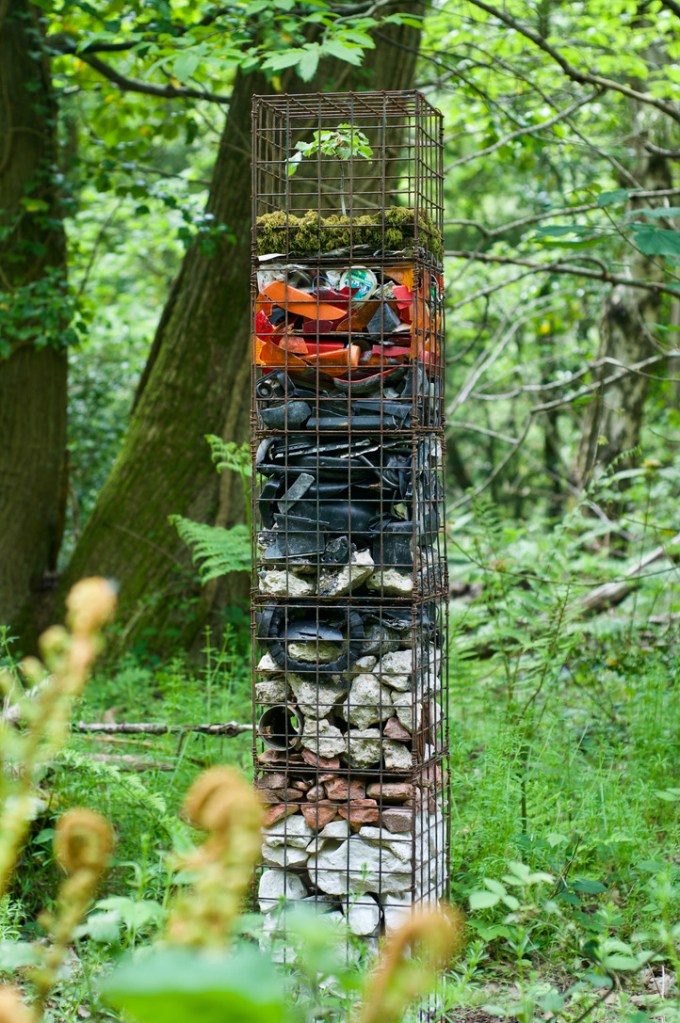
The piece is a visual metaphor for what’s known as The Critical Zone by earth system scientists. That is the zone of the earth’s surface from the upper bedrock to the lower atmosphere where life exists, and where that life has radically modified earth’s atmosphere and geology. I use stacked gabion baskets to hold the materials together in layers. From chalk at the bottom, then brick, concrete, steel, plastic and finally soil, living moss and a beech sapling. The gabion basket is a form associated with large scale engineering projects like road building and flood defences and here I’m also thinking of core-samples taken from the earth’s surface when prospecting for mining.
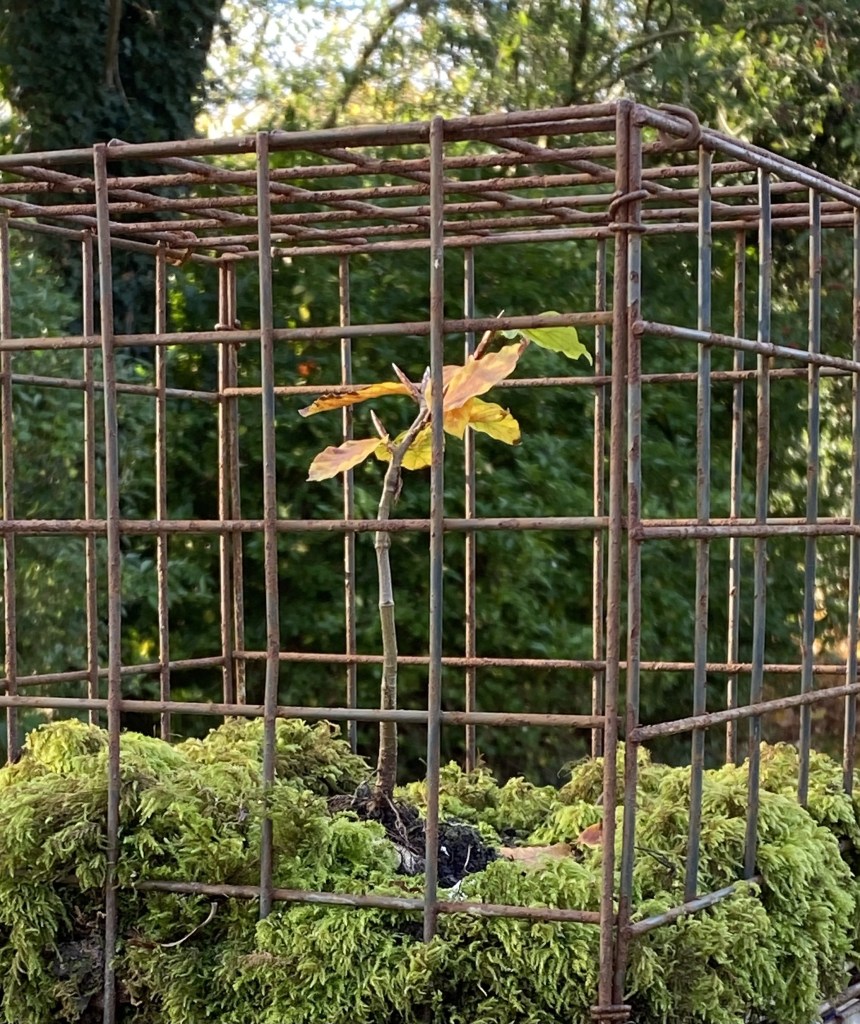
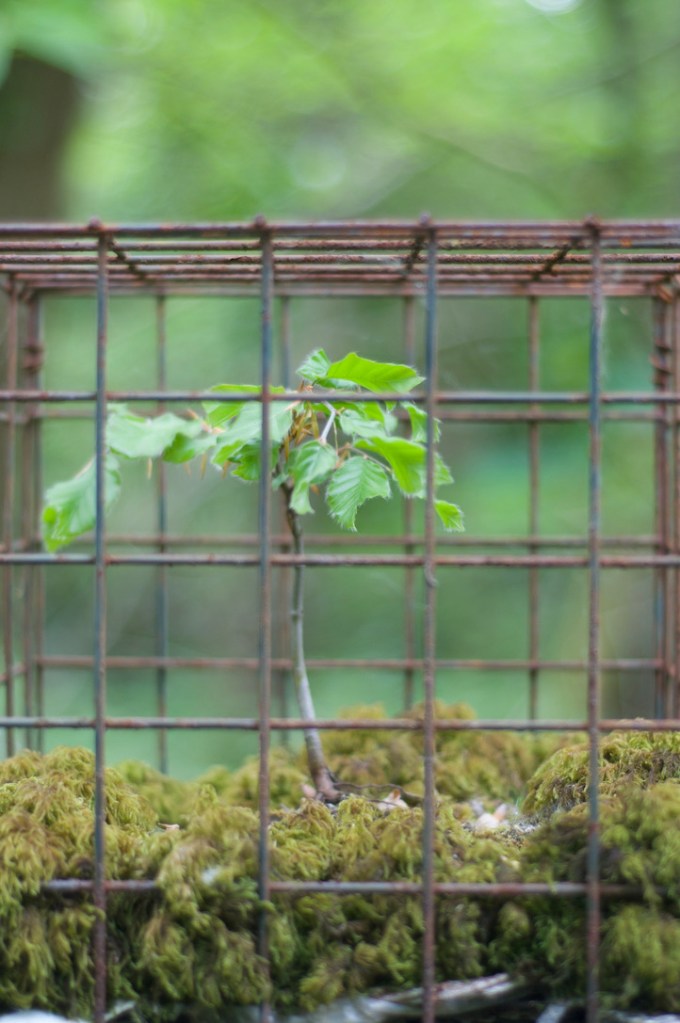
The beech tree in the top layer was ‘rescued’ during the Covid lockdown 3 years ago. It had seeded itself on the track right where it would be run over once the 4x4s were allowed to drive again. I potted it up and now it’s growing on a thin layer of soil over the pile of plastic waste that I’ve been picking up as I walk. The tree and moss represent the 1 of the ratio 1:10, biomass to human generated deposits in an average square metre of earth’s surface. The layers of plastic, steel, concrete & brick are becoming the geology of the future and a lasting human impact on earth, the quaternary layer in the new geological era known as the Anthropocene. The top layer of the sculpture thus references the depletion of biodiversity but also aims to be read as a message of hope for resilience and regeneration.
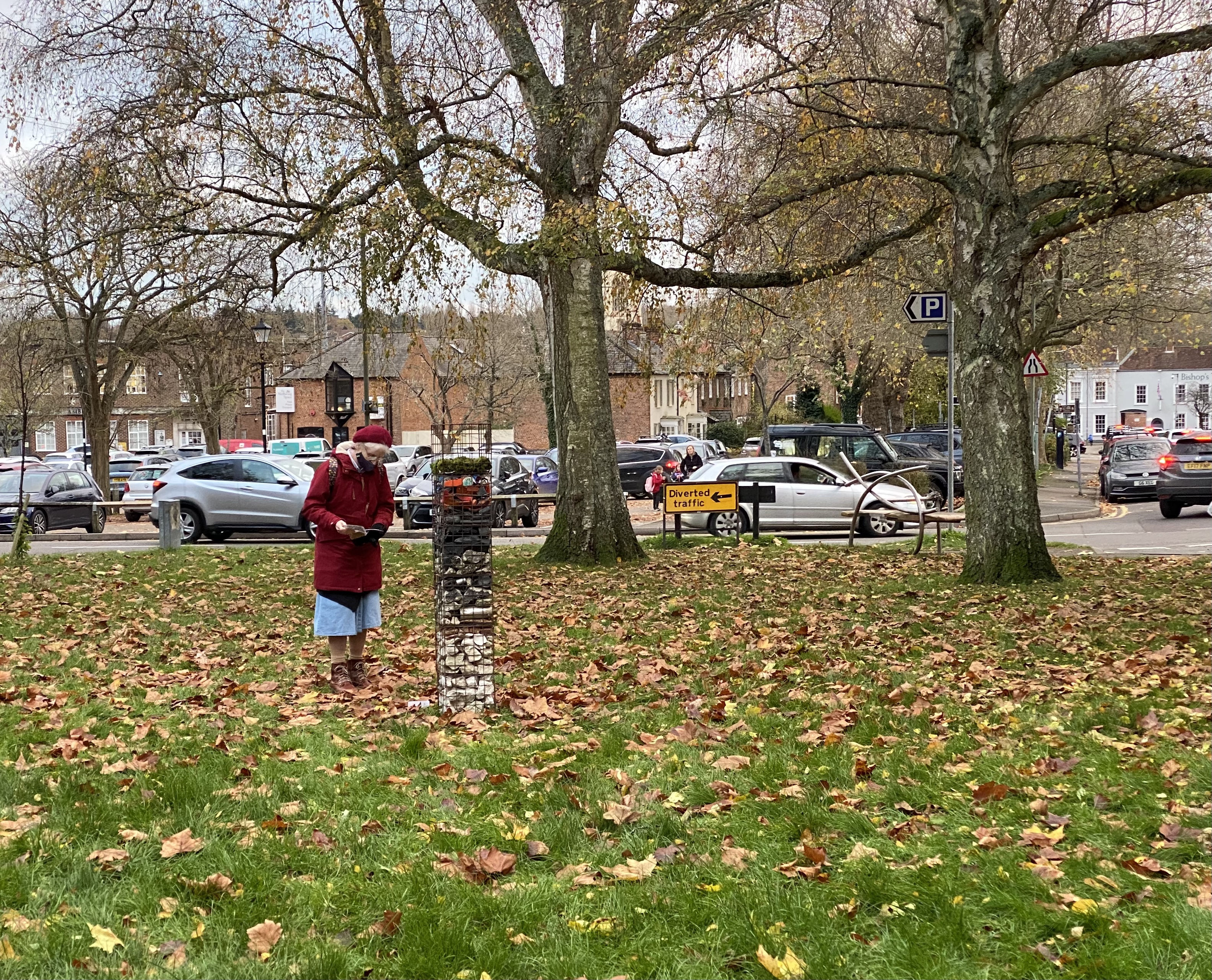
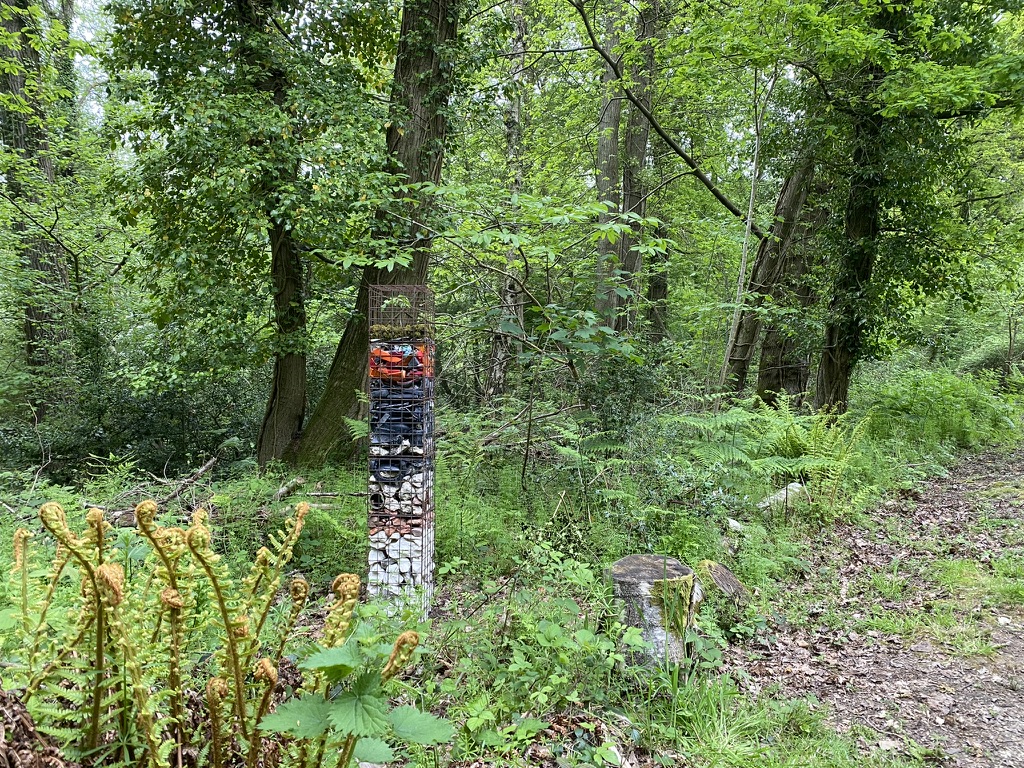
The urban environment of the UCA Farnham Sculpture Garden was a very visually busy location for the work, even though it had a clear flat site. Although it clearly read as a sculpture, it had to compete with architecture, street furniture and vehicles for attention. In the woodland context, however, the piece immediately stands out in contrast to its surroundings. This is in terms of colour, texture, materials and the verticality of the piece. There is a shock element to coming across the piece in the natural landscape. It is not visible from far away and creates a surprise as the viewer turns a corner on the woodland path. Perhaps the time of year has also helped, in that the extreme May green of the location makes the red plastic really jump out. The little tree has its new leaves and is sheltered from too much sun by the adjacent chestnut tree.
I had the opportunity to talk about the work to a small audience at the opening evening, which allowed me to explain the thinking behind it and the choice of its site near the derelict pig shelters. This was a very rewarding, confidence-building experience with the added bonus of being awarded the Little Forest Open Competition Prize for 2023.
All photographs by Liz Clifford.
 Liz Clifford