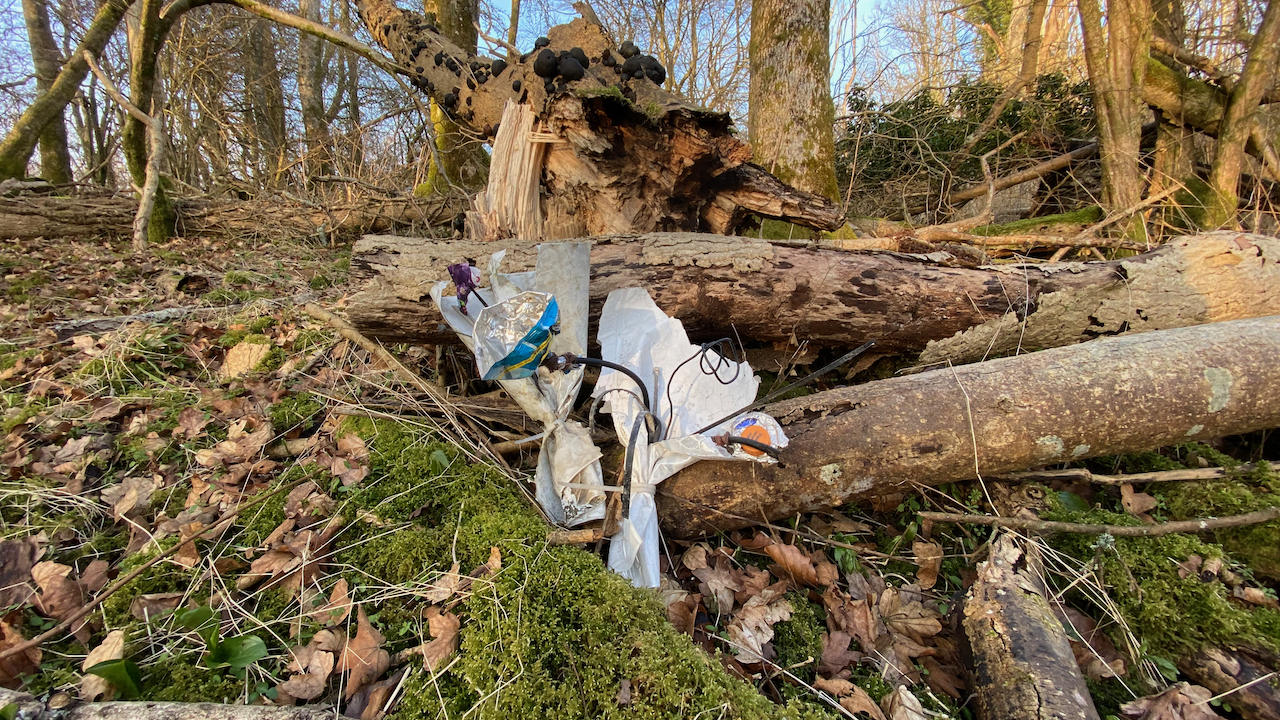
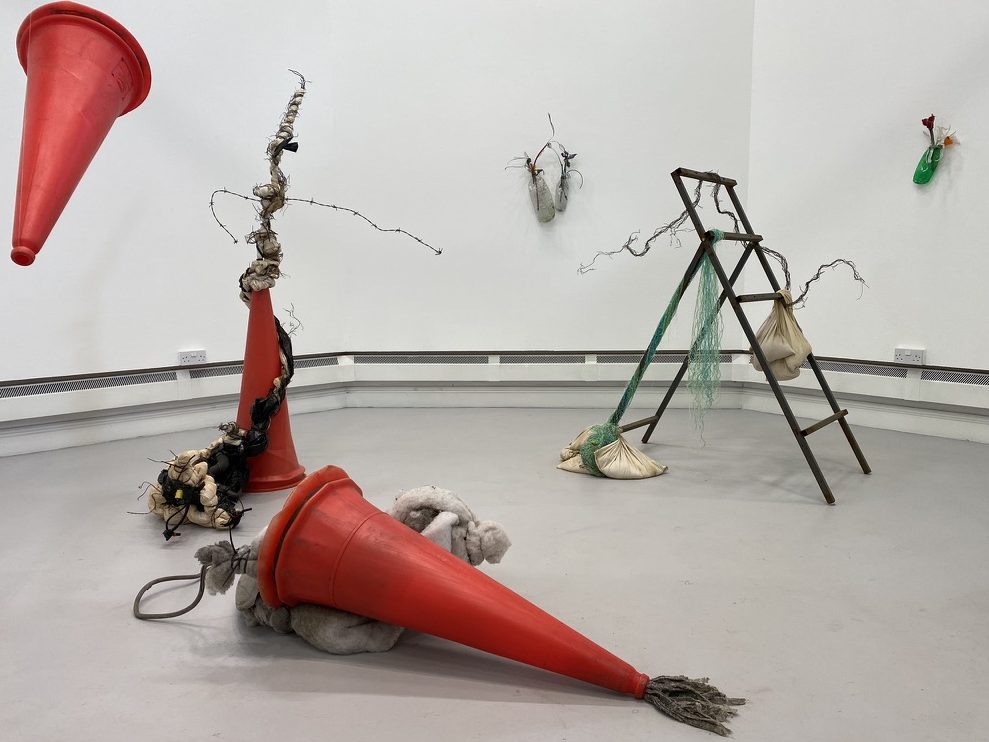
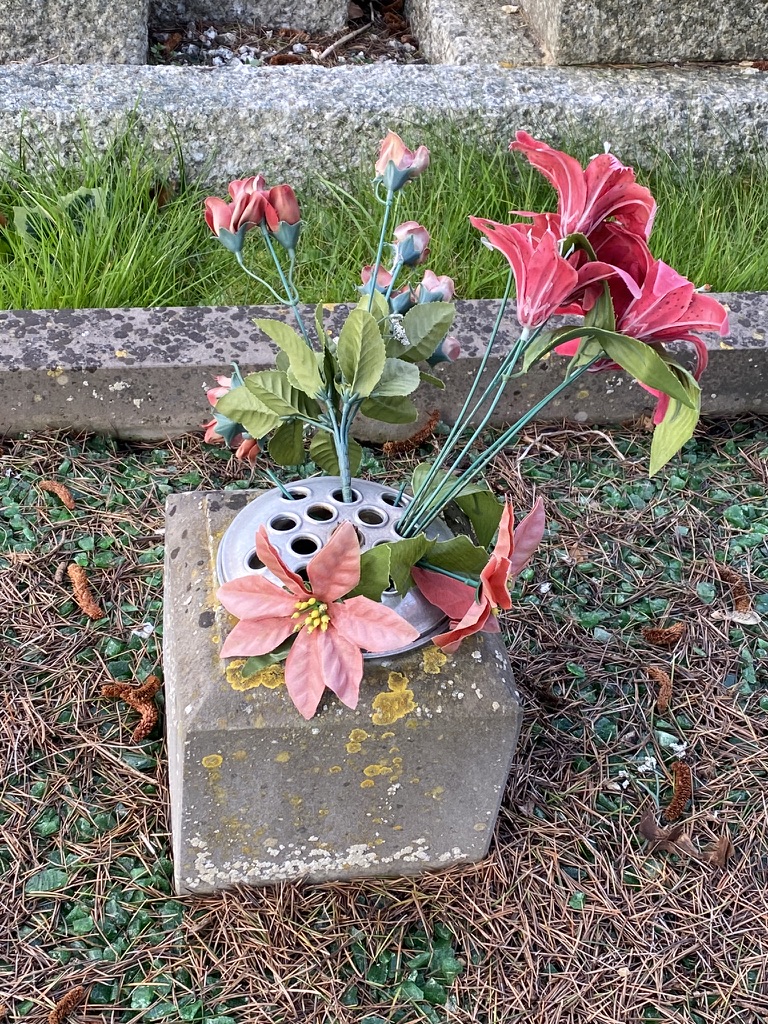
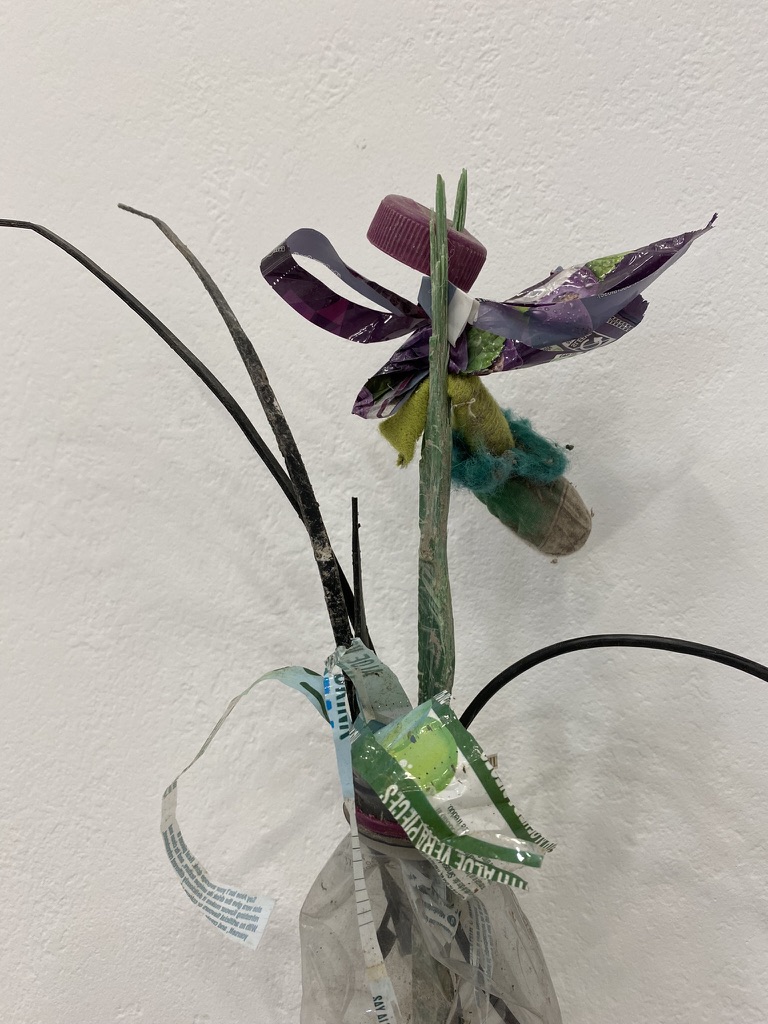
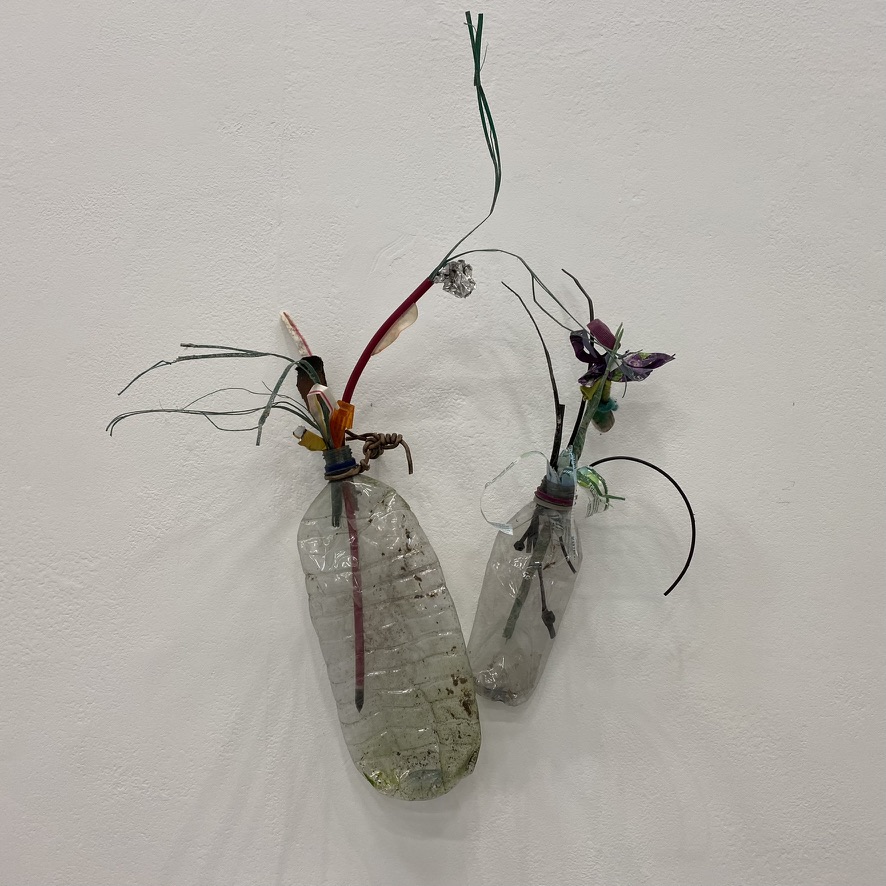
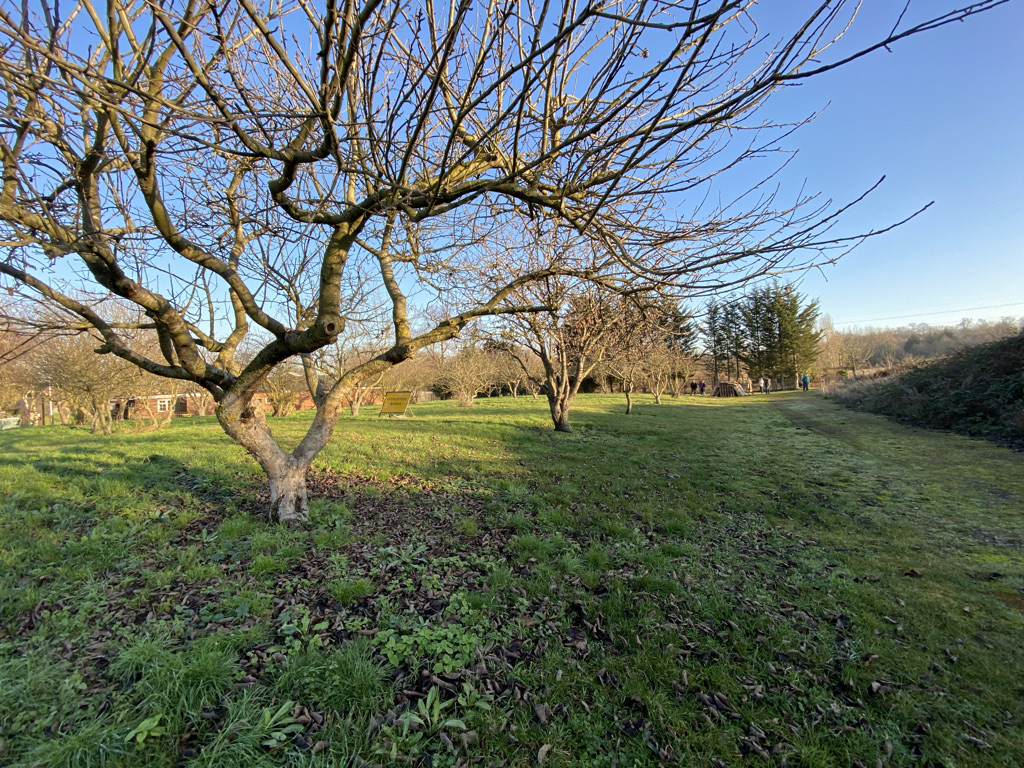
Over the past year I have been working on a series of small assemblages made from plastic waste collected during my daily walk in the Hampshire countryside. These ‘bouquets’ and ‘floral tributes’ were started during my residency at Chapel Arts Studios, discussed in my previous post. The experience of the daily drive on busy A roads, coupled with arriving at the Chapel via the surrounding Andover Cemetery drew attention to glimpsed roadside tributes. These grassroots memorials are ubiquitous and anonymous for the passing motorist. Often there is nothing left of the bouquet of flowers but the plastic wrapper and cable tie. Just a shred of plastic that endures as a reminder of strangers’ grief.
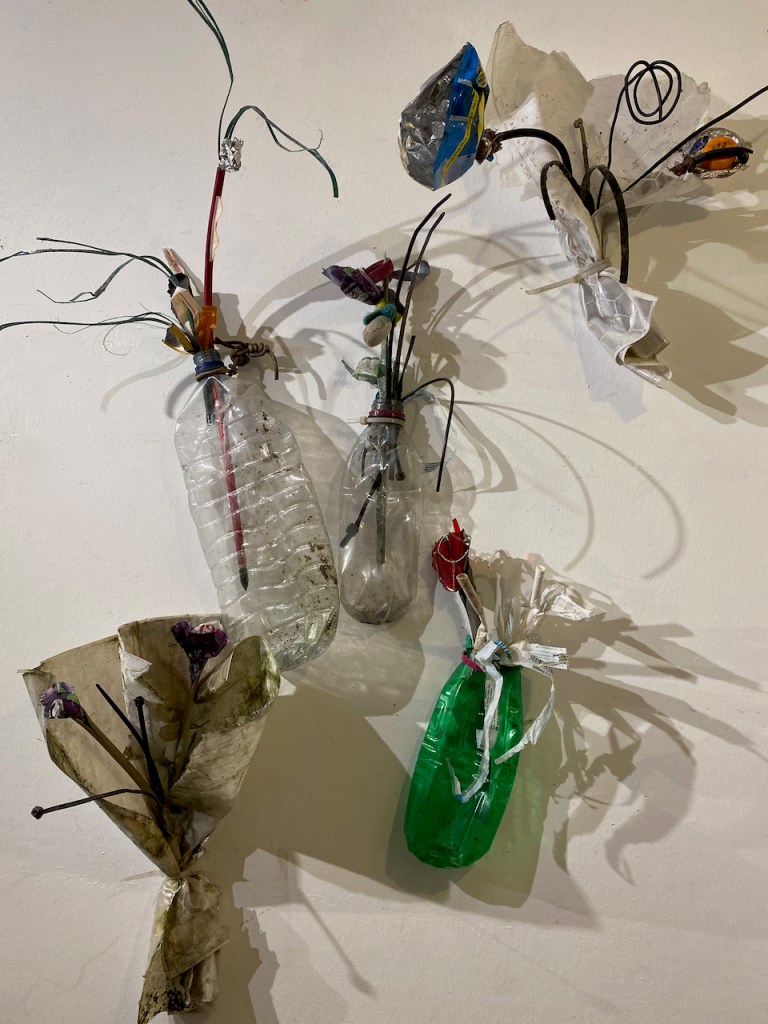
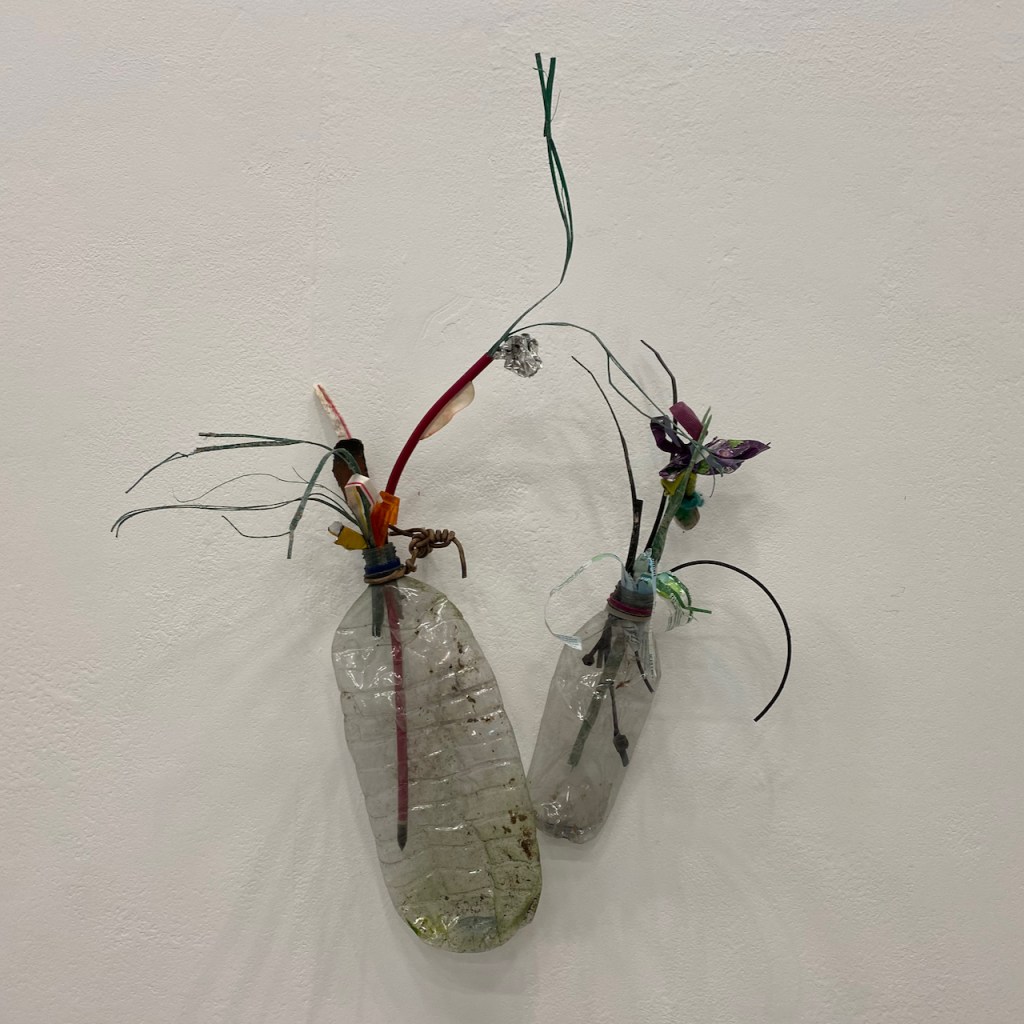
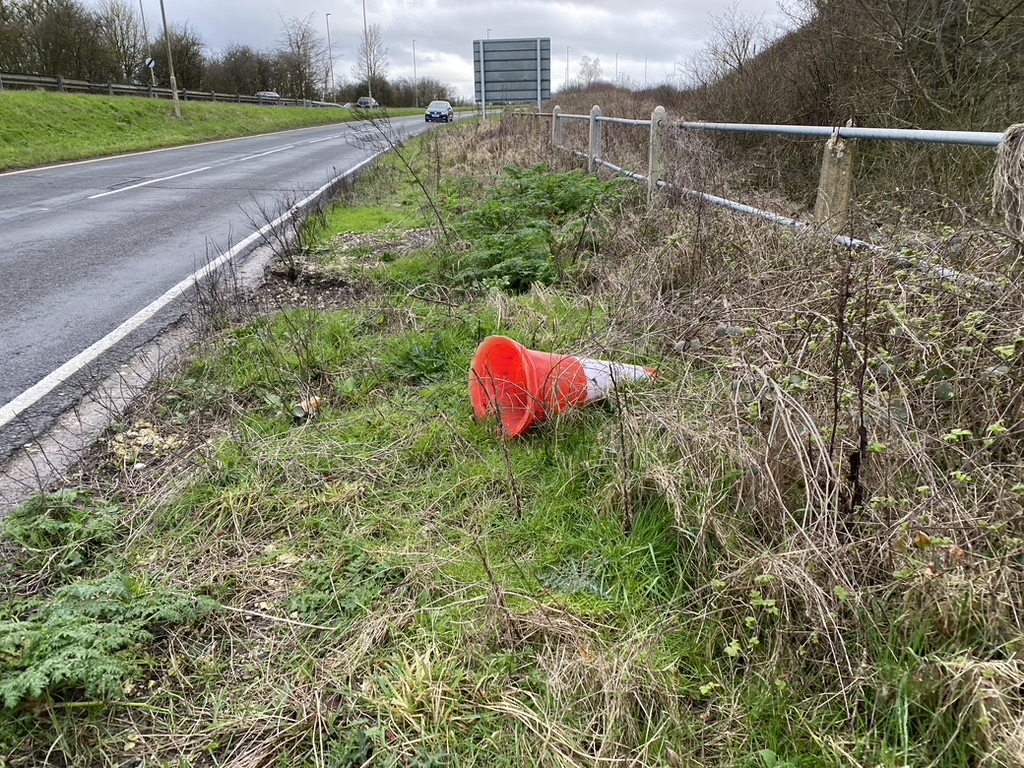
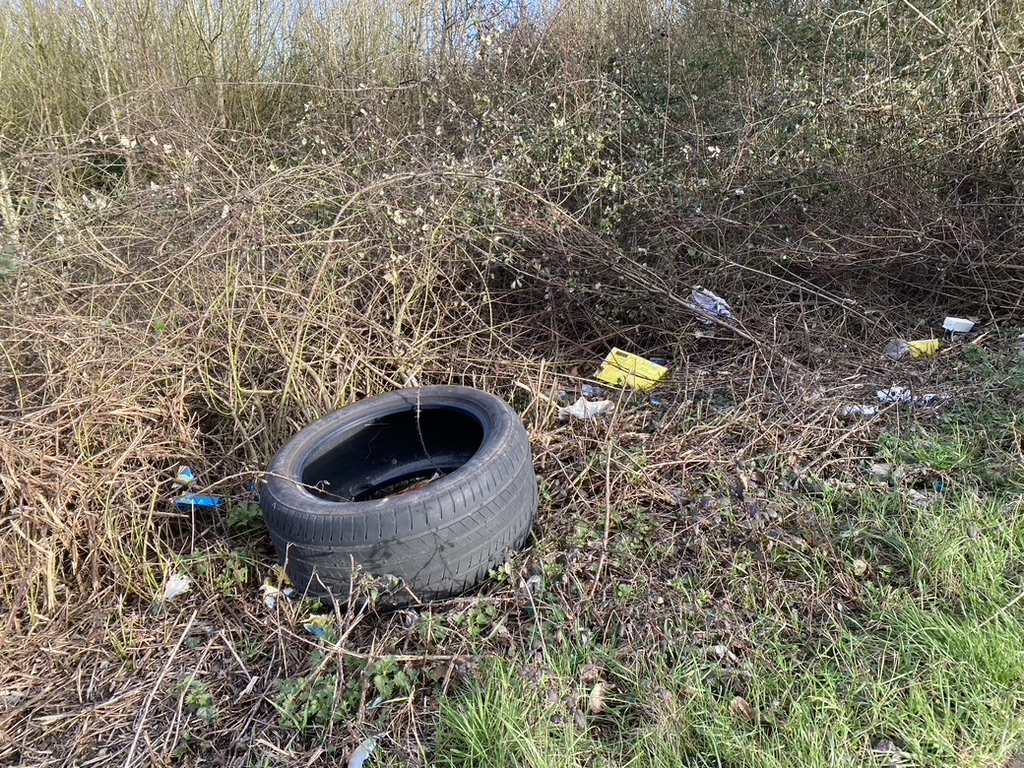
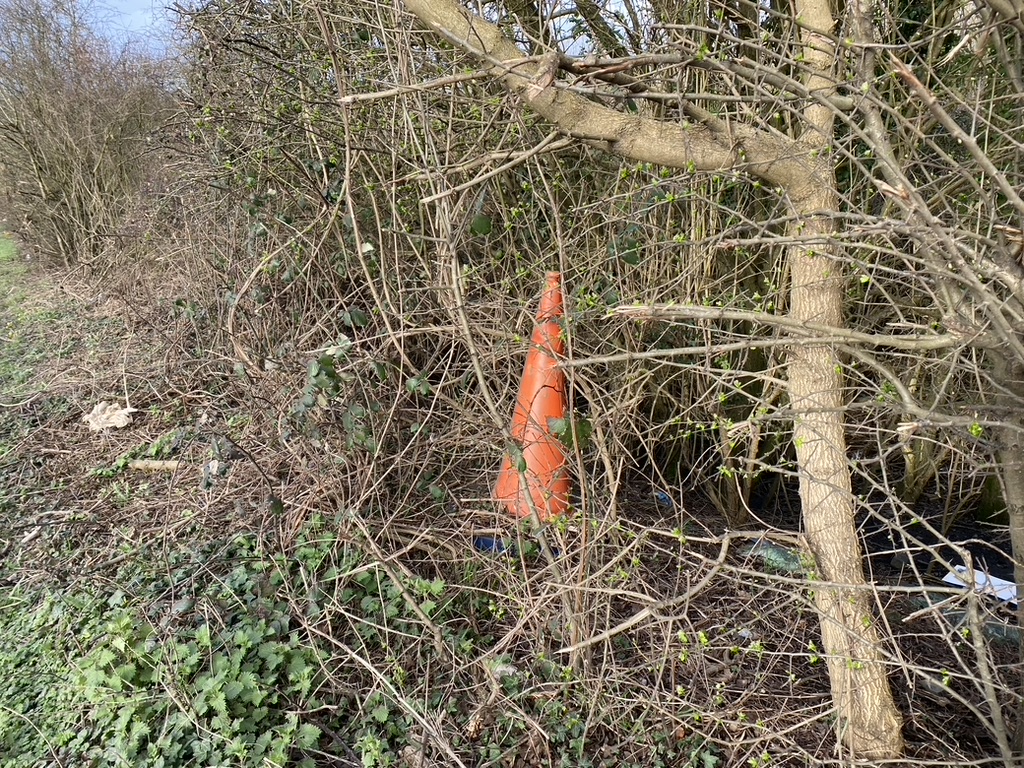
Where I walk is very rural and essentially unspoilt but even here plastic waste accumulates. It is not cleaned away as it is in a town, although it is certainly not abundant in the way it is along our A roads. Each time I walk I return with something, from crisp packet to cable tie. The waste comes from recreation, agri-business, general road users cutting through the lanes and fly-tipping. Weird juxtapositions are thrown up between domestic objects, packaging and broken infrastructure. Still thinking of roadside memorials I have continued to build these assemblages, initially mounting them in a cluster on the wall.
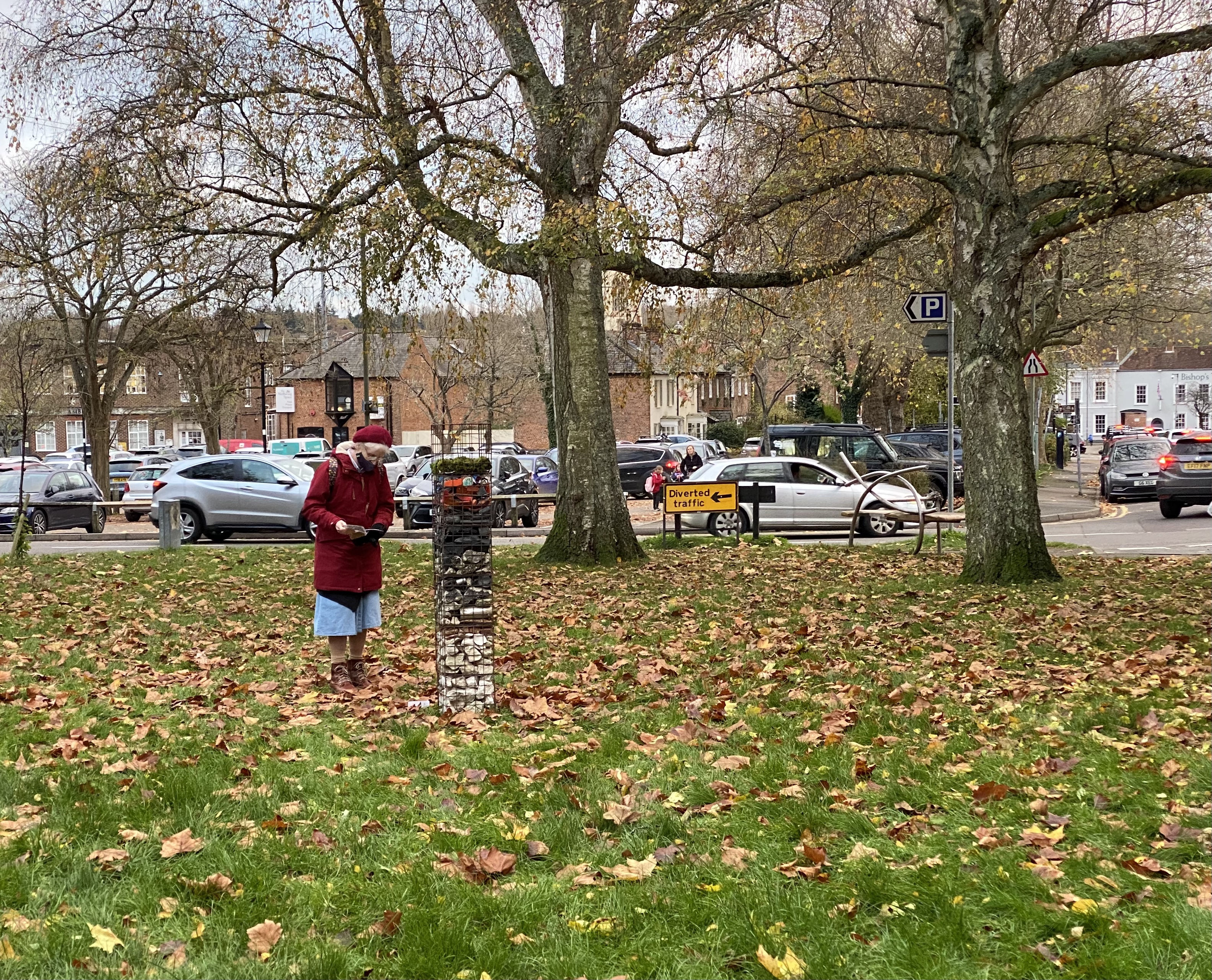
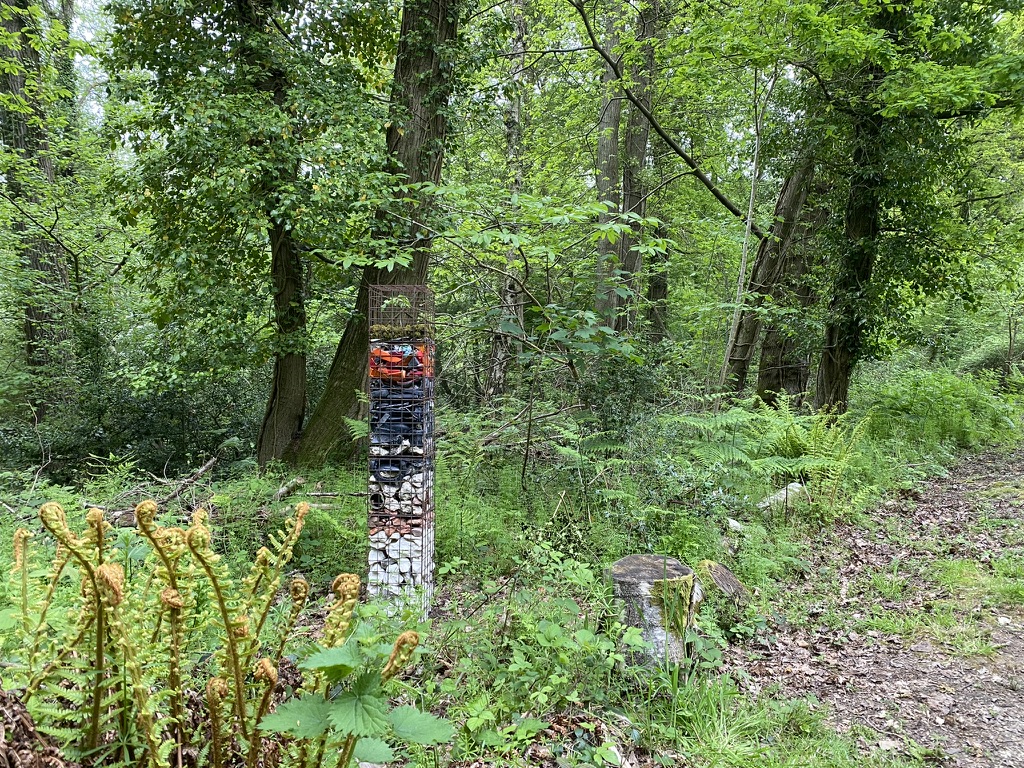
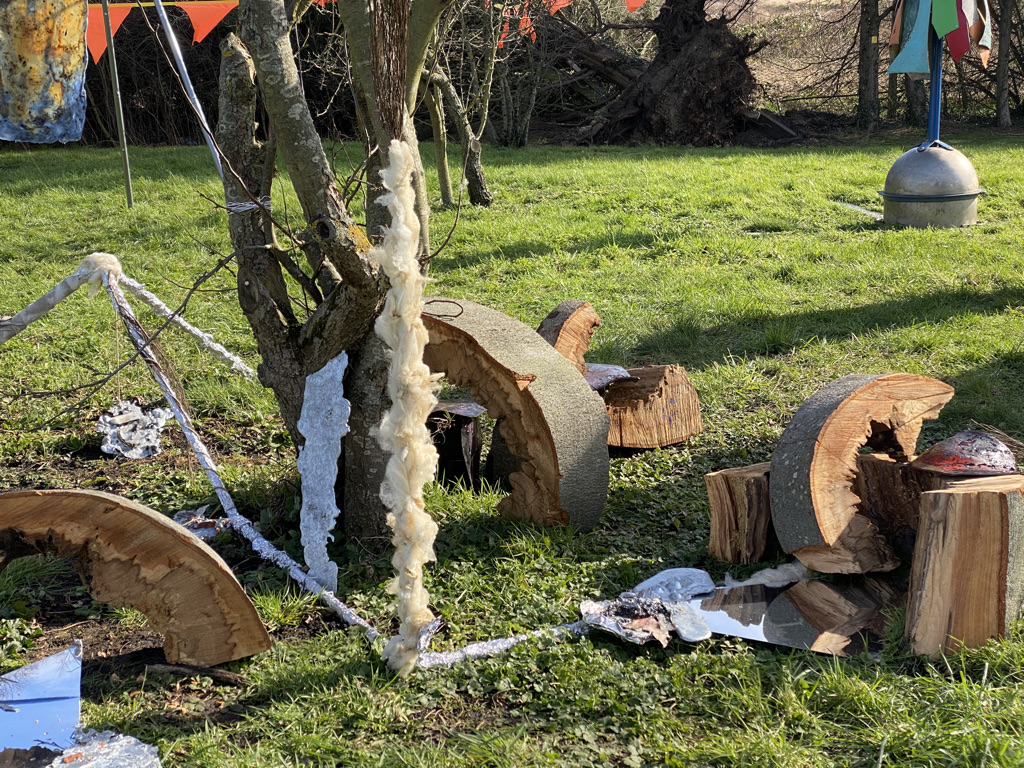
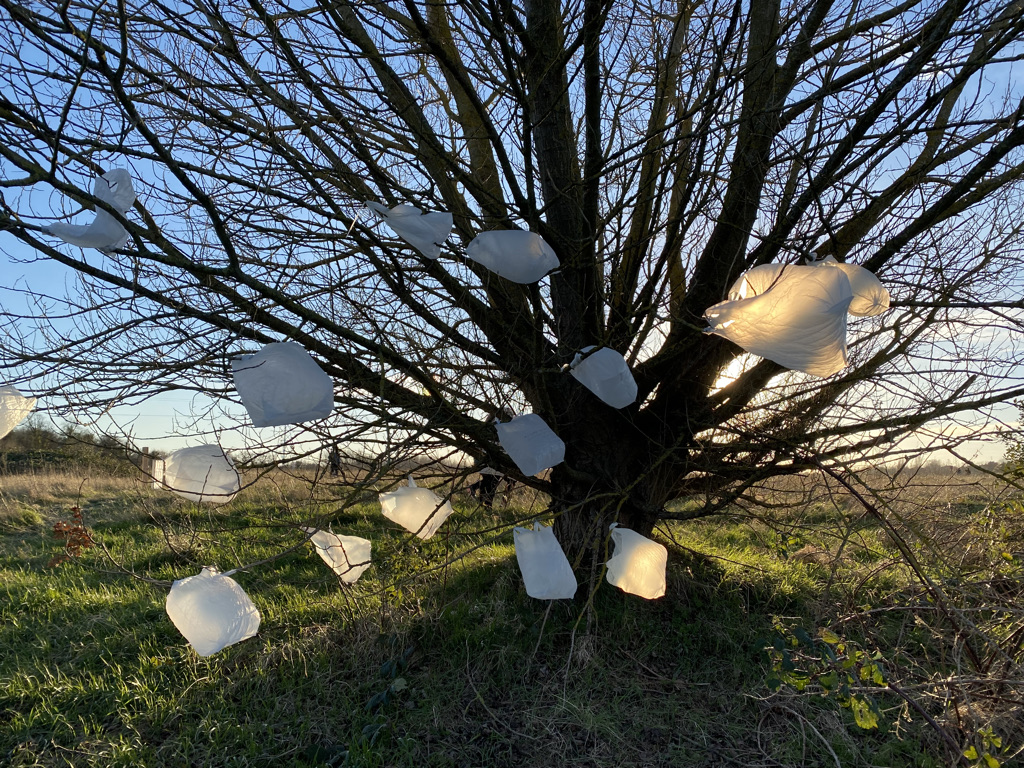
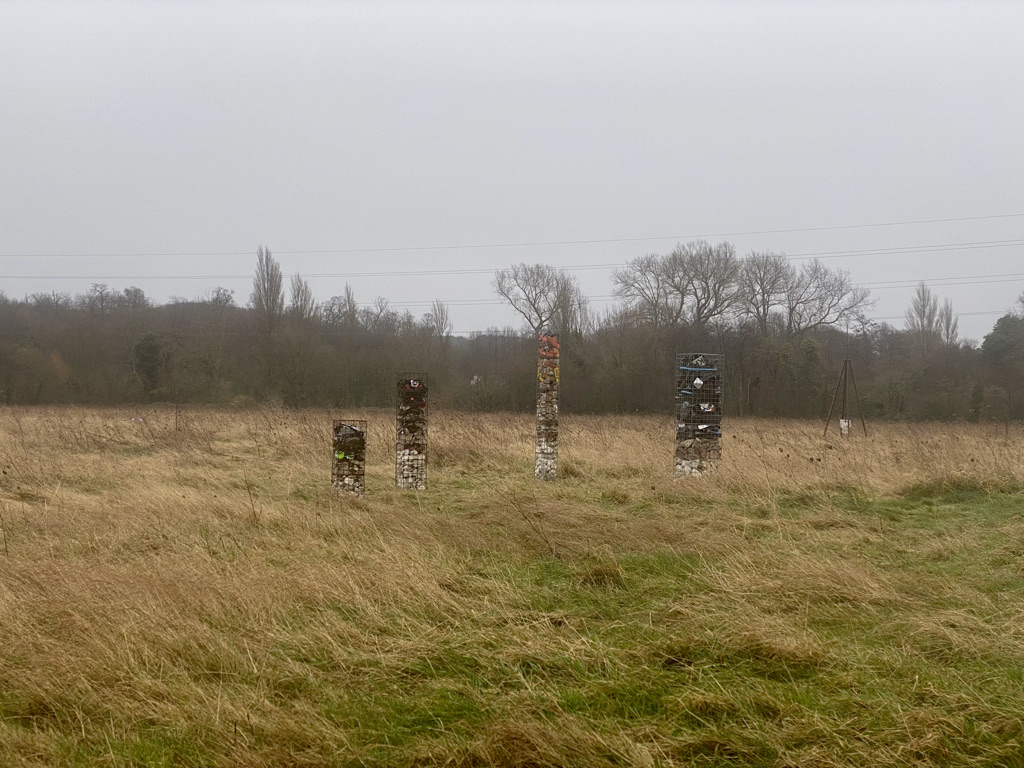
Searching for a more resonant way of displaying the assemblages, and thinking about the grassroots memorials we glimpse on a daily basis, I set about placing and photographing groups of them in the landscape where I had found the materials. Contingent to this activity I had been reading about the increasingly prevalent phenomenon of commemorating the non-human with grassroots memorials that echo those used by humans to mourn both their loved ones and those who may not be personally known to them, but with whom they feel a strong connection. A well publicised example of this being the funeral ceremonies and memorials for lost glaciers in Iceland and Switzerland. Extinctions and biodiversity loss leading to collective mourning for nature. A plaque was installed in 2019 at the base of Iceland’s lost Okjökull glacier during a ‘funeral’ ceremony, a durable message to future generations more like a traditional gravestone and unlike the flowers of roadside memorials that decay. It is the plastic in these memorials that endure as it has done in the location I focus on.
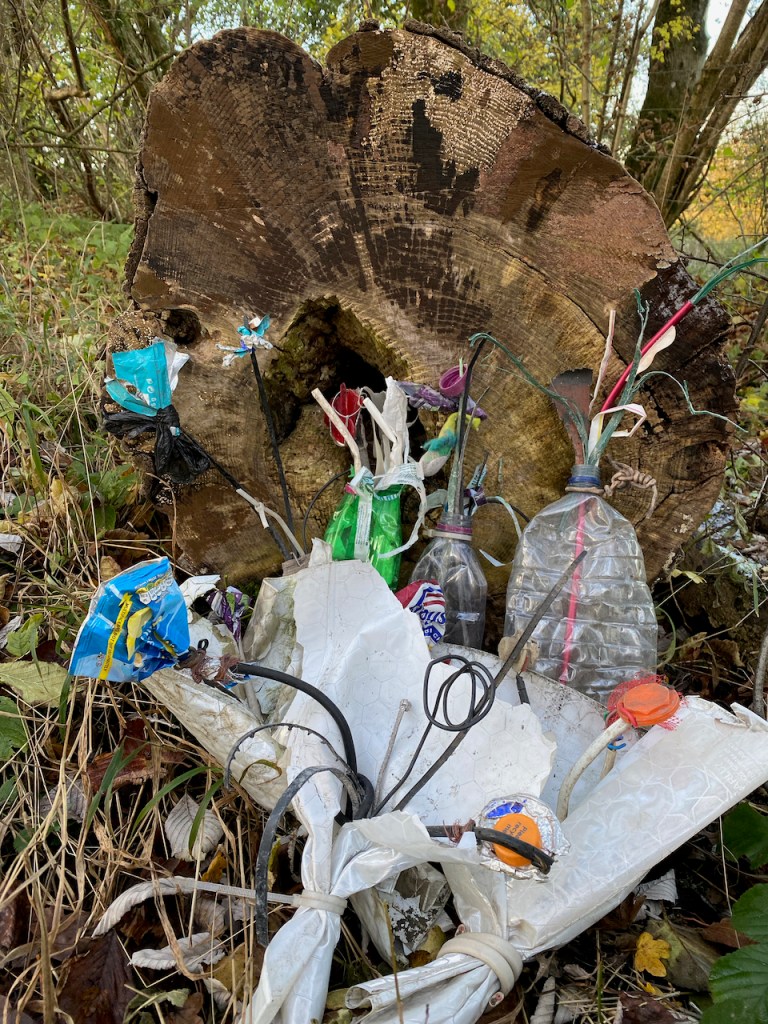
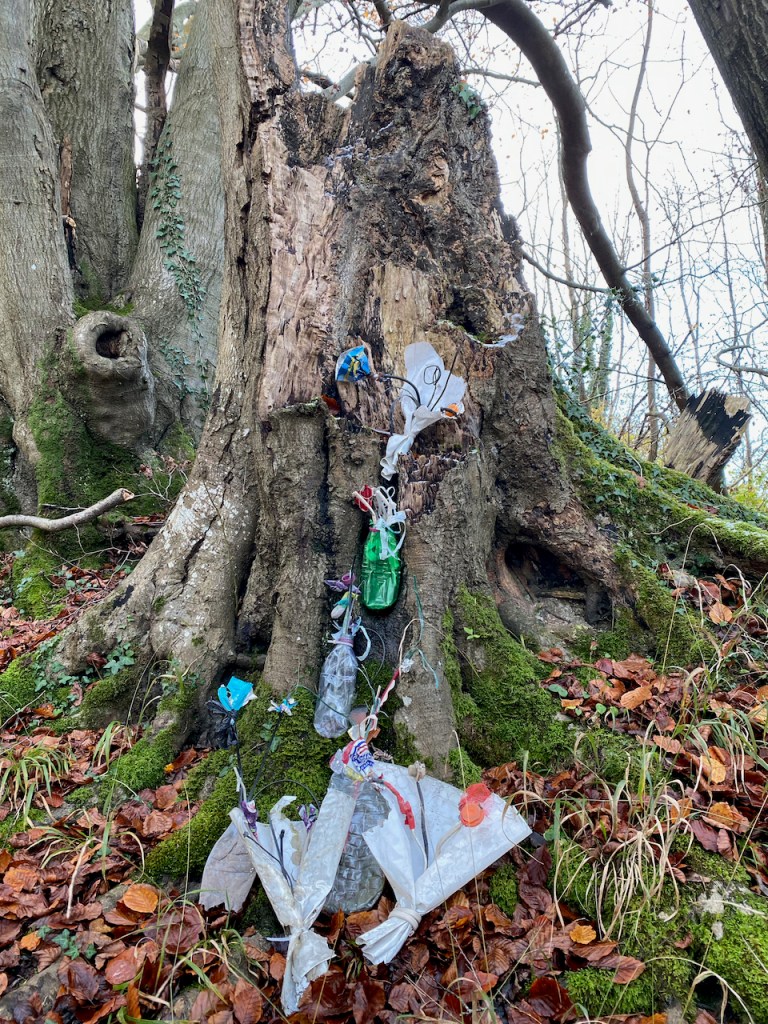
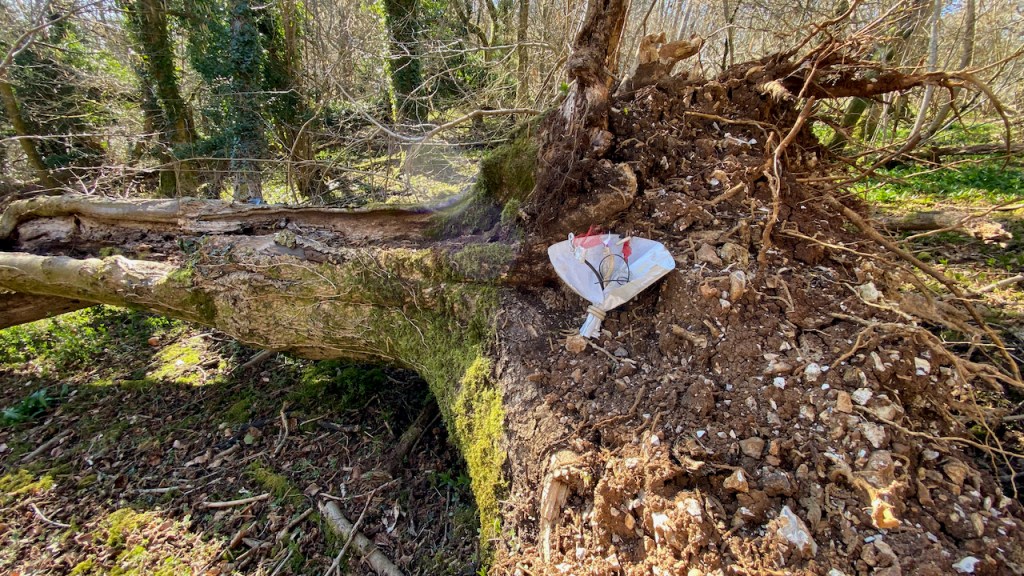
What I was drawn to on my walk were the dead and fallen trees lining the route, most being ash. Since 2012 ash dieback disease has ravaged the UK’s ash trees, Fraxinus Excelsior, and a decade on climate change induced storms have been felling these trees in great numbers.
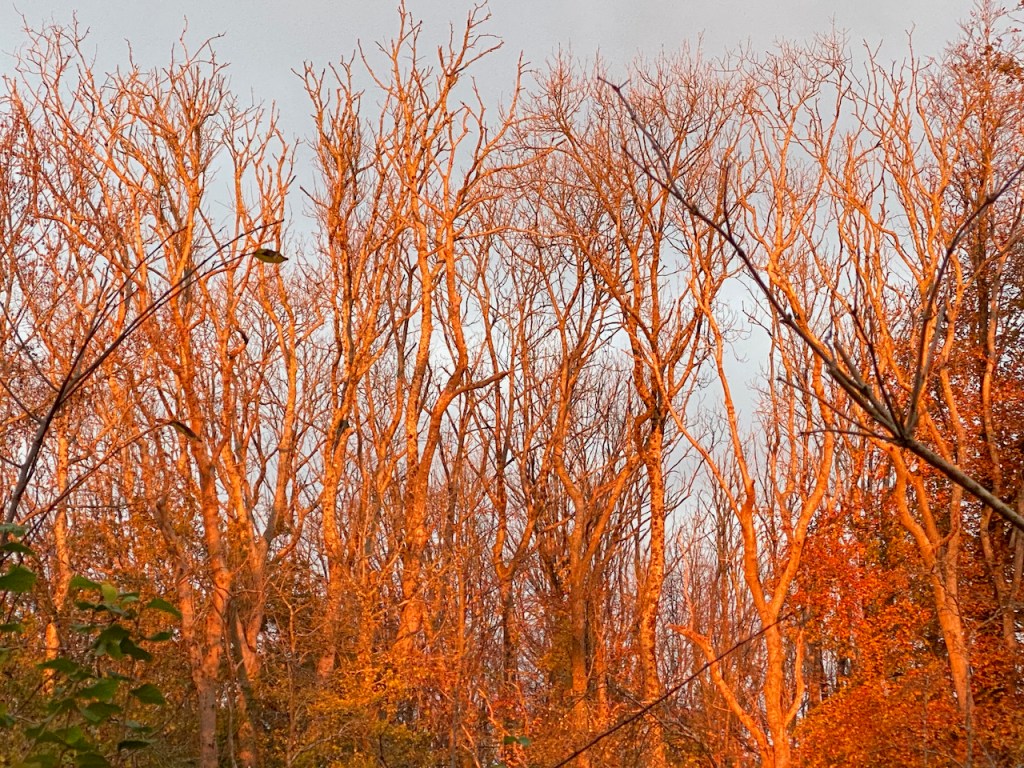
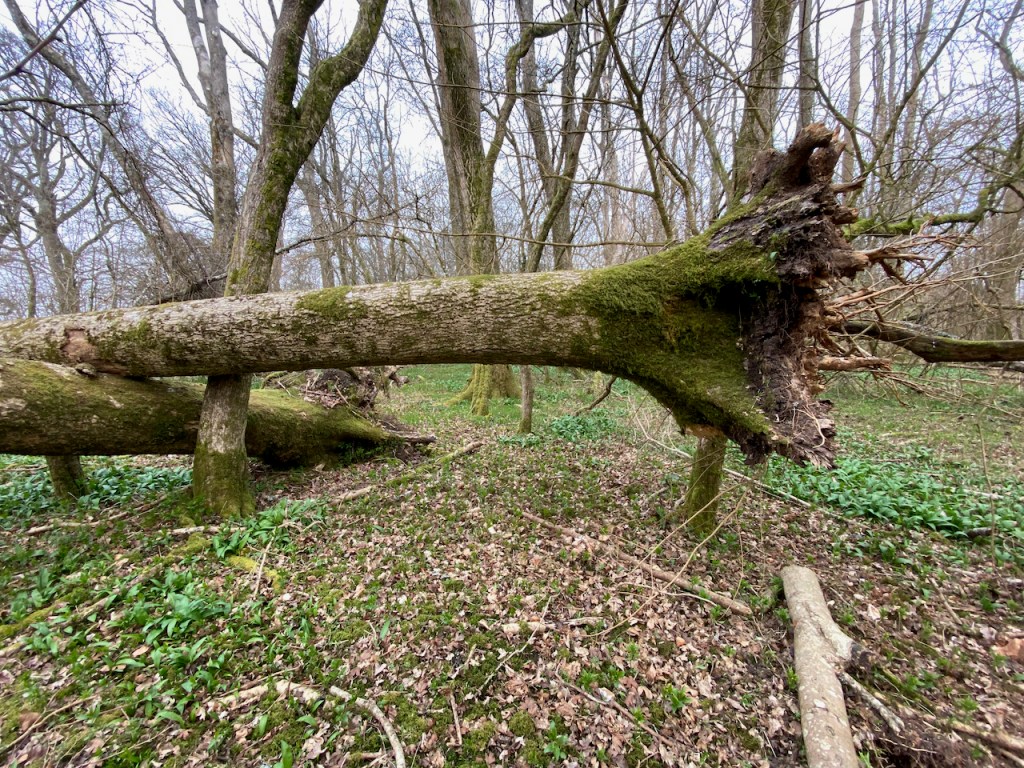
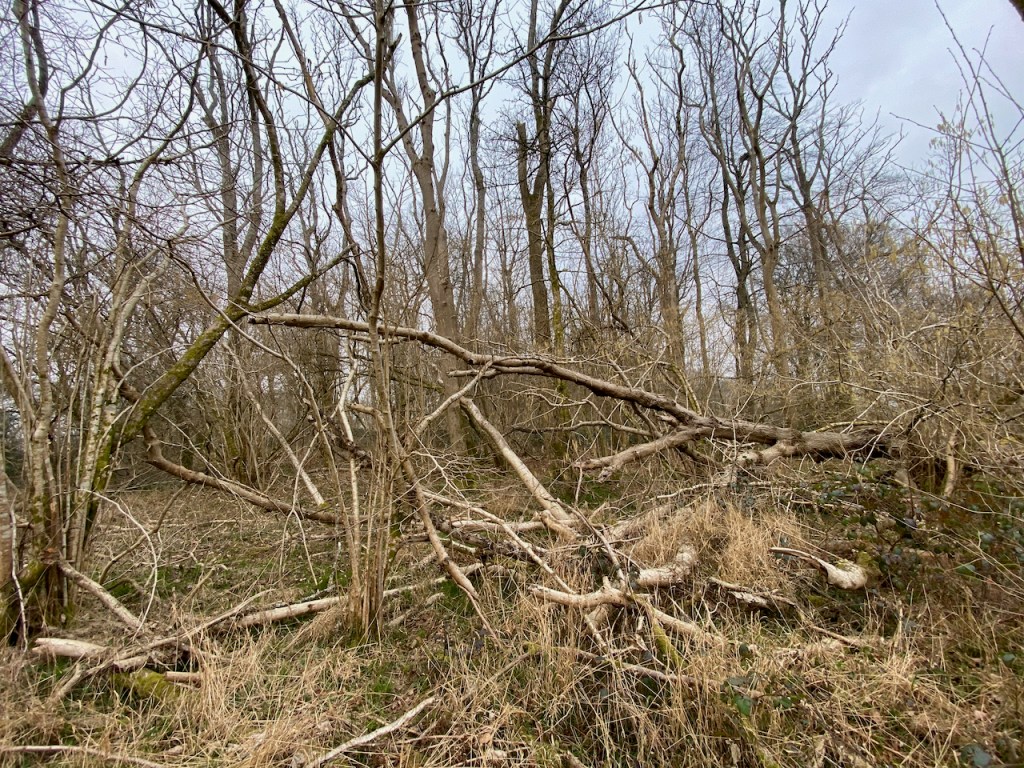
Looking at the images I’d made on the walks, I felt the most connection with those where a single tribute, two at most, had been placed on the dead tree, rather than the more cluttered groups. Something about the contrast of colour and texture of the plastic to its natural surroundings, as well as the lonely single placement resonated.
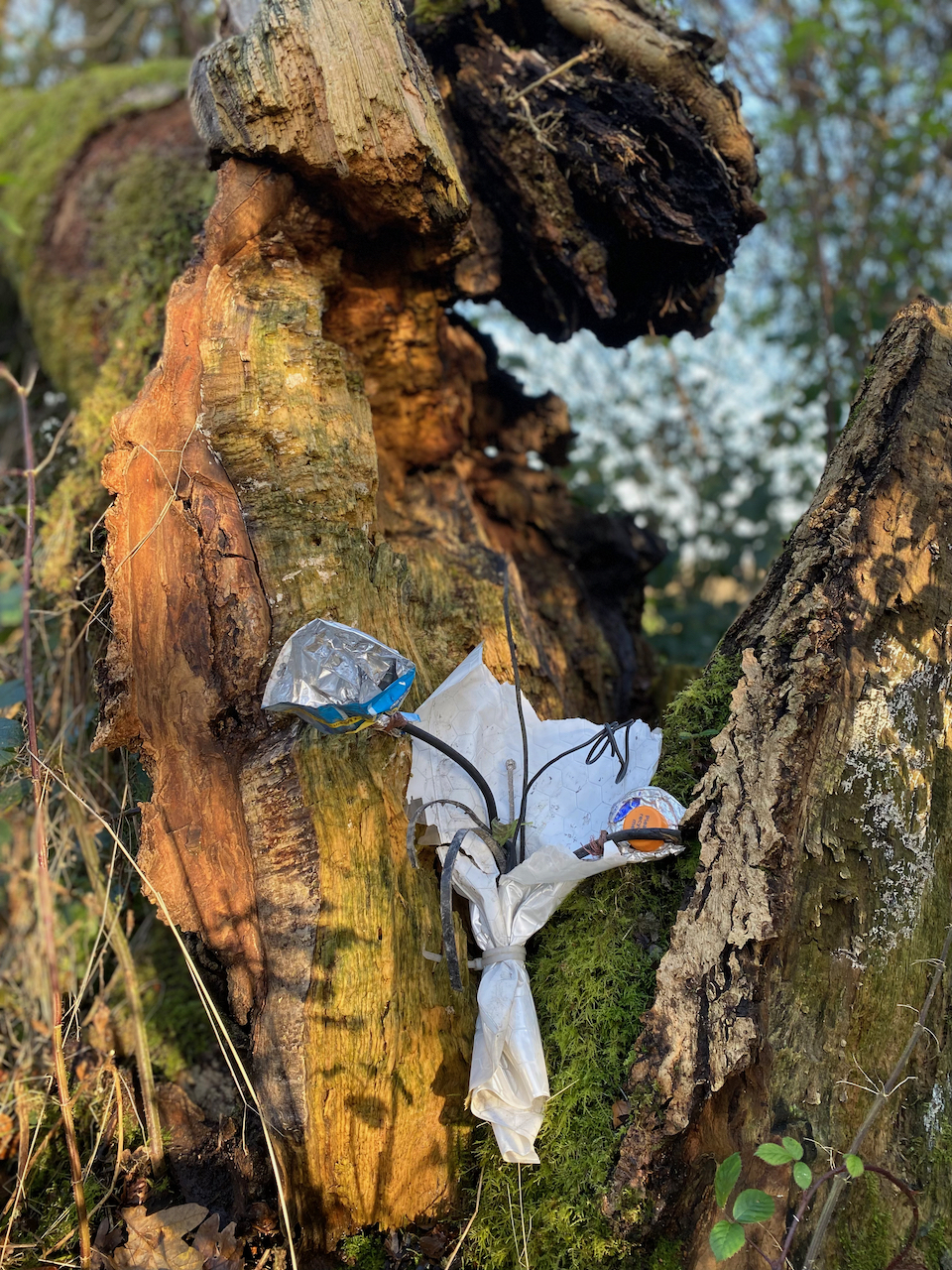
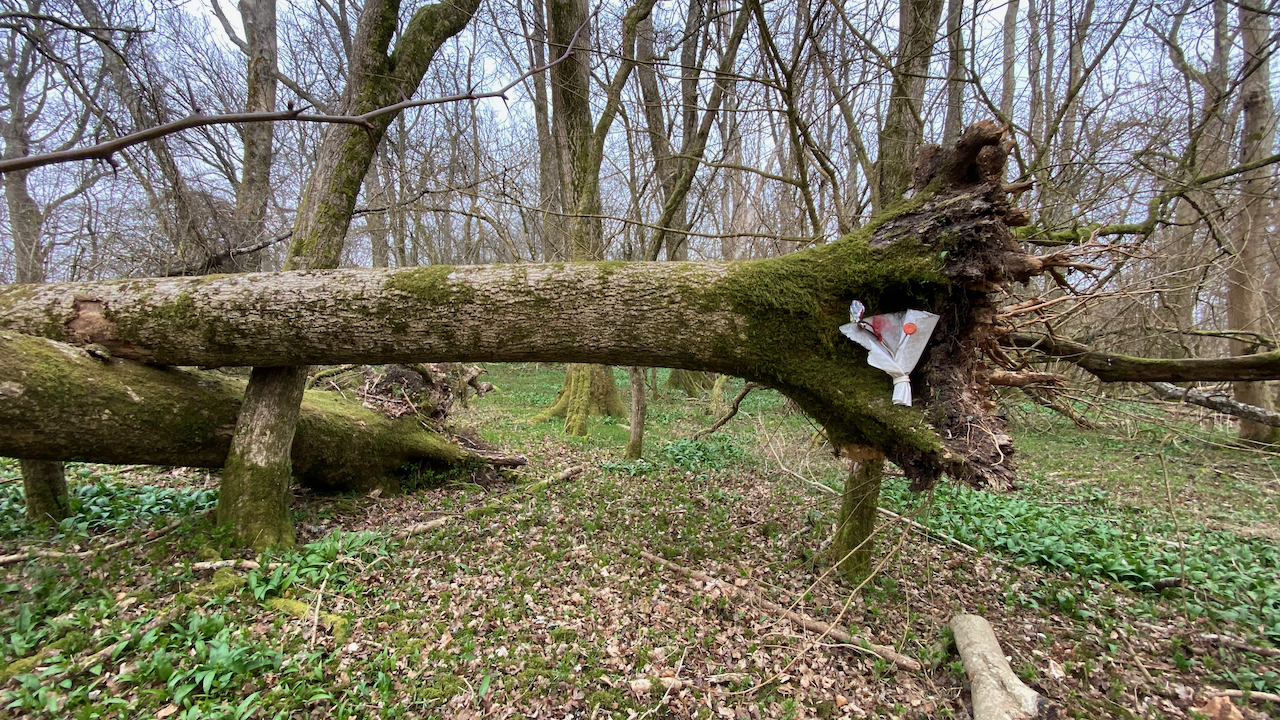
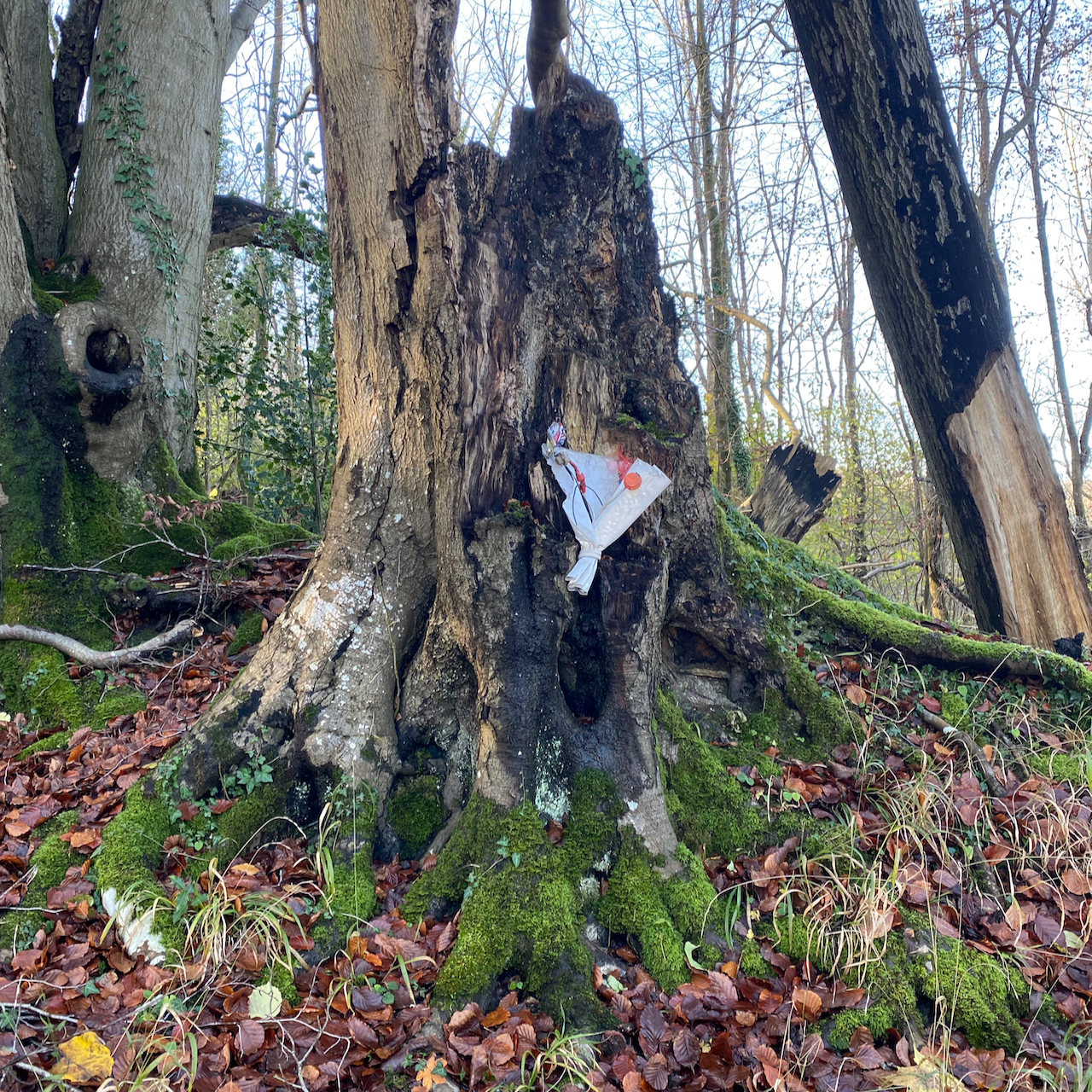
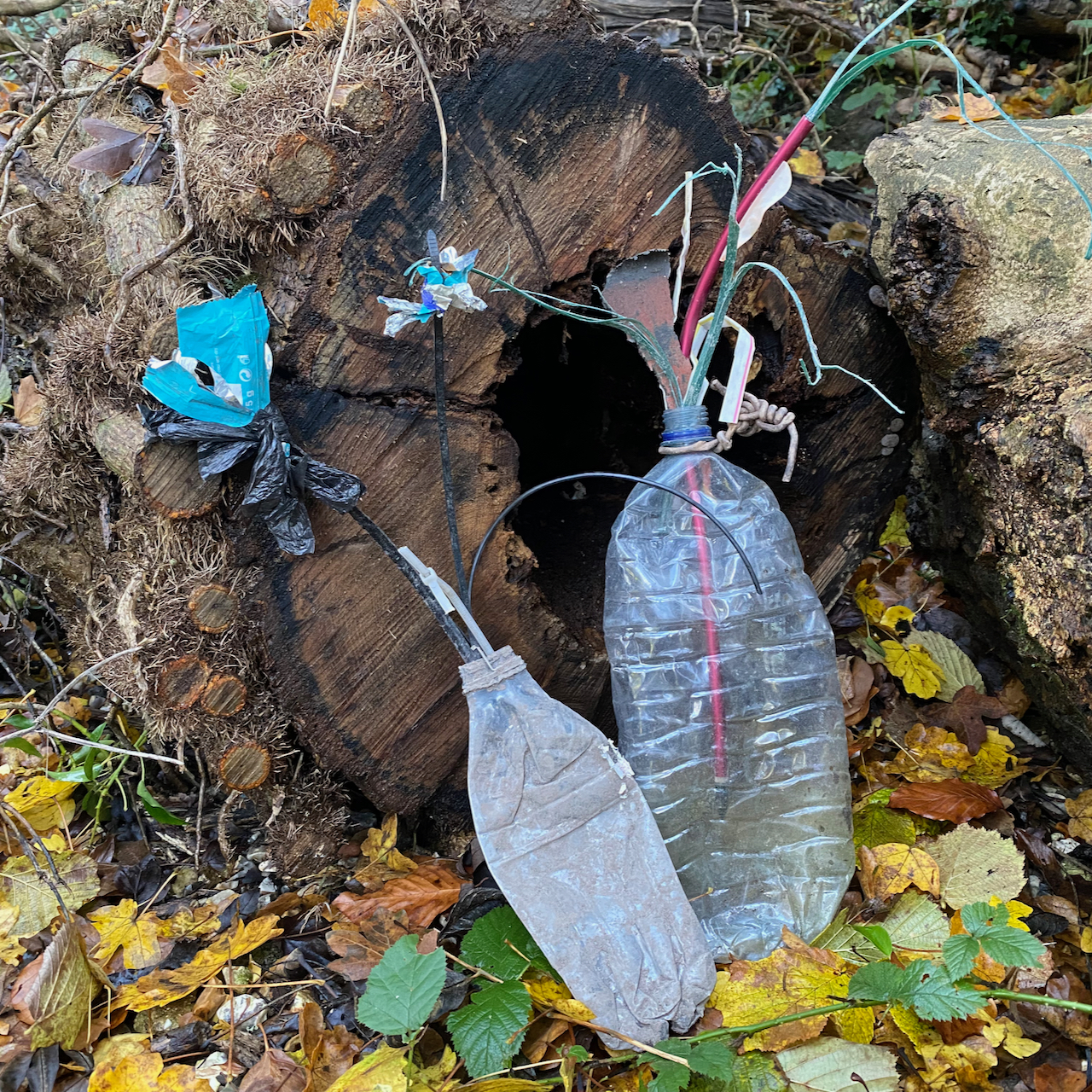
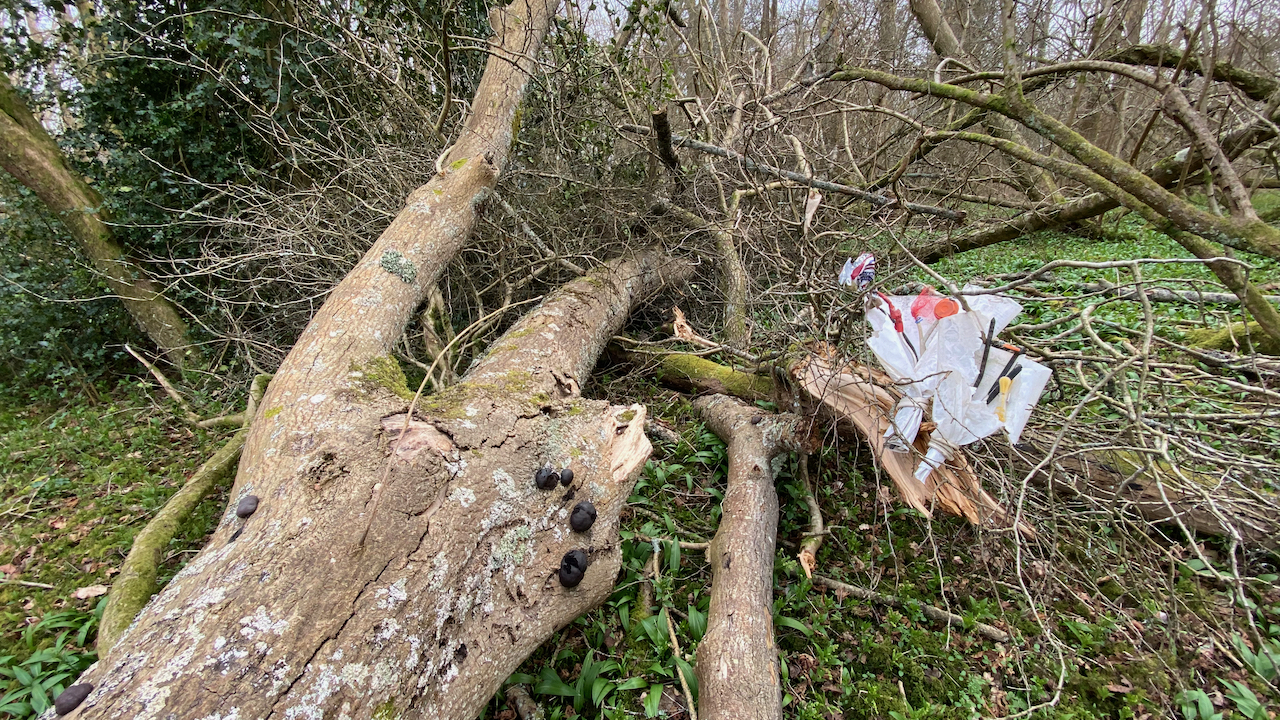
Once I’d sorted and selected the best images, then the question of how to use them needed addressing. Was this the work – the intervention of placing the objects back into the landscape and photographing them? Is the connection between fossil fuels and plastic waste then linking both visually and intellectually to biodiversity loss, the storms that fell the diseased ash trees, the global trade in trees that would have hastened the spread of the fungus that causes the disease, the fashioning of the plastic into objects that resemble bouquets used in honouring human loss now honouring loss in nature? The fact that trees are also traditionally used to honour memory of a human life added to the mix.
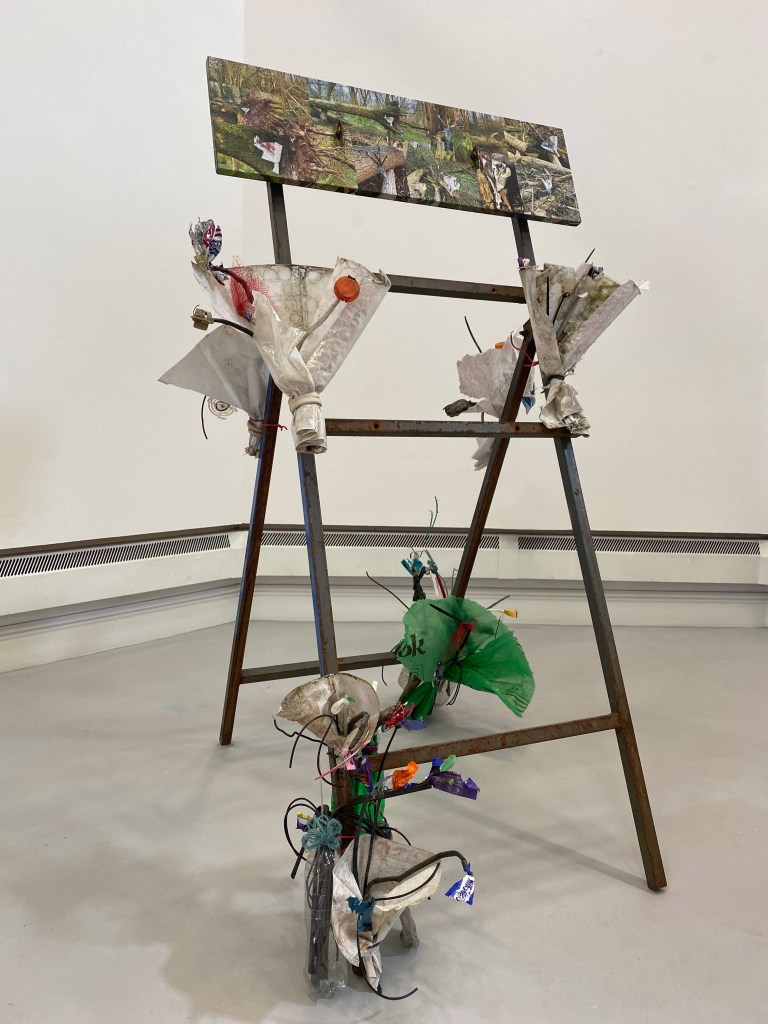
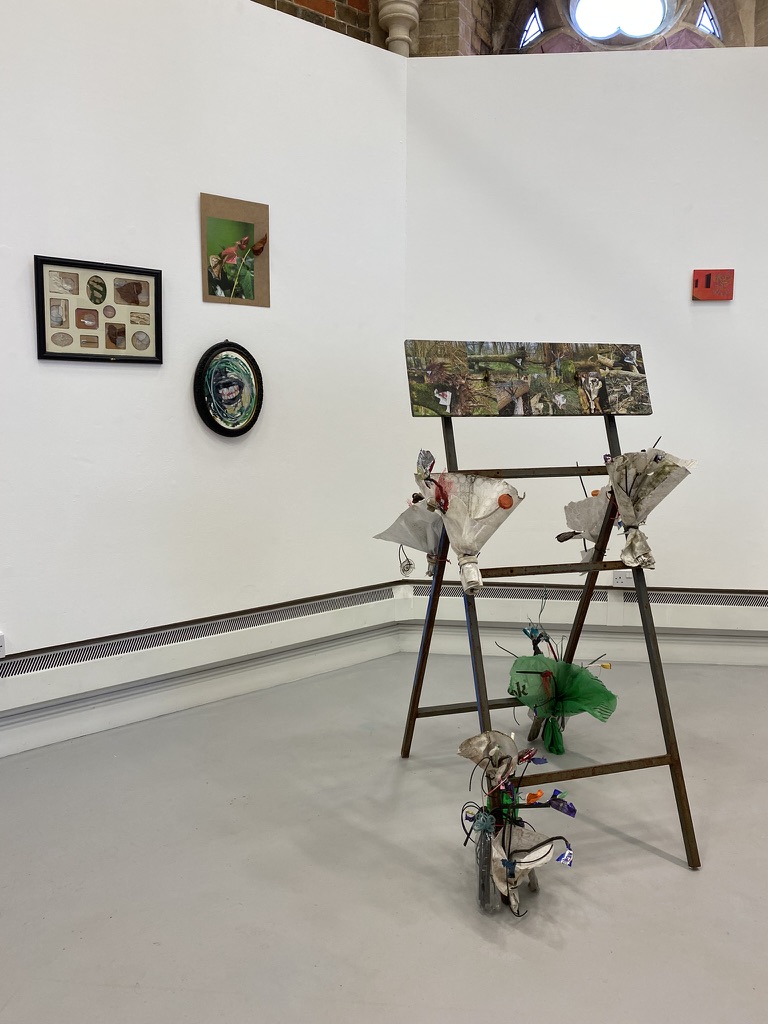
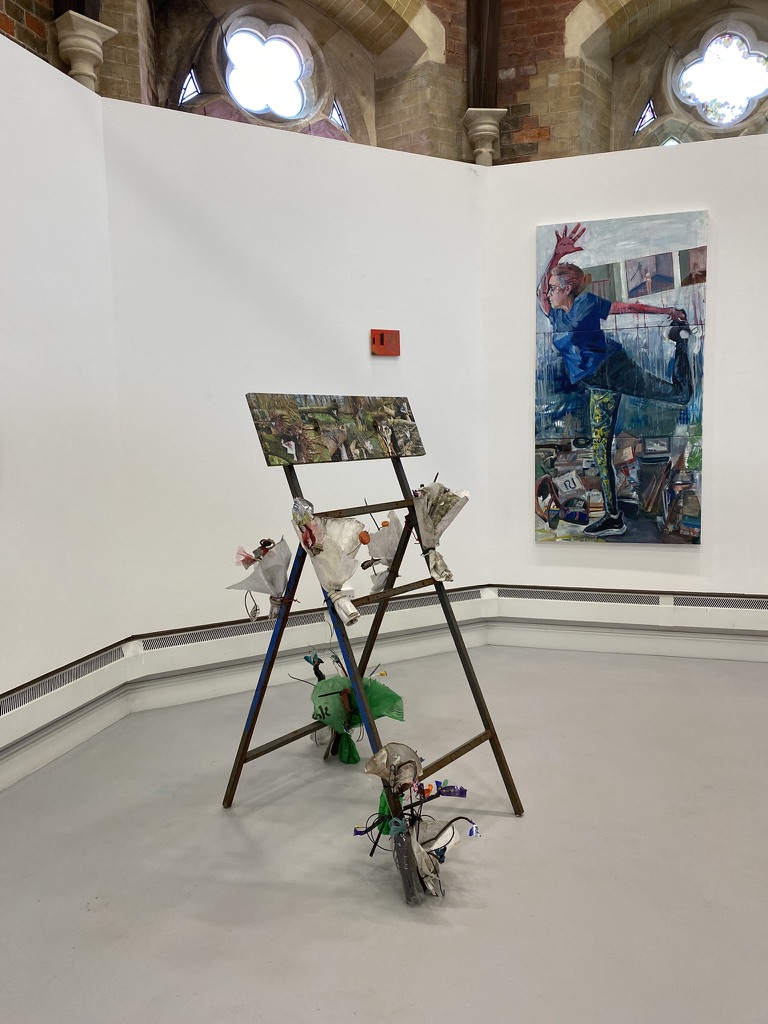
I’d had in mind to somehow present the ‘bouquets’ in a way that would reference the roadside memorials I’d originally been thinking of, so I began to lash them to a traffic management A frame to make a free-standing sculpture. There was no temporary road sign to go with the frame but it occurred to me that to make something of similar dimensions as a support for the photographic images would be a way of presenting the record of the placings on the dead ash trees and to create the link to the phenomenon of grassroots memorialisation of nature. I worked on degrading the images a little before building a collage of them on both sides of a ply sheet that can be attached to the frame with the same fixings as a temporary road sign.
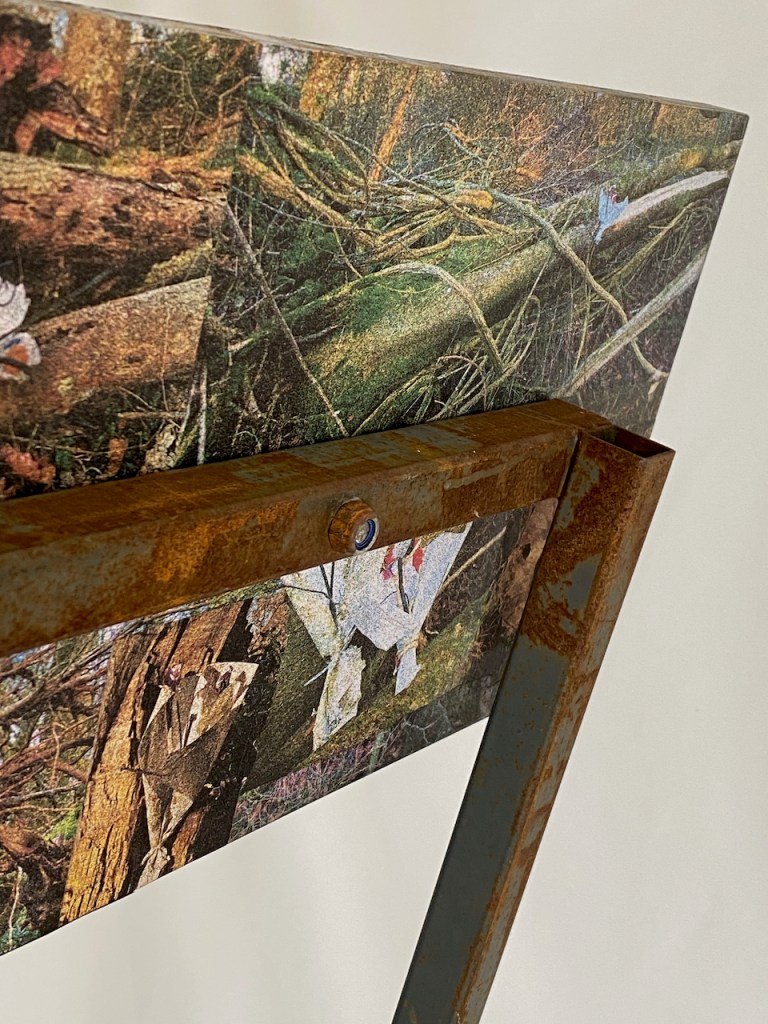
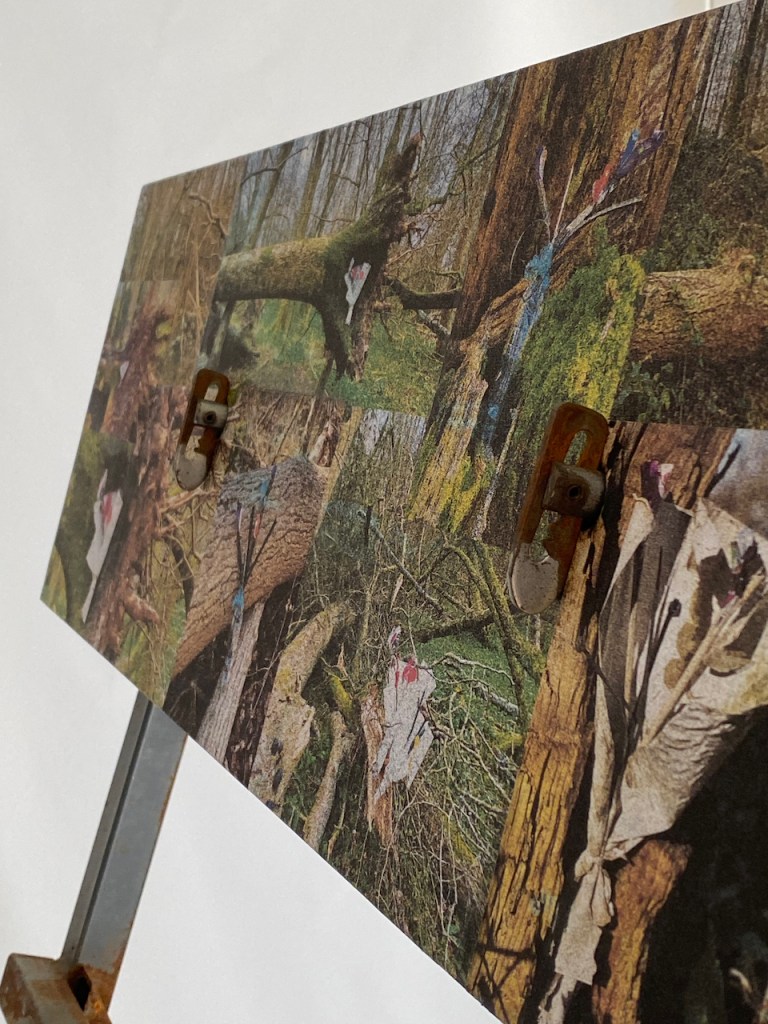
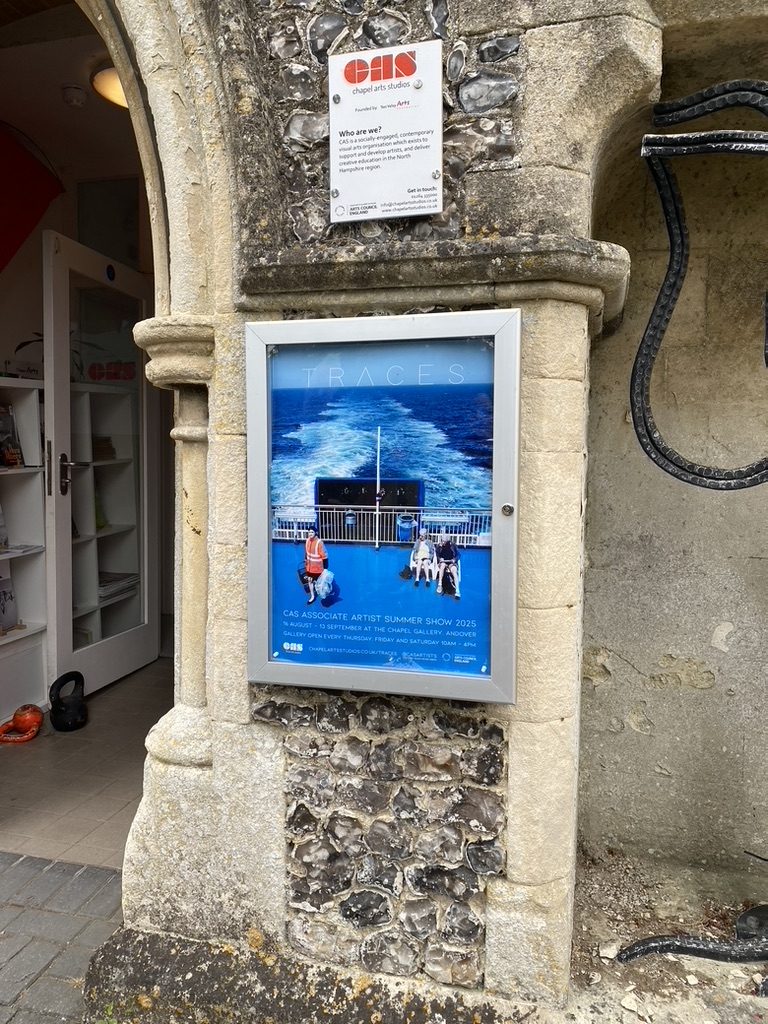
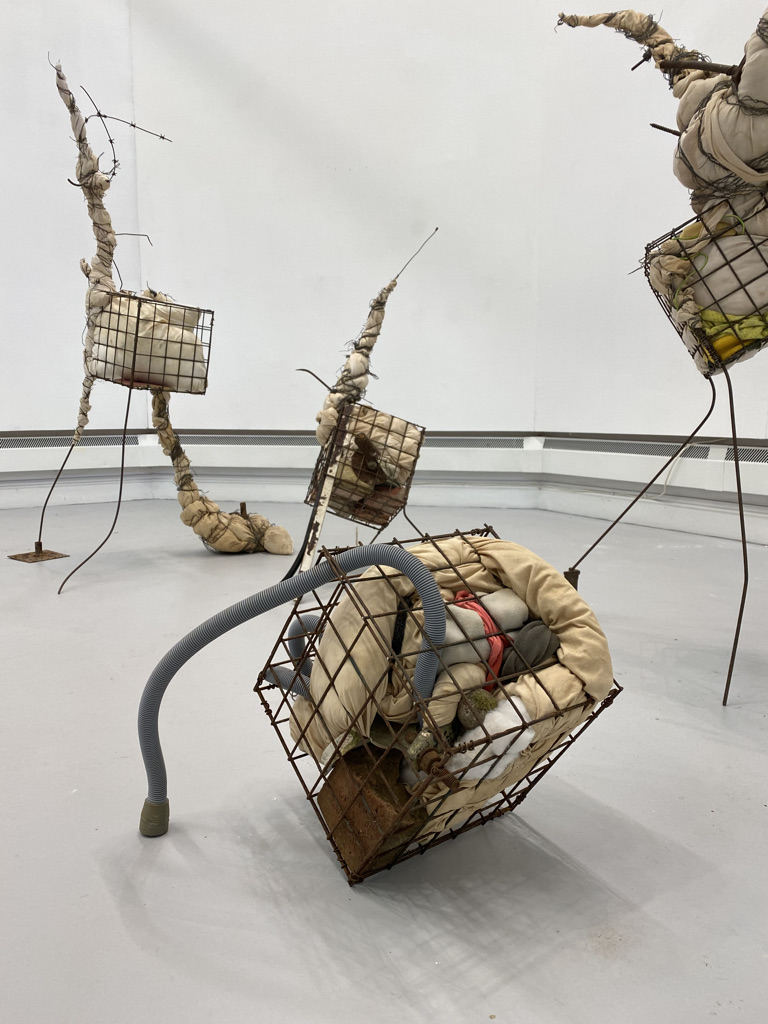
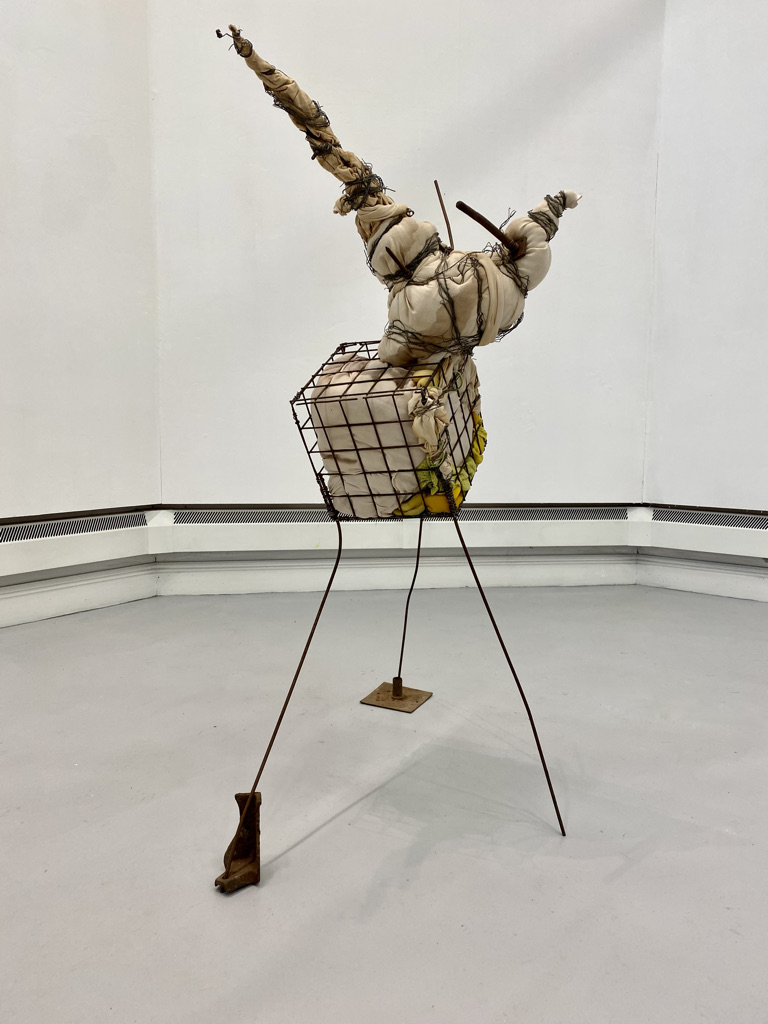
In the resulting sculpture, the original ‘bouquet’ assemblages are lashed to the front, back and sides of the A frame below the collage. The viewer is encouraged to walk round the piece and view from all sides. The piece has been shown in the group exhibition “Traces” on the theme of remembrance at Chapel Arts Studios in Andover. I gave it the title RIP Fraxinus Ex in reference to both the human act of memorialisation and to the Latin name of the ash tree. The exhibition venue was the place where the original ‘bouquet’ assemblages had been made last year bringing the project full circle in some senses, though also presenting a need to unpack and simplify.















 Liz Clifford