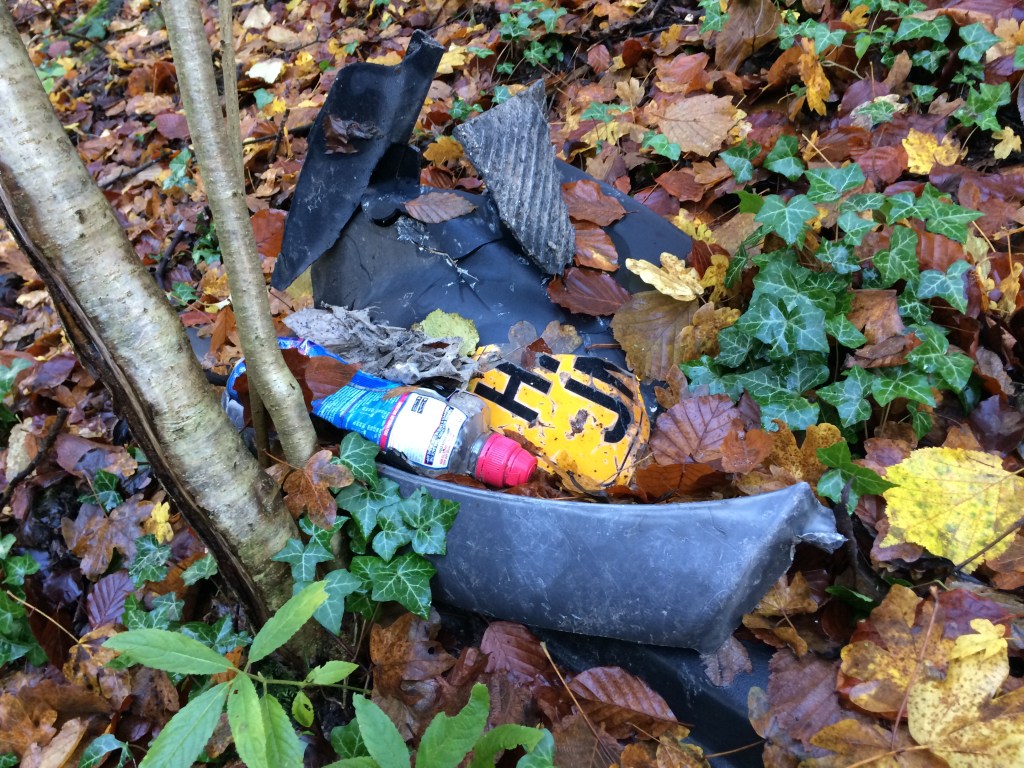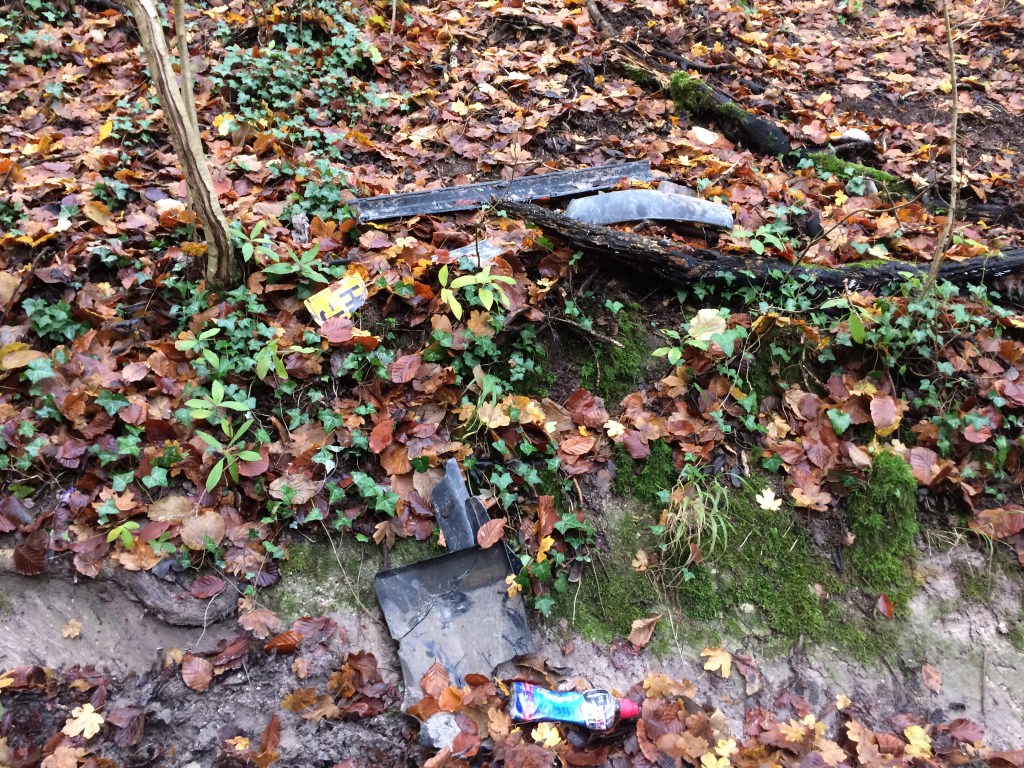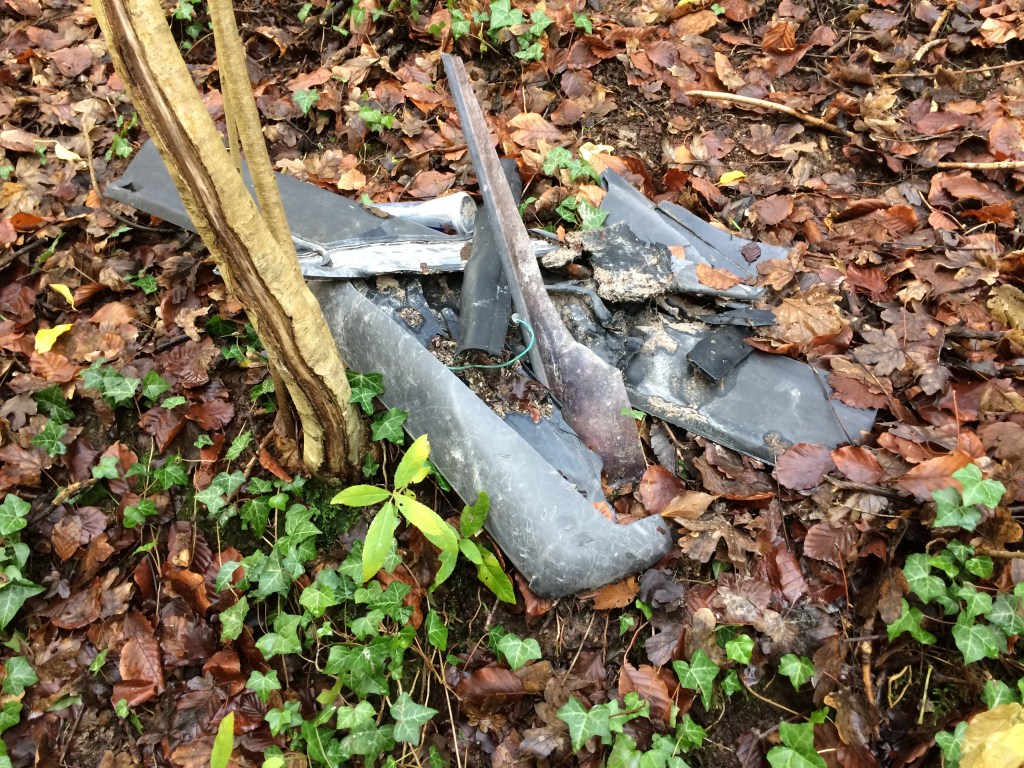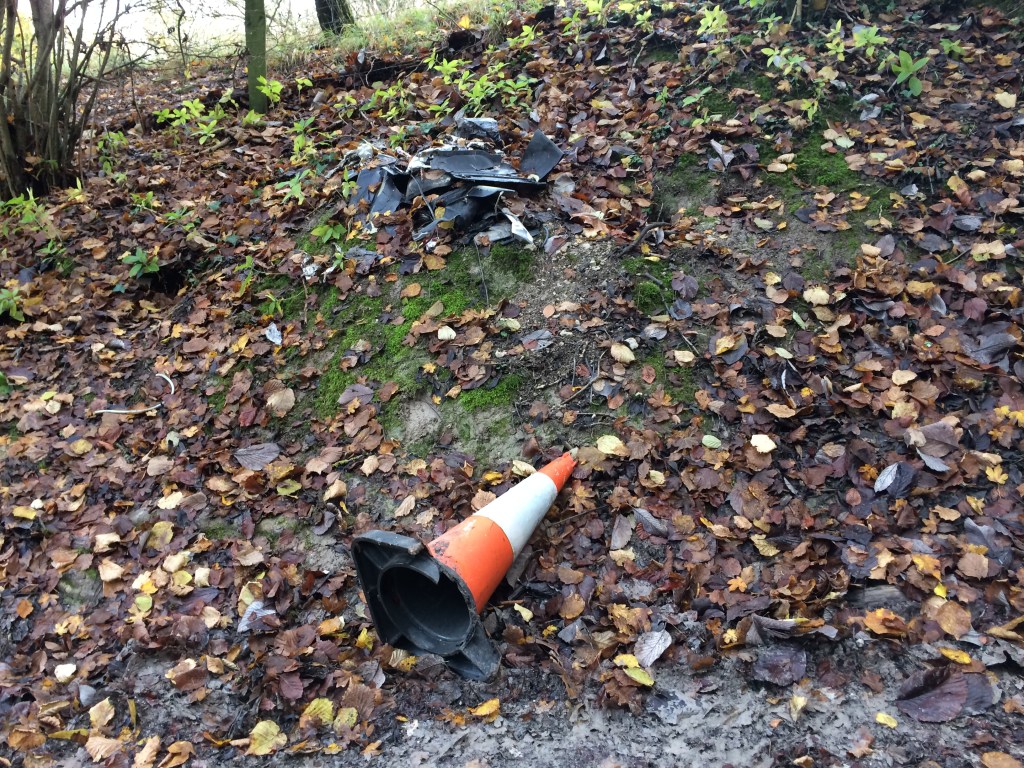
Intervention: Fieldwork.

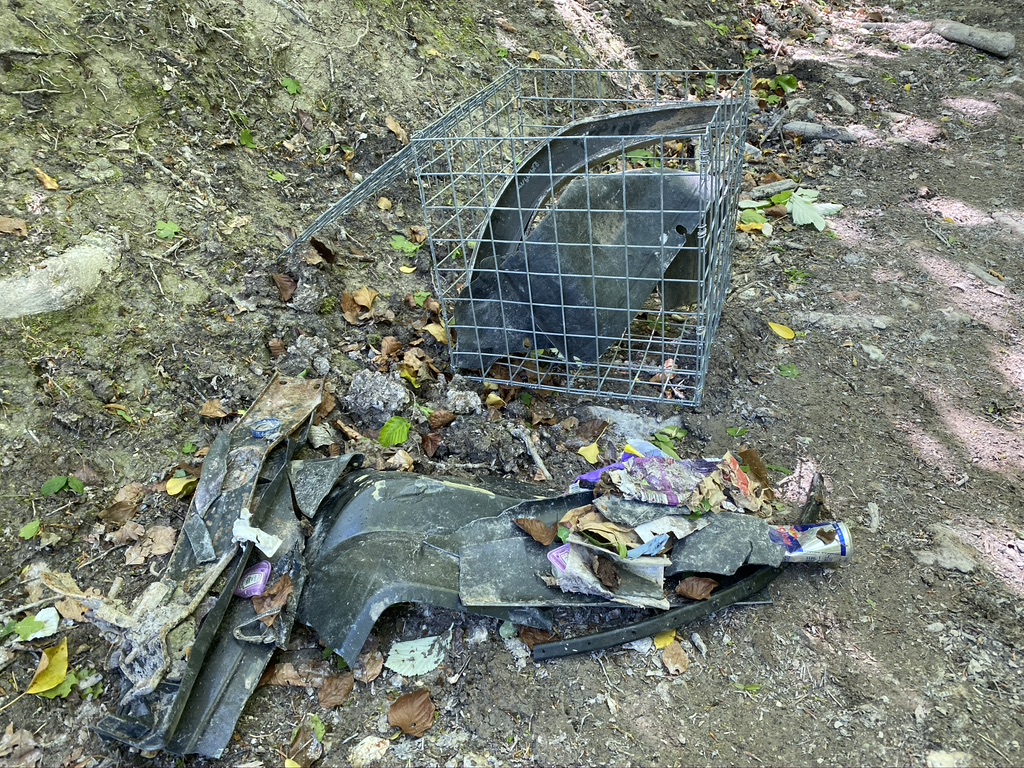
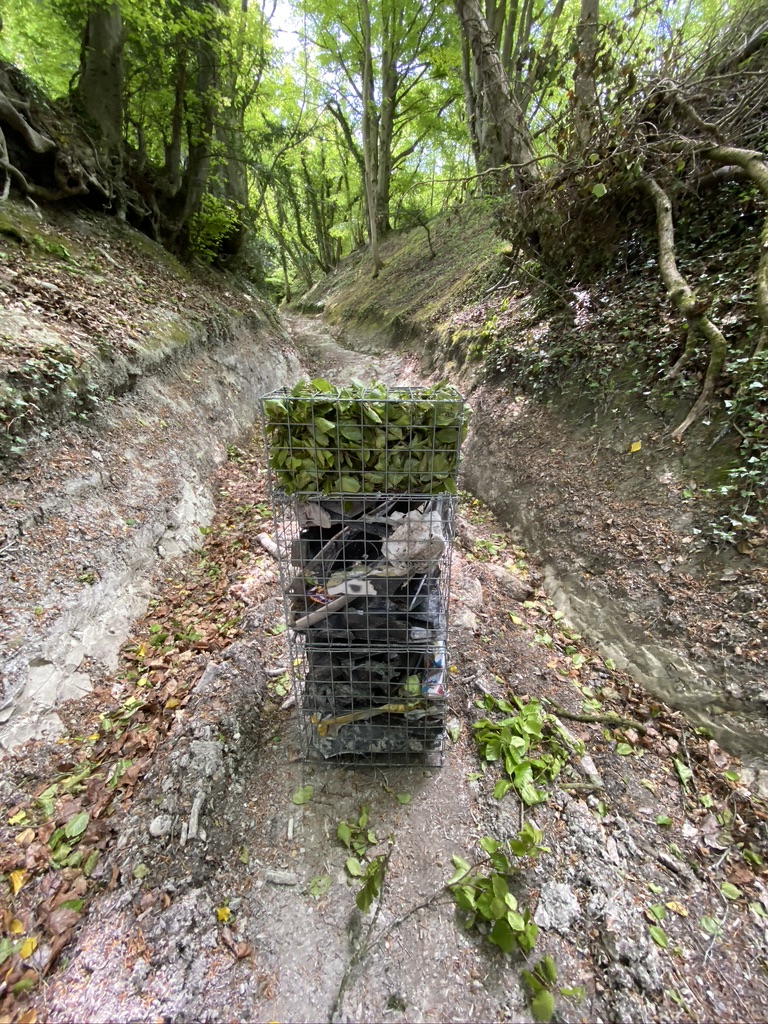
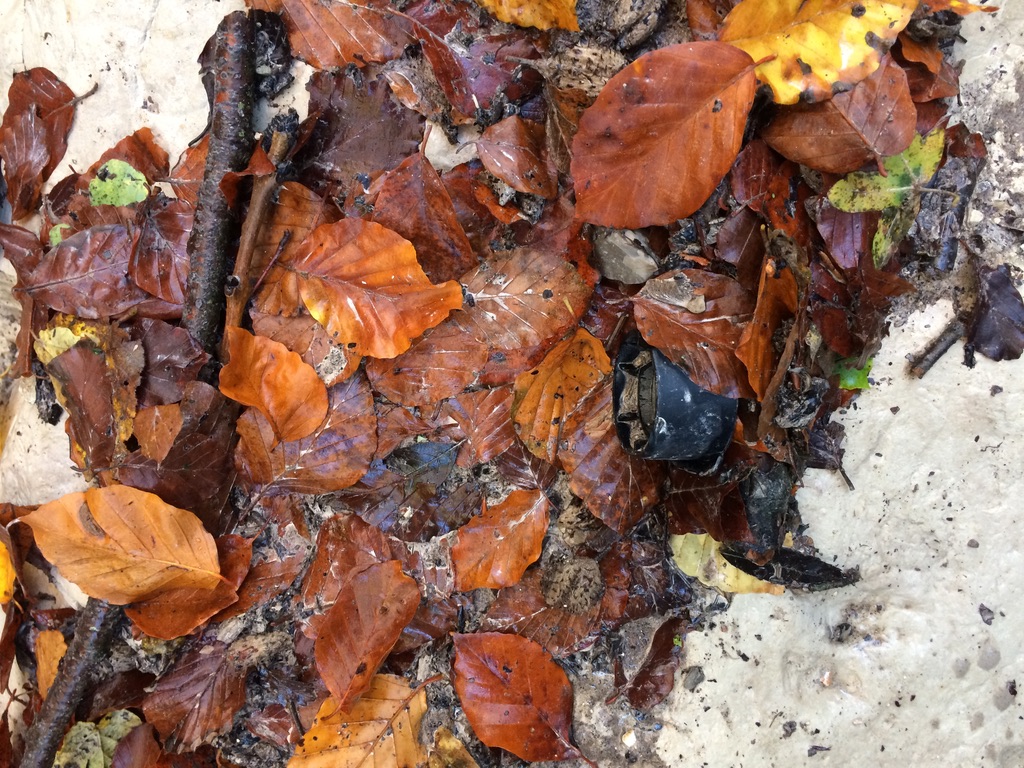
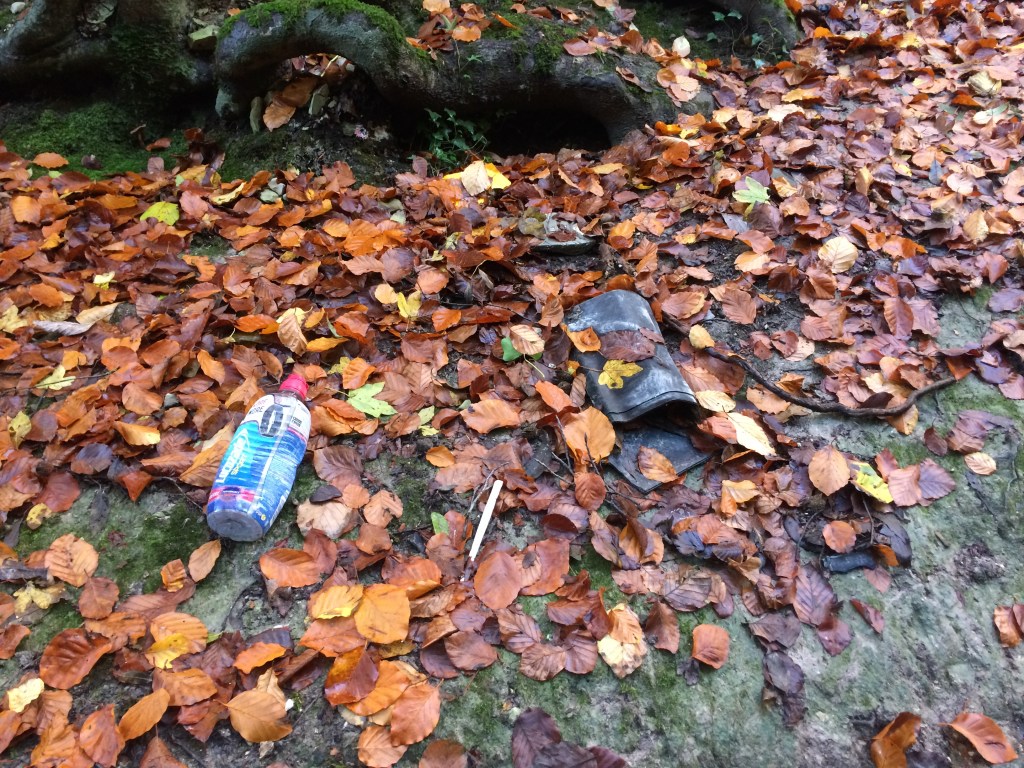
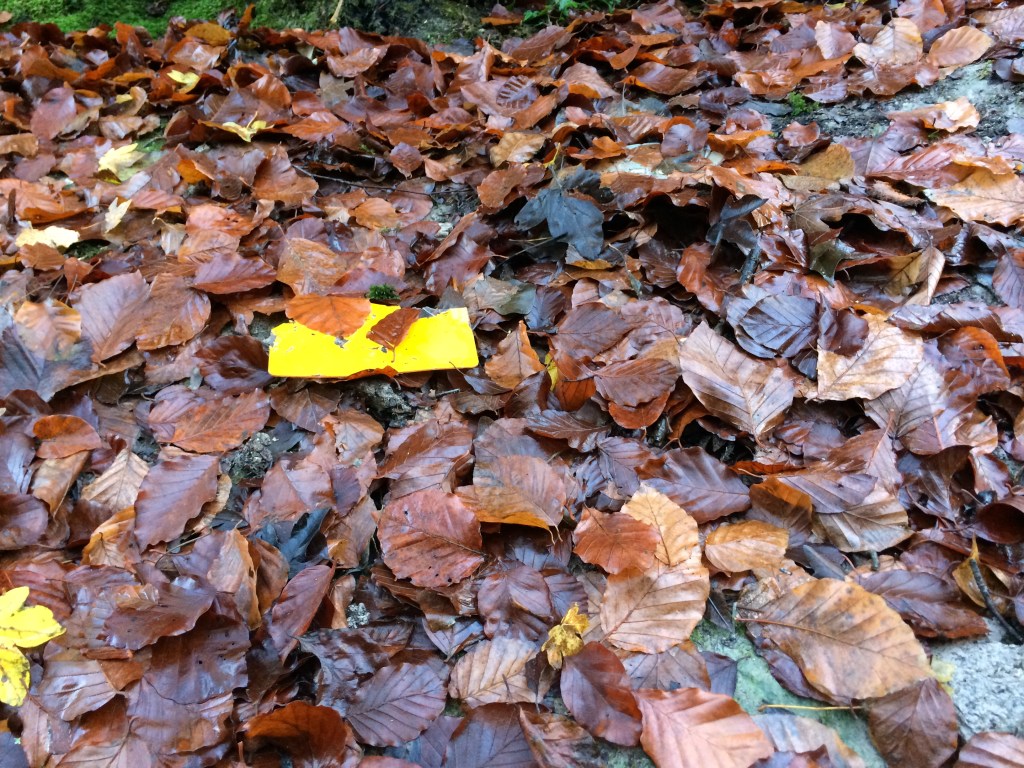
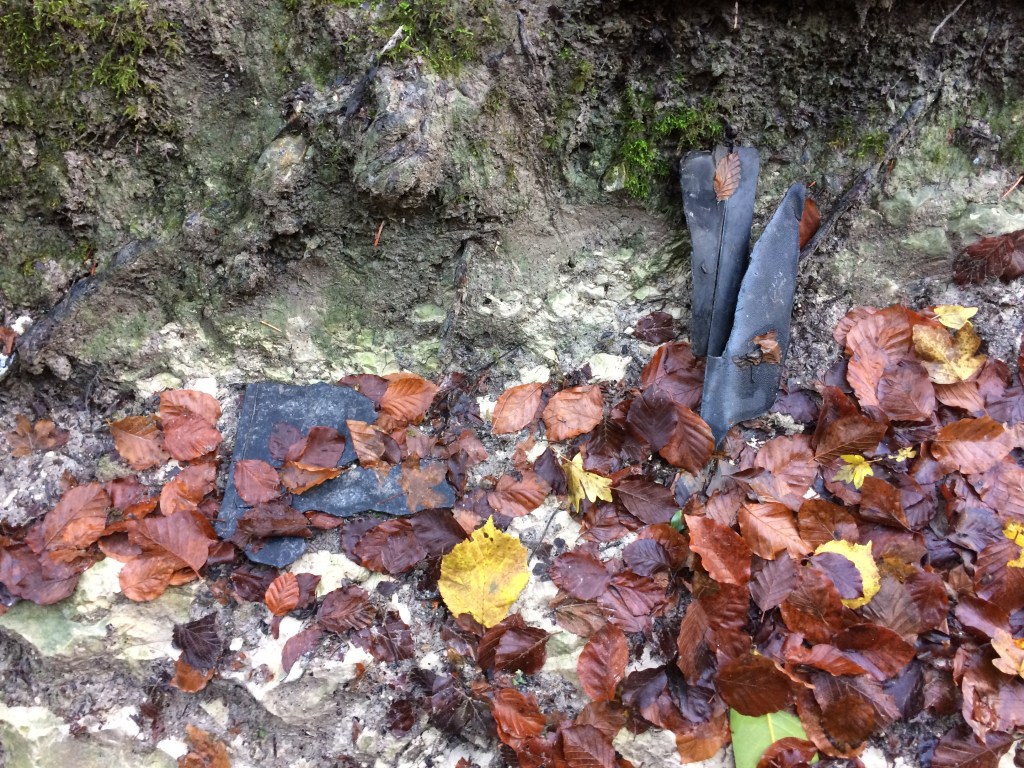
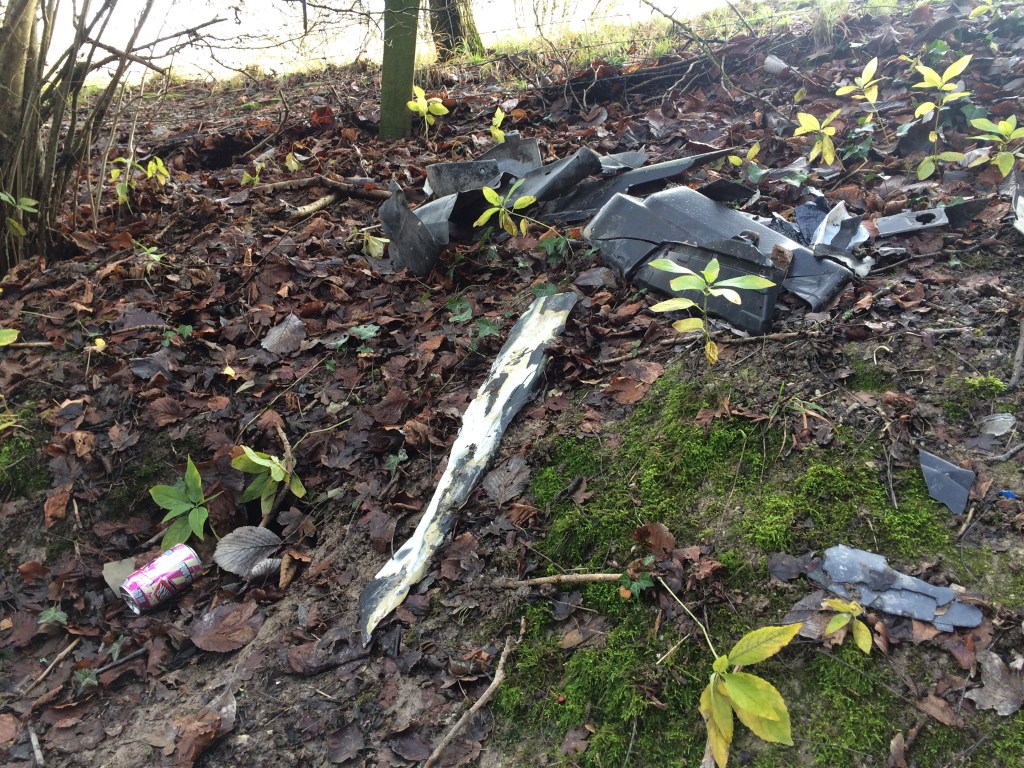
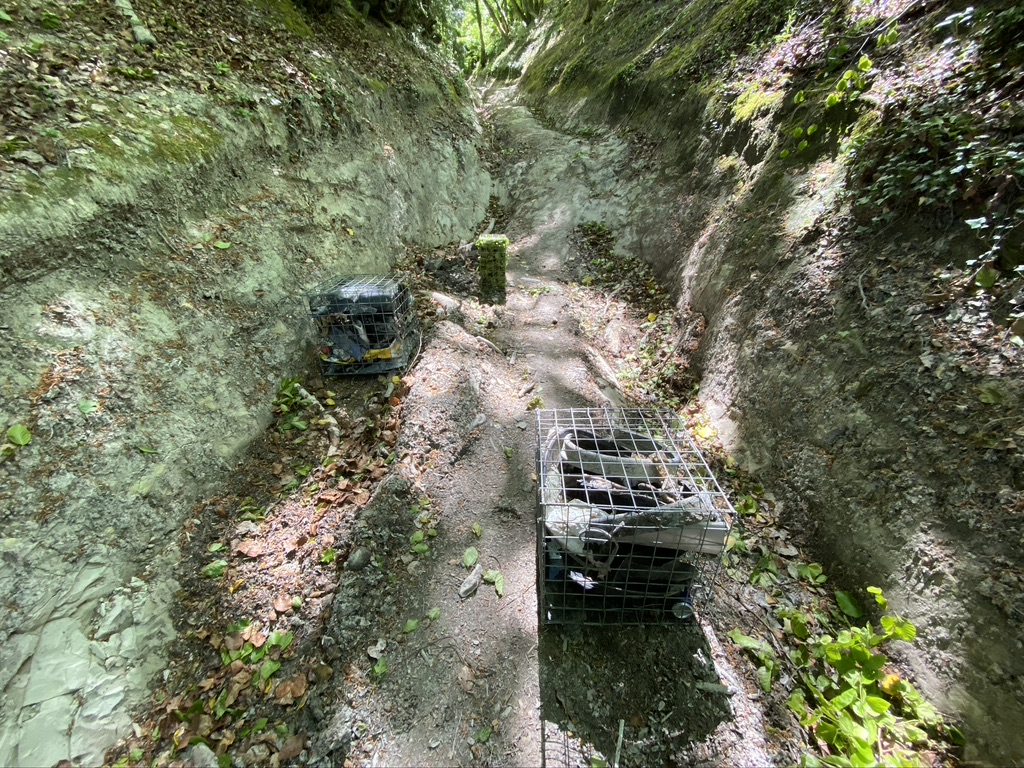
I’ve been building on my site specific project with found detritus as presented in my blogpost of January 4th. The latest intervention has involved taking hand built gabion baskets into the landscape and filling them with detritus from the two Rubbish Cairns I have been monitoring on Byway 745 since last summer.
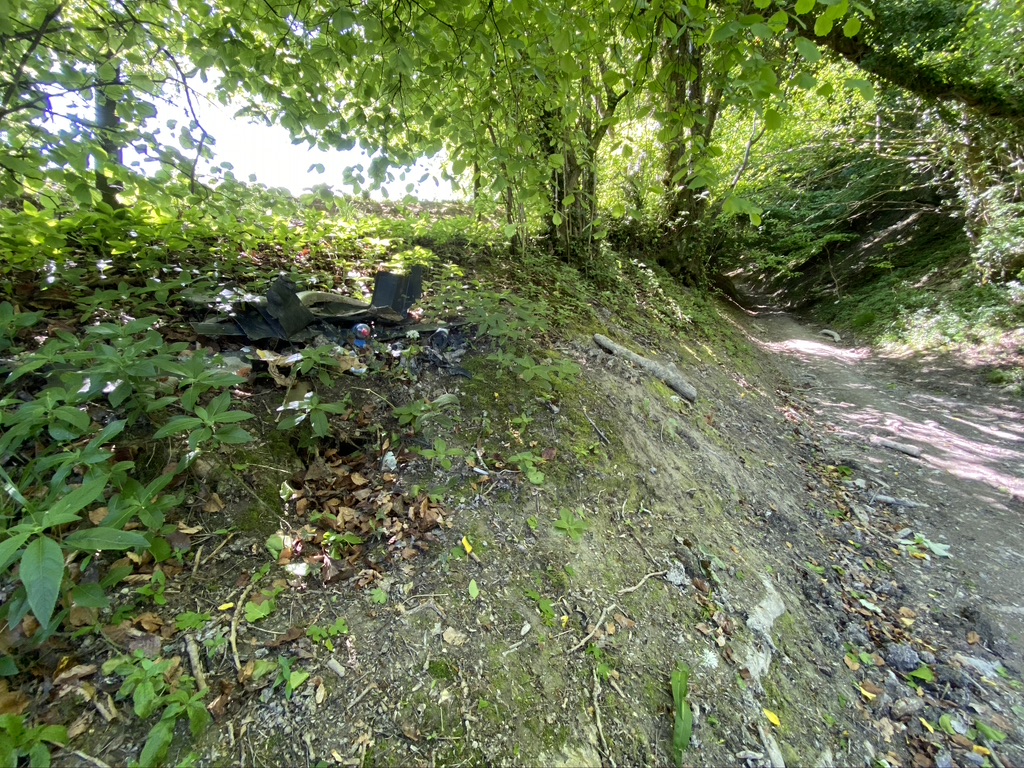
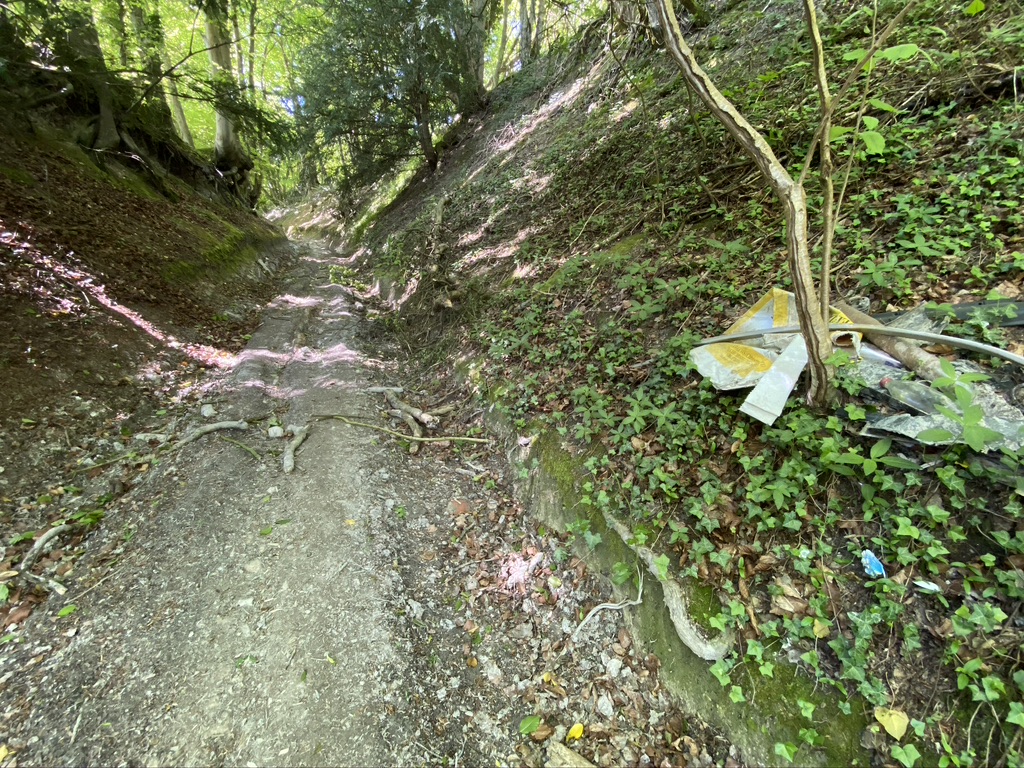
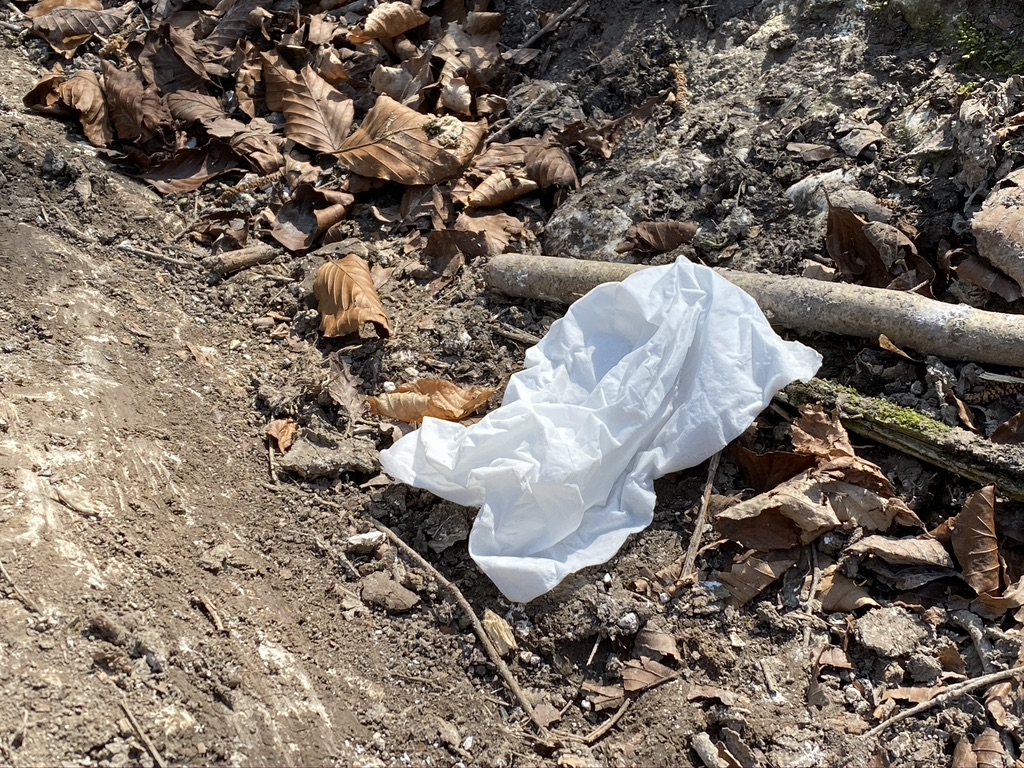
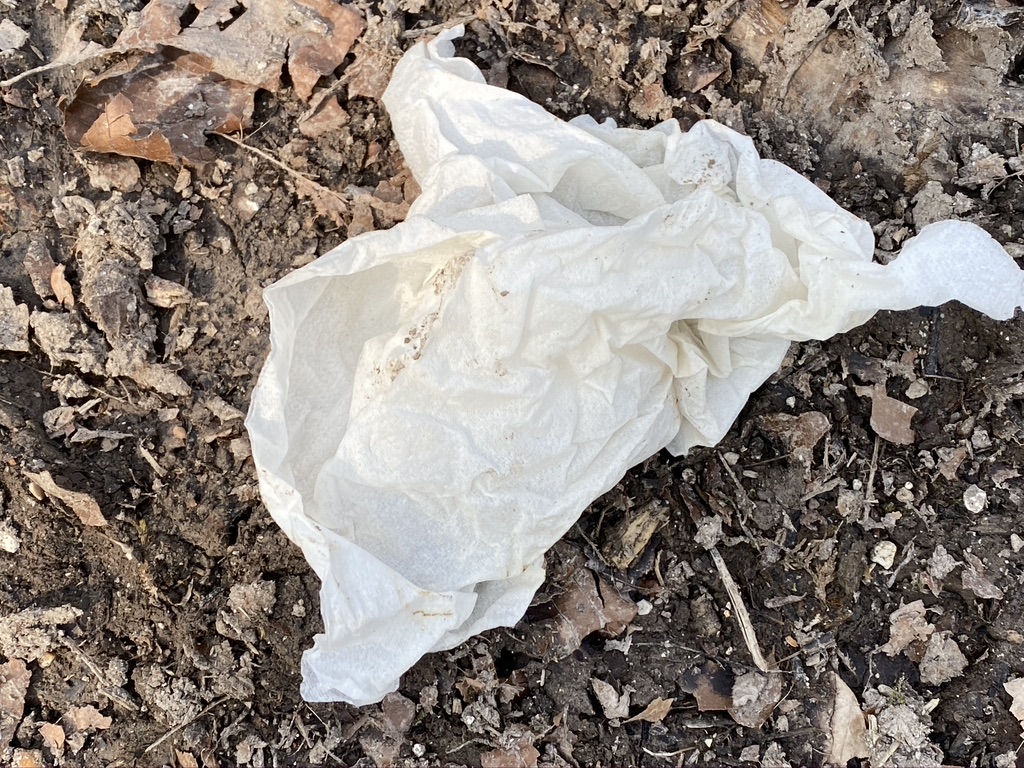
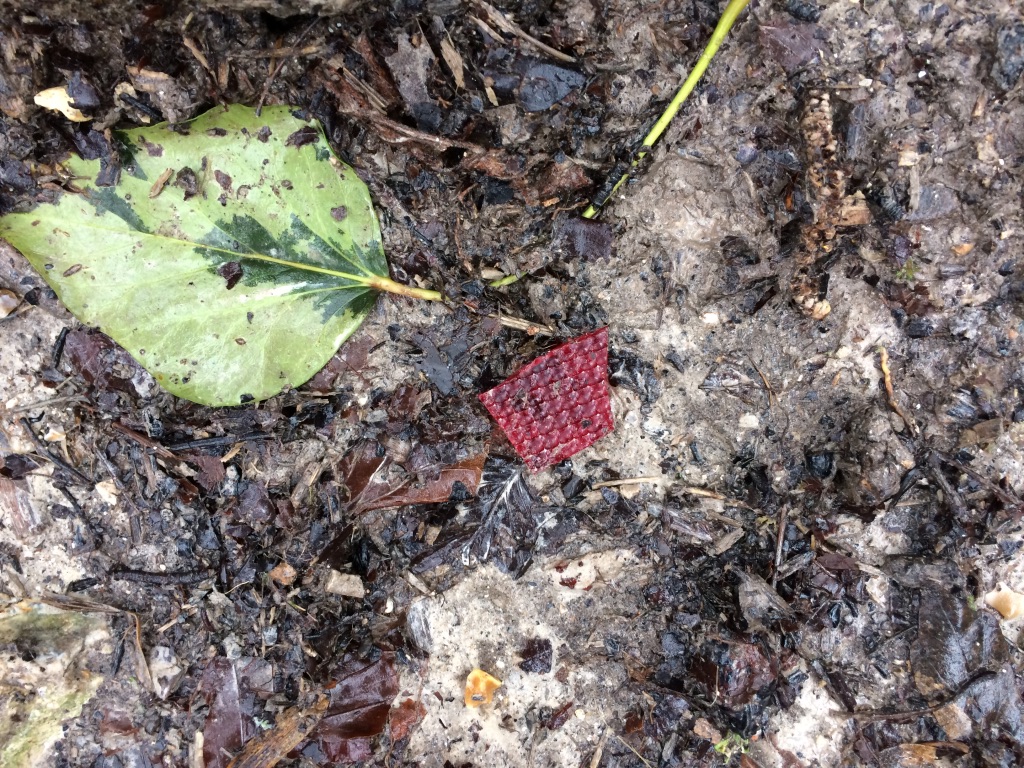
Whilst lockdown against Covid-19 has been in place there has been a fall off in the amount of rubbish found but it hasn’t dried up completely. Old fragments are still surfacing and new litter is appearing. Tissues are more prevalent which feels particularly disturbing. See my previous post Under(cover) in which I discuss my audiovisual work dealing with these specific objects.
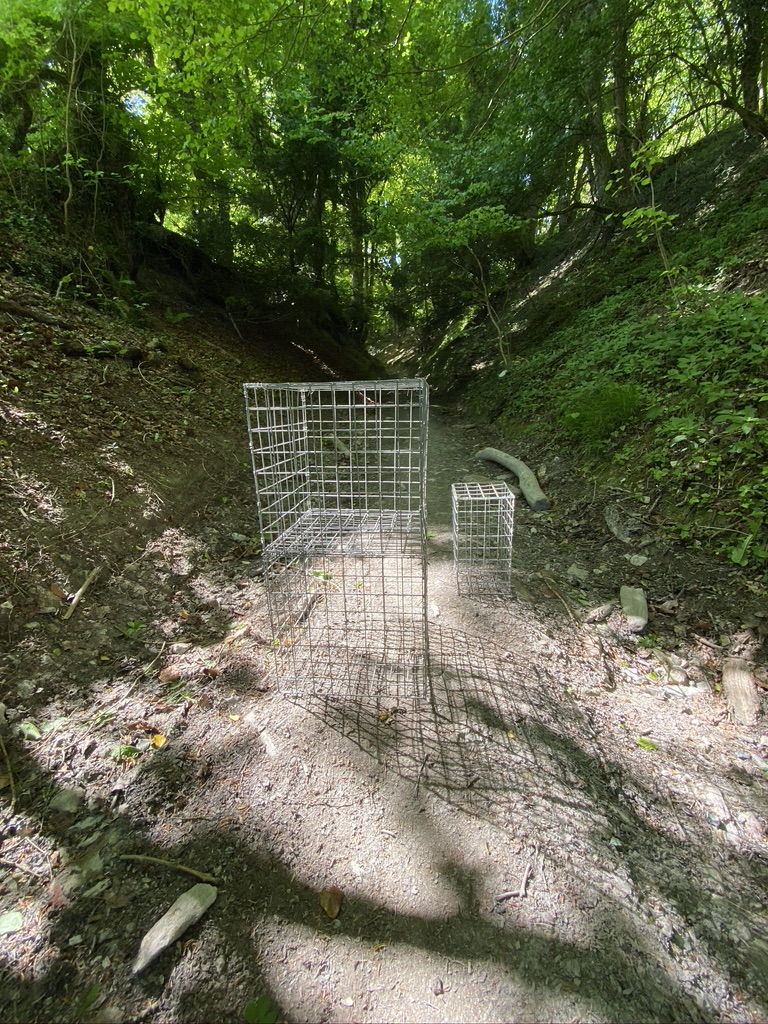
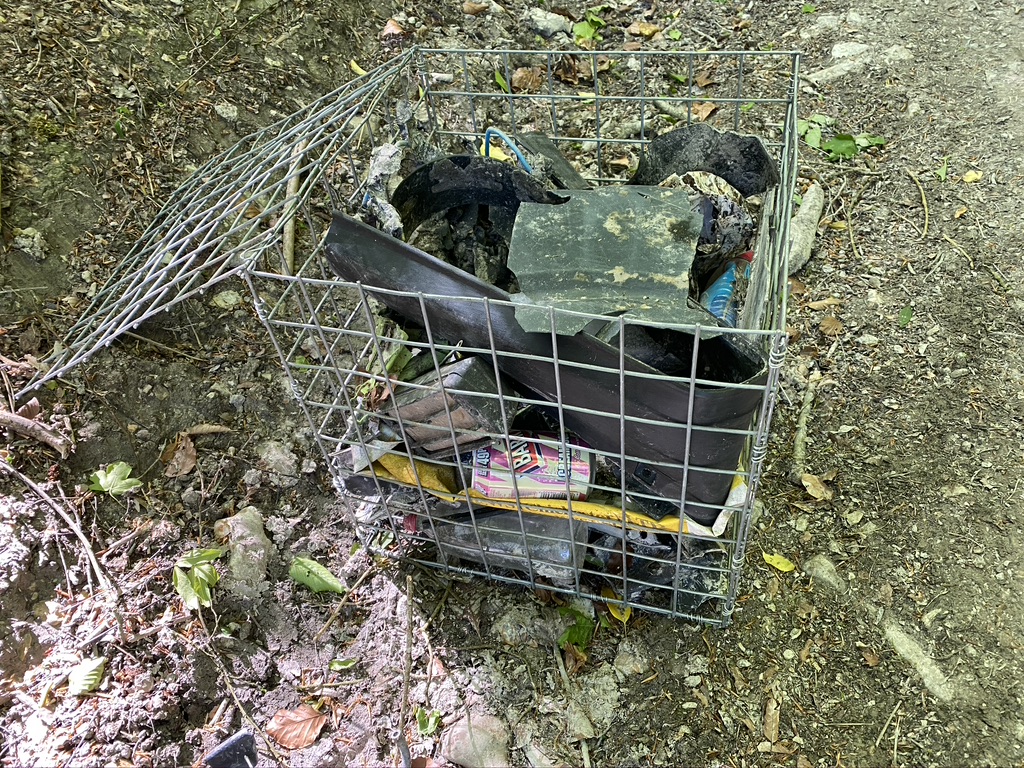
I was able to clear the Rubbish Cairns away totally into the two square gabions and fill the small rectangular one with storm damaged beech twigs. Interestingly, a passerby walker expressed his surprise that litter is left “out here” in this landscape. The idealisation of the countryside leads to disbelief that anything can ever be amiss, and outrage that it could be at all in a National Park. Rural sociologist Rosemary Shirley identifies this phenomenon in her book Rural Modernity, Everyday Life and Visual Culture (Ashgate/Routledge 2015) where she writes that “The presence of litter in the countryside….is not benign. It creates a range of emotional responses from slight annoyance to outrage, from nervous curiosity to actual fear.” A persistent nostalgia about the countryside is at odds with its contemporary reality, as a place of recreation and agribusiness, as well as a place to live, work and from where to commute.
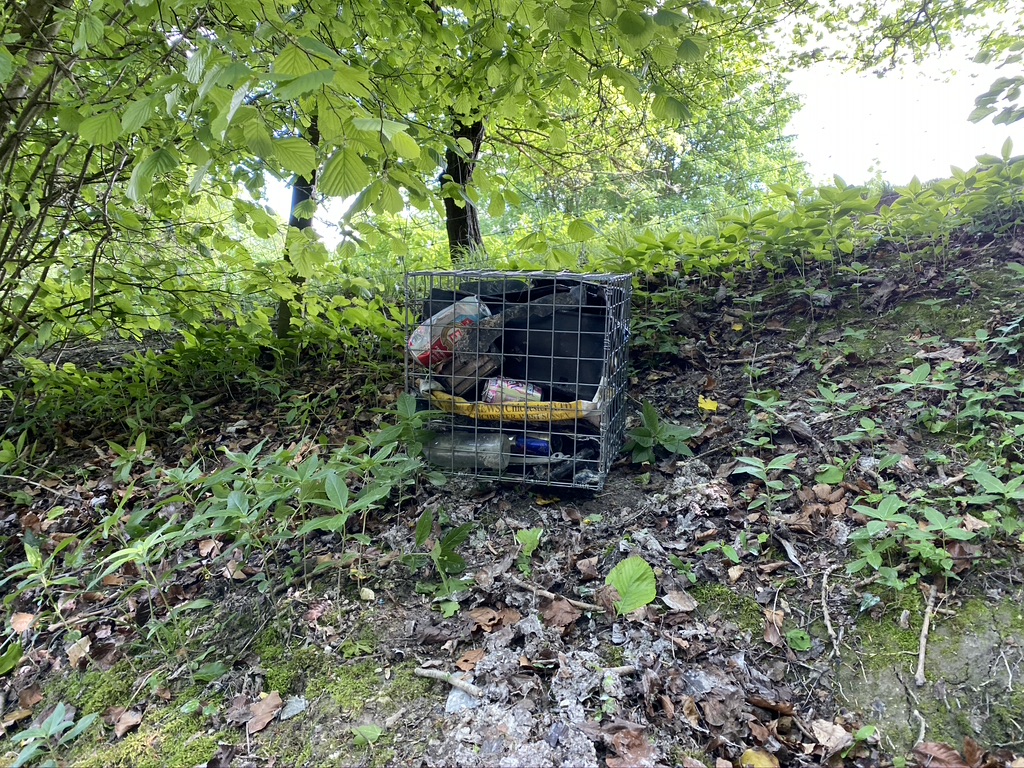
Before removing the packed gabions back to the studio, I experimented with siting and configurations of the three. I started by placing them back where the chaotic piles had sat for the last ten months. Tidied away and contained at last.
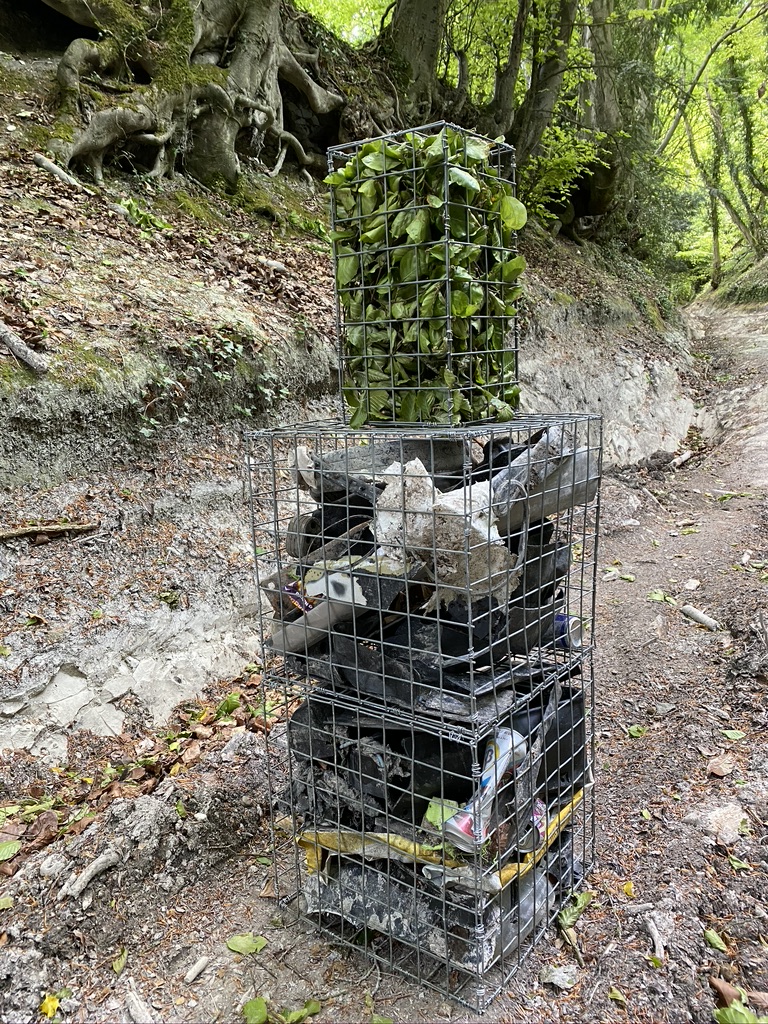
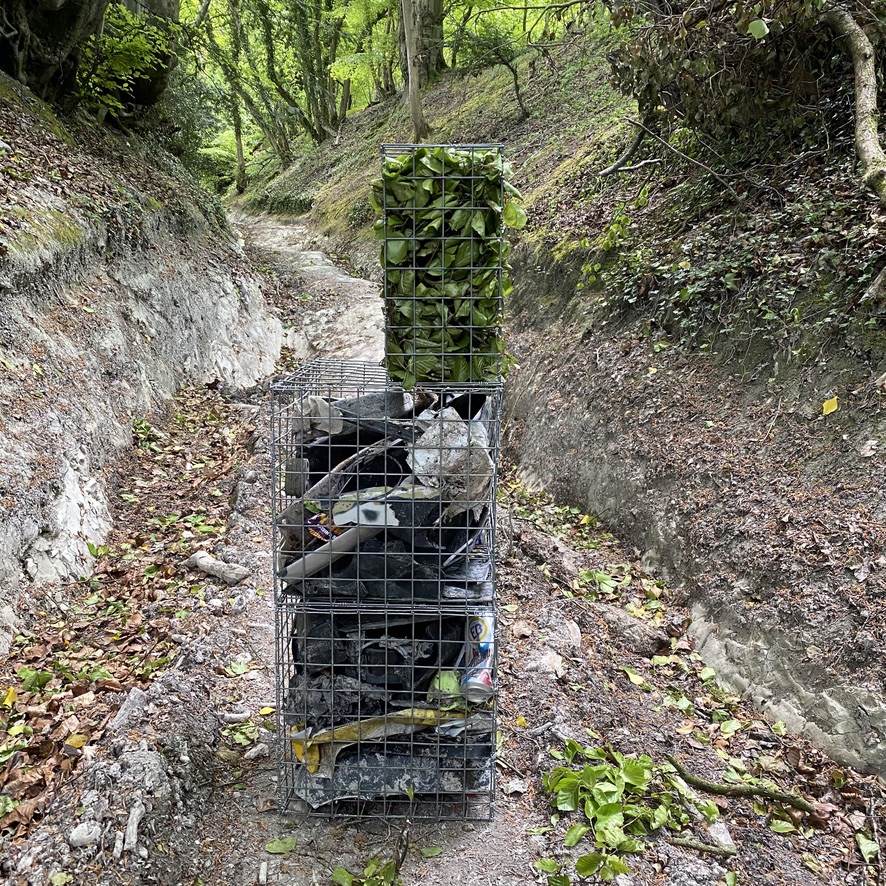
Then I placed the forms on the most rutted and eroded part of the track, in a stack and in proximity to each other. This was the context in which the materials were originally found. The site of struggles with gravity, mud, wind and rain. Reviewing these photographs, I’m stuck by the proportion of manmade detritus to natural leaf form within the gabions, the technosphere and the biosphere. One more gabion of detritus would make for a representation of Jan Zalasiewicz’s one metre measure of the geological data of the Anthropocene – biomass makes up 5kg per m² whereas human produced detritus makes up 50kg per m². A really sobering statistic that he expands upon in his essay “The Anthropocene Square Meter” included in Critical Zones. The Science and Politics of Landing on Earth. 2020, eddited by Bruno Latour & Peter Weibel (MIT Press). Alternatively – only half filling the small gabion would achieve the same proportion.

Under(cover)

Debate around the politics of litter explored by Rosemary Shirley in her essay Keeping Britain Tidy: Litter and Anxiety 2016 have prompted me to take a closer look at my own reactions to what I find on my walk. My submission to the Instagram Open Call Under(cover) takes photographs of discarded tissues from the first days of The Covid-19 Lockdown and contrasts them with an audio track of natural sounds in a 2 minute slide show.

Litter in a rural context is not tidied away and it is evidence of the urban invading the rural. This human littering is potentially spreading the unseen virus. Human behaviour is at the heart of what is happening. Why do people think it’s okay to leave their microbes lying around? My reaction is typical of what Rosemary Shirley identifies as the anxiety and even fear created by the presence of litter in the countryside.

In the pandemic the unseen has become a “hyperobject” or overwhelming event as Timothy Morton explains in the second episode of his BBC Radio 4 program “The End of the World has Already Happened”. He is referring to catastrophic weather events brought on by climate change but this event also qualifies. The photographs used in my slide show contrast the dirty tissues with the spring sunshine and wild flowers. The audio uses birdsong and wind only, with no sound of cars or planes. The natural world is getting on with Spring.

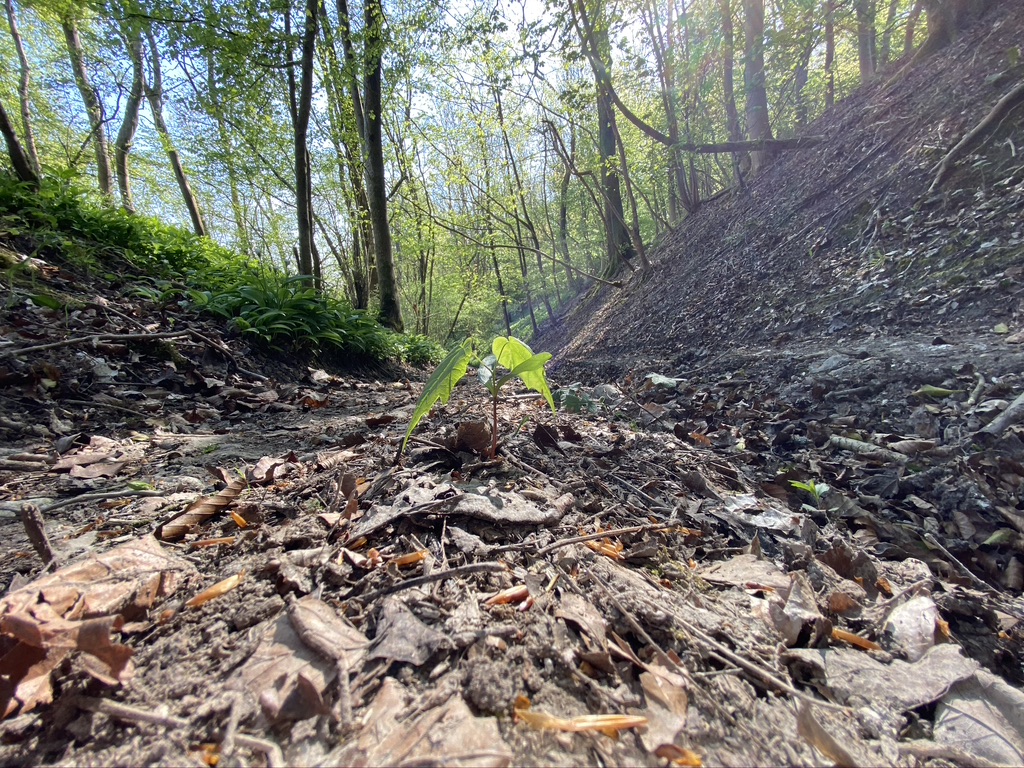
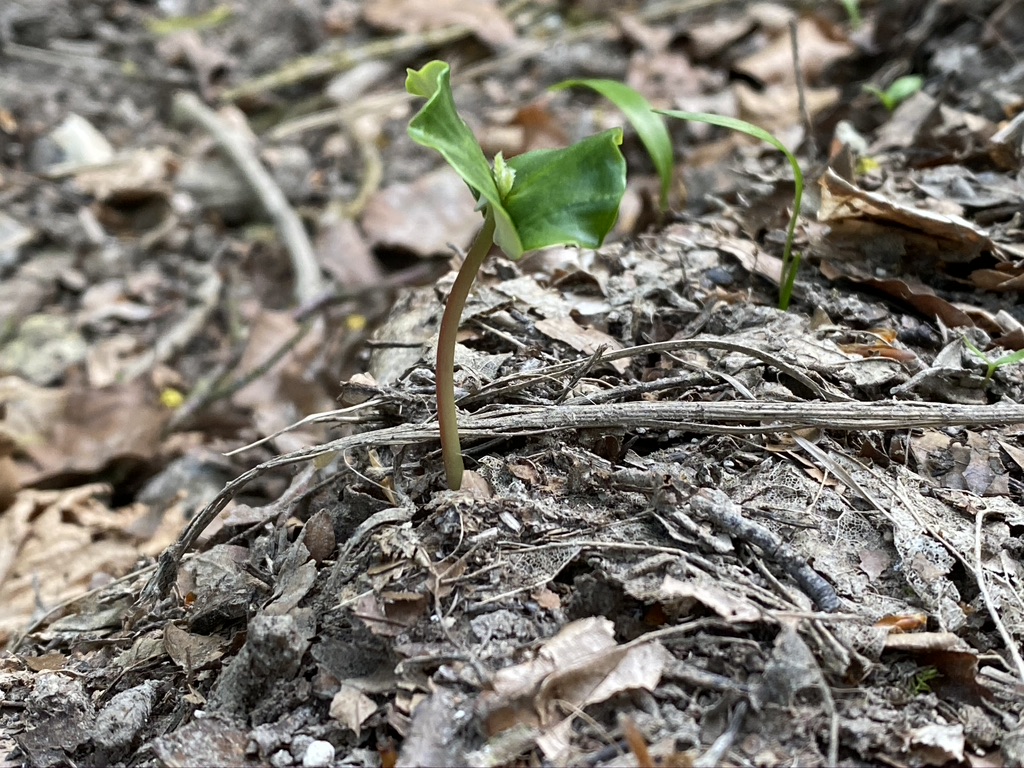
Observations of nature’s reaction to lockdown is continuing with a series of images of seedlings growing where normally they would be run over by recreational vehicles.

Traces of the Technosphere.

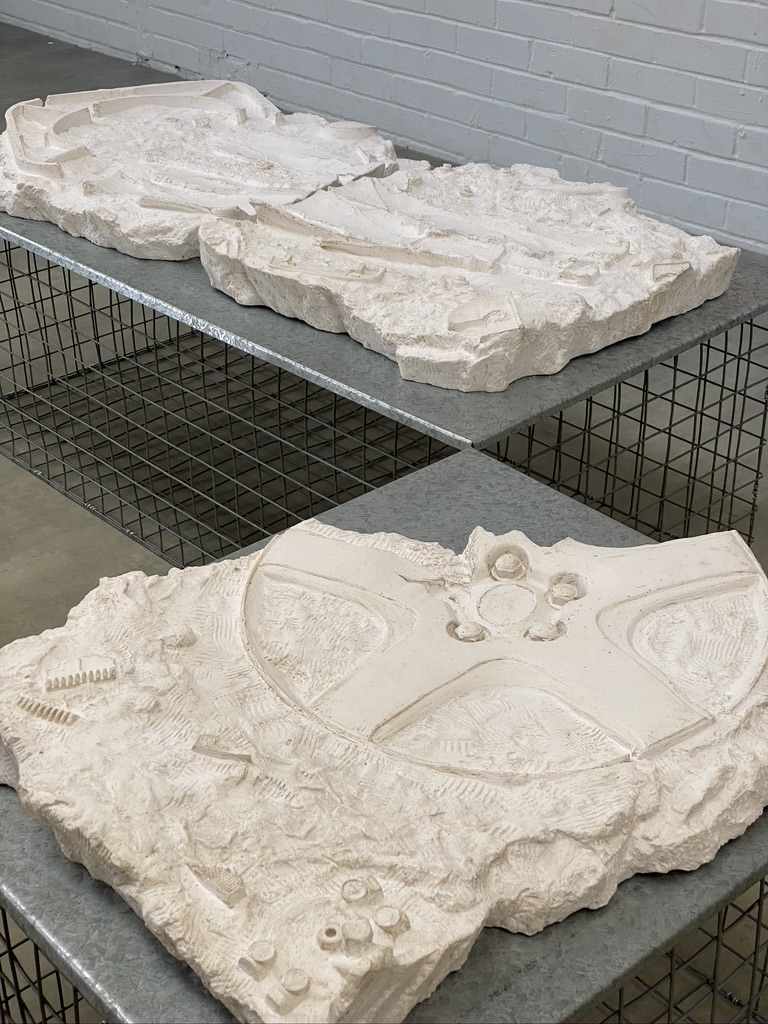
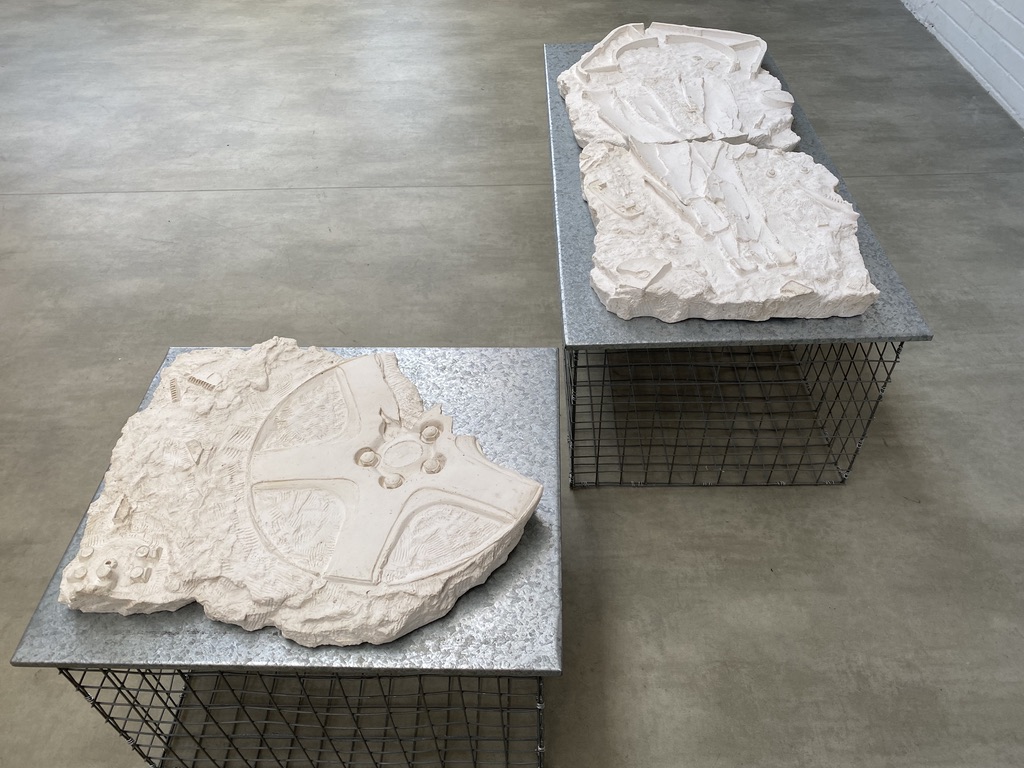
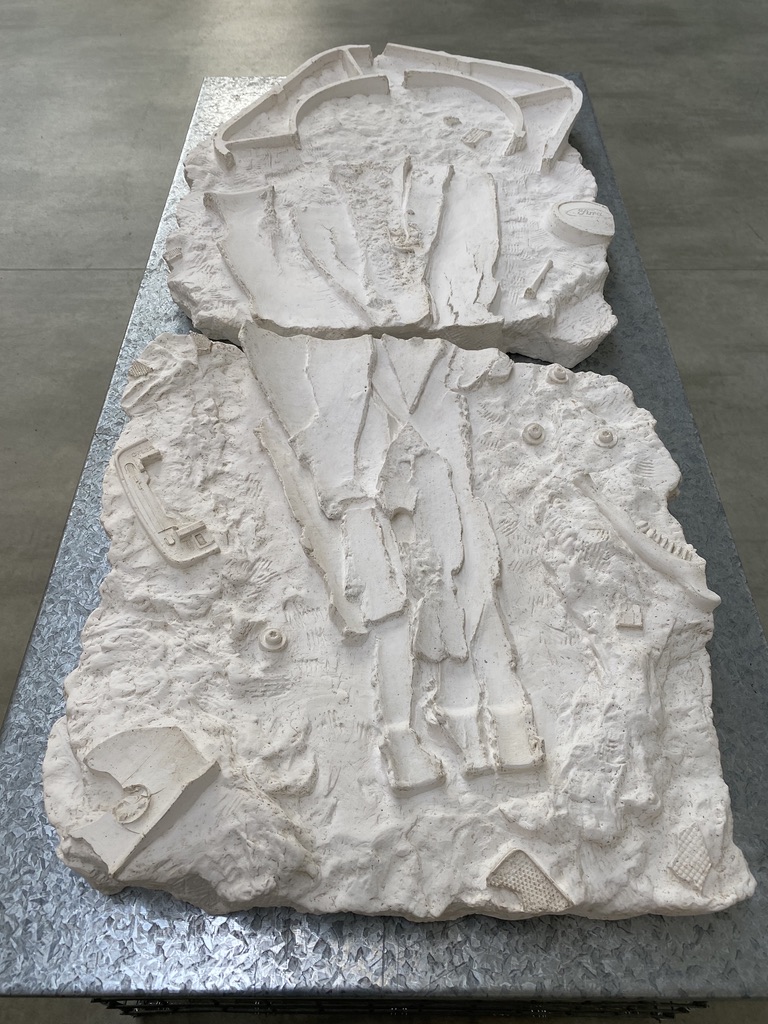
My submission to the group show Unsettling Focus, to be held at The James Hockey Gallery, UCA, Farnham, has finally come together. The work consists of several elements – plaster and steel sculpture, digital print and video.

Traces of the Technosphere 2020

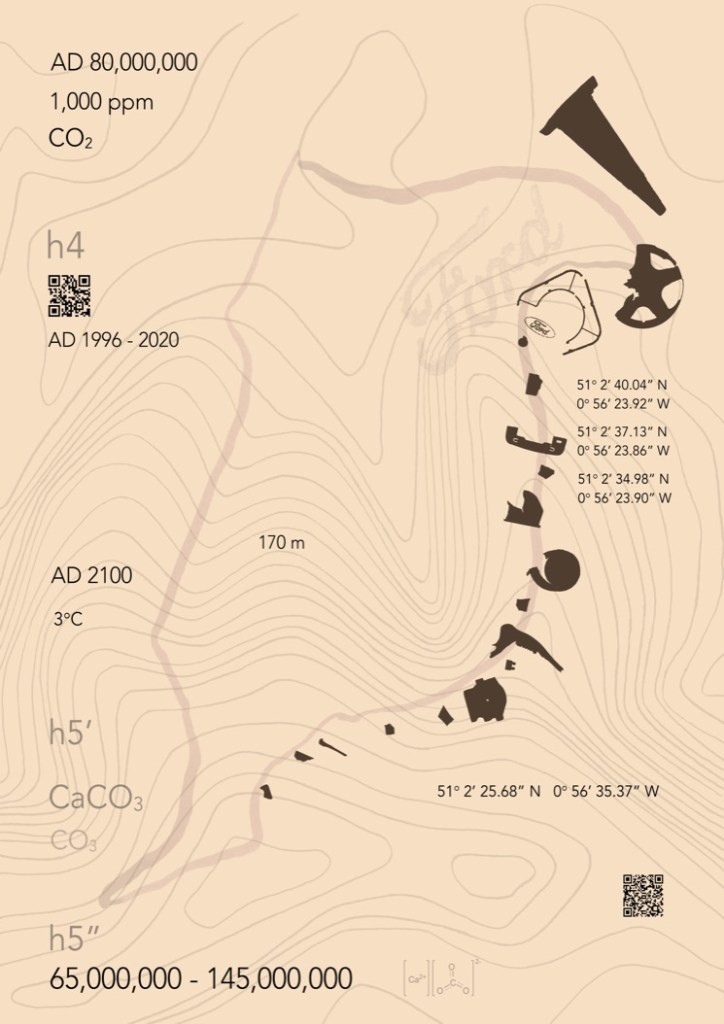
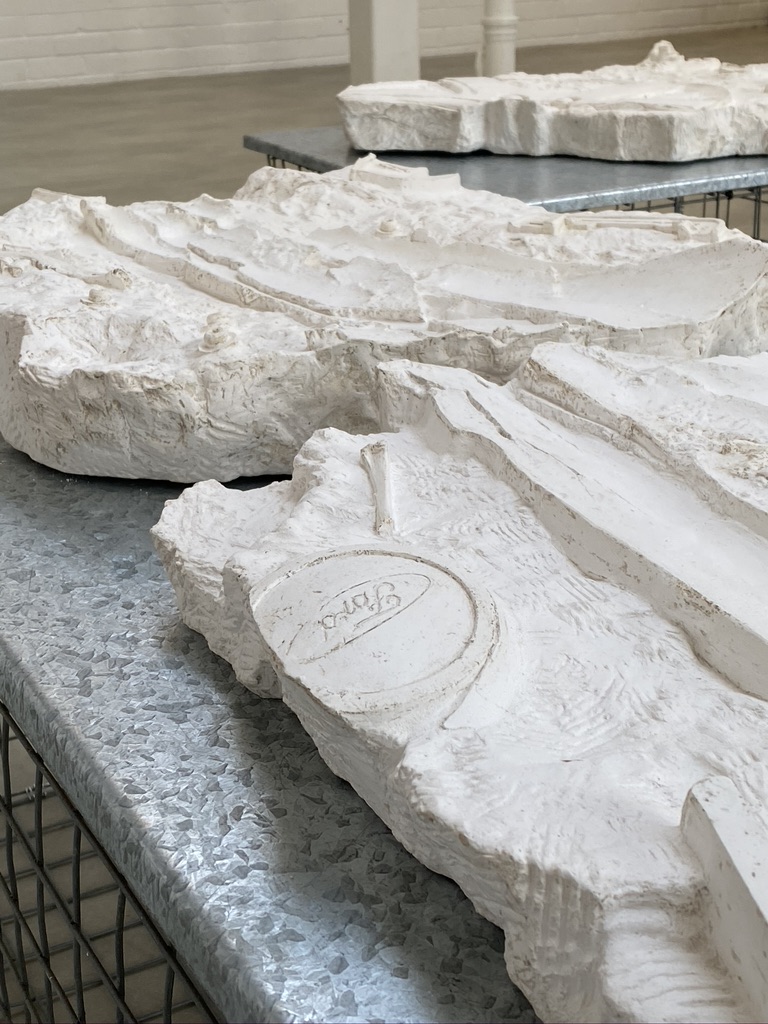
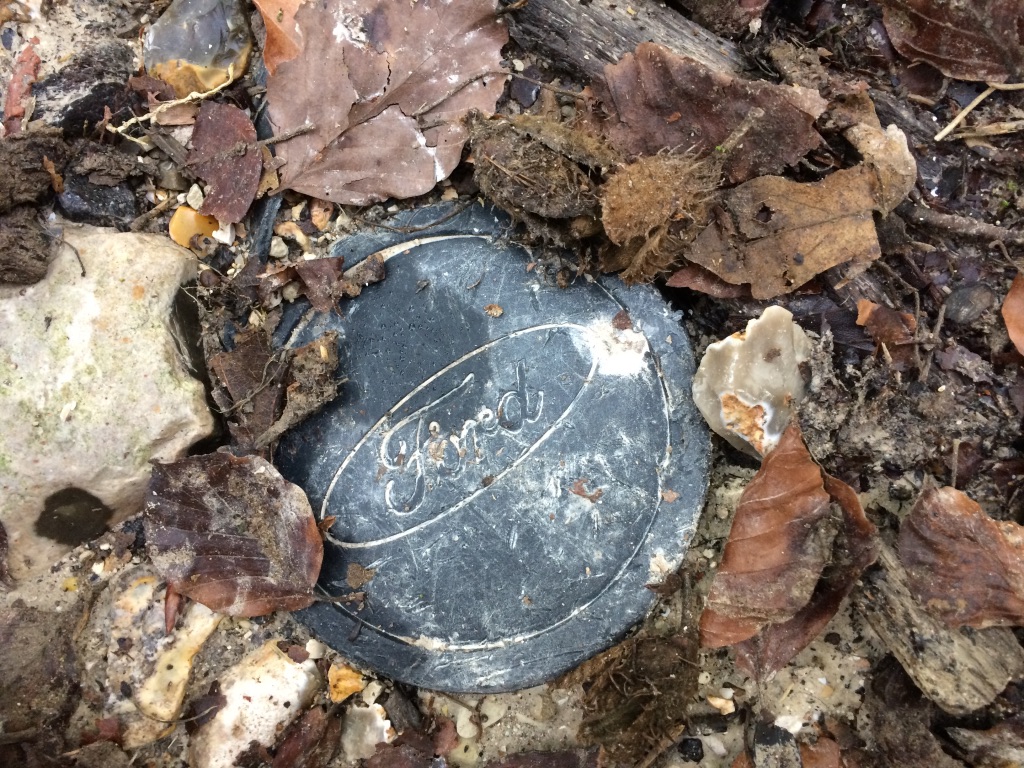
The work presents a future for the plastic detritus I collect on a 4000 year old track in East Hampshire. 4 x 4 drivers, dirt bike riders and walkers are just the latest users of this Bronze Age route to erode the chalk hill. That chalk is 150 million years old and full of fossils. Trace fossils are not the remains of a species itself, but rather the remains of the trace left by that species. Human artefacts form trace fossils and since the middle of the 20th century have spread over the entire globe, forming a technosphere, the preserved remains of which may be used to help date extinctions, including our own.  The plaster slabs presented here contain such “trace fossils,” are supported on a home-made version of the gabion basket, used in flood defences, and are accompanied by an info-graphic that lays out the geology and topography of the landscape and provides location information for the “finds”. The infographic deliberately avoids using words, except the Ford logo which is one of the “finds”, so as to set the piece in a possible far distant future. The figures relate to dates, GPS coordinates, and chemical formulas for calcite, calcium carbonate and carbon dioxide.

The infographic also contains two QR codes, a technology developed by the car industry. One takes the viewer to an academic article by Jan Zalasiewicz et al. The technofossil record of humans. The other to a post in this blog that describes the walk I make, the landscape and the process of collecting. That blog also includes a link to the video that goes with the piece. You can view it here.

The video and the infographic are attempts to bridge the gap between being in the landscape and the gallery. The video can also be screened in the gallery and its sound world is very important. It is about the artist’s daily walk on one level but also aims to link with the message of the “technofossil record of humans” presented by the plaster slabs and museum style infographic.

“Fossil burning human beings seem intent on making as many new fossils as possible, as fast as possible.” Donna J Haraway. Staying with the Trouble: Making Kin in the Chthulucene. 2016

Substrata

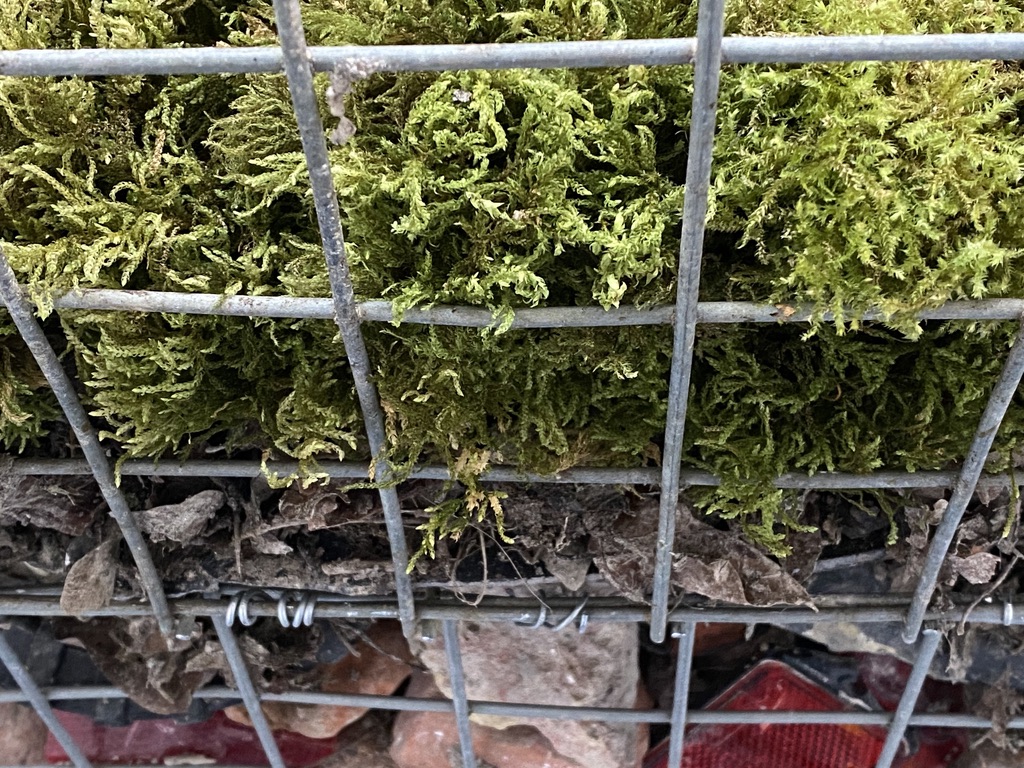
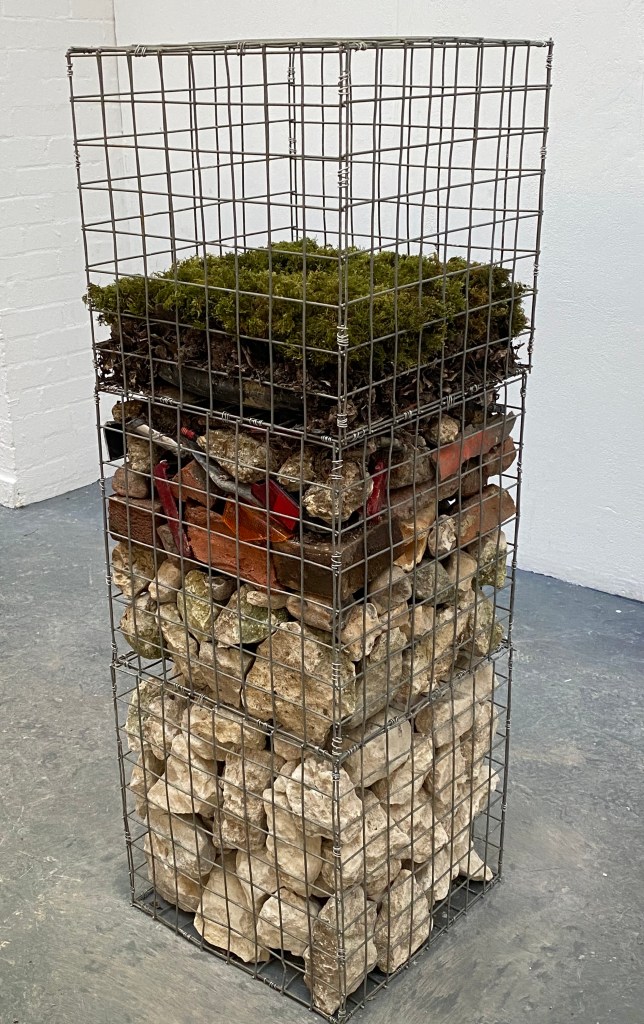
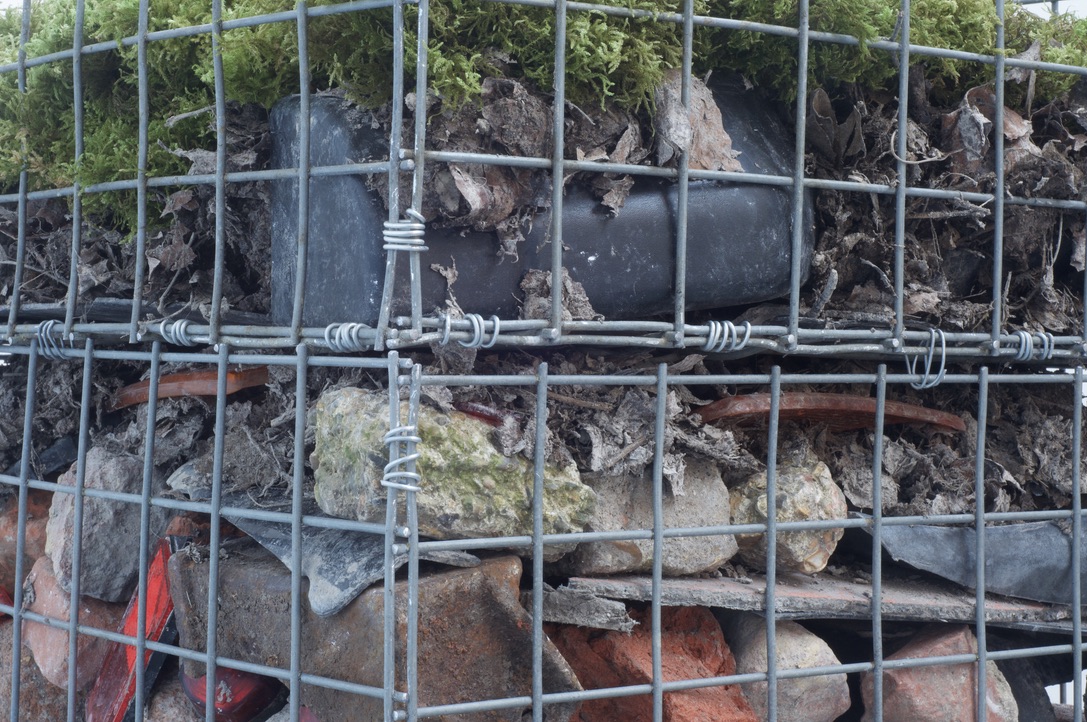
This work consists of a stack of hand built gabion baskets filled with collected materials from the landscape. The largest layer is chalk, then flint, brick, concrete, plastic and metal objects, earth and moss.

Substrata by Liz Clifford
122 x 42 x 42 cm

The chalk layer represents the vastness of geological time, and the work references human impact on the fossil record as well as geo-engineering and the climate emergency. The materials contained within the gabion structure were all collected in the same location over a number of years and form a version of the “non-site”, as pioneered by Robert Smithson. The outdoors brought indoors. The plastic and metal detritus comes from fossil-fuelled recreational vehicles and is layered with the brick and concrete. It pokes through the living layers of mud, leaf mould and moss. The moss layer is easily viewed from above as it is only one metre off the ground. The audience is encouraged by its seductive colour and texture to peer down into it but finds sinister glimpses of the plastic hidden beneath.

Gabion baskets are cages filled with rocks that are used extensively in flood defences and other civil, as well as military, engineering projects. The idea dates back to the Renaissance when a type of gabion was used for the foundations of buildings. I had been building my own gabions as plinths for other pieces of work because of the flood defence/climate emergency resonances when I started to move towards using the form in the work itself.

The earth and moss layers are sprayed with water which gives the piece a living smell as the moss revives. Olafur Eliasson’s Moss Wall and Moss Valley series of photographs fed into my decision to use this material. It also provides a colour contrast with the layers below. The green moss, black and red plastic, layered with brick and concrete, on top of the white chalk. The space above the moss layer is empty. It is the space occupied by the stratum of air in this column of strata. As the audience leans in to inspect the moss layer from above, they breathe in the air stratum and the aroma of moss and earth given off by it.

In my research for this piece of work I came across Spanish artist Miguel Sbastida. His “Technofossils of the Anthropocene” is an installation of sculpture, photographs and found objects. The work explores the formation of trace fossils from industrial waste already showing in the rock strata of the estuary at Bilbao, Northern Spain. Between 1920 and 1970 more than 120,000,000 tonnes of industrial waste from the metallurgic industry was pumped into the sea there. Tides and wave actions have returned much of it to the shore where it has sedimented to form a 6 metre tall rock stratum containing layers of recognisable industrial materials, most strikingly, the fire-bricks used in the metallurgic furnaces. Sbastida’s desire to make work from a vital materialist, post humanist perspective really resonates with me. The installation itself blends a cool display of the facts, through the found objects and photographs, with a much more emotional response embodied in the sculpture referencing the space within a closed human palm made from site-specific sediments.

In my work, Substrata, I am referencing geology on the physical level but I am also exploring geology as a metaphor. Deleuze and Guattari in chapter 3 (The Geology of Morals) of their book “A Thousand Plateaus” 1988 investigate the constant state of flux that exists within a stratum and between strata. They take as an example the behaviour of crystalline formations in the milieu of rock strata and apply this observation to all milieu, abstract and physical, macro and micro. The crystals form on the exterior as the interior is emptied. The centre moves to the periphery and back again in cycles. The middle is really important – the “milieu”. When something leaves its milieu it forms assemblages and evolves. It’s that flux and it’s unforeseen consequences again. Within the organic stratum, Charles Darwin observed in 1888 how earthworms work to make a fertile topsoil that in turn allows humans to grow food. The worms’ “small agency” allows for human production and the preservation of artefacts in the soil. This is not an intended outcome but the unintended consequence of an assemblage. Within my work, Substrata, the organic strata of mud and leaf mould do contain a few earthworms. They are composting the work as it is displayed. There is that ephemeral aspect to the work which I am keen to keep developing as I puzzle through ways of bringing the experience of walking, observing and collecting in the landscape to a gallery audience.

Traces from the Technosphere. Walking the track.

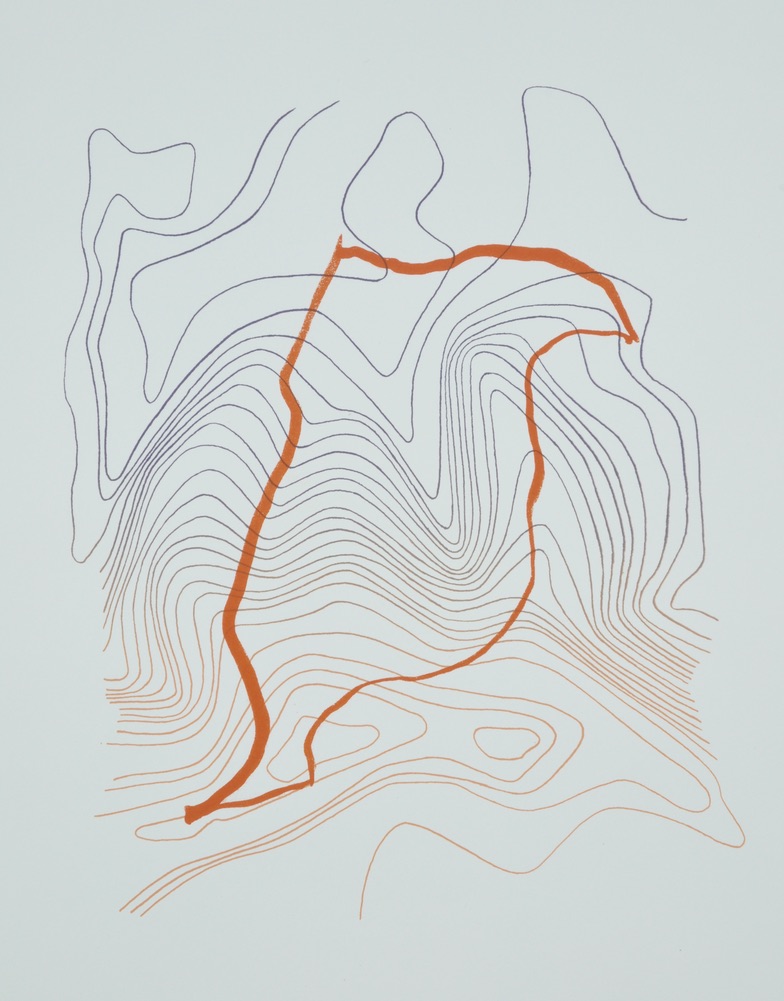
Circular Walk 2019 screen print. Liz Clifford.

This is the starting point for the various strands of my current work. A circular walk I’ve been making almost daily for 24 years. In the screen print below, the orange line represents the trace of the walk across the contours of the landscape.

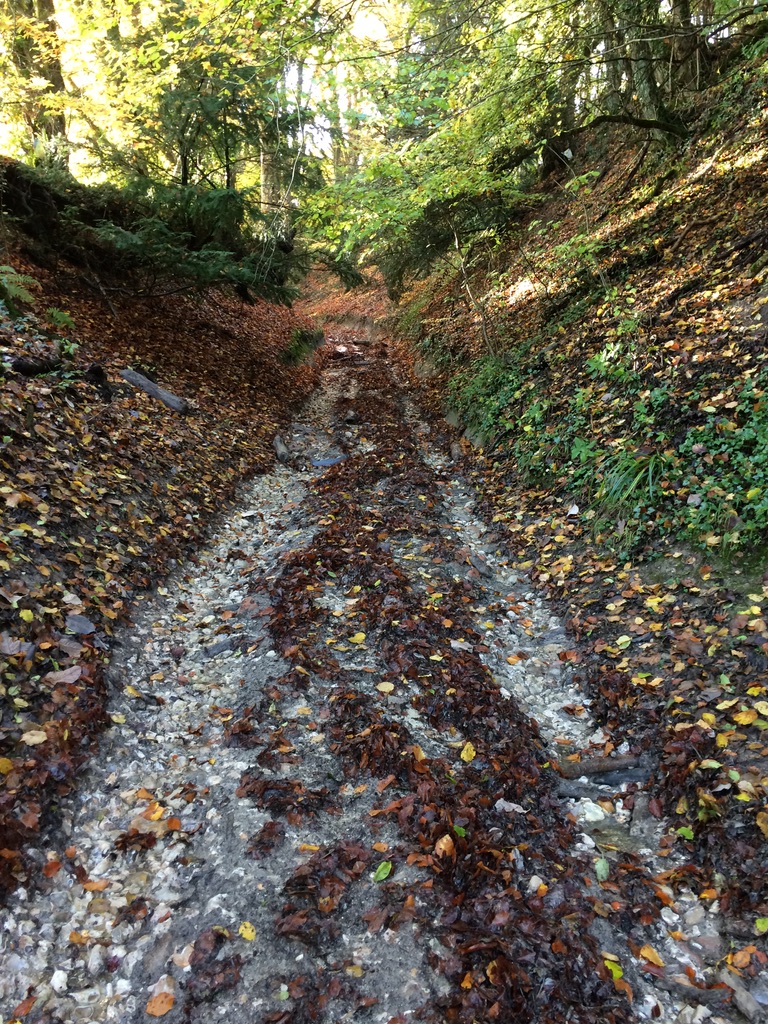
That landscape is in the very beautiful, chalk hills of the UK’s South Downs National Park. Part of the circular walk is on a 4000 year old track. Over those thousands of years it has eroded to become a hollow lane 30 foot deep in places. Originally used by Bronze Age humans, then coppicers, farmers and travellers, it is now a place for recreation. Off-road 4×4 drivers and dirt-bike riders share it with cyclists, horse riders and walkers.
Hollow lane. 4000 year old track.
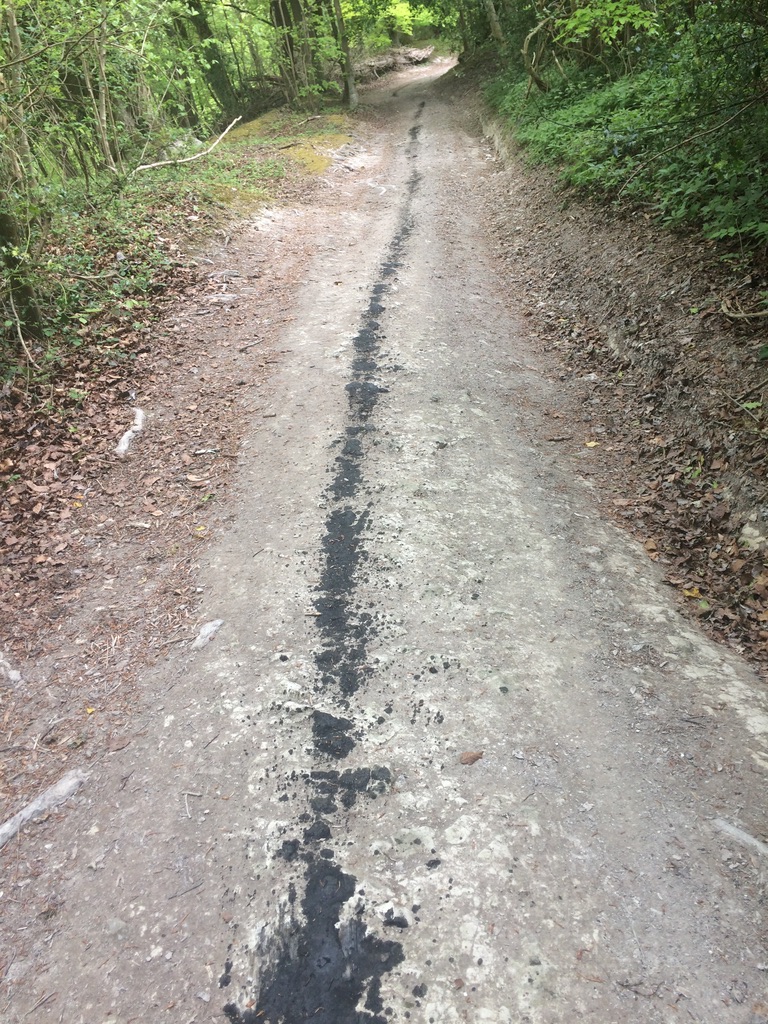
The black line on the chalk is an oil spill from 4×4 vehicle.

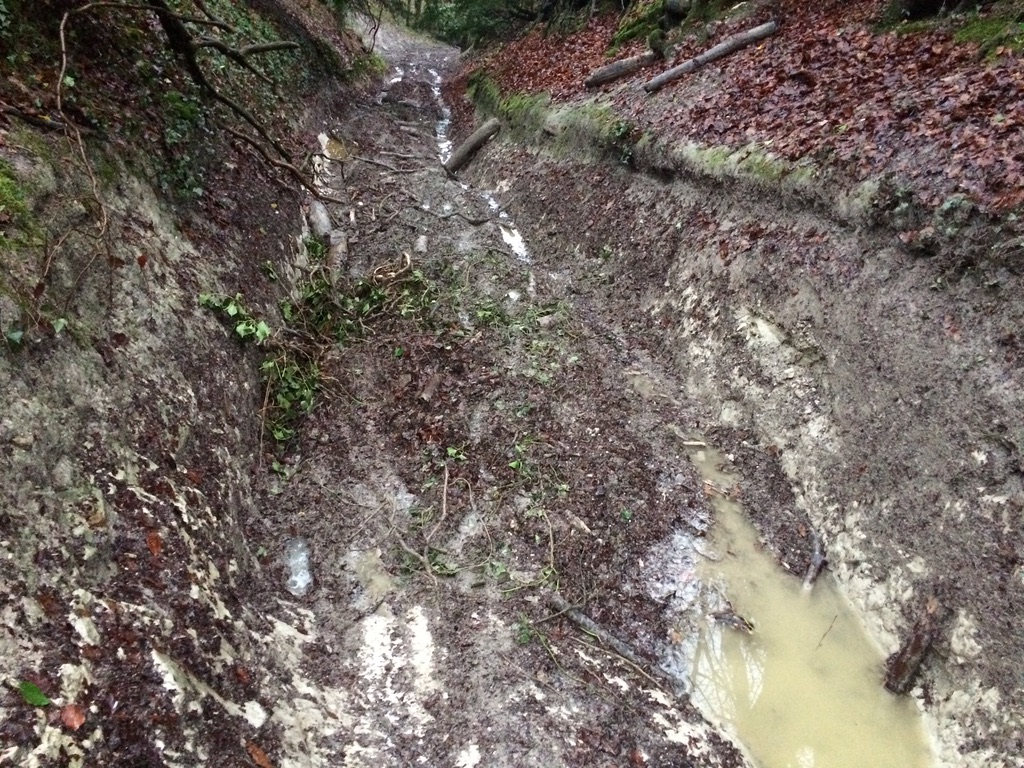
The erosion caused by these humans is accelerating due to vehicle use. The image below shows the muddy ruts in winter. The hollow lane is becoming deeper faster.

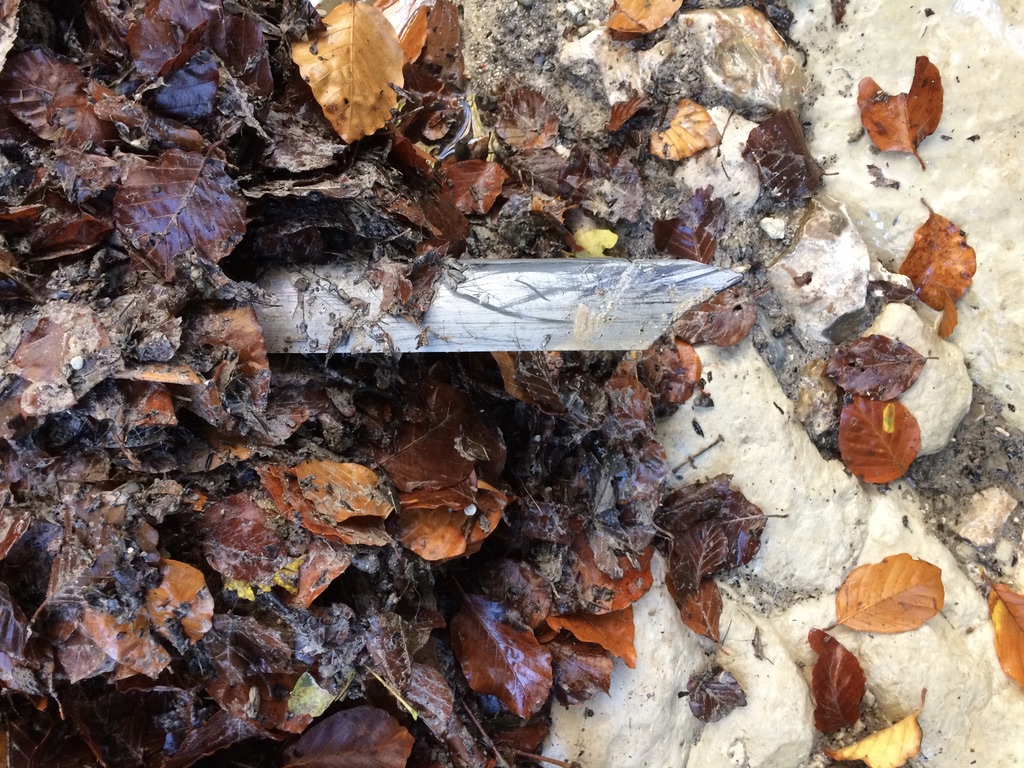
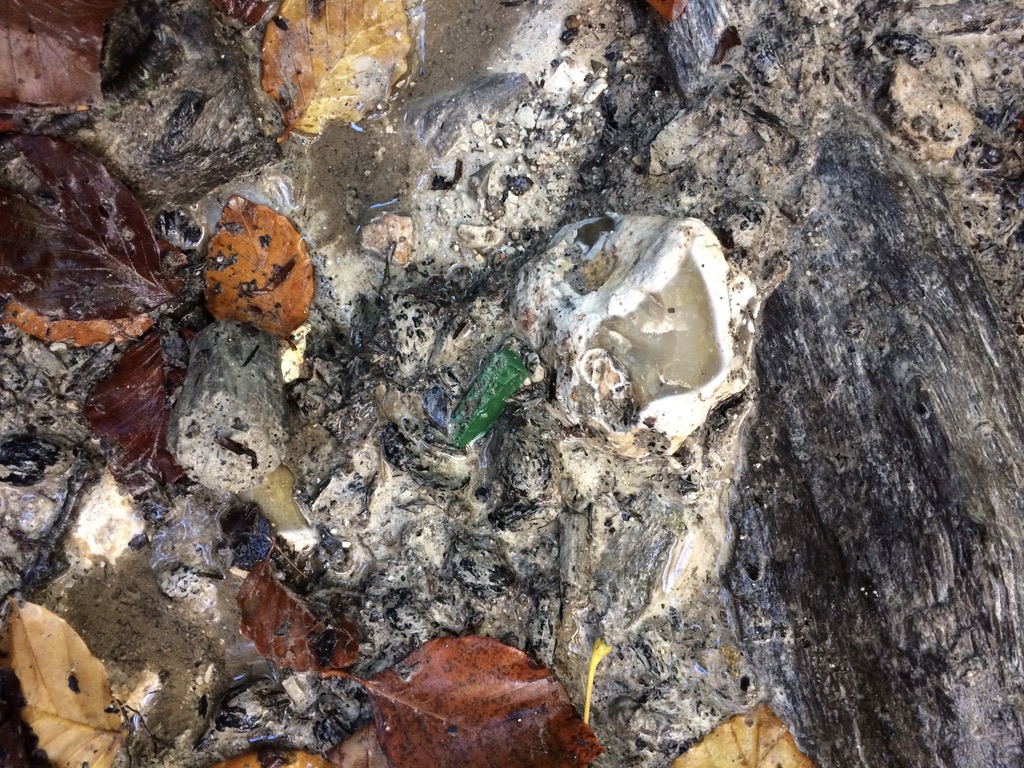
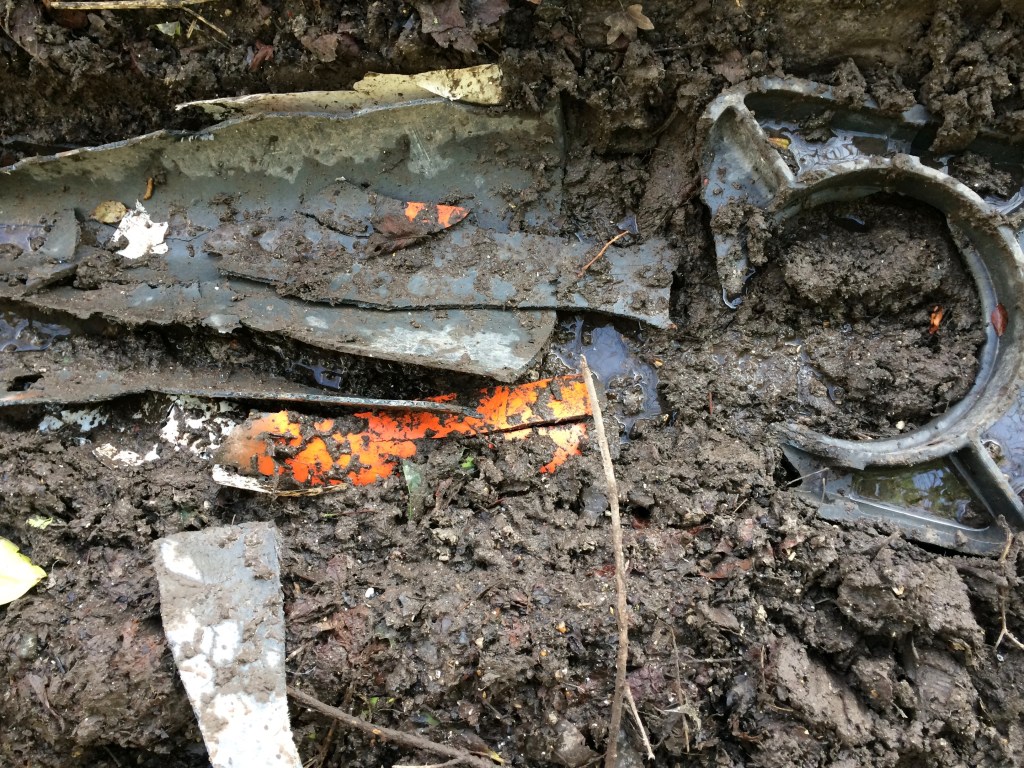
Whilst I walk I collect the plastic waste I find on the track. Most of these objects are parts smashed off the 4x4s and dirt-bikes. I document them where I find them. I’m struck by the way the objects get embedded in the ground, looking ancient and sometimes gem-like, reminiscent of archaeological finds or proto-fossils. This chalk hill contains fossils 150 million years old, from a time when the area was a shallow sea. Not all those fossils are body fossils. Some are trace fossils. Trace fossils are not the remains of a species itself, but rather the remains of the trace left by that species – impressions, footprints, worm casts. Human artefacts also form trace fossils and are called technofossils by geologists. Since the middle of the 20th century human artefacts have spread over the entire globe, forming a technosphere, the preserved remains of which may be used to help date extinctions, including our own.

I have made a video about this walk and the objects I find. You can view it here.

“Fossil burning human beings seem intent on making as many new fossils as possible, as fast as possible.” Donna J Haraway. Staying with the Trouble: Making Kin in the Chthulucene. 2016

Gordon Cheung’s “Home” at Edel Assanti.

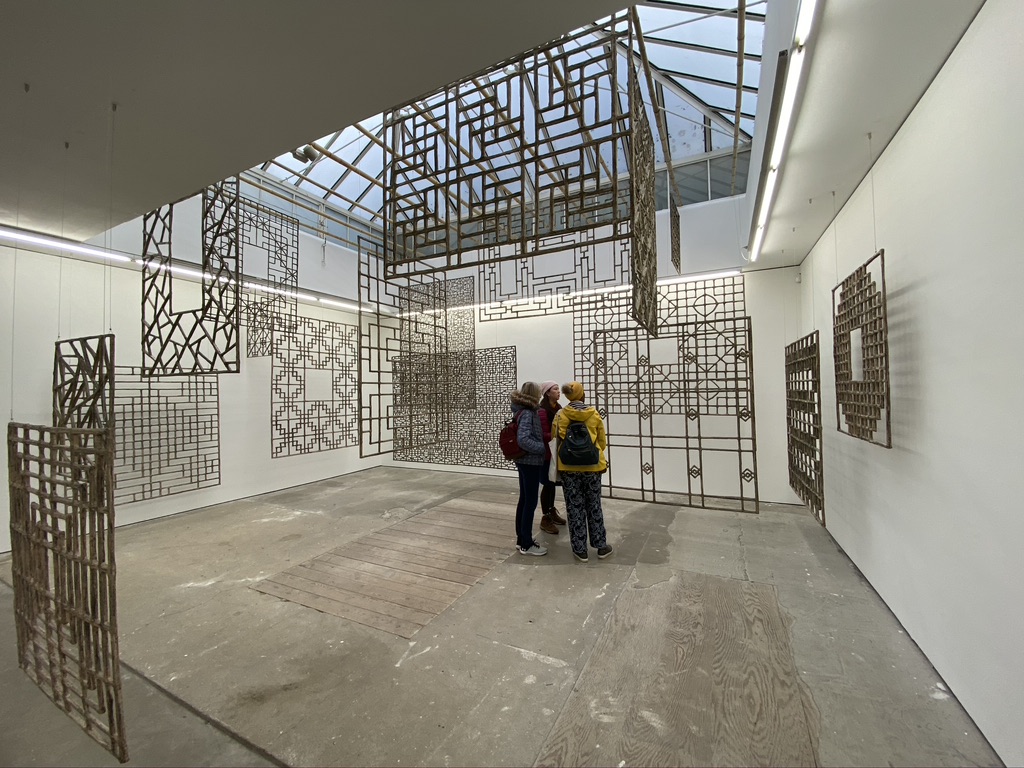
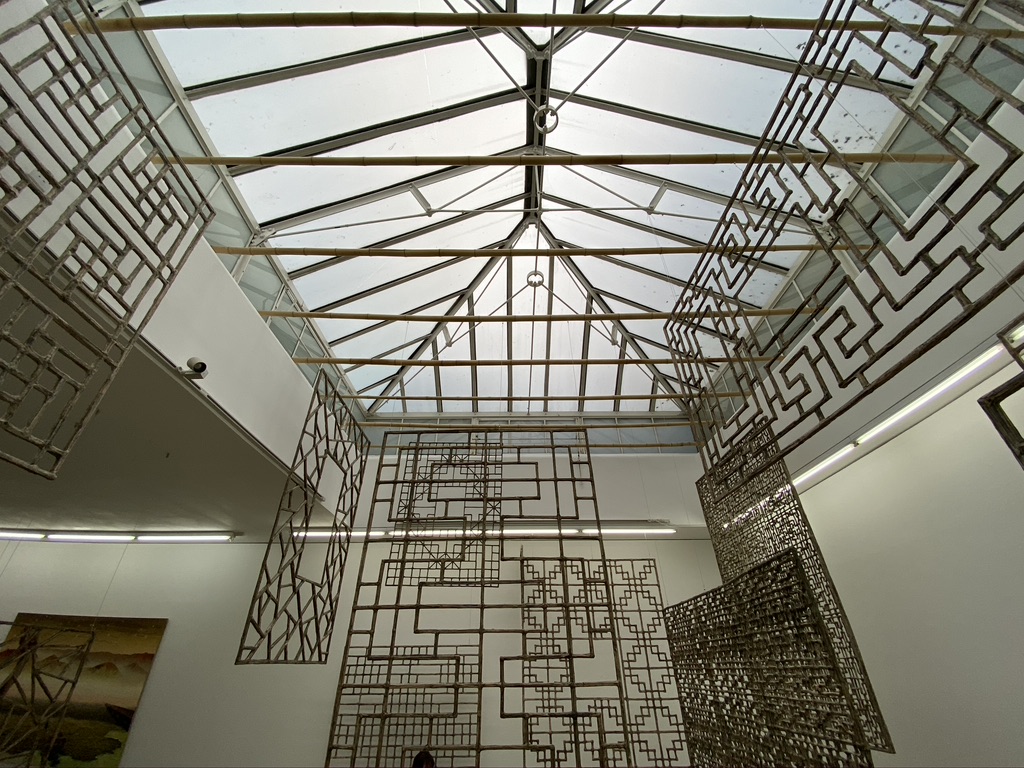
In this show of paintings and an installation, it was the installation that I was most drawn to. The work, titled “Home”, was originally shown in Hong Kong in 2018 and comprises eighteen screens hanging perpendicular to each other.

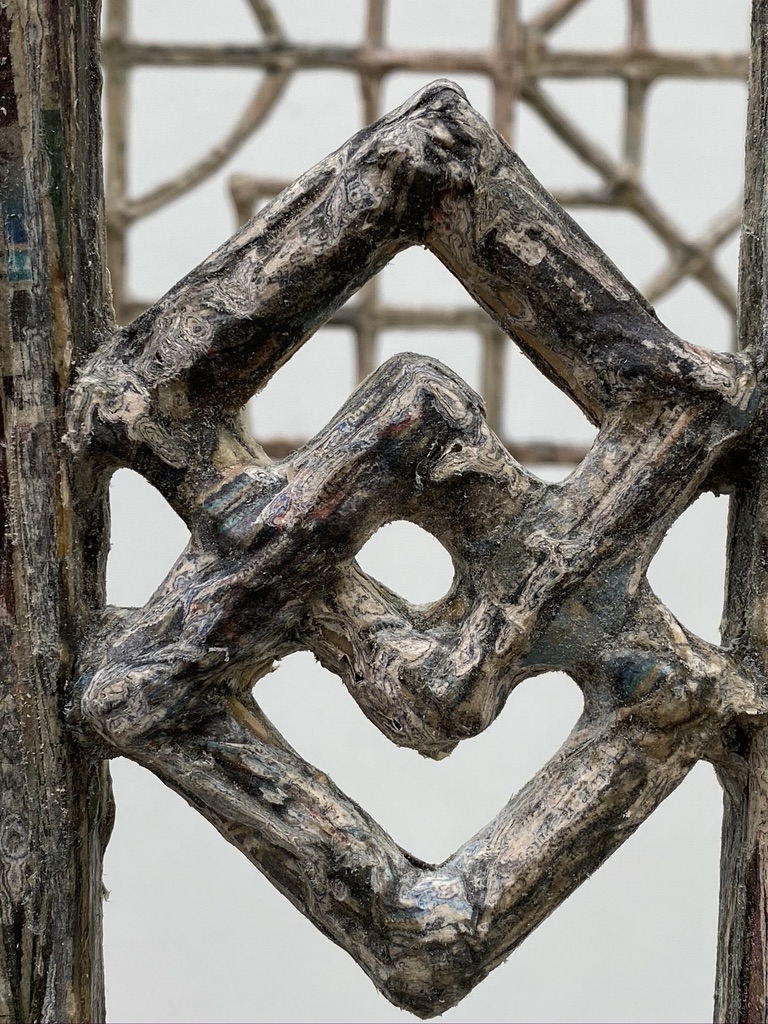
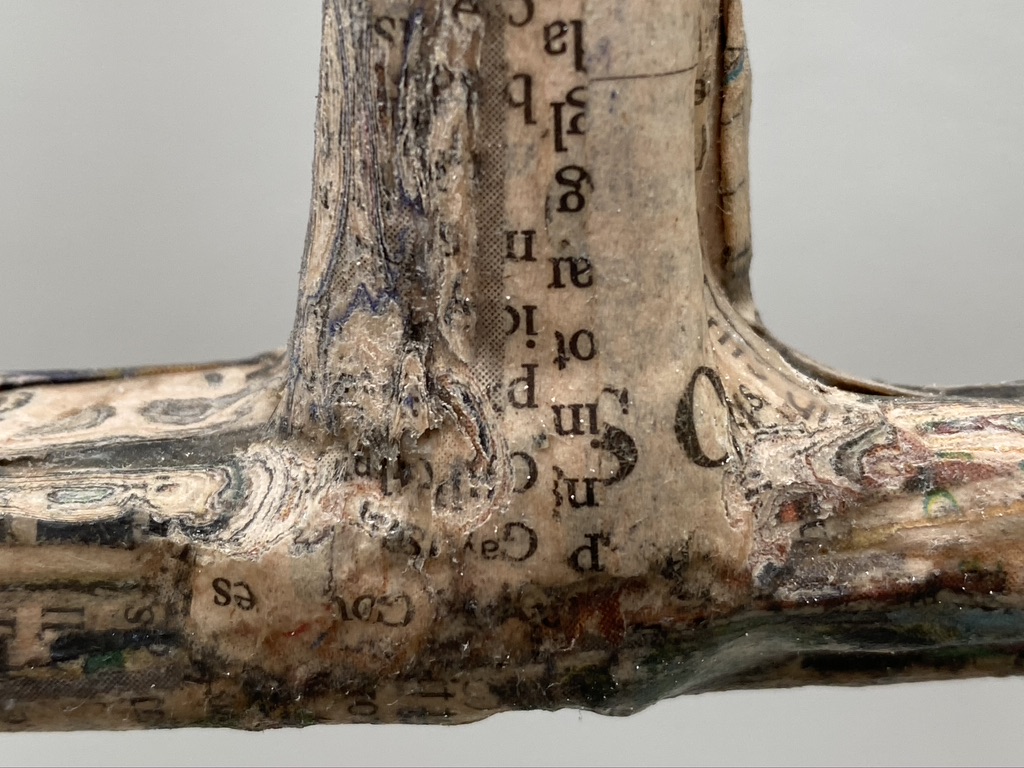
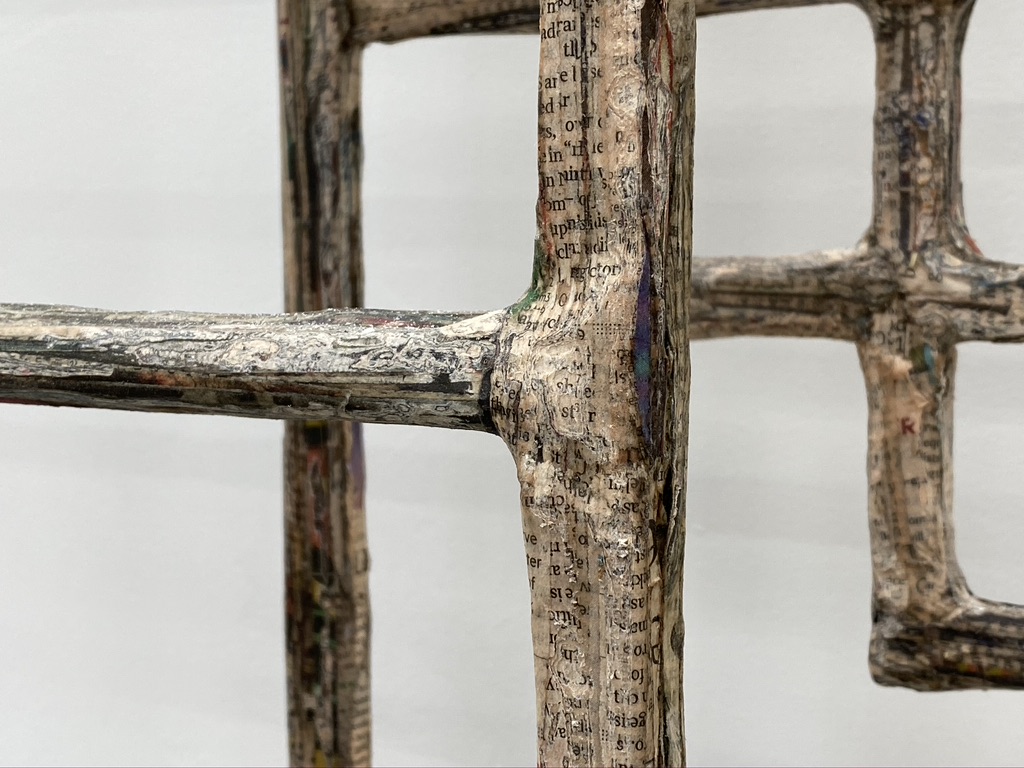
The screens are lattices made of bamboo and newspaper. In this gallery they are suspended partly beneath a glass roof on chunky bamboo poles by elegant wire fixings. They hang at varied heights, some hovering just above the floor and others well above head height.

The lattice forms are derived from traditional Chinese window designs used in buildings that are being demolished to make way for rapid urbanisation and expansion of Chinese cities. The artist visits this issue repeatedly in his paintings of “nail houses” – the houses that get marooned by development as the city grows around them. In the paintings the traditional house is picked out like an island. Here it is symbolized by the lattice window form that is suspended without its walls, like a ghost window.

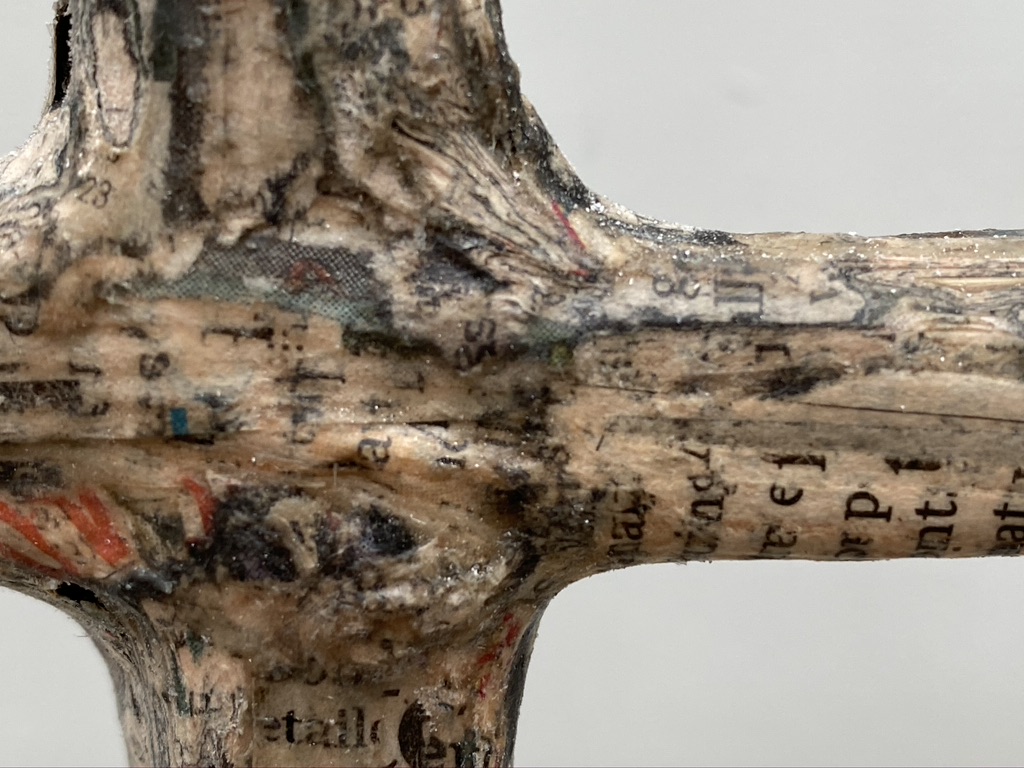
The eighteen lattices are all different but constructed with the same bamboo, paper and glue method. The artist has glued layers of financial newspapers over the bamboo structure and then carved it back in places to make an ancient, distressed aesthetic. He also uses financial newspapers in his paintings as a collage material citing its reference to capitalism. He talks of making the choice of material as part of his critique of the tearing down of traditional Chinese homes in the name of Communist Capitalism. (1)  Here the text and numbers show through and the unmistakable pink of the Financial Times is clearly recognisable.

The audience can wander through “Home”, between the suspended windows. You can view each other through the piece. As if glancing into each other’s homes. It invites you to think about inside and outside, public and private space. Some of the panels are suspended just in front of the white walls of the gallery and so have no view through them whilst others allow a view of the rest of the gallery and the street. If you look up, you are looking through the higher panels towards the glass roof and the city sky. The glass roof has its own simple lattice structure, the glass is frosted so that external architecture is not visible. This allows the piece to feel timeless for a moment.

The varied sizes and hanging heights of the different panels, as well as their perpendicular and overlapping proximity to each other evokes a feeling of an ancient and crowded city street with centuries of history embedded in its decorative elements. This is enhanced by the presence of old exposed floorboards on the gallery floor. However, the floating, lightweight and disembodied nature of these panels, with the emptiness either side of them really does make them ghostly memories of something that has been lost for ever.

Photographs by Liz Clifford

  1. Gordon Cheung’s talk at UCA Farnham 4/11/19

The World After.

Gallery exterior with window installation for The World After by David Blandy.
Photo by Liz Clifford

I was really lucky to catch this fabulous show before it closed recently. “The World After” by David Blandy at Focal Point Gallery, Southend-on-Sea, Essex. The project was part of a larger initiative, New Geographies, a three year partnership across arts organisations in the East of England to commission site-specific work that responds to a series of publicly nominated locations across the region. One of nine commissioned artists, David Blandy’s work for this exhibition takes inspiration from the unique post-industrial setting of Canvey Wick on Canvey Island, near Southend. Canvey Wick is a Site of Special Scientific Interest on the south west corner of Canvey Island and was once the site of an oil refinery that was only partially developed in 1970s and never operational due to the oil crisis of 1973. It is now one of the most biodiverse areas of the UK but is very low lying and threatened by rising sea levels.
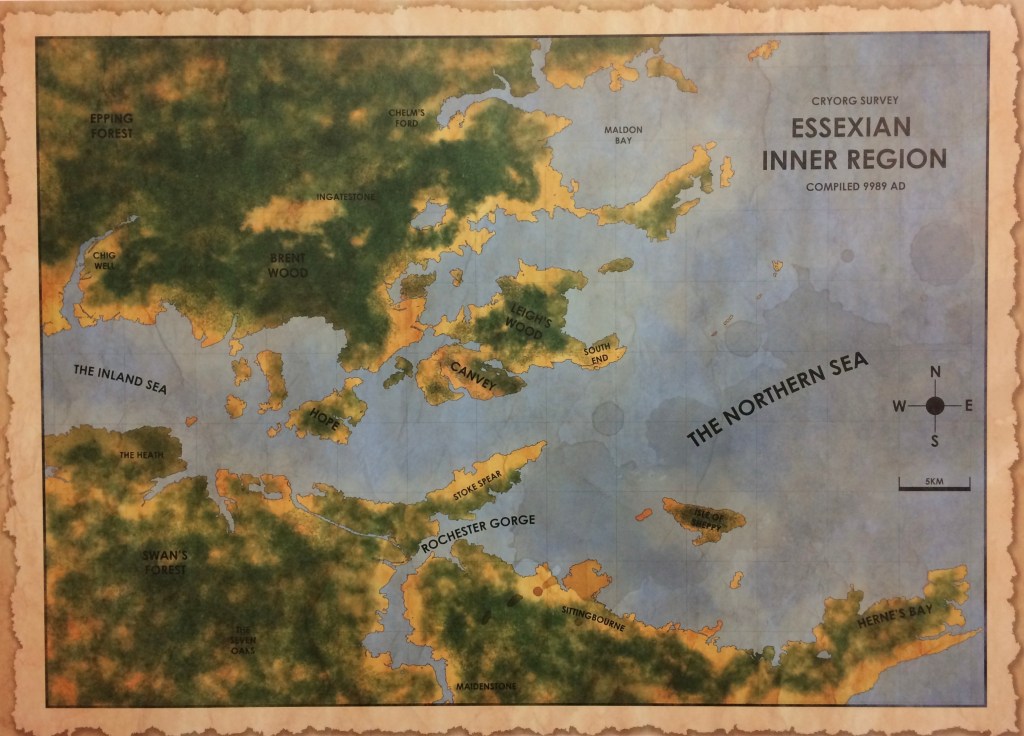
Map of Essex after a 20 metre sea level rise. David Blandy
photo by Liz Clifford

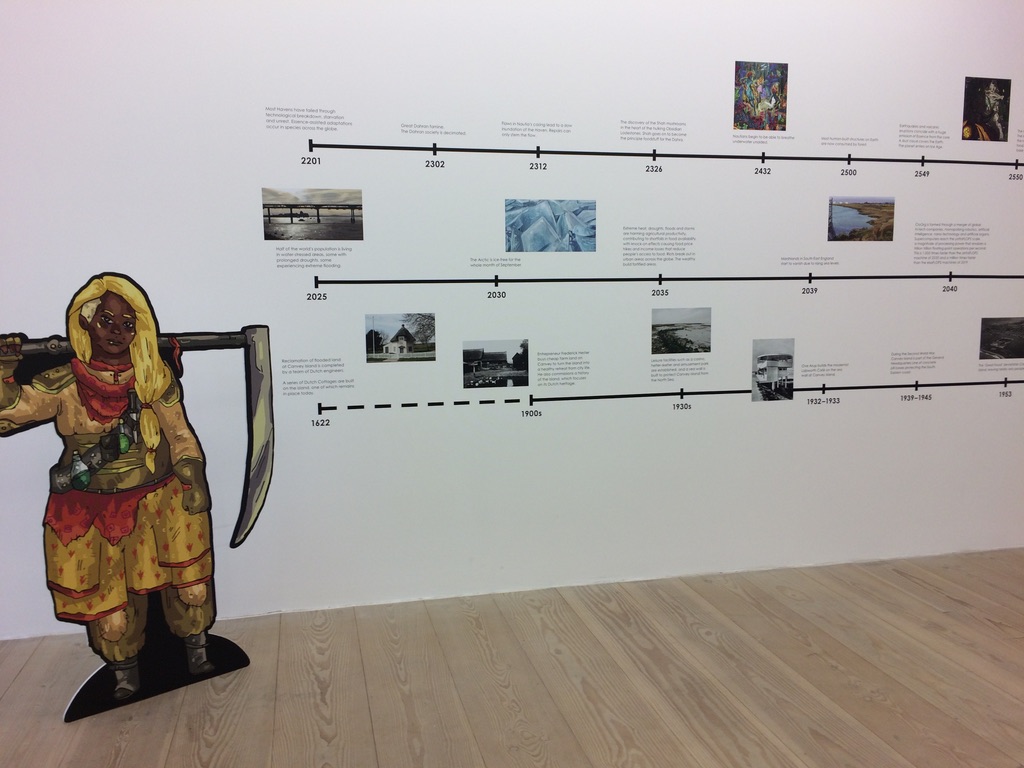
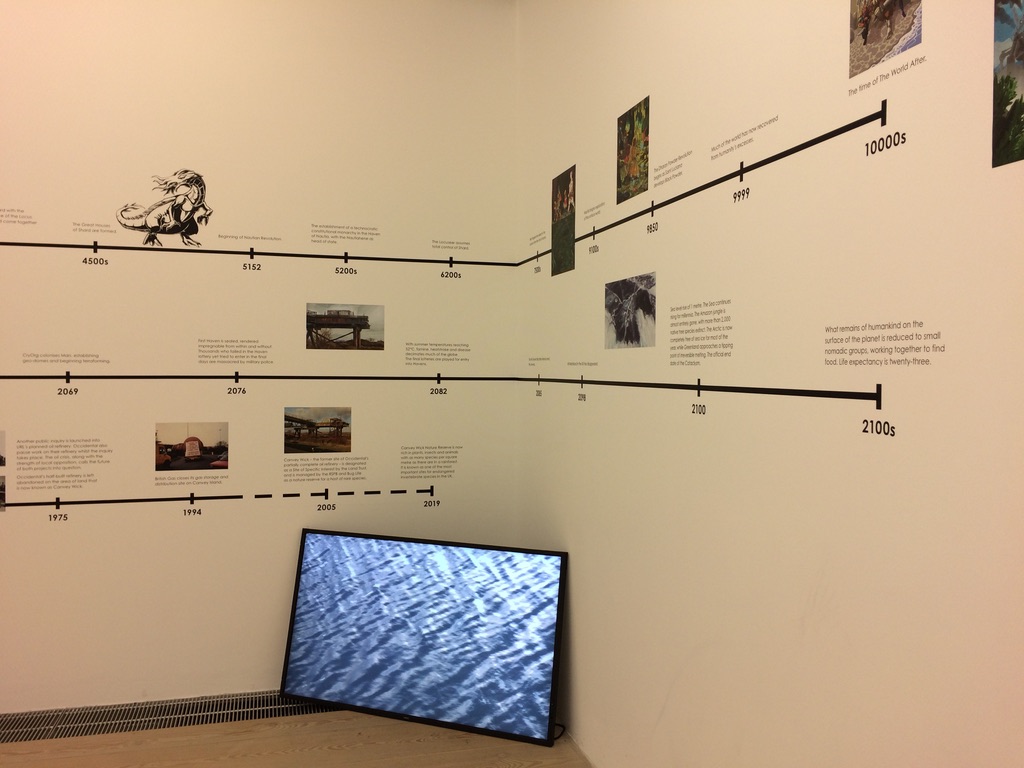
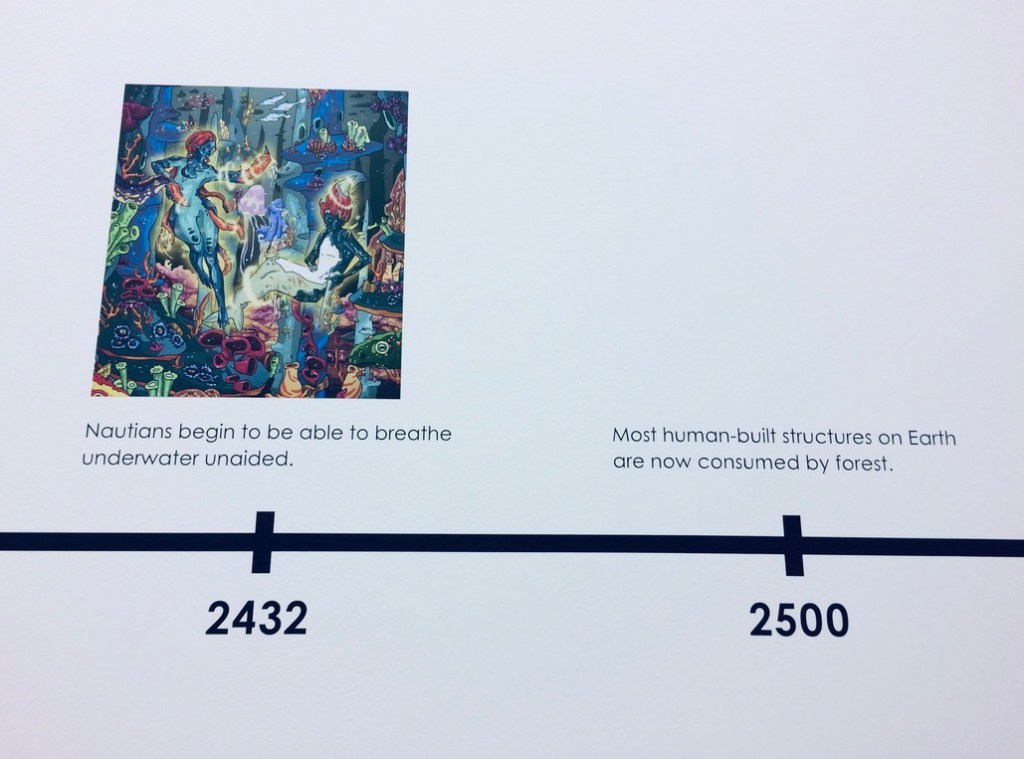
The World After show consisted of a film, an installation and a table top role play game. The artist made use of the whole of this beautiful new gallery space, including the foyer and window. I found myself in the installation first which was a very good move, as that set me up really well for understanding the other elements. The installation was a time line on the wall akin to that you would find in a well presented visitor centre. Starting with the 20th century through to 2019 and then layered with a fictional future to 10000AD accompanied by audio archive from survivors of the devastating floods of 1953 and moving images of water.

The lower level of the time-line deals with the history of Canvey Wick to 2019, then the upper two layers take events into the imagined future when surviving humans move underground to escape the climate cataclysm they have caused. Some of the descendants of these humans evolve physically and socio-politically to emerge in 10000AD to The World After. A cardboard cut-out of one of these stands to the side of the time-line.

The 30 minute film being screened during the show was made by Blandy after visiting the Canvey Wick site every month for a year to record the changing seasons on an iphone, much of it in macro close-up. The images show nature carrying on against the backdrop of a post-industrial ruin, the abandoned oil refinery. The voice-over is told from the perspective of surviving humans of the fictional time-line who emerge from their underground havens to experience the wonders and dangers of the World After, the post-anthropocene. It is accompanied by a symphonic score composed by Blandy and recorded by the Southend Symphony Orchestra. The aural history of the commentators is referred to in the script when they talk of the “elders” and their accounts of the “climate cataclysm”. The film is screened within an installation of its own. Materials are used to make an environment rather than a cinema. The smell of tar emanates from planks salvaged from the original Southend Pier, here repurposed to make a walkway from which the audience views the film. The floor is covered in rubber tyre offcuts and the area in front of the screen is littered with industrial relics – concrete blocks and steel rails.

The role play game book which accompanies the film and time-line installation was devised in collaboration with the Essex gaming community and published by The Focal Point Gallery. The players have to develop the characters of the World After and work together to forge a new society. The graphics and models from the collaboration were displayed in the gallery foyer. The game book was displayed and for sale, and sessions were held where the public could participate in the game. These sessions happened in a side room which also acted as a library of the books that the artist had been reading whilst researching for the project. These included works by Ursula Le Guin, Donna Haraway and  Bruno Latour along with publications specifically dealing with the local area. This room helped the viewer feel the depth of research and collaboration that had gone into the project.

The World After role play game book and character figure. Image by Cat Rogers
photo by Liz Clifford

It was a really impressive show that all held together. Each part shed light on the next and the attention to detail made for a convincing, heart-rending, and thought-provoking take on the predicament we find ourselves in, with a glimmer of hope thrown in.

Intervention: Rubbish Cairns.

Throughout the Autumn I have continued adding to the collections of plastic waste as I walk on Byway 745 – the Rubbish Cairns I started building in August 2019. Torrential rain has scoured the chalk ruts which are repeatedly attacked by off-road vehicles. Churned up mud and fallen leaves then re-cover the chalk. Detritus is buried in the mud and revealed later with the next scouring.

Rubbish Cairn No 2
07.11.19
Rubbish Cairn No 2
28.11.19
Rubbish Cairn No 2
28.11.19

The images above show Rubbish Cairn No 2 that has slipped away completely. Gravity, wind, rain and then more vehicle activity has dragged the pieces down hill to be re-found and re-formed as a new Cairn – Rubbish Cairn No 3. See below.

Rubbish Cairn No 3
28.11.19
Rubbish Cairn No 3
30.11.19
Rubbish Cairn No 3
03.01.20

Human intervention, beyond my own, has reconfigured the original pile, Rubbish Cairn No 1. The images below show how the traffic cone has travelled off the pile during the month to end up crushed into the muddy rut lower down the hill.

Rubbish Cairn No 1
28.11.19
Rubbish Cairn No 1
30.11.19
Rubbish Cairn No 1
03.01.20
03.01.20

On a rare occasion, at the end of November, I met a group of off-roaders who had just finished winching a Land Rover out of the deeper mud. They were keen to tell us that they encourage the teenagers with them to collect up the plastic bottles to recycle. I mentioned collecting up bigger pieces of plastic but the conversation didn’t go further, perhaps because I was taken by surprise to meet them at all. We were very outnumbered, the light was fading and they were just moving on. Undoubtedly a missed opportunity to engage with audience/participants/contributors and an area of practice that needs a lot of further research.
Reading the new Whitechapel Documents of Contemporary Art issue, “The Rural”, edited by the Myvillages collective, I have come across an essay on litter by the rural sociologist, Rosemary Shirley – “Keeping Britain Tidy: Litter and Anxiety” 2016. She looks at 1940’s Litter Trails, Anti-litter Campaigns and two works by artist Stephen Willats that investigate the dynamics and meanings of litter in specific public semi-rural locations – The Lurkey Place 1978 and Dangerous Pathway 1999. Shirley is interested in our attitude to litter in a rural setting, its provenance, symbolism and the conflicts it causes and reflects. This is an area of resonance for my work, in addition to its primary concern with the ubiquitous use of plastic and fossil fuelled recreation.
The Whitechapel publication is a rich source of essays discussing Art in a rural context, rural concerns and definitions of what might even be meant by the term ‘rural’. It has helped me identify debate and conversations to follow within contemporary art practice as well as rural arts organisations like Grizedale Arts, Wysing Arts Centre and the new organisation More Than Ponies.

All photographs by Liz Clifford.

Fossils at Oxford University Museum of Natural History.

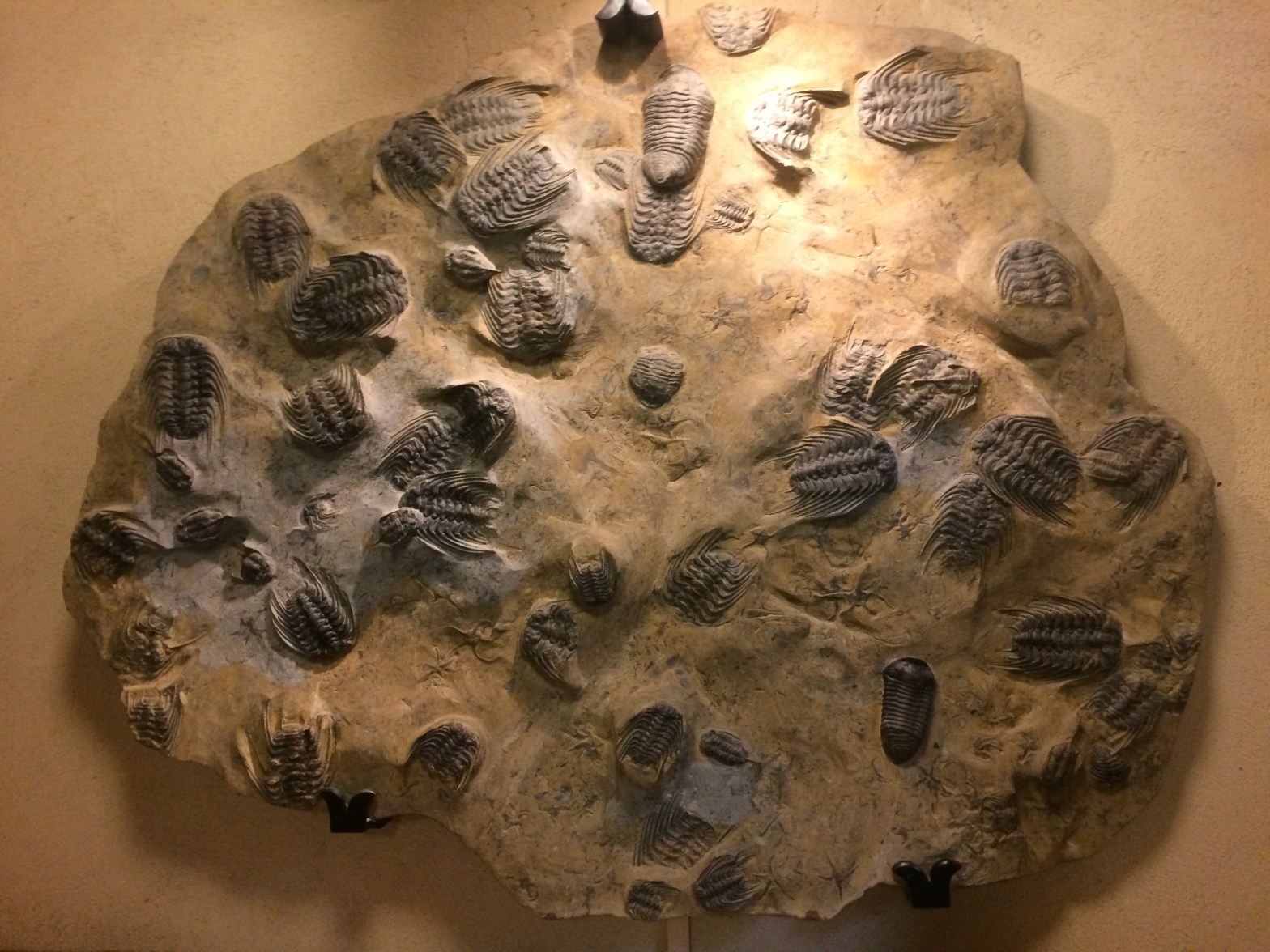
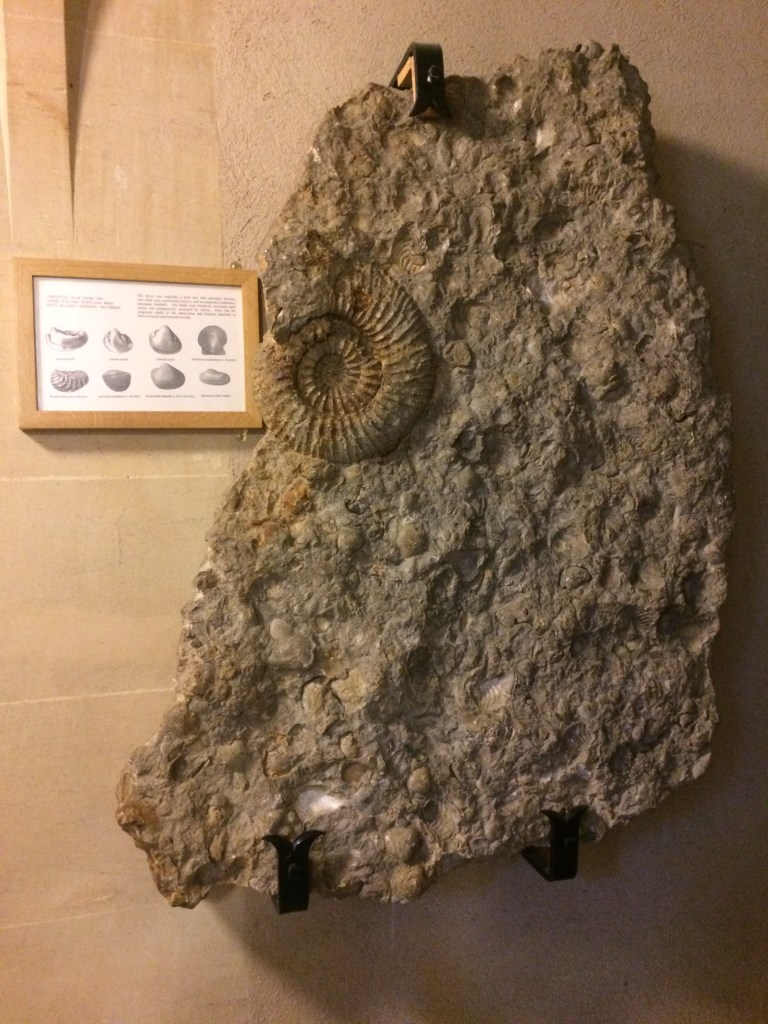
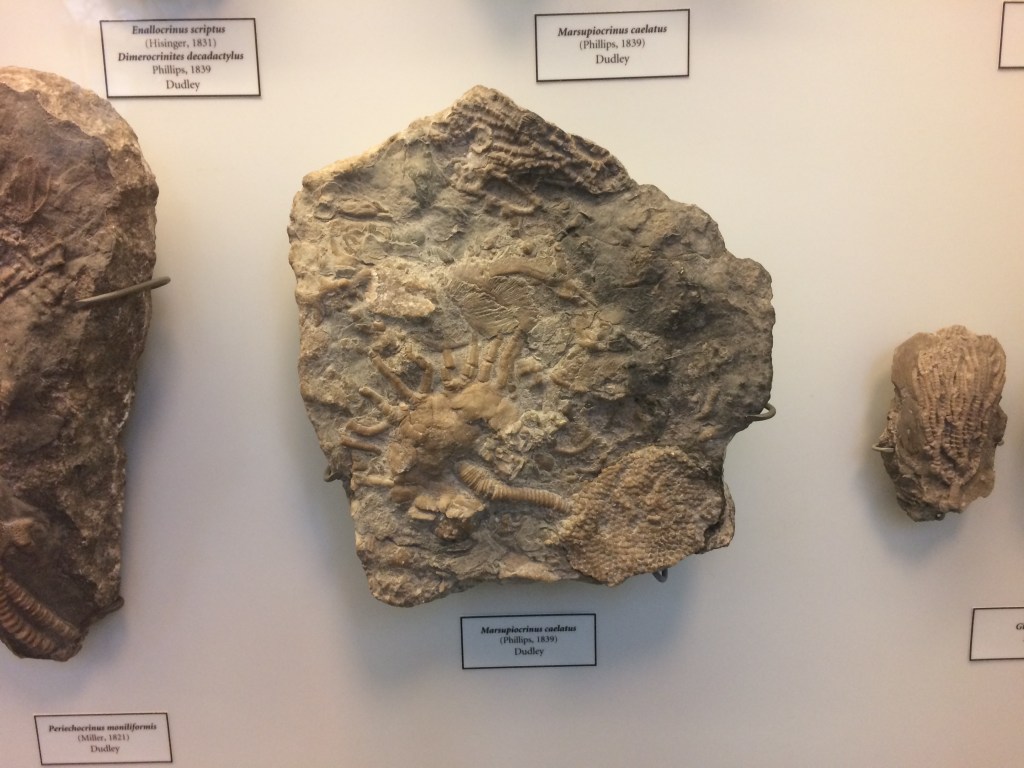
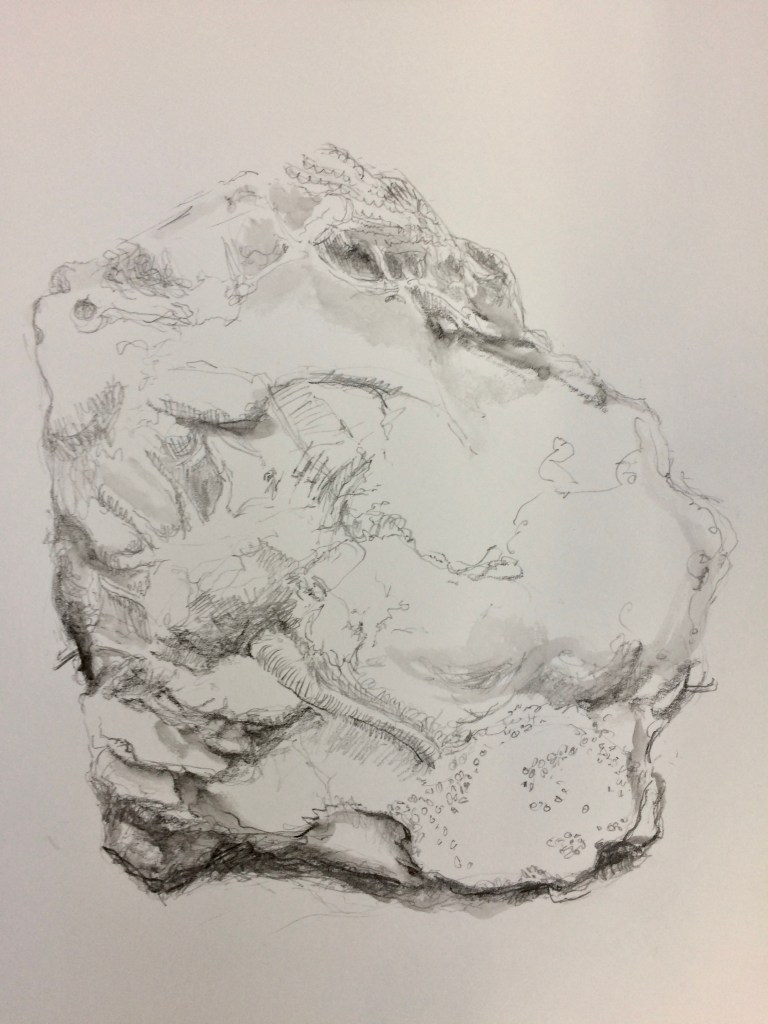
The UCA MA Fine Art group made a visit to Oxford this week. First port of call was the Museum of Natural History where I was bowled over by the vast collection of fossils. There was time to make drawings and have a really good look at the exhibits. What I found immediately striking was the fact that these were all slabs of stone rather than deeper blocks. They are displayed wall-mounted with metal brackets. The surface texture is picked out by oblique lighting as with the 513 million year old trilobite slab above.

The slabs are fragments of much larger pieces. Fossils are broken off with the stone. The fossilised material is sometimes exactly the same colour as the stone and at other times it contrasts in texture and colour.

Fossils. Pencil and wash on paper.
Liz Clifford

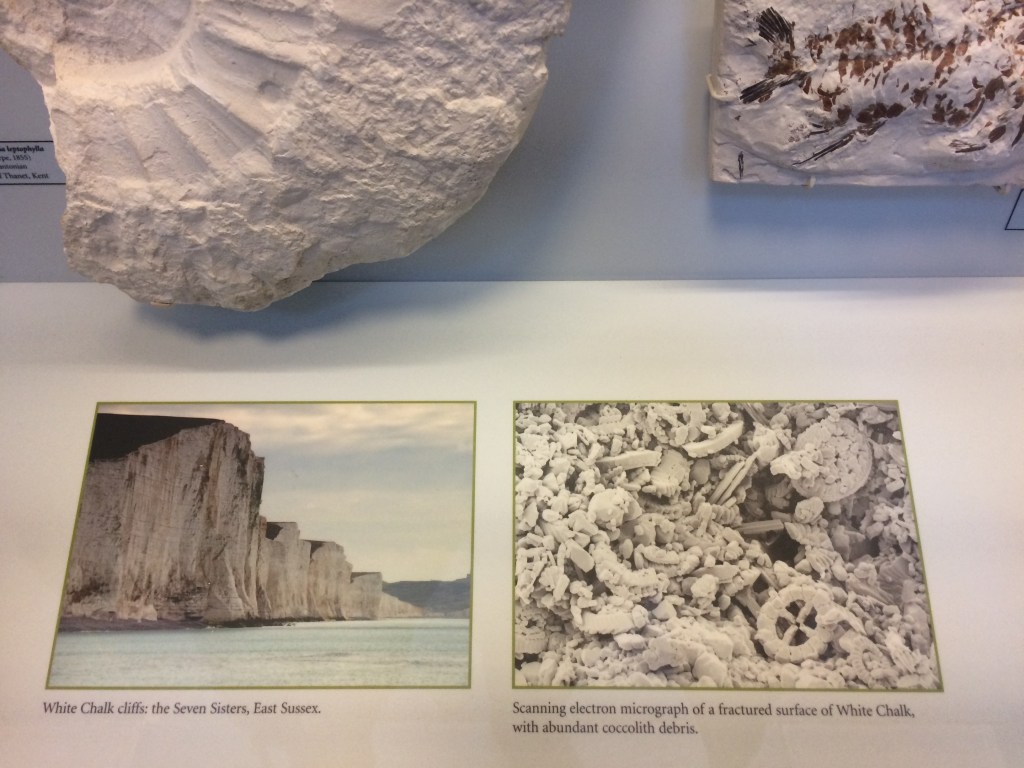
Fossils are found in chalk but tend to be limited in variety, although chalk is itself made up of micro-fossils – planktonic skeletons. It was fascinating to see this exhibit from the Seven Sisters chalk cliffs in East Sussex. I feel really encouraged to push forward with my work in plaster, in which I use the metaphor of fossilised remains of vehicle parts to present a fictional palaeontolgy. Our legacy locked into the earth’s surface. A fossil cycle to be uncovered in 513 million years?

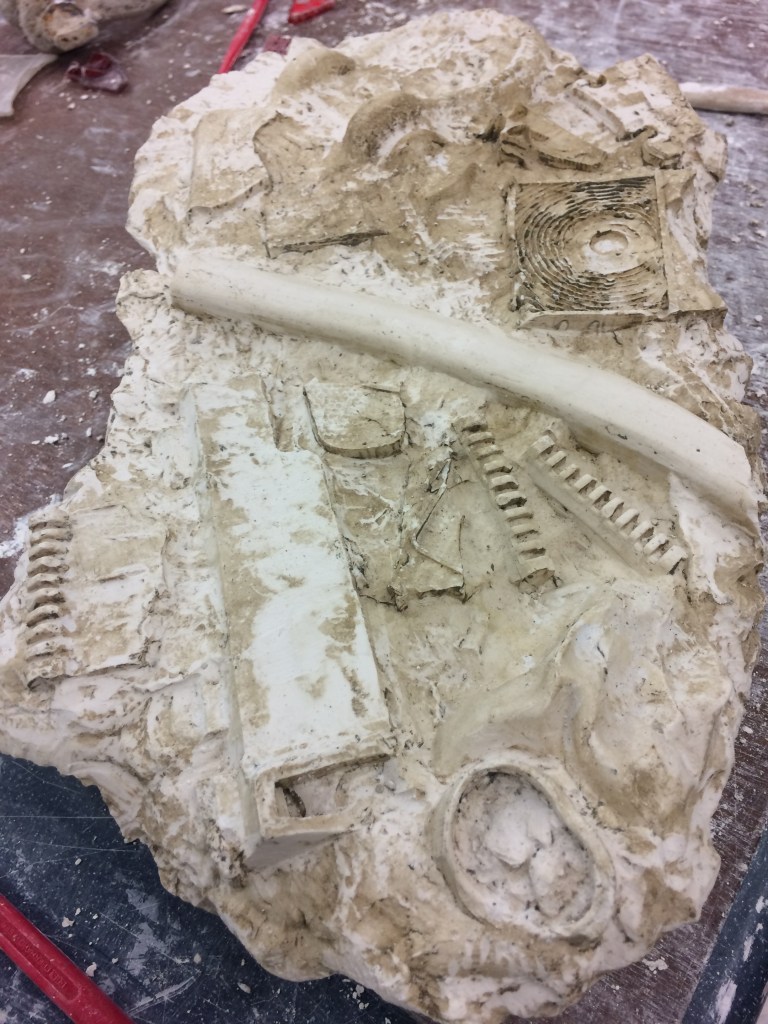
Plaster cast from press mould. Work in progress.
Liz Clifford

I came away with plenty of ideas as to how I would develop these “fossil” hash plates. To start with I will work on slabs rather than deeper blocks and consider making the impressions cropped by the edge of the slab, as if broken off. Larger pieces will need to be reinforced. Wall mounting and lighting needs to be thought through. Perhaps labelling to suggest a museum aesthetic. The aesthetic of ancient remains…

Fictional Fossil

Ford Fossil 2019. Plaster. Liz Clifford

I have been working with plaster rather than chalk recently to move my embedded objects forward. Up to now I have embedded the actual objects in the material but the work pictured above is made entirely from plaster. I hope this new approach will enable me to work on a larger scale as I continue to explore ideas around fictional Palaeontology.

Carbon Vestige 2009
Liz Clifford

As can be seen in the above photograph of my 2009 Carbon Vestige, the pieces of found chalk are really too small for embedding the larger plastic vehicle trim that I’d like to focus on. Hence the need to either work with larger blocks of stone or to rethink the approach. By making a simple press-mould in clay I can cast from my found objects to make them resemble real fossils. The clay has to be the correct softness to enable a good impression to be made but if it is too wet it will stick to the object. Using talcum powder helps prevent it sticking but I’ve had to experiment to find the best solution. The great thing about using clay is that I can build a ‘rock’ form to cast and then finish it by carving into the plaster as it dries.

I have been collecting images of fossils, being drawn towards those large collections of strewn dinosaur bones or what fossil collectors call ‘hash plates’ of diverse fossils all found in the same piece of rock. My plan is to make grouping of castings from my collections of smashed car parts to resemble these ‘hash plates’. As the work gets bigger I will need to add scrim and reinforcing to the plaster. Some hollowing out will need to happen to prevent the work getting too heavy as well.

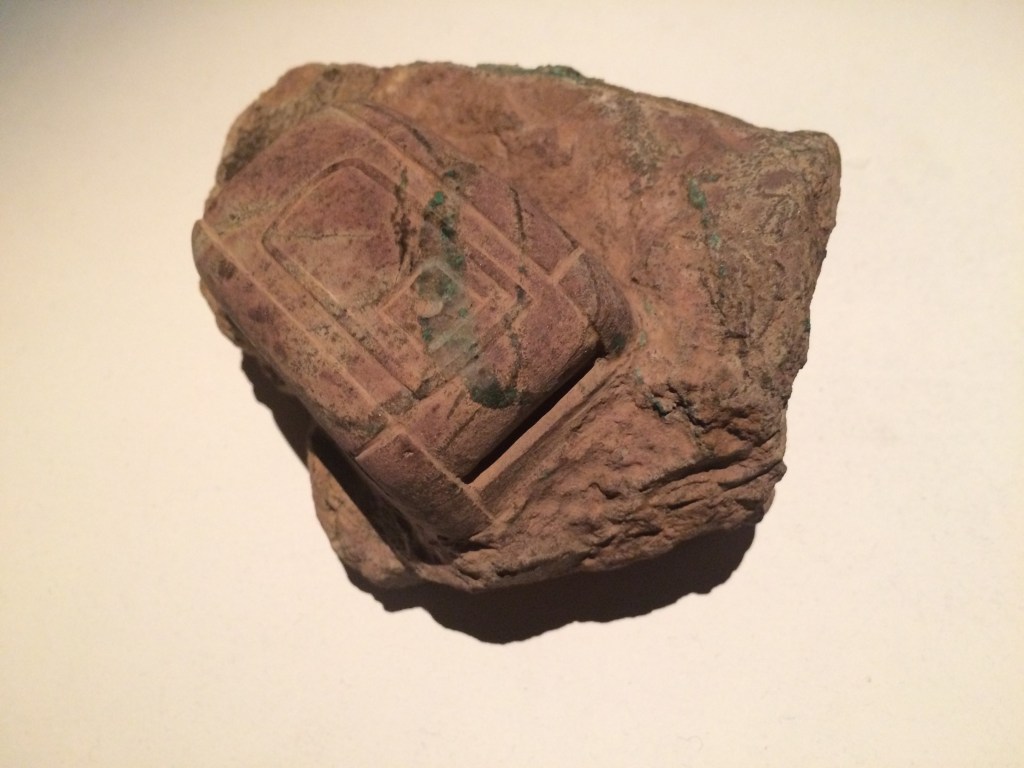
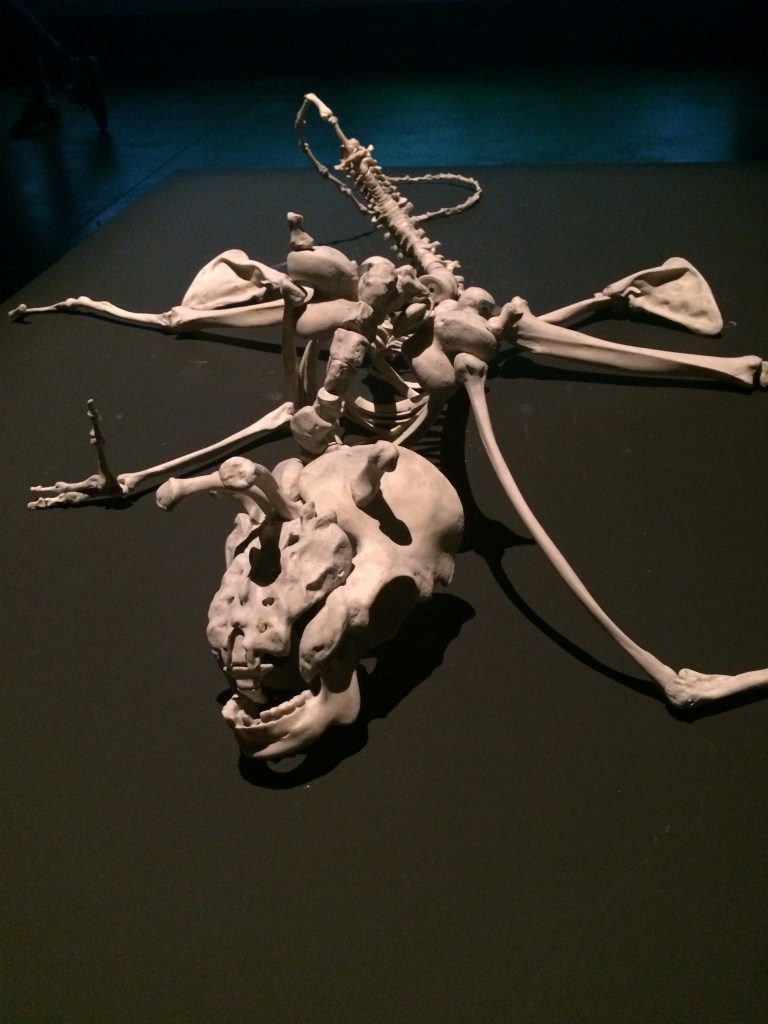
I have recently discovered the work Daniel Arsham, Shan Hur and Maarten Vanden Eynde, all of whom work with the idea of fictional futures and fictional archaeology. I saw Maarten Vanden Eynde’s work recently in a show called “Jusqu’ici tout va bien?” (So far, so good?) at Cent Quatre in Paris. He carves into stone to make his Technofossil (Samsung E570) in which we encounter a ‘fossilized’ mobile phone and takes a human skeleton and rearranges it to present the remains of Homo Stupidus Stupidus. His work resonates with me through its environmental concerns and the irony he uses. The whole show is subtitled ‘Archeology of a Digital World’ and runs until 9th February 2020. For more details see link below.

Maarten Vanden Eynde. Technofossil (SamsungE570) 2015
photo by Liz Clifford
Maarten Vanden Eynde. Homo Stupidus Stupidus. 2008
photo by Liz Clifford