
“Between Inside and Outside” by Anna Maria Maiolino. Photo by Liz Clifford
We started by looking at four works by UCA PhD student Martha Todd at The Freud Museum in North London – part of a show to celebrate the centenary of Freud’s publication “The Uncanny” which runs until 9th February 2020. Martha works in clay and porcelain with found objects to create hybrid “well-loved” dolls. With mirrored eyes, they reflect uncannily back at the viewer. Missing parts have been replaced. Casts of the artist’s fingers and repurposed forks become legs. “Love Funnel Deluxe” is an assemblage of glazed slip-cast earthenware and antique vacuum hose, with humorous as well as creepy and overtly sexual connotations.

Photo by Liz Clifford
Not only did Martha give us a really interesting talk about her work and the processes involved in making it, but we were also able to tour the museum and ask questions of the curators. In answer to questions about Feud’s vast collection of ancient artefacts, archaeology began to emerge as a theme of the day for me. Freud used objects with his patients as a way of explaining what was happening. Archaeology was used as a metaphor for psychoanalysis. The words excavated are merely fragments. Nothing is intact but can be painstakingly pieced together.
Up the road at Camden Arts Centre, Cypriot artist, Christodoulos Panayiotou is showing his work, The Island, until 5th January 2020. He uses experience of the archaeological site at Kourion in Cyprus for two floor pieces, making a critique of the practice. In “Spoil Heap”, he has made a complete terracotta tile floor with earth from an archaeological excavation site. This displaced earth is usually discarded and considered waste material. The artist has given it new life and invites the audience to walk on it once again. “Mauvaises Herbes” is a mosaic that records the surface of the excavated and then reburied site of an ancient mosaic at Kourion, complete with the weeds that grow in the disturbed soil. Once the ancient remains have been uncovered and recorded they are often reburied to help preserve them for when another generation may or may not want to rediscover them.

Photo by Liz Clifford

Photo by Liz Clifford
Los Angeles artist, Mark Bradford, at Hauser & Wirth in the West End until 21st December offered a really visceral contrast to Panayiotou’s cool approach. Bradford’s paintings are vast, layered, distressed, vibrant and energetic surfaces. He uses an array of found materials, collaged, cut into and then stripped away to create grids and map-like images alluding to repressive urban infrastructure with a stunning sense of colour. Layering and stripping away again making me think of archaeology.
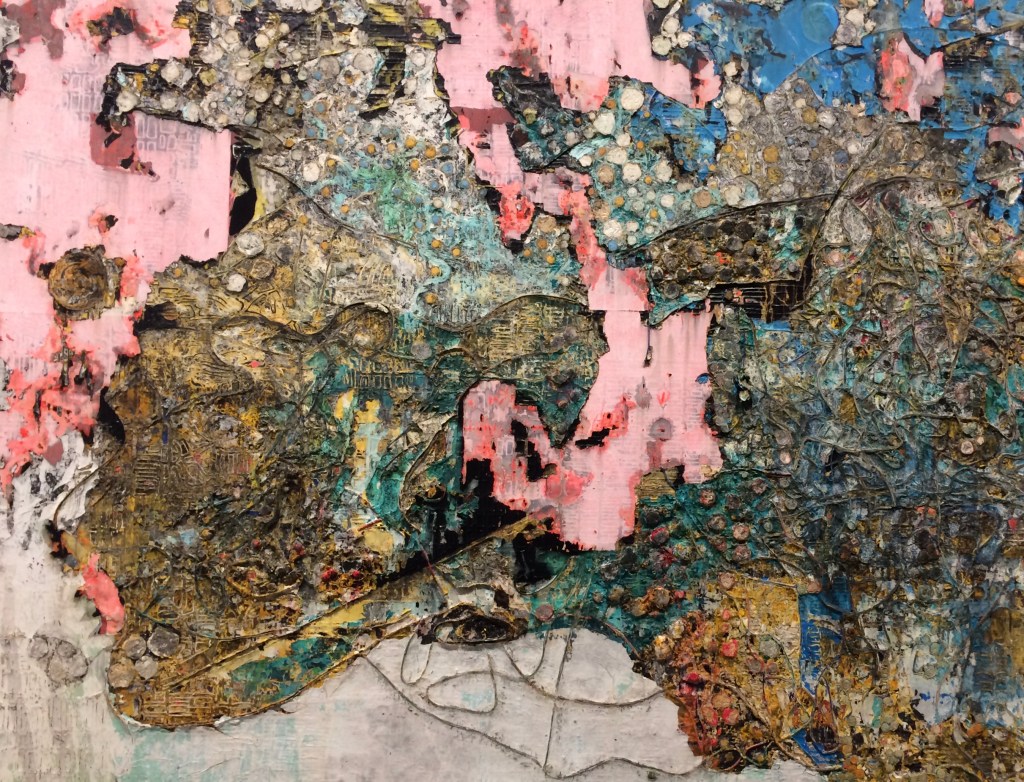
Photo by Liz Clifford
The real highlight of the day came with the discovery of Anna Maria Maiolino at The Whitechapel Gallery. Her show “Making Love Revolutionary” runs until 12th January 2020. Although she was born in 1942 and has been working since the 1960’s, it is the first major UK exhibition of this Brazilian artist. I immediately felt an affinity with her pieces in clay, plaster and cement. She uses the process of preparing clay as a language in her work. The first piece in the show is a table of unfired clay, made on site as the show was being installed. The artist has hand moulded and rolled the clay into repetitive forms that resemble both food and excrement. They are left to dry out over the course of the exhibition, alongside a larger piece made of a pile of clay strands on which gravity also works to render cracking and collapse. There is a cycle of use of earth and the return to earth happening here.
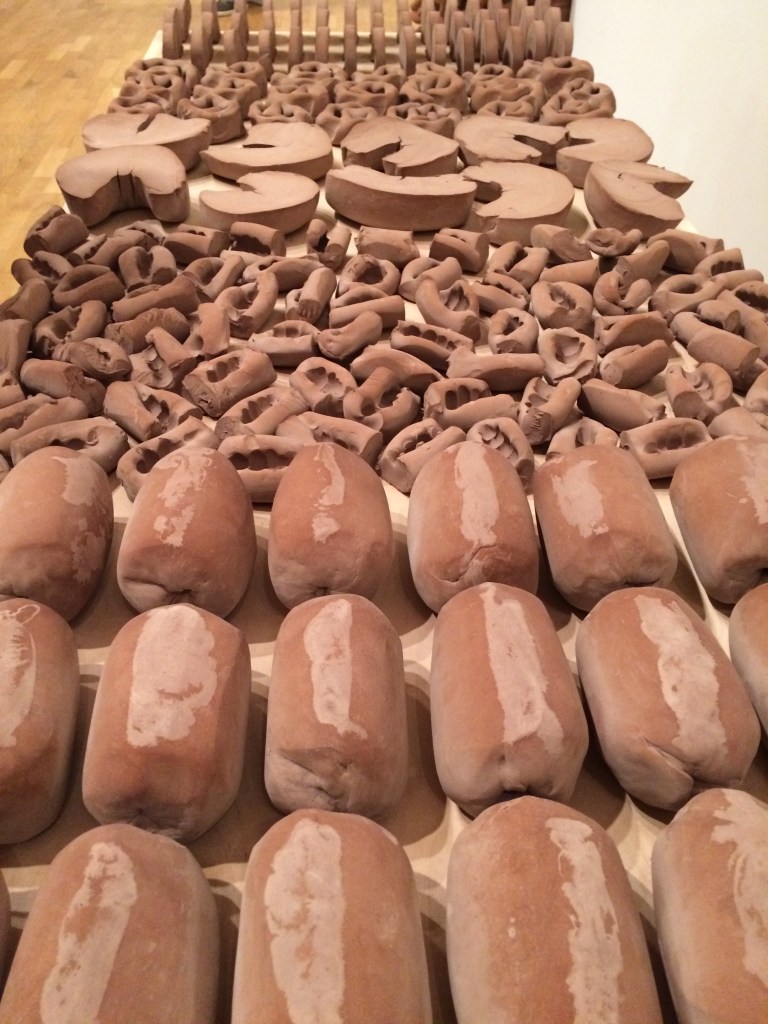
Photo by Liz Clifford
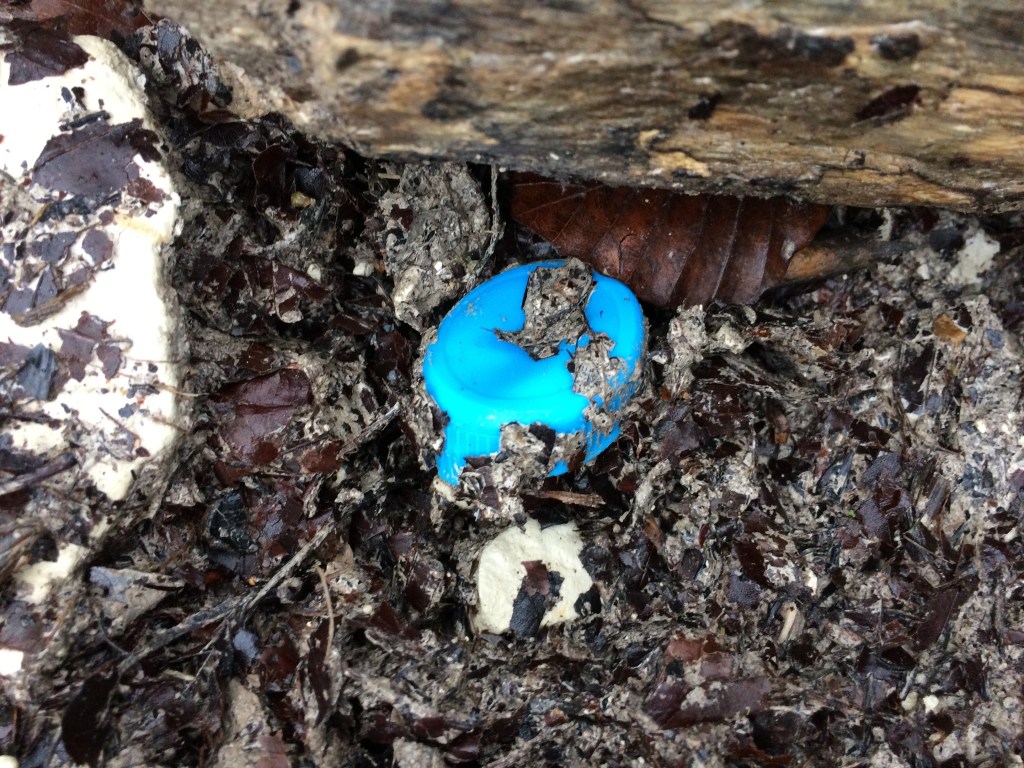
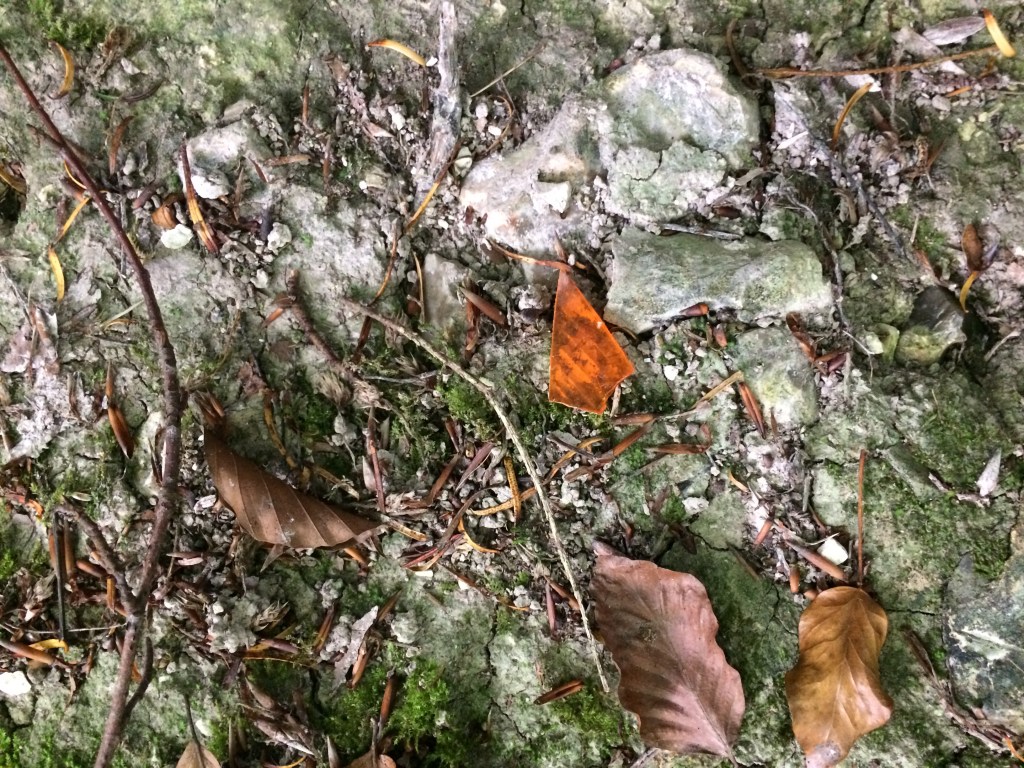
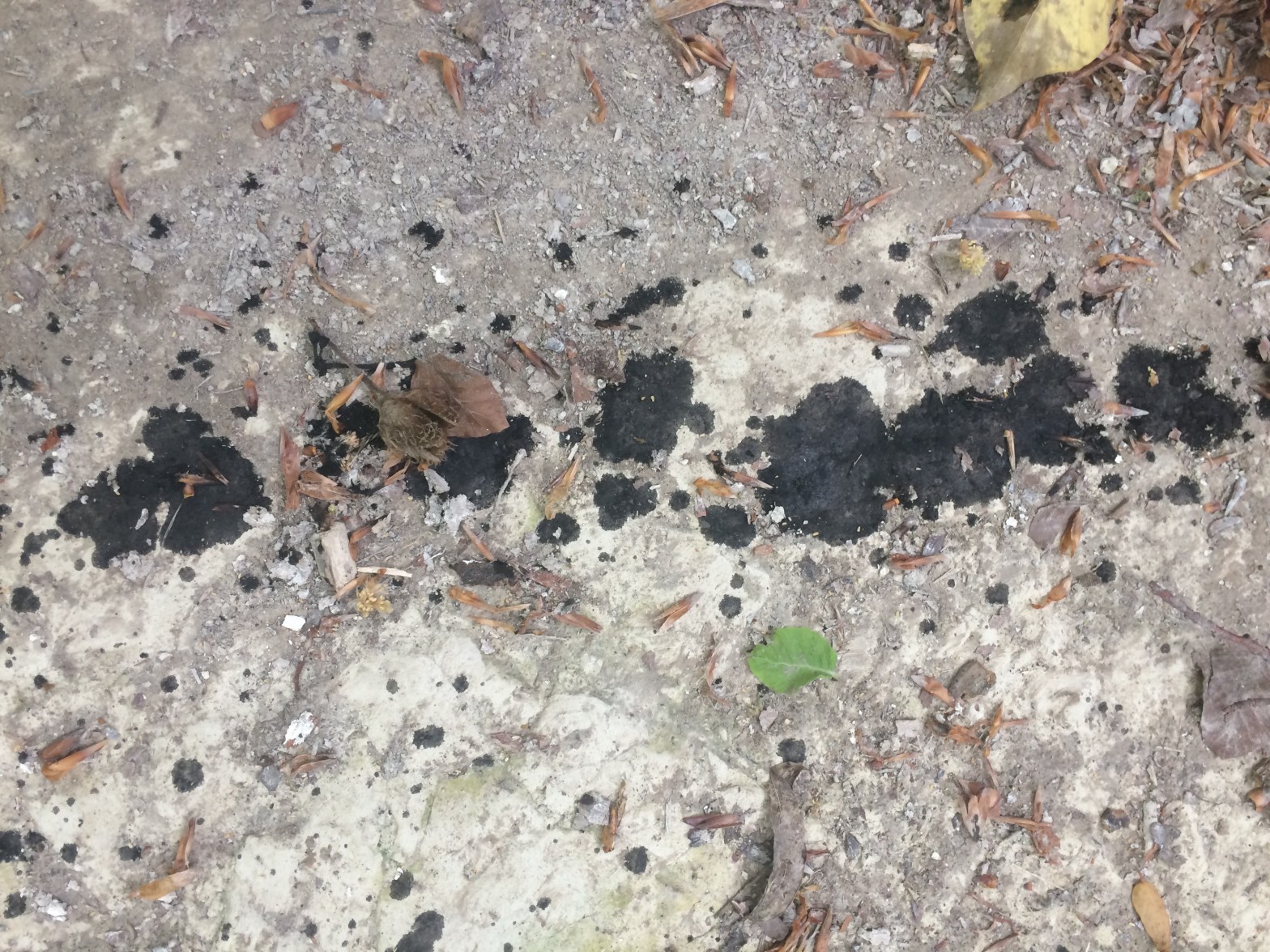
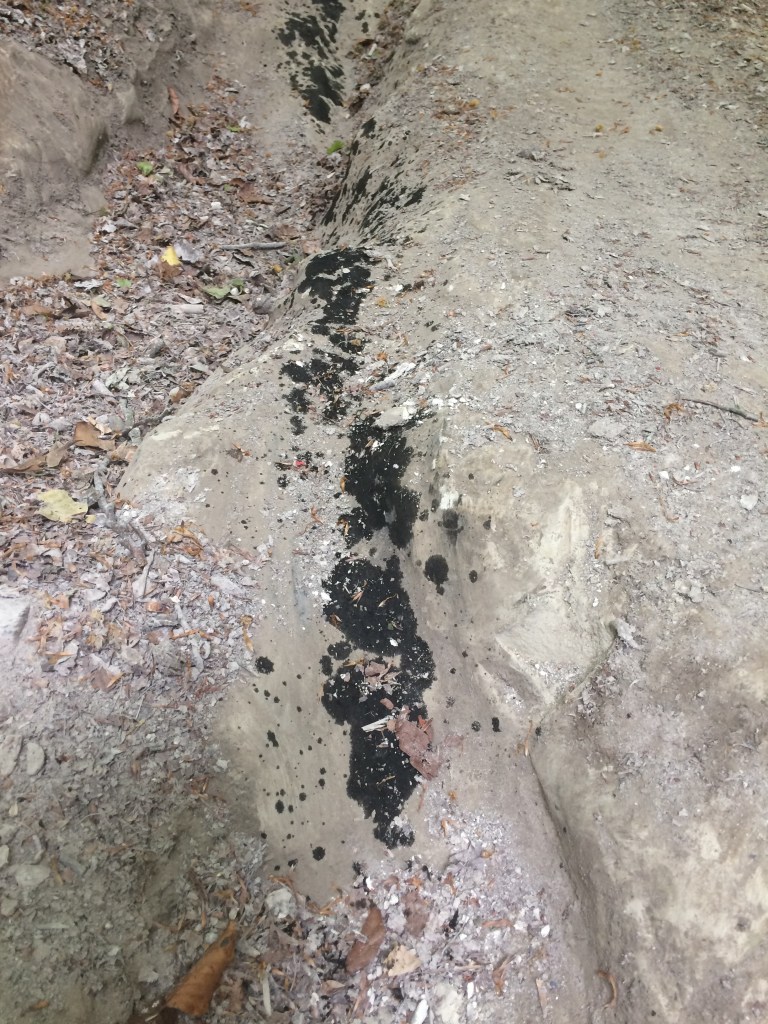
Using clay and plaster, Maiolino creates a series of works that elevate the plaster mould to the status of artwork. The voids left by removed clay are an absent positive. Opposites are embodied in these works. In some, parts of the clay remains. They are records of a process and a trace of a past presence. Below are my shots of pieces from the 2012 series “Between Inside and Outside” and “From the Earth – Poetic Wanderings”.
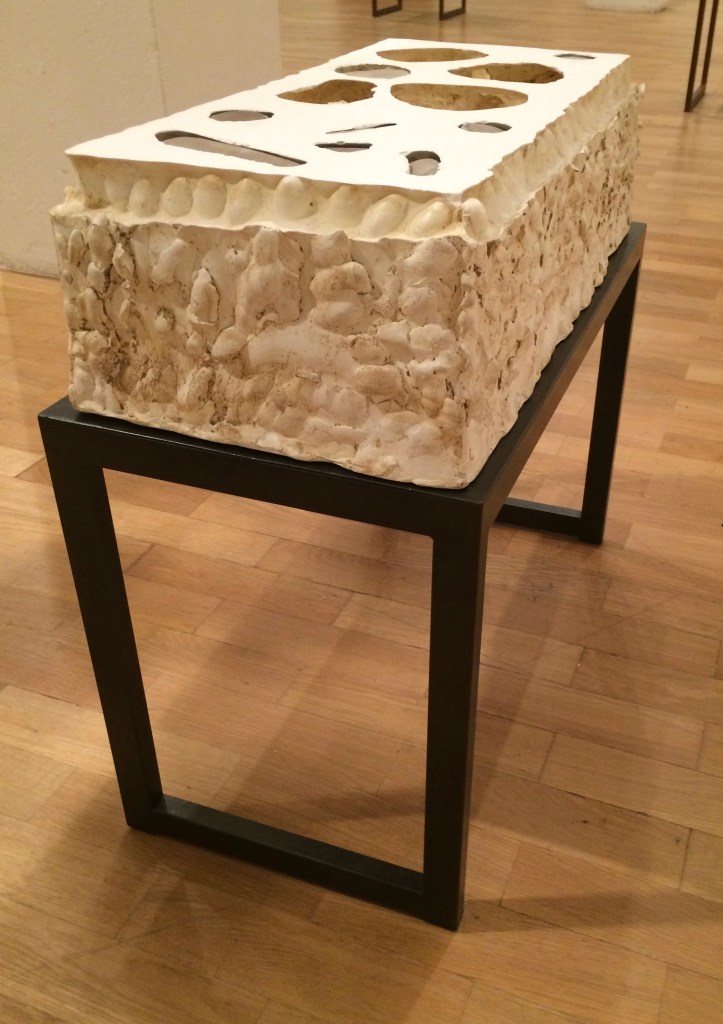
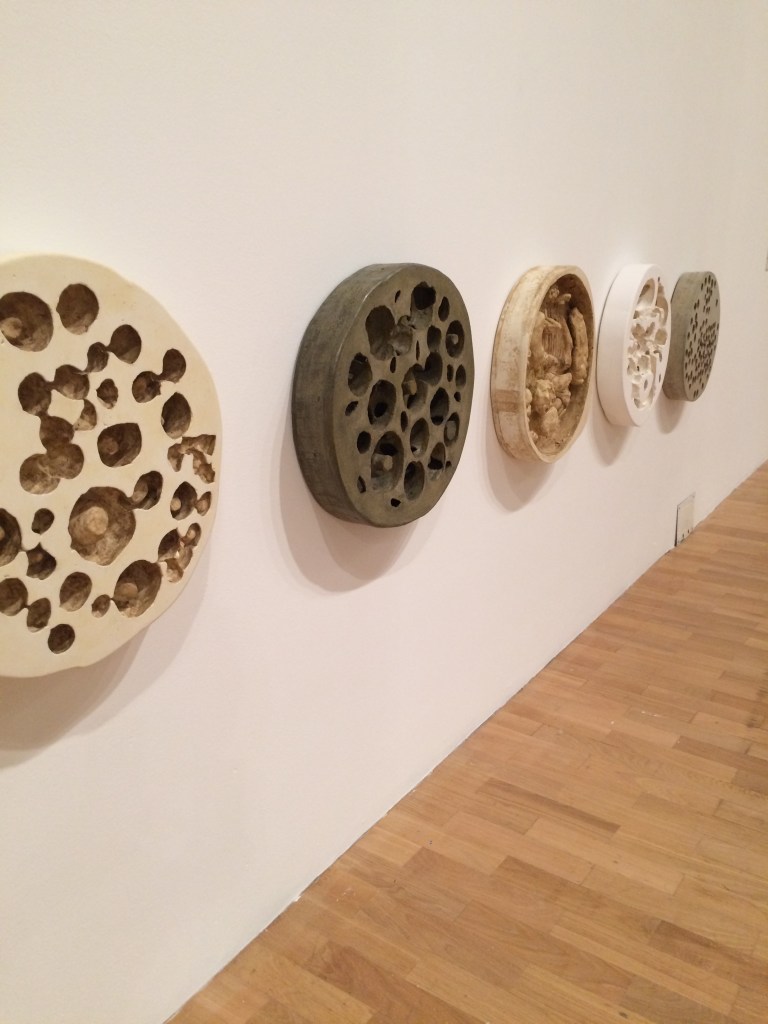
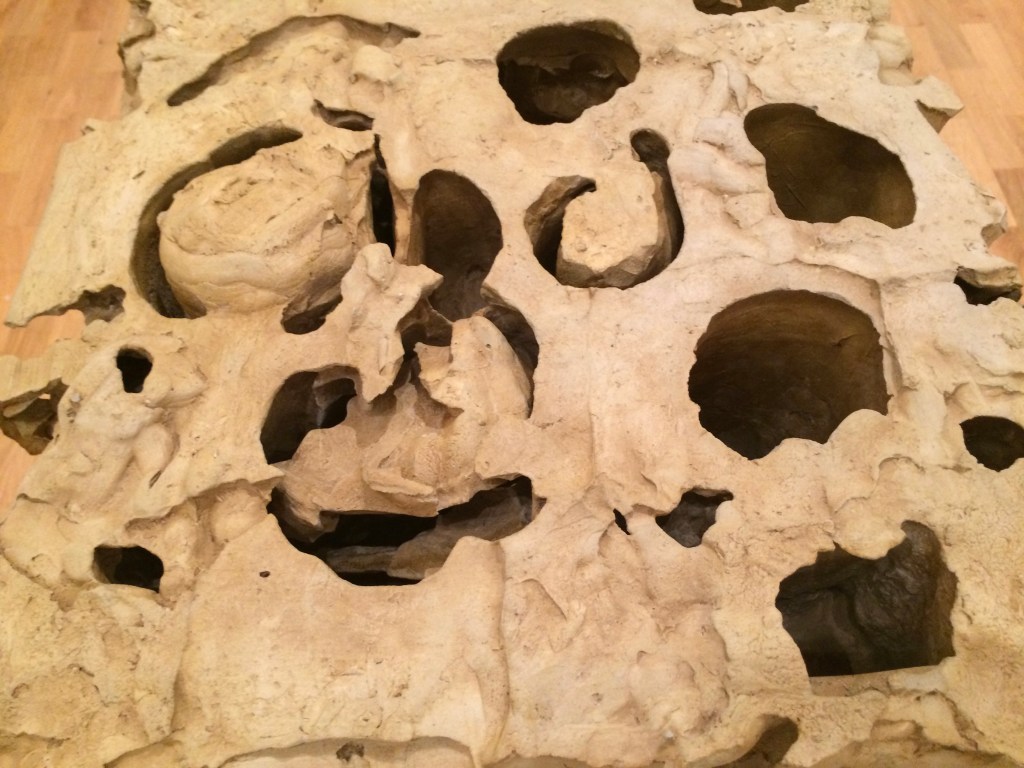
Materiality of earth seems central to Maiolino’s work and these pieces allude to the mould-making, fossil-making process of sedimentation. Subtle earth colours stain the work she casts in cement and the clay leaves its colour on the plaster giving the pieces a calm, timeless quality. Certainly a feeling of time well beyond that of the human imagination. Geological time. Not archaeology this time, but perhaps palaeontology.







 Liz Clifford