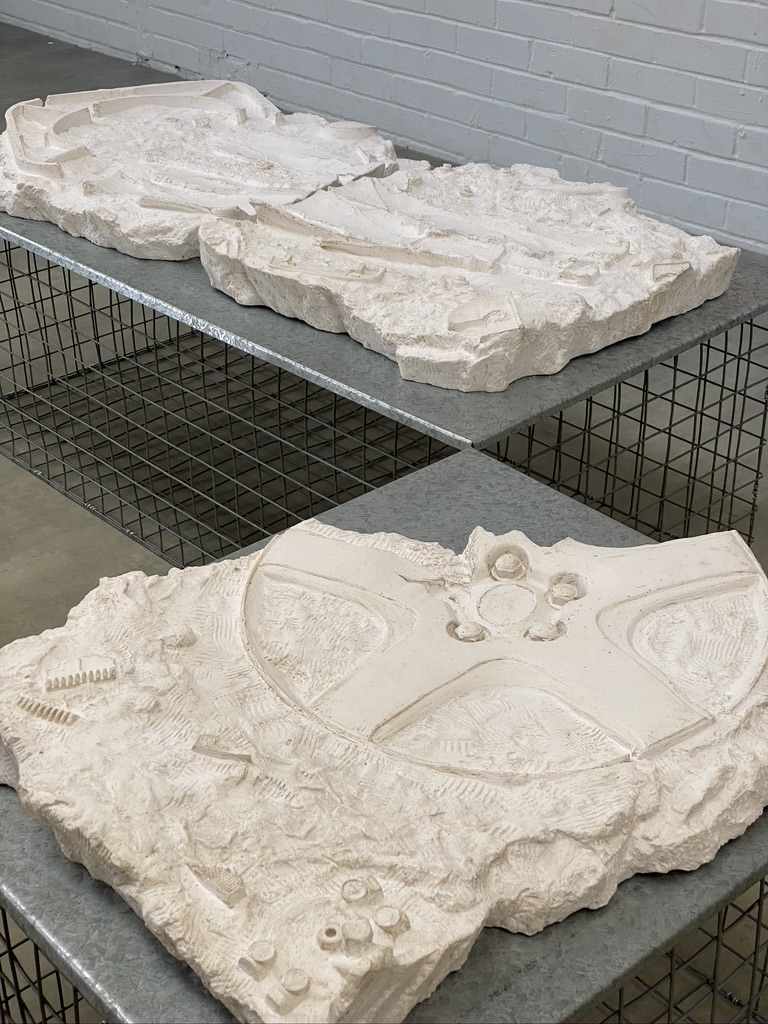
My submission to the group show Unsettling Focus, to be held at The James Hockey Gallery, UCA, Farnham, has finally come together. The work consists of several elements – plaster and steel sculpture, digital print and video.

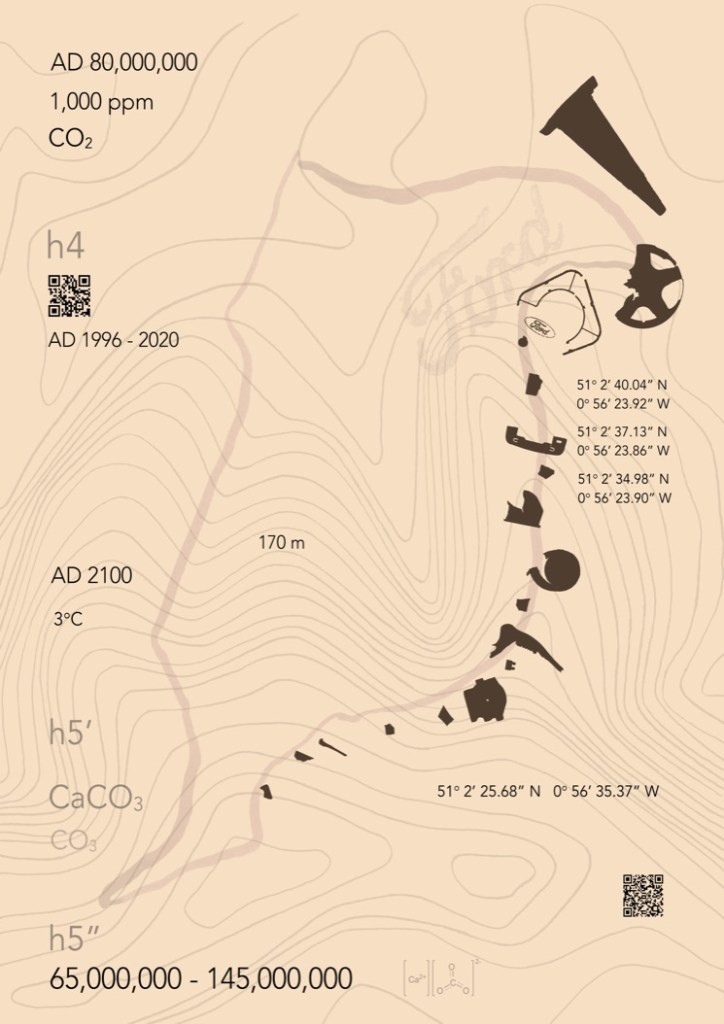
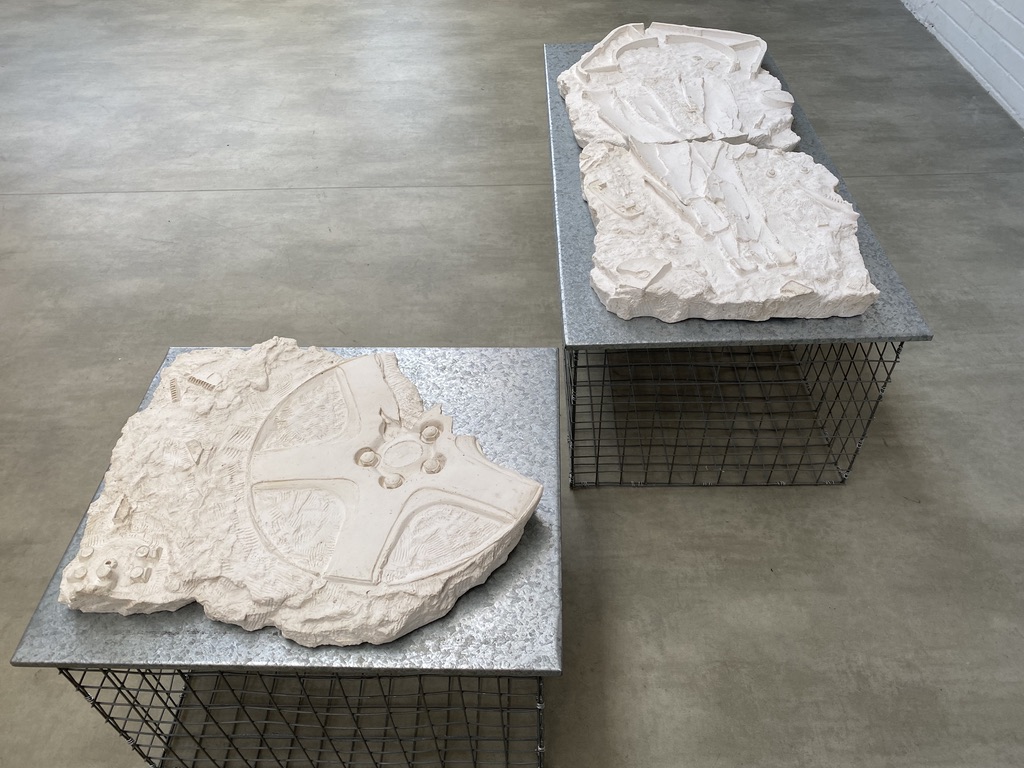
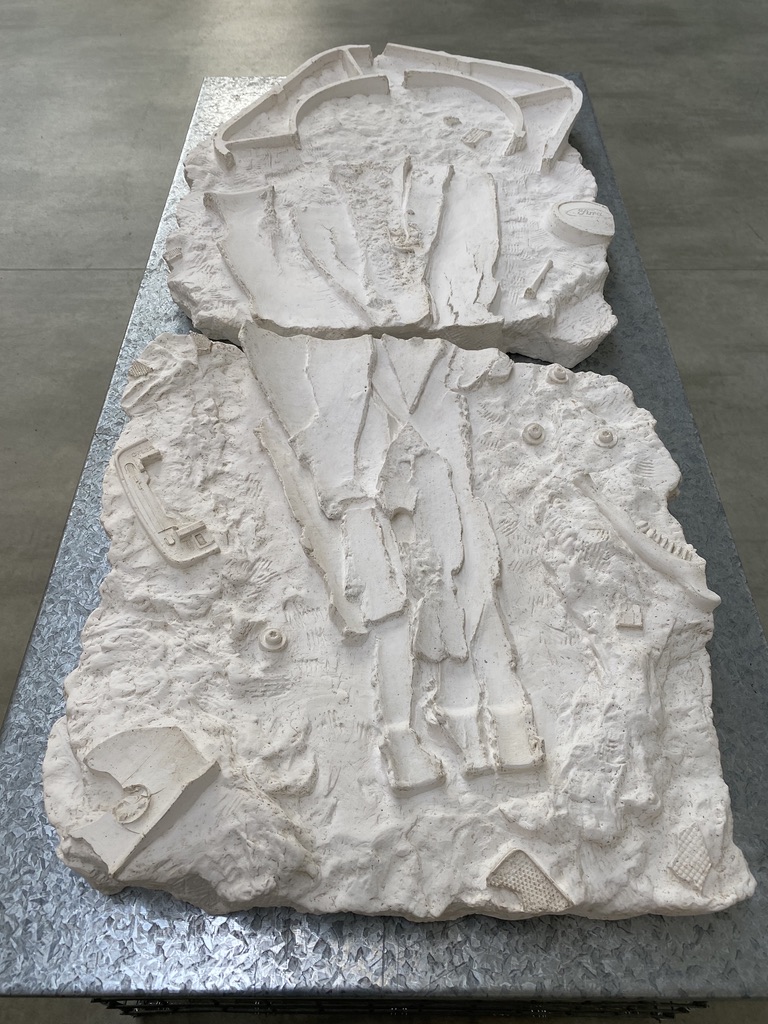
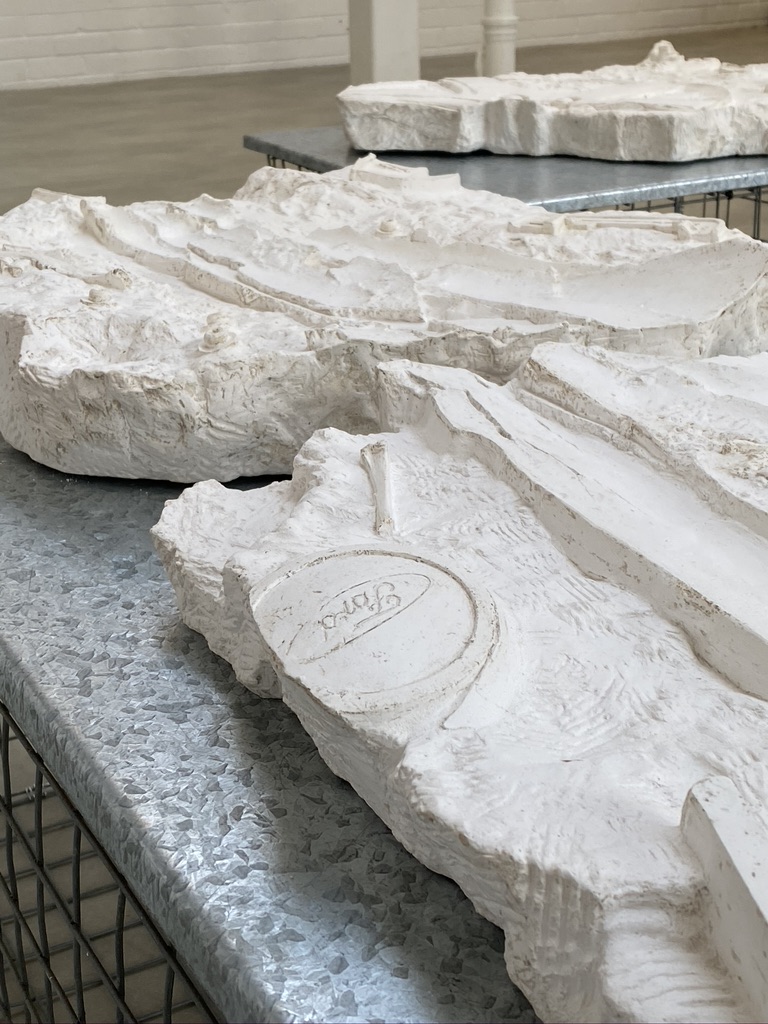
The work presents a future for the plastic detritus I collect on a 4000 year old track in East Hampshire. 4 x 4 drivers, dirt bike riders and walkers are just the latest users of this Bronze Age route to erode the chalk hill. That chalk is 150 million years old and full of fossils. Trace fossils are not the remains of a species itself, but rather the remains of the trace left by that species. Human artefacts form trace fossils and since the middle of the 20th century have spread over the entire globe, forming a technosphere, the preserved remains of which may be used to help date extinctions, including our own. The plaster slabs presented here contain such “trace fossils,” are supported on a home-made version of the gabion basket, used in flood defences, and are accompanied by an info-graphic that lays out the geology and topography of the landscape and provides location information for the “finds”. The infographic deliberately avoids using words, except the Ford logo which is one of the “finds”, so as to set the piece in a possible far distant future. The figures relate to dates, GPS coordinates, and chemical formulas for calcite, calcium carbonate and carbon dioxide.
The infographic also contains two QR codes, a technology developed by the car industry. One takes the viewer to an academic article by Jan Zalasiewicz et al. The technofossil record of humans. The other to a post in this blog that describes the walk I make, the landscape and the process of collecting. That blog also includes a link to the video that goes with the piece. You can view it here.
The video and the infographic are attempts to bridge the gap between being in the landscape and the gallery. The video can also be screened in the gallery and its sound world is very important. It is about the artist’s daily walk on one level but also aims to link with the message of the “technofossil record of humans” presented by the plaster slabs and museum style infographic.
“Fossil burning human beings seem intent on making as many new fossils as possible, as fast as possible.” Donna J Haraway. Staying with the Trouble: Making Kin in the Chthulucene. 2016
 Liz Clifford
I enjoyed reading about and visualising your sophisticated and confronting work which is both well-conceived and well-executed. It is a strong candidate for that imaginary museum of the future – where the strangeness of our conduct and value system will be ‘on show’ for the cultural anthropologists interested in history. Heidegger was perturbed by the emerging ethos of even his times: he thought a ‘mining’ metaphor best described the cultural moment – in which things are ‘set upon’ and extracted solely for their use value. I think he was correct. With best wishes, Robert
LikeLike
Your work for the exhibition looks great, what a shame we haven’t been able to make it happen. I enjoyed reading your blog entry which gave me a clear idea of your thought and research processes behind the work. Fascinating.
LikeLike