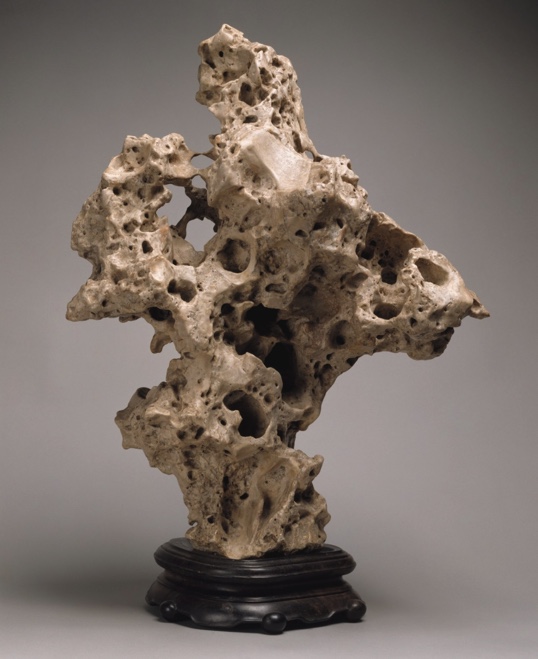
Scholars Rock in the Form of a Fantastic Mountain. Taihu limestone. MET Creative Commons Zero
An MA trip in lockdown.
To replace a planned physical trip to London the group voted to visit galleries virtually in another city. Shanghai was the city we chose. The brief was to find an artwork and respond to it through drawing and reflective writing.
In the Shanghai Museum I was able to visit the exhibition Elegant Friends for a Lofty Studio and catch a glimpse of the Chinese tradition of collecting weathered stones for their resemblance to mountains, clouds and other natural forms. Gongshi, meaning “spirit stones”, are also known as scholars’ rocks and the tradition was established in the Tang dynasty. Large stones were used to decorate gardens and small ones were used as objects of contemplation and meditation indoors. They also form subject matter for traditional Chinese paintings.
The rocks generally consist of types of limestone that have eroded into softened shapes with perforations and cavities, sometimes further carved into by humans. Each stone is mounted on its own unique rosewood stand and given a poetic name that describes what it resembles. The most sought after tend to be those that resemble mystical mountains and the practice of making and collecting is linked to Taoist beliefs about humanity’s place in nature, and a common spirituality.
I am drawn to the dynamism of these objects. To their history as well as to the geology of the materials and their aesthetic qualities. They have been picked out as special and have been given mystical meanings. They embody time. The rocks with their scars of erosion are millions of years old. The stands on which they are presented are centuries old. The geological features of their titles are anthropomorphised, as in A Peak that Enjoys the Companionship of Clouds, in a way that echoes Jane Bennett’s plea for acknowledgement of the vitality of the non-human and “the common materiality of all that is” (Bennett, 2010:120).
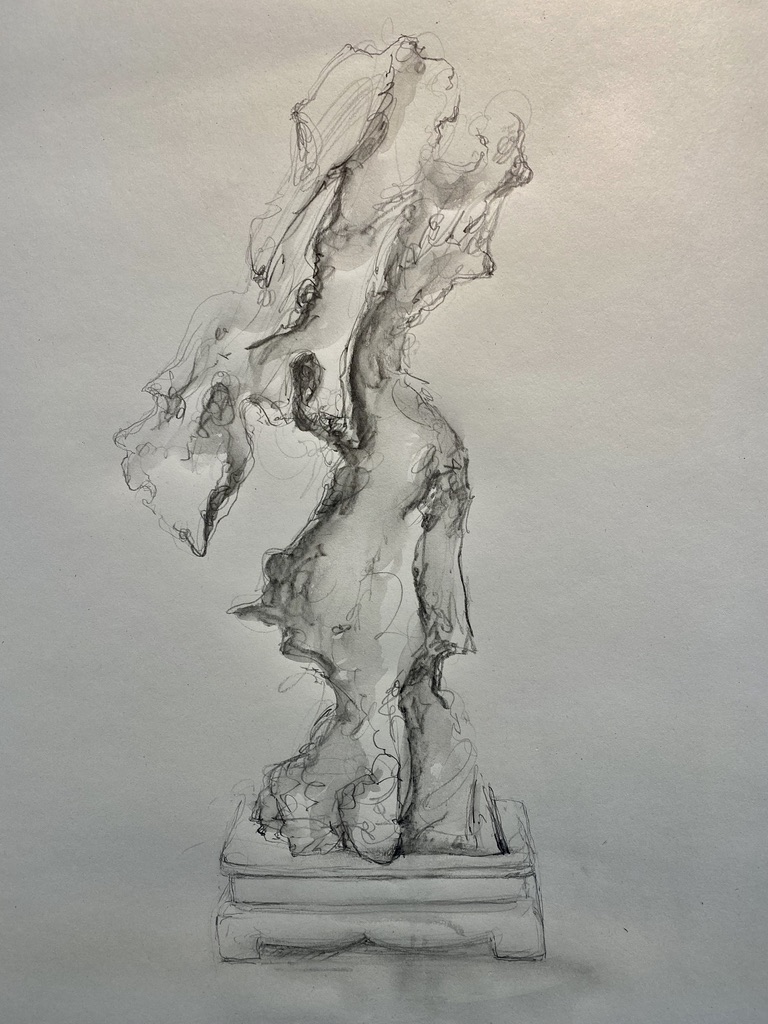
I started my investigation with two drawings from the scholars’ rocks I had chosen to home in on. Trying to think 3 dimensionally whilst drawing from a photograph was a challenge. I began to think of sculptors’ drawings I admire – Henry Moore and Tony Cragg – with their use of contours to describe volume. The way their sketchbook pages fill with multiple iterations of forms.
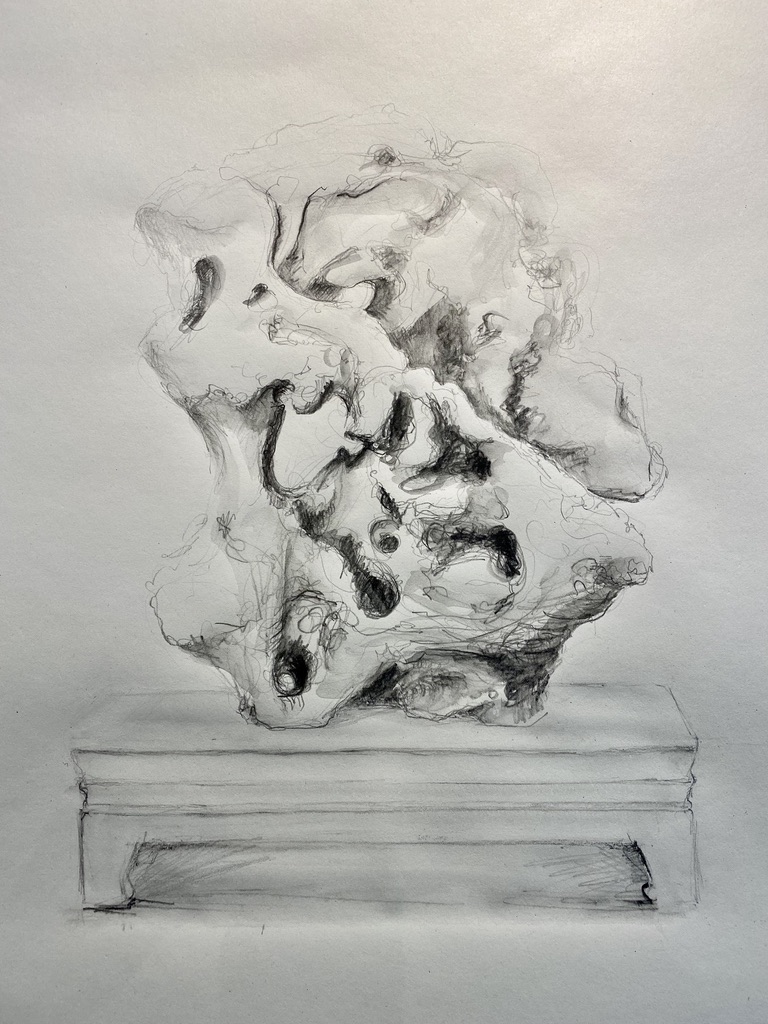
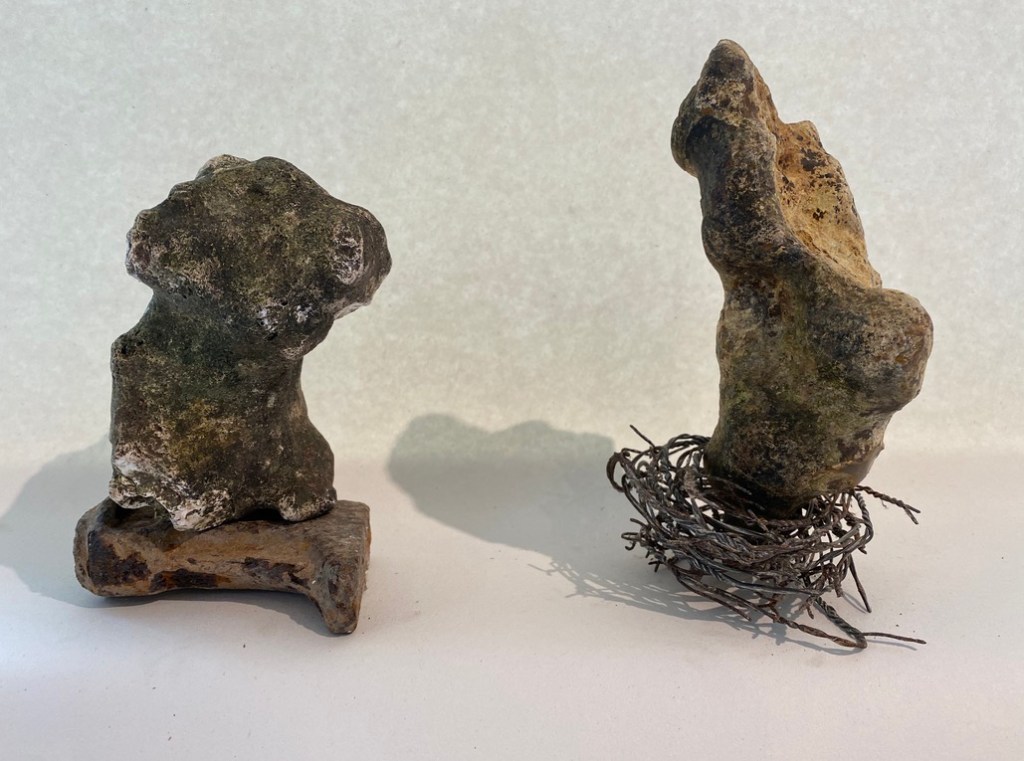
I have a collection of flints with interesting shapes found on the chalk hill on which I walk and have begun to think about how they might work in juxtaposition with other materials like the scholars’ rocks do. How they could each have a stand of a contrasting material. Whether they resemble other natural forms or phenomena. How they might work as a group of forms and in combination with other structures.

I have begun experimenting with stands made from some of the man-made detritus I collect from the same location as the flints. The two examples shown here use steel. Brick, plastic, concrete and wood are other possibilities I’m working with.
 Liz Clifford
So interesting Liz. I like the idea of the stands for your flints, it transforms them.
LikeLike