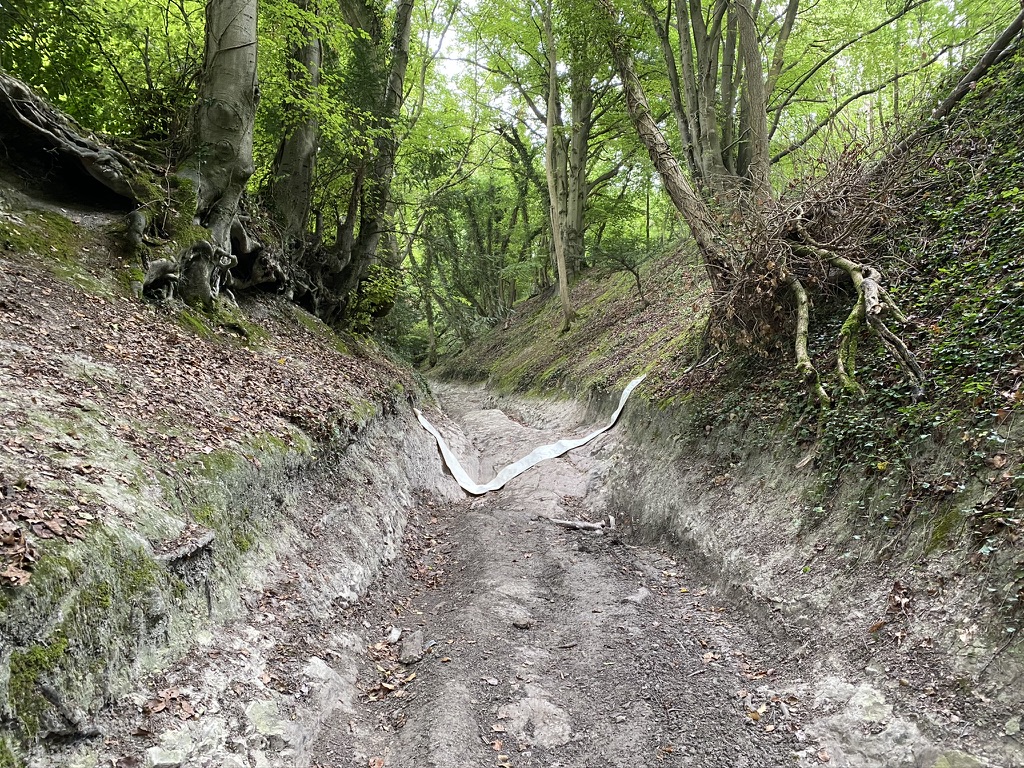
Byway 745 Observatory with direct drawing.
I have recently started making daily drawings on a 10 metre section of Byway 745, deciding to home in on, rather than pass through, the space. To establish a kind of “observatory” examining the whole space from the trees at the top of the banks down into the chalk trench of the track and up again. A cross section of the geological, biological and human history of this critical zone – of air, soil and rock. Data from maps and GPS apps have been recorded to pinpoint the space and more research into it’s history will follow but the real starting point is on site drawing.
Beginning with pencil and wash annotated sketchbook drawings was a fantastic way of tuning into the space. The act of observational drawing perhaps allows thinking time and a level of absorption absent when recording with a camera.
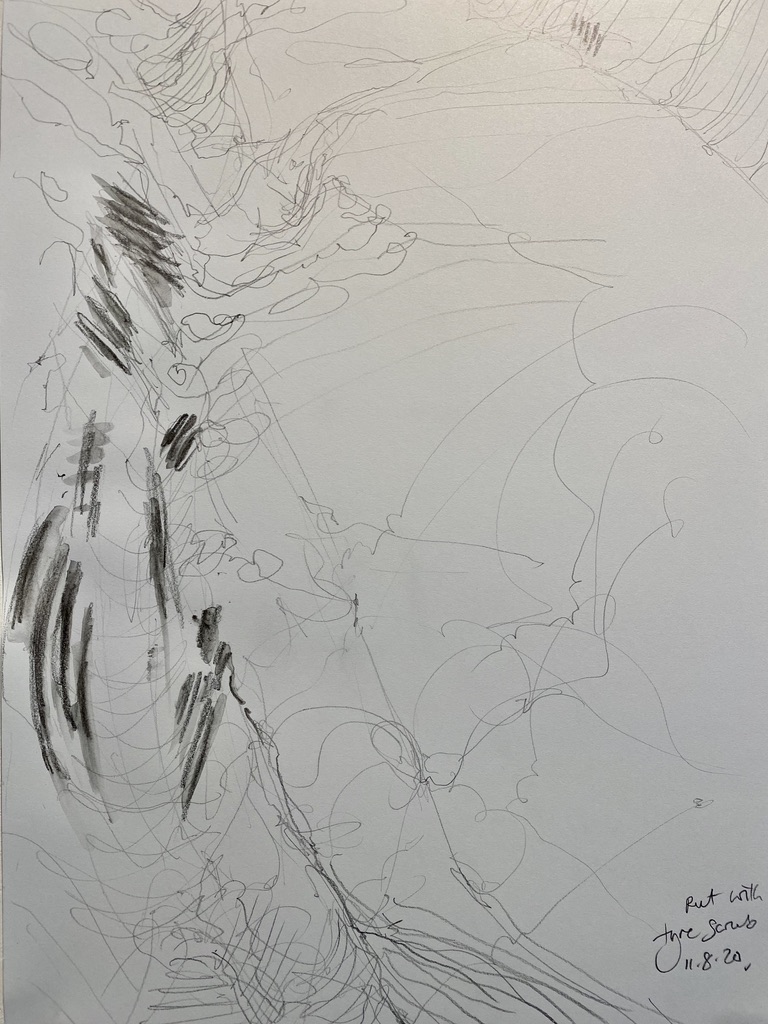

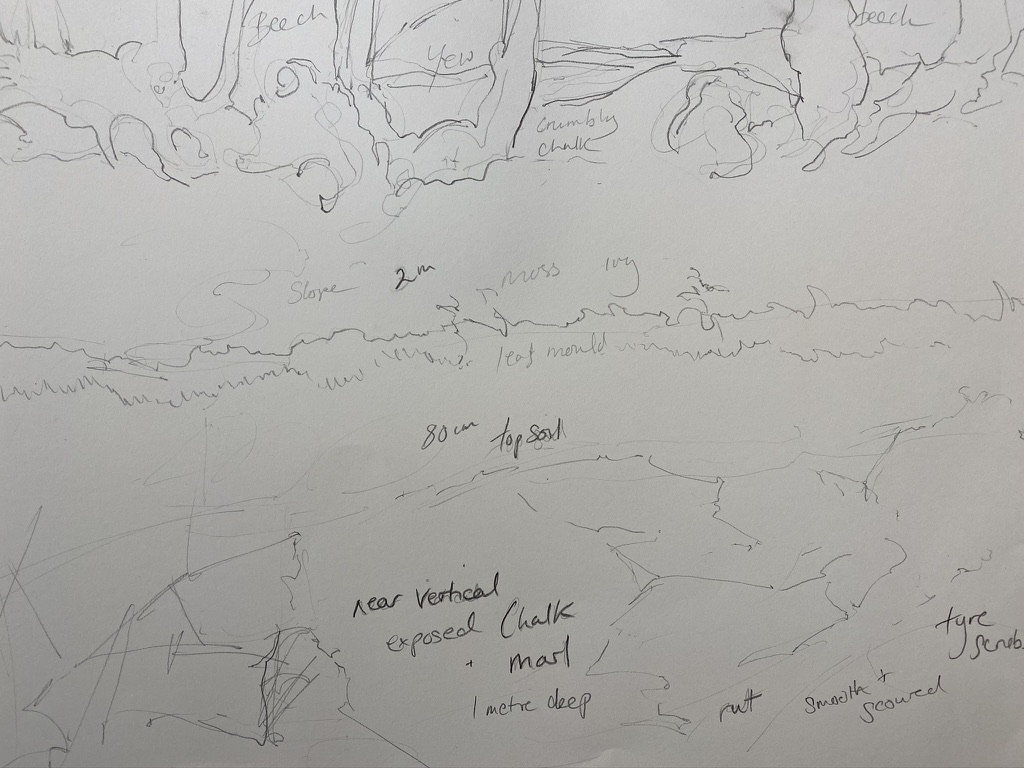
The other form of drawing has been much more physical. A direct drawing made across the width of the track consisting of a mixture of frottage and mark-making using brass rubbing wax and soft graphite stick. I will revisit this method and use longer pieces of paper unraveled from a greater height.
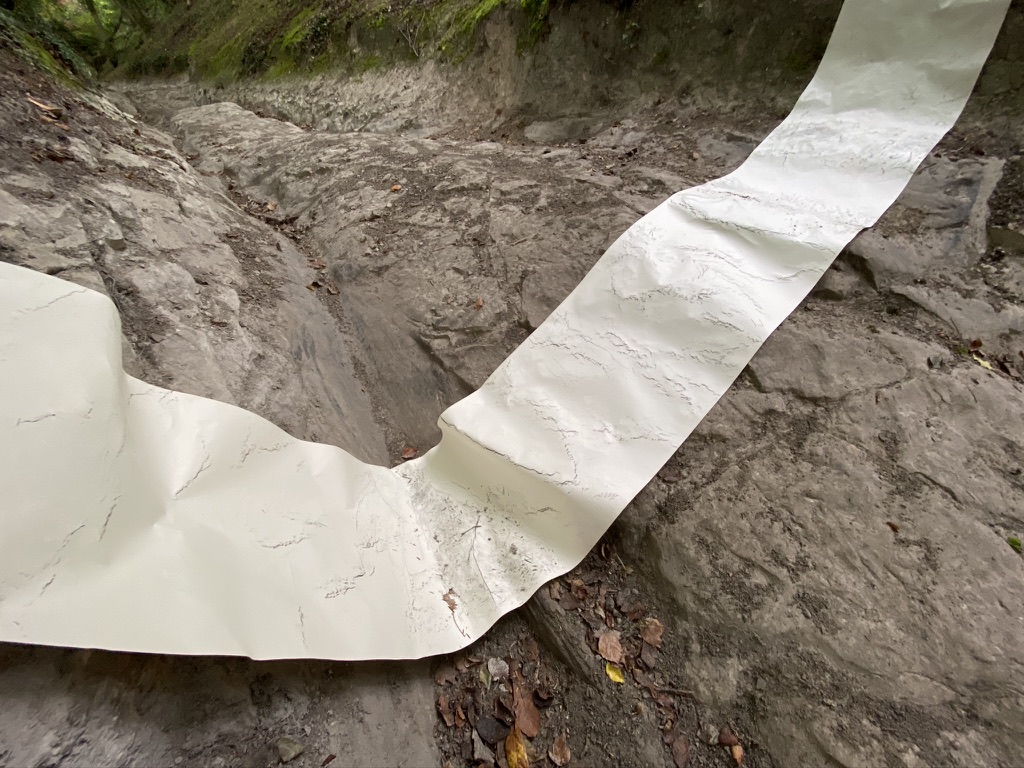
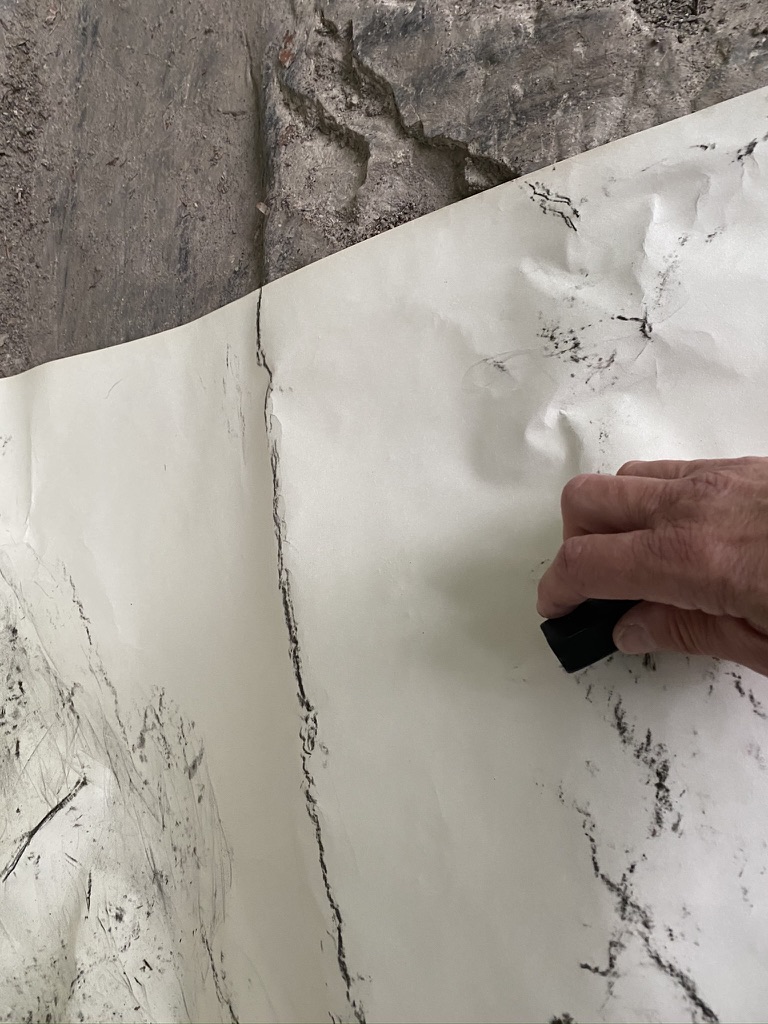
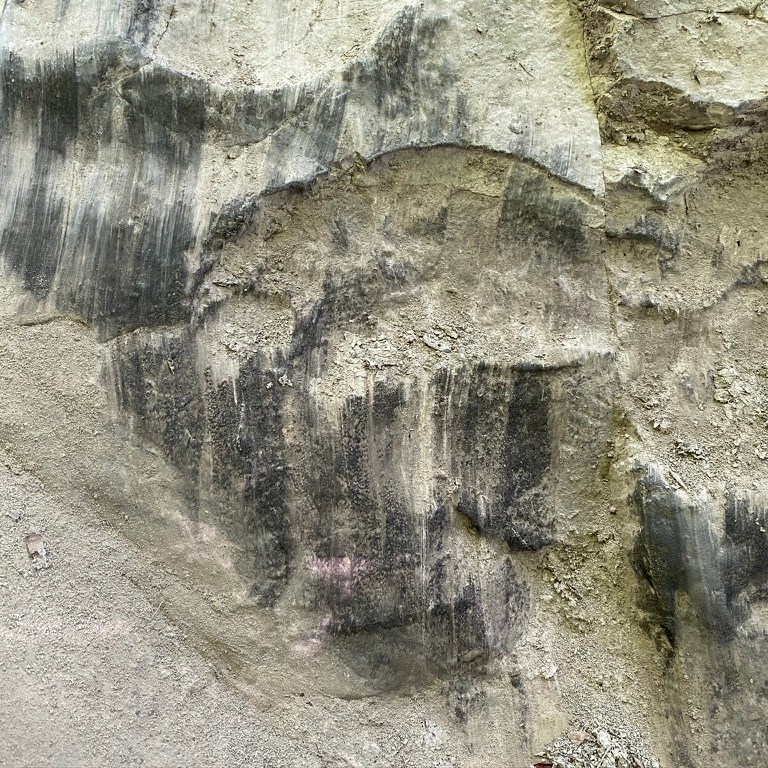
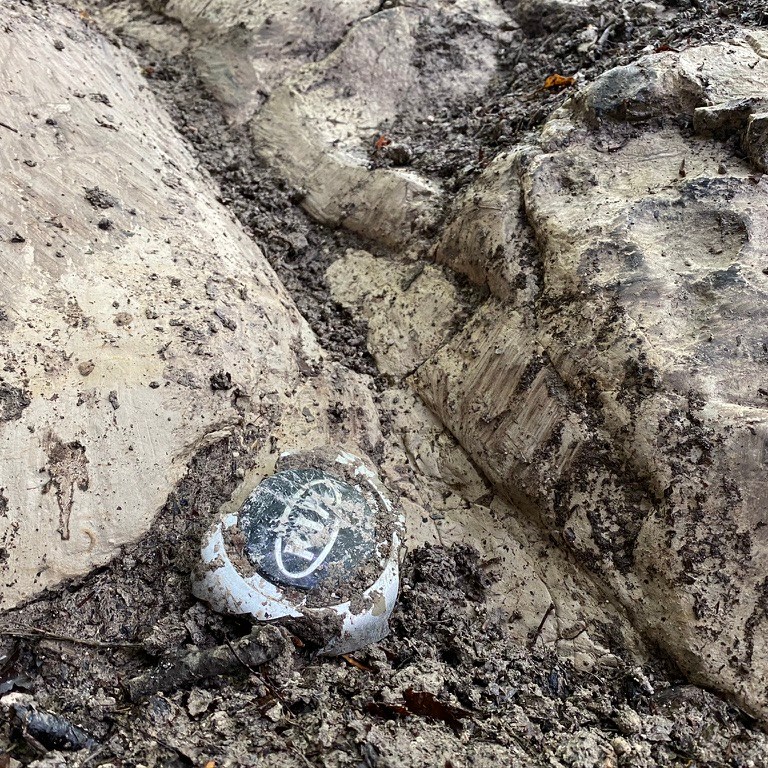
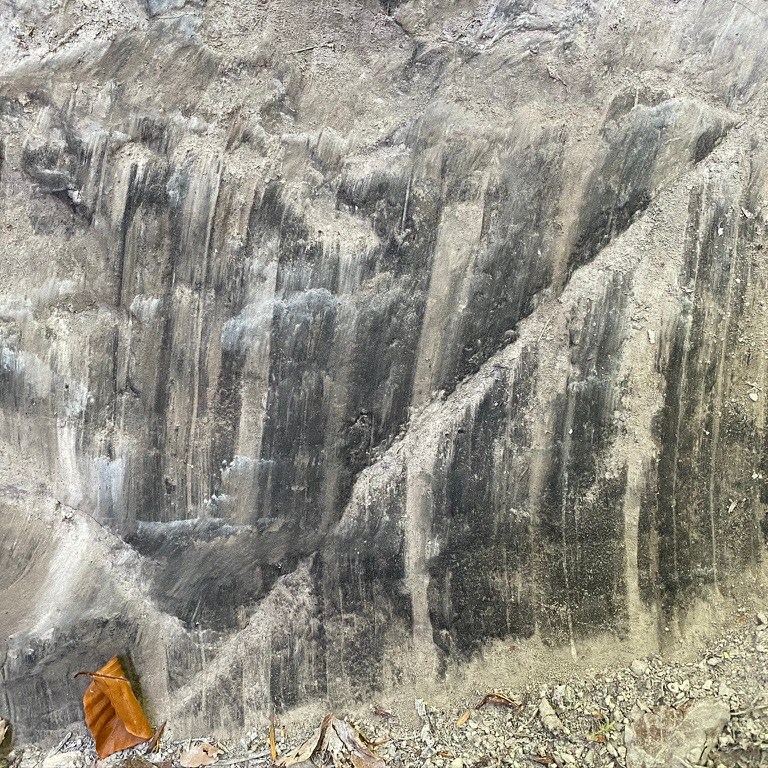
Whilst drawing, natural sounds have felt amplified. Buzzards, woodpeckers, and the nearby grazing sheep. Butterflies and spiders have passed by on their way but, so far, no humans. The human traffic is only evident in what has been left behind. The images below show the 4 x 4 tyre scrubs on the chalk and a smashed logo badge. A reminder of the accelerated erosion of the chalk by recreational vehicle use in recent years.
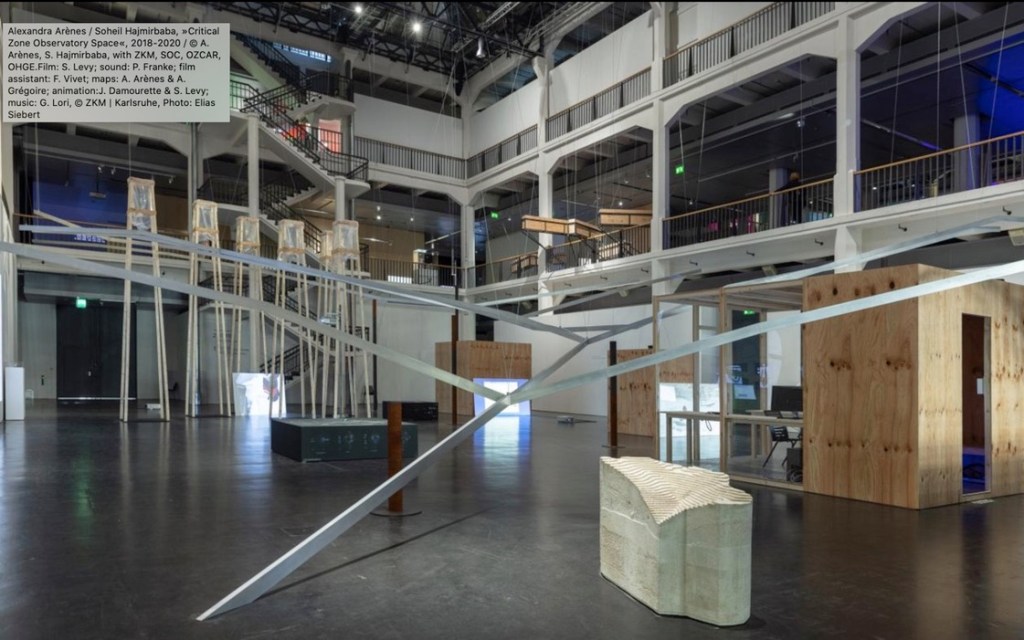
The prompt to take this approach comes from the current exhibition at ZKM Karlsruhe in Germany – Critical Zones: Observatories for Earthly Politics. The first room of this “thought” exhibition curated by Bruno Latour and Peter Weibel is called a Critical Zone Observatory Space. The installation by Alexandra Arènes and Souheil Hajmirbaba represents the work of scientists monitoring a section of the Vosges forest at Strengbach in the Alsace region of France that has been affected in the past by acid rain. The location has been a multi-agency observatory for 35 years with the aim of understanding the local ecosystem as teams work on air, soil and water monitoring. The challenge for the artists and film makers who observe the scientists at work is how do you share that experience in an exhibition space? Below is an installation shot from the exhibition showing the curation of screened films of the scientists in the field along with displays of instruments and representations of the lie of the land. That last element is embodied in a cast model of the contours of the section of forest studied, the main valley of which, the watershed, is a skeletal structure suspended in the space. The artists are not showing landscape in the traditional way, but are rather extracting what the scientists see and collaborating to make a visualisation of scientific data. They use the analogy of a body under observation and the suspended “skeleton” encourages the audience to consider what is under the ground.
I am encouraged to continue working with multi-disciplinary ways of representing the landscape in a gallery space and the graphic work these artists made for the digital version of the exhibition is also fascinating. Covid-19 delayed the physical opening so the digital platform was a vital component for this piece of work. The animation and graphic explains what is meant by The Critical Zone in general and visualises the scientific data from the Strengbach Critical Zone Observatory in particular, using what the artists call experimental mapping. They place the atmosphere at the centre of their circular map then the canopy, the soil and finally the rocks. In this schema “The Earth is closed – we are earthbound creatures. However, the cycles are endlessly looping from the rocks to the atmosphere or from the atmosphere to the rocks. It is these dynamic cycles driven by the interactions of life forms that scientists trace in the Critical Zone and that make the Earth unique.” (Arènes & Hajmirbaba)
Drawings by Liz Clifford.
 Liz Clifford
This is really interesting work it necessitates spending time with the work and understanding our relationship with our environment. The drawings and use of frottage are great.
LikeLike