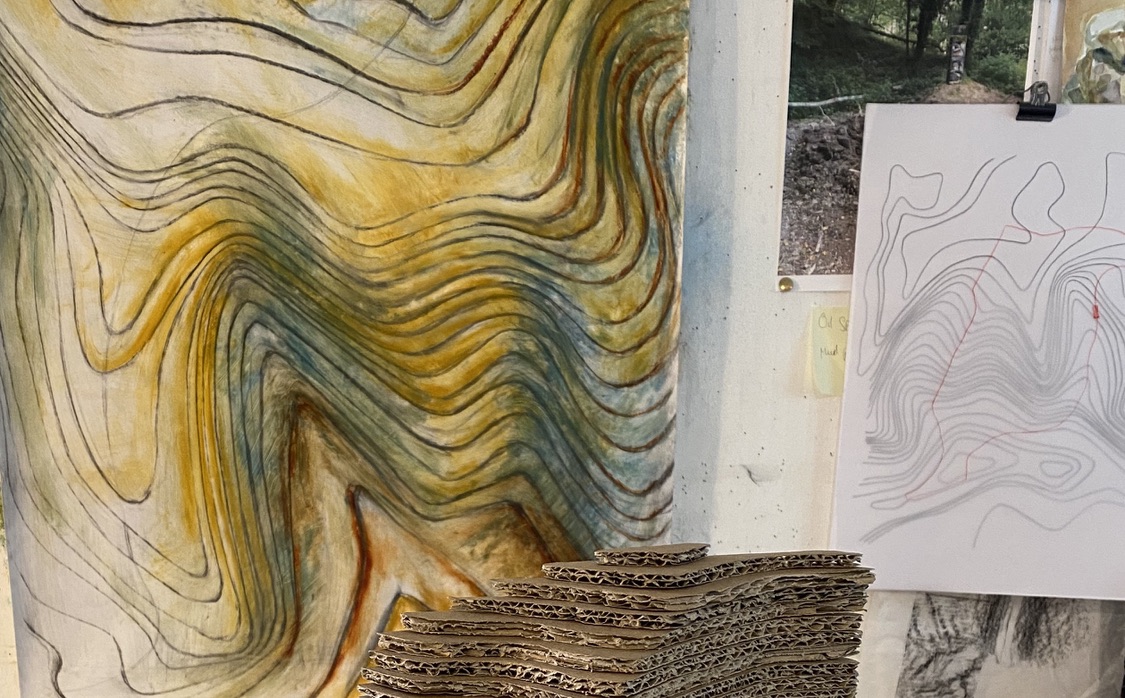
Having set myself the challenge of making observations in the landscape over the summer, I now return to the problem of curation of that information. I have a collection of rubbings, drawings, photographs, videos and collected materials. I also have graphic information relating to the geology and contours of the site which has been realised in drawing and print but not resolved and needs to be developed further.
Taking my cue from Alexandra Arènes and Souheil Hajmirbaba at the Critical Zones Exhibition at ZKM Karlsruhe, I have recently completed a three dimensional piece of work intended to help contextualise the various strands of my research. A free-standing representation of the hill on which Byway 745 is located.
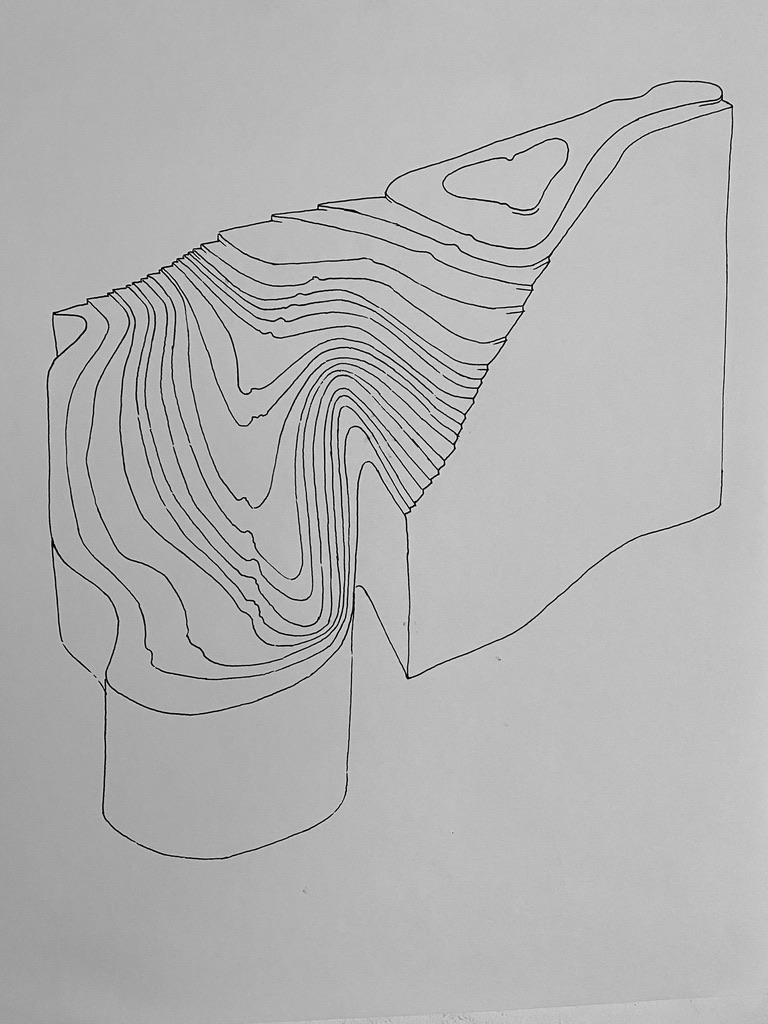
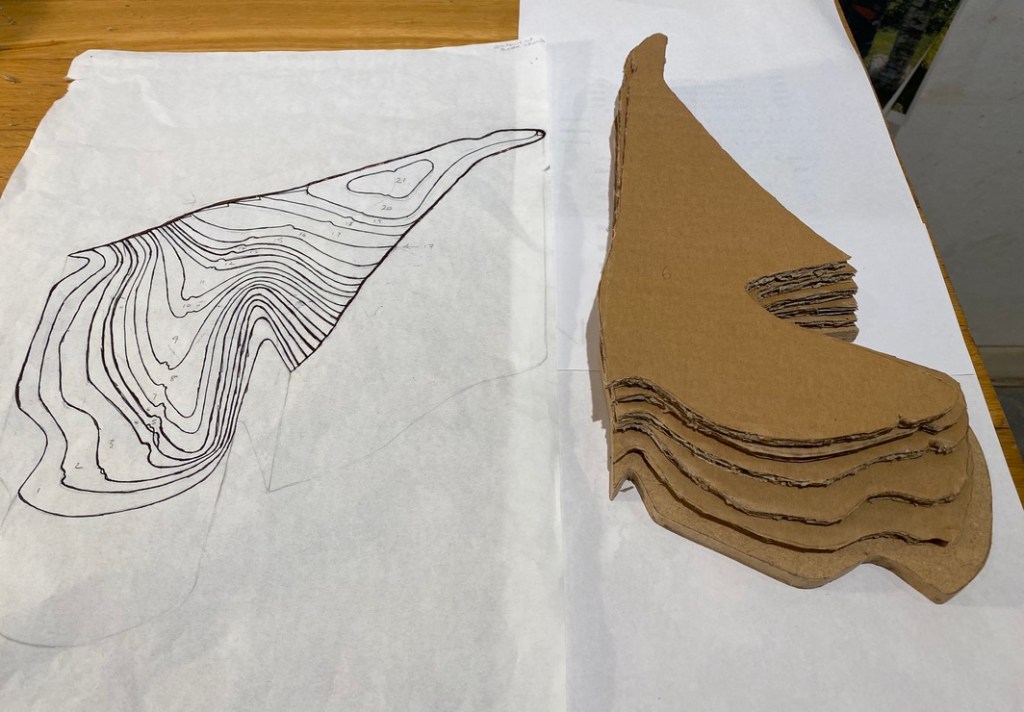
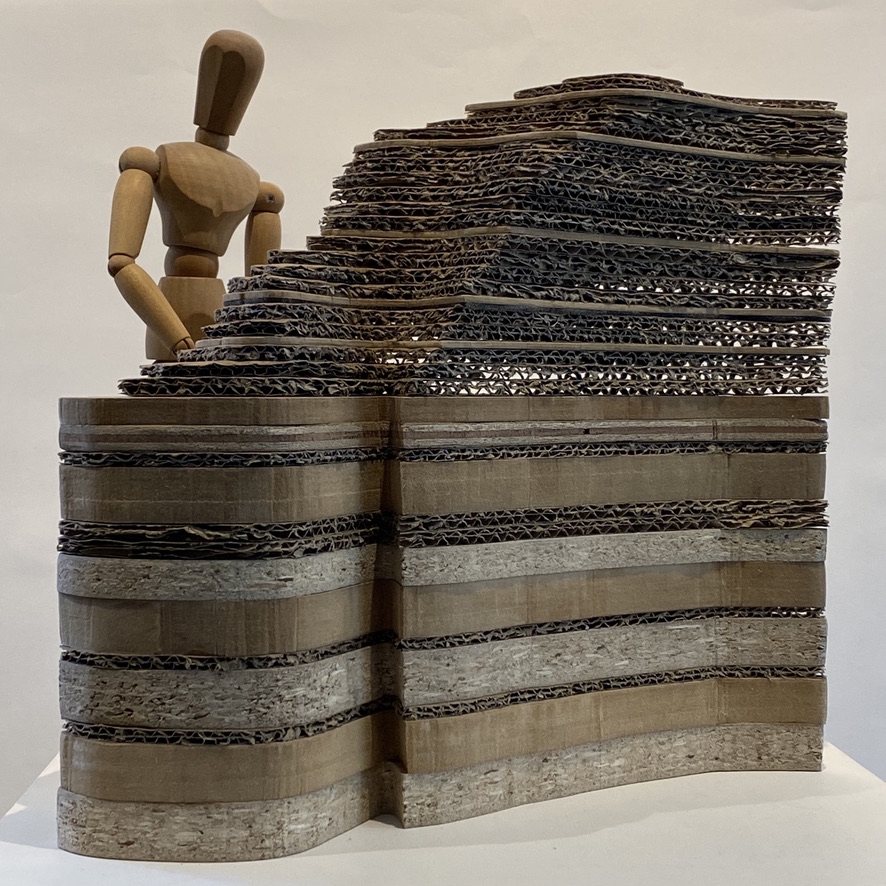
Taking the contours from the OS map and scaling them up, locating the Byway with a notch in each layer, the work was made by cutting scrap materials to build up the layers. The contours from an elevation of 110 to 250 metres above sea level are represented and various combinations of scrap materials were experimented with before the final iteration was glued together. The choice of materials is informed by their availability as off-cut scrap and discarded packaging, but also as various forms of processed wood. This is a wooded hill.
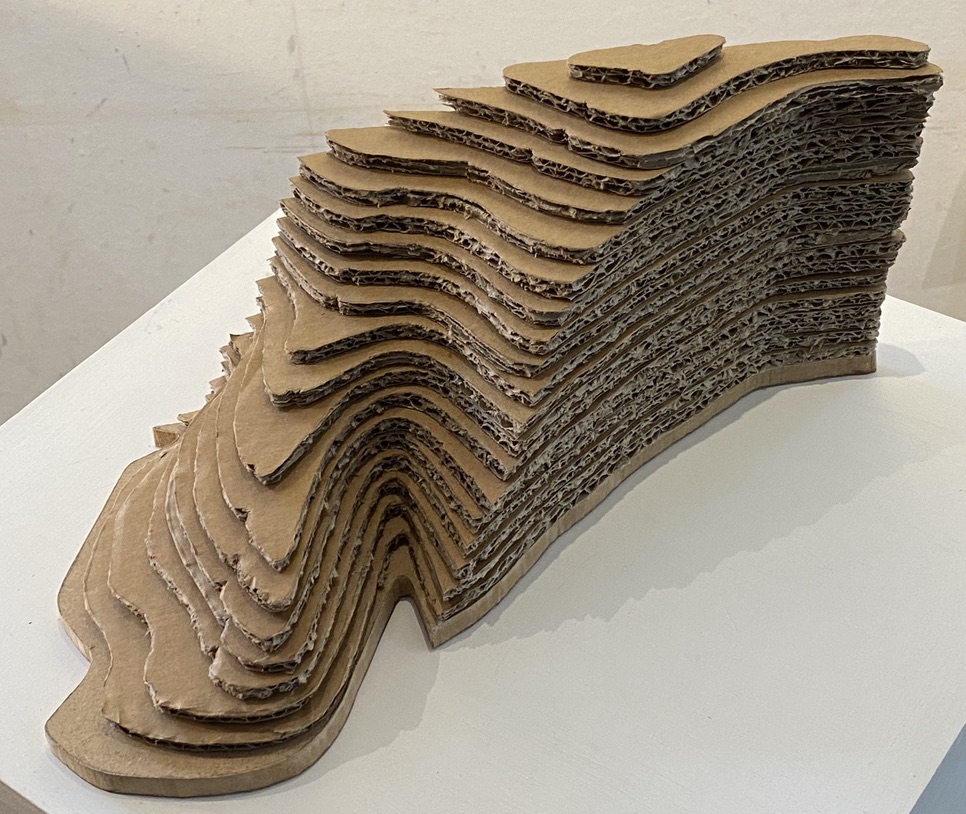
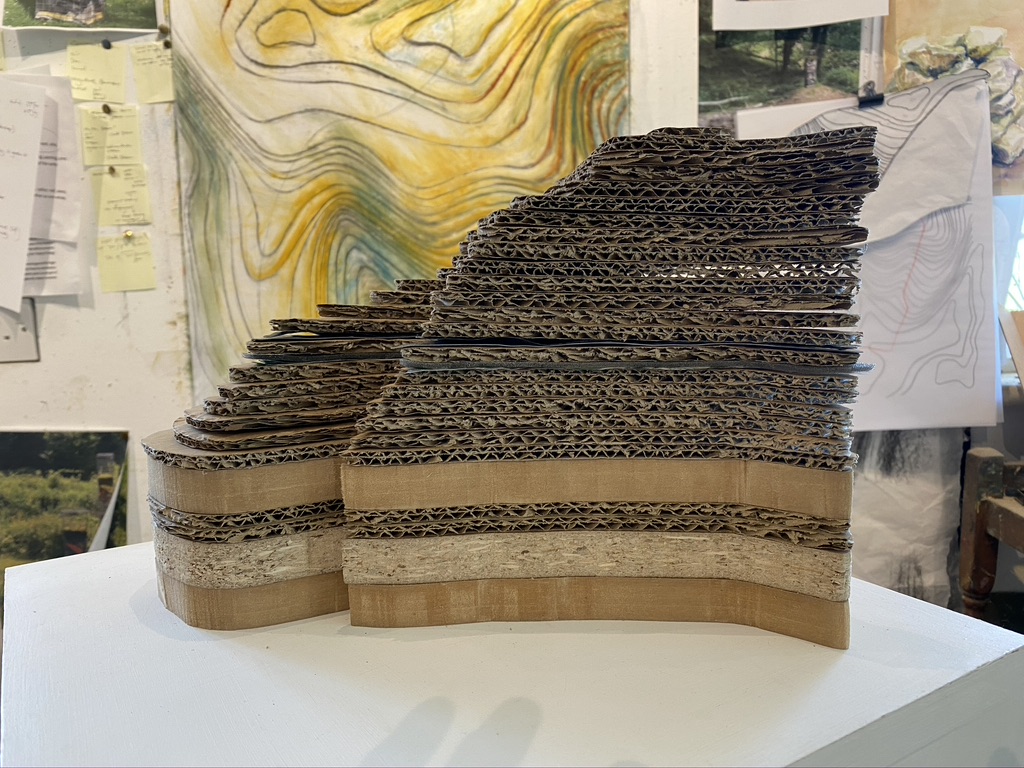
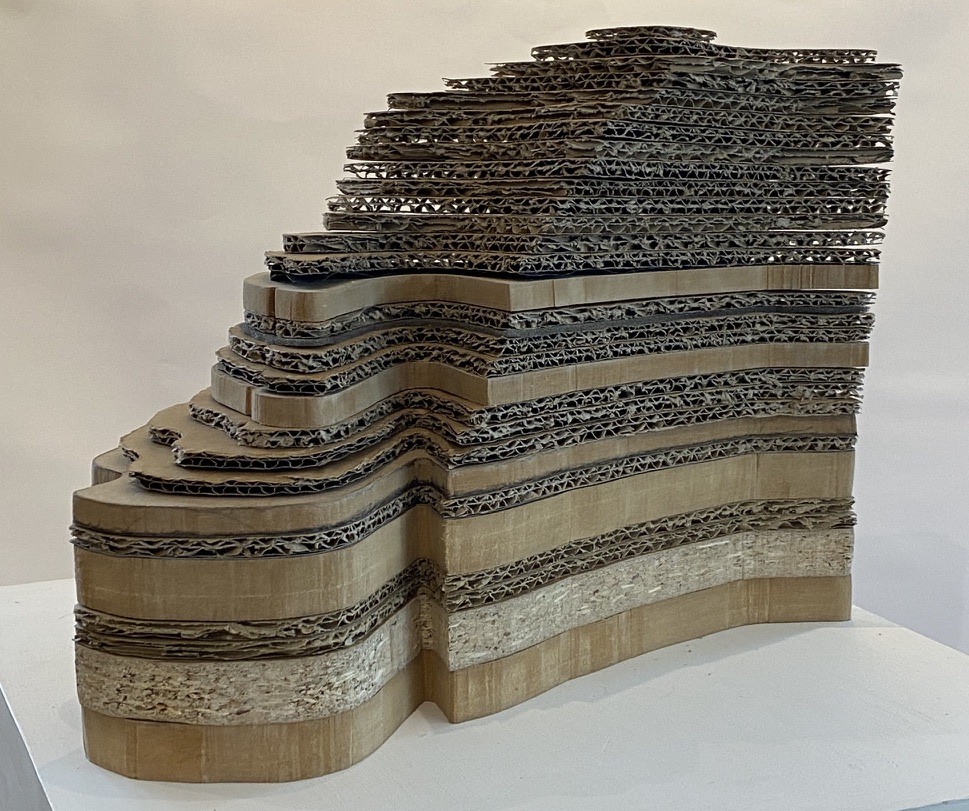
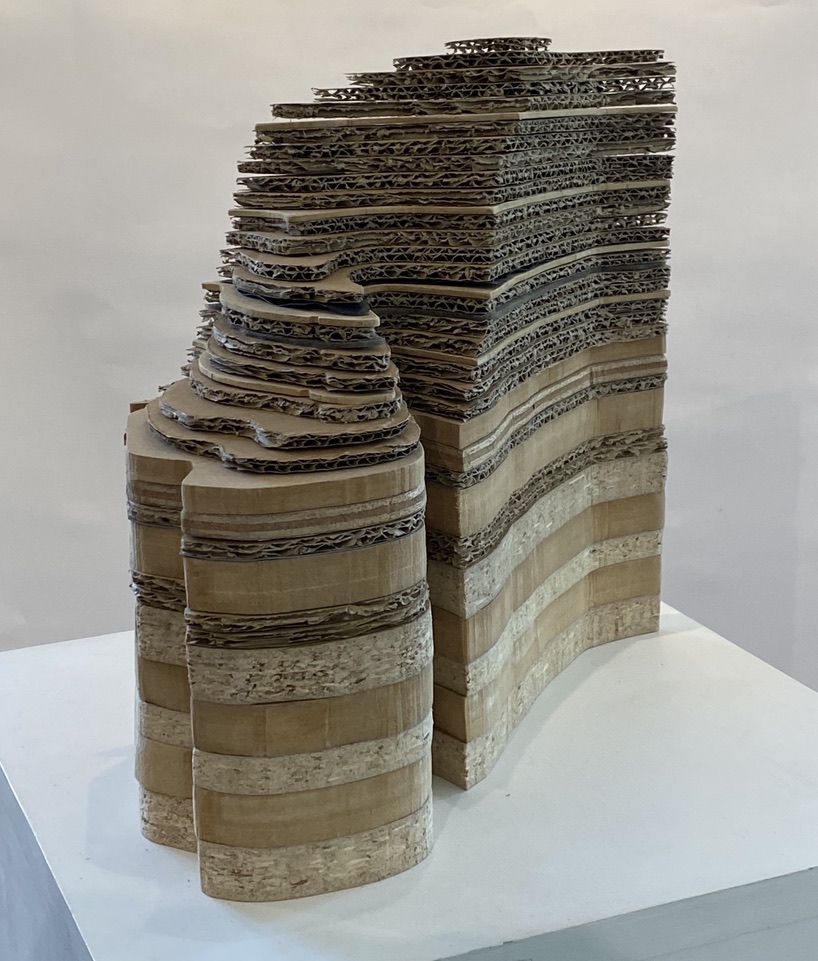
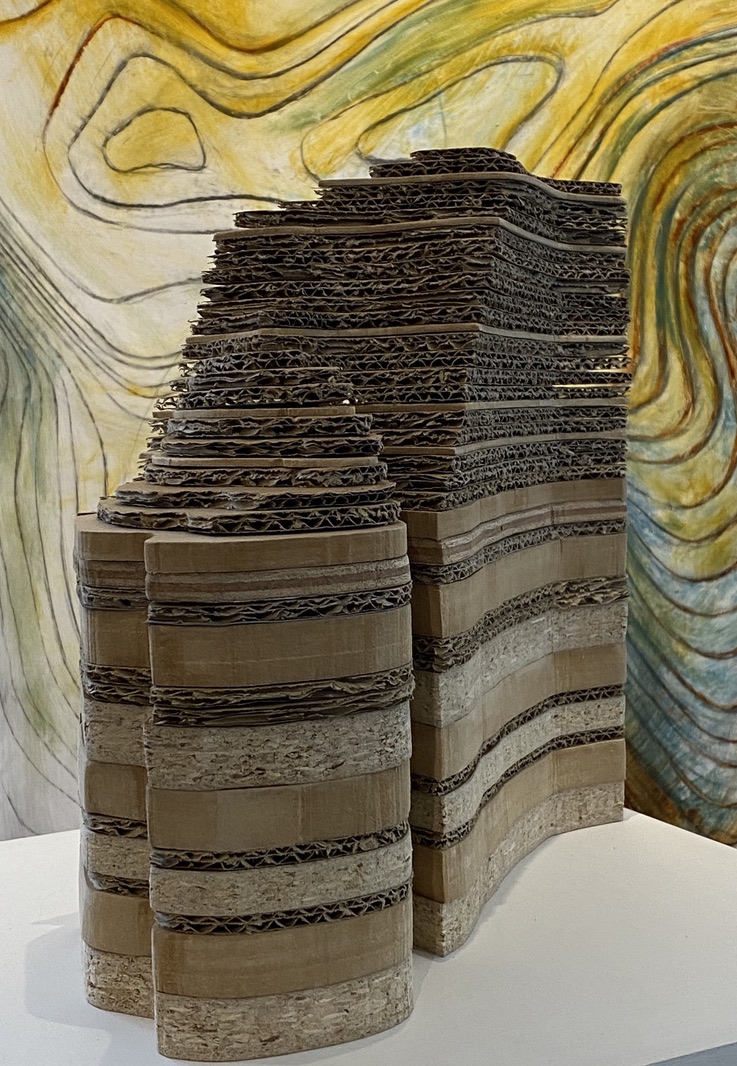
After a lot of work with jigsaw and scalpel I settled on a stack that suggests strata way down in the bedrock by building up a kind of plinth. The contrasting textures of the fairly limited selection of materials emphasises the horizontality and a simplicity is retained by the muted colour and repetition. The exception is in the inserting of a layer of grey plastic foam and black plastic sheeting at the two layers that correspond to the location of the Byway 745 Observatory. This is both to identify the location of the Observatory and as an acknowledgement of the amount of plastic waste that has been found on that part of the track.
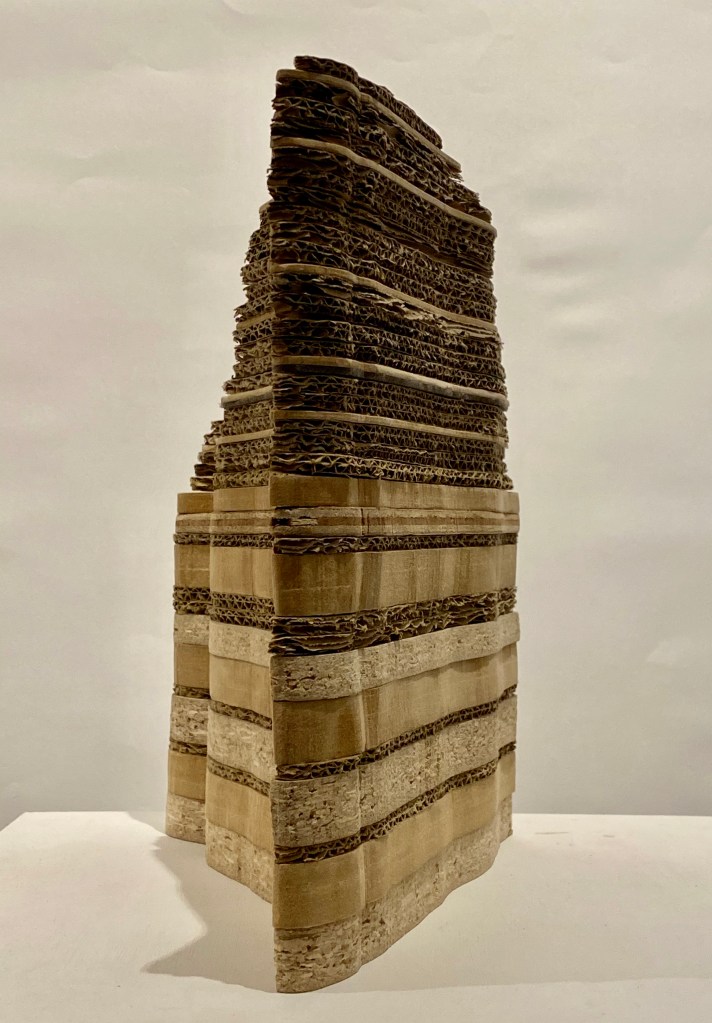
The resulting piece can be treated as a maquette for a larger scale realisation or as a plinth based small sculpture. The images below use model human figures to visual two different scale options.

Two sculptures that I have been looking at whilst building this are both called Stack, one by Tony Cragg from 1975 and the other by Kathy Prendergast from 1989. Both use humble, salvaged materials and create a free-standing form through horizontal layering. The scale that both artists achieve with their Stack is very likely what my work is aspiring towards. It will now form part of my proposal for an installation that aims to bring the landscape of Byway 745 to a gallery audience.
Photographs by Liz Clifford.
 Liz Clifford
This work looks great, when I look at it I begin to understand the notion of time in connection with the world. The millennia that came before us and how we are teetering at the very edge of that.
LikeLike