I have recently been reading artist, writer and film maker Hito Steyerl’s essay In Free Fall: A Thought Experiment on Vertical Perspective in which she charts the rise of linear perspective as the dominant tradition in Western Art and the triumph of today’s ubiquitous aerial view. The view from above has become a norm of the 21st Century thanks in part to Google Earth, Google Maps, drone footage, computer games and feature films. In my own practice I use contours taken from the Ordnance Survey map to help contextualise work made about a specific landscape.

Following that first piece of reading, I came across Techniques of the Observer in Artforum International Vol.53, Iss. 9 (May 2015). This is a transcript of a conversation between Steyerl and journalist and documentary film maker Laura Poitras. Both Poitras and Steyerl have made films about surveillance and drone strikes. Steyerl’s How Not To Be Seen: A Fucking Didactic Educational .MOV File (2013) and Poitras’ Citizenfour (2014) about Edward Snowden’s revelations of NSA surveillance post 9/11. In this conversation they are speculating about Poitras’ forthcoming installation Astro Noise at the Whitney Museum of American Art in New York. Poitras asks ‘What is the relationship between that museum context and the public? How is political content contained in a museum context? How is it different from a movie theater?’ She is looking forward to being able to move away from narrative filmmaking and to let the audience participate more in the process. Steyerl had already experimented with the curation of her films in art spaces. At the time of this conversation her work was showing at Artists Space, New York for which she had built a series of viewing set-ups including a kind of half pipe you might find in a skate park and a barricade you could use to prevent flooding or to take cover behind. She appears very aware of the challenges of not having a captive audience. In a gallery the audience abandons longer work.
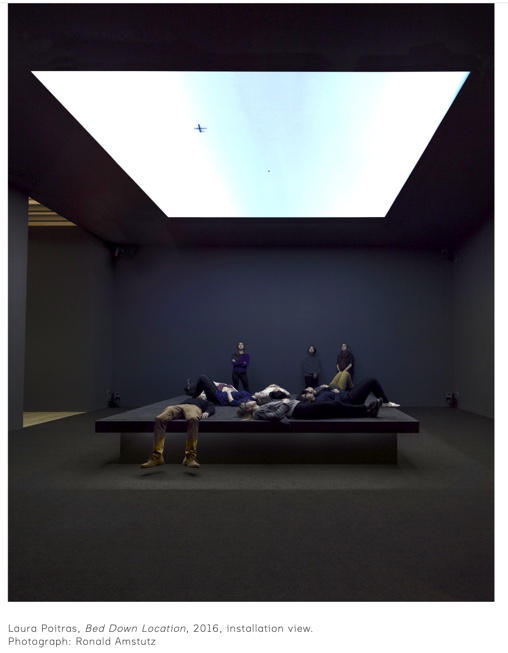
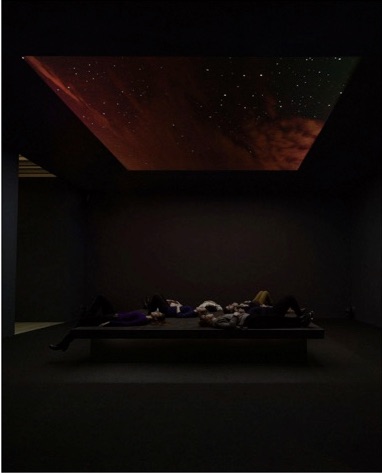
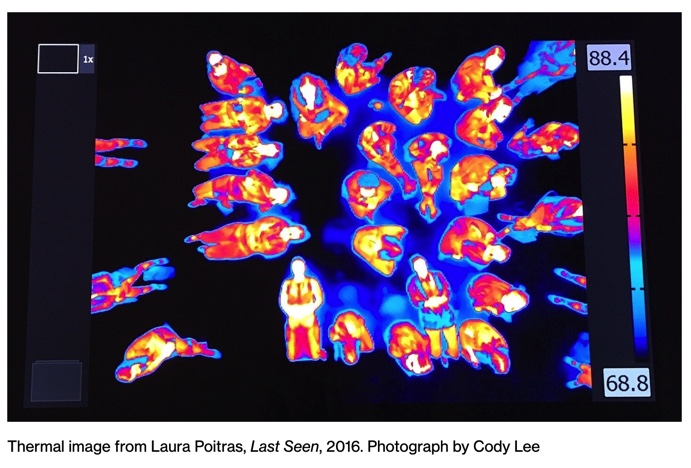
In Astro Noise Poitras employed a variety of curatorial techniques to pull the audience in, including double-sided projection, viewing cracks and in Bed Down Location a platform on which to lie down and watch the night sky. Not just any night sky but that over Pakistan, Yemen and other countries where U.S. military drones may regularly hover. The artist is asking the audience to empathise with those for whom the likelihood of a drone strike is a reality and lying down in public is a way to feel vulnerable. The audience may be lulled by the night sky images but feel that vulnerability when the sounds of overhead drones start up. In the last room of the exhibition the visitors were confronted with thermal images of themselves as they lay down to watch the night sky, the thermal imaging equipment having been part of the installation. See top image, Laura Poitras’ Last Seen (2016).
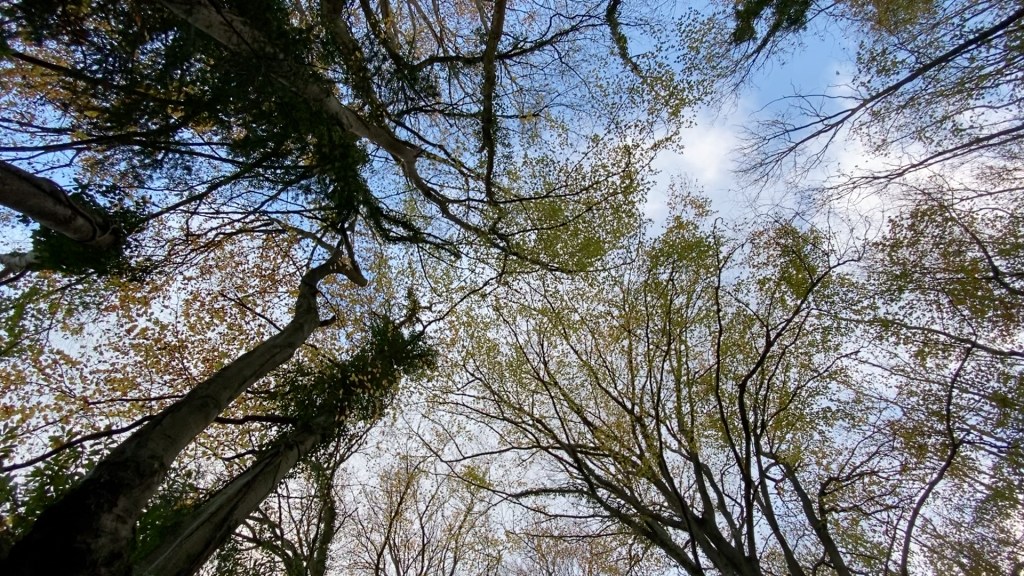
This work is fascinating, as well relevant to the video piece I am developing to go with Byway 745 – Observatory. Looking up from the ground at the canopy rather than adopting the traditional viewpoint of passing through or observing from a fixed vertical, linear perspective. A year of changes is observed from that viewpoint and questions of how curation of the video will work need to be considered carefully. Will the audience perhaps lie down to view it? How will their attention be held? Should they be required to engage with each other? Possibilities are suggested by Steyerl’s and Poitras’ curations of film work but I will need to research many others.
Not only is this viewpoint at odds with the traditional view onto the landscape associated with landscape painting, often an idealisation, but it is also associated with the reality of looking at the landscape from above. As the camera looks up into the canopy satellites and aircraft pass over head, 4 x 4 drivers search Google Earth for good off-road tracks and experience this landscape from their vehicles with the help of Sat Nav. The after effects are felt on the ground, in the spot where I have placed the camera. The erosion of the chalk, the air pollution and the detritus that is left in the vehicles’ wakes.
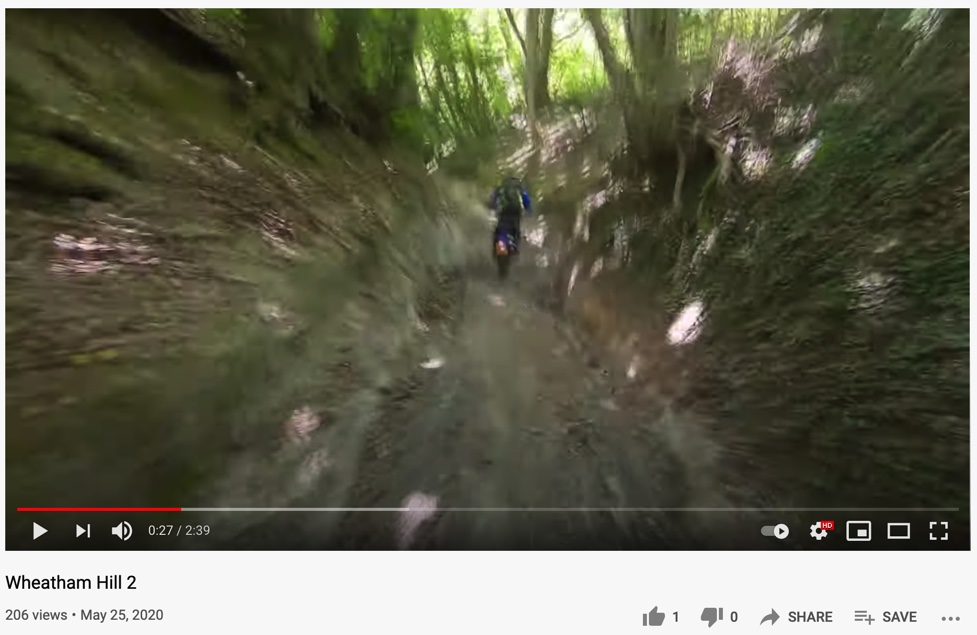
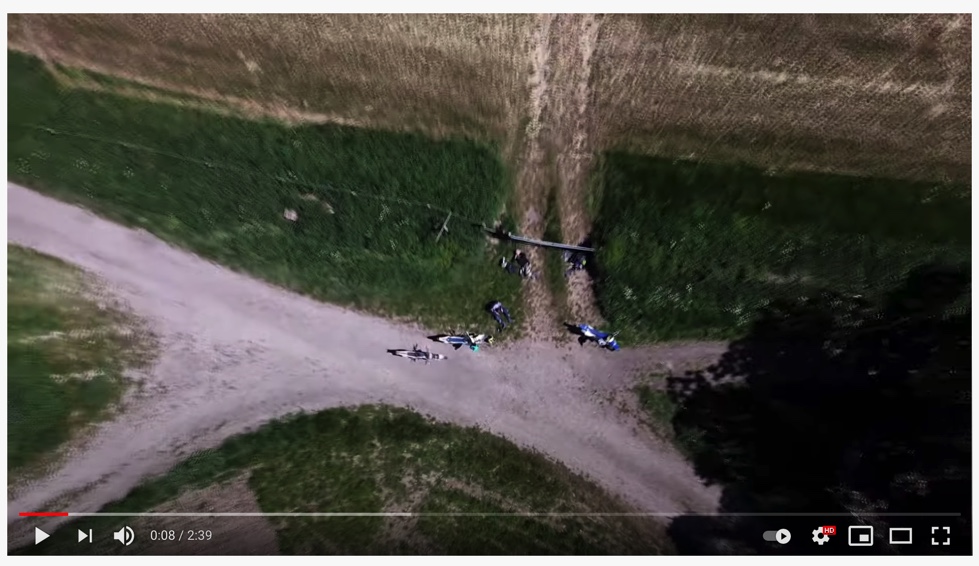
For many the landscape is experienced through a screen. For some it is relived through a screen. The stills above show those 21st Century viewpoints of GoPro ‘point-of-view shot’ and ‘the-eye-in-the-sky’ drone shot. The recreational activity of dirt-bike riding in the countryside can be visited over and over without the need to venture out thanks to this video posted in May 2020.
.


A great post Liz liked the connection between theorists and practise
LikeLike