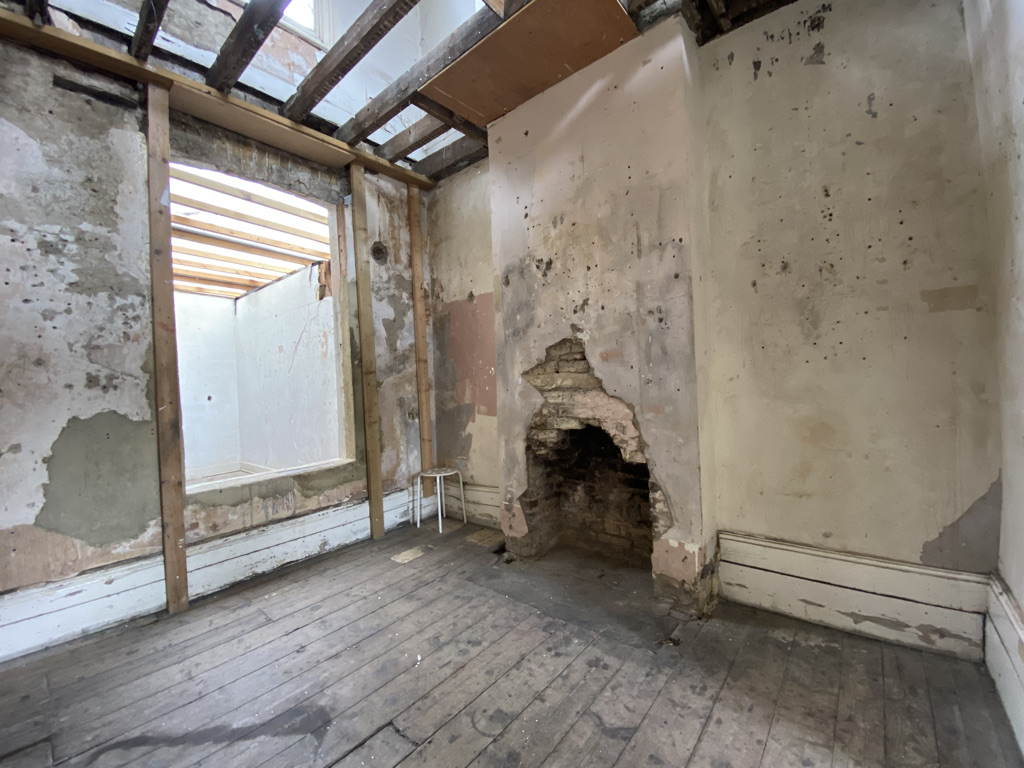
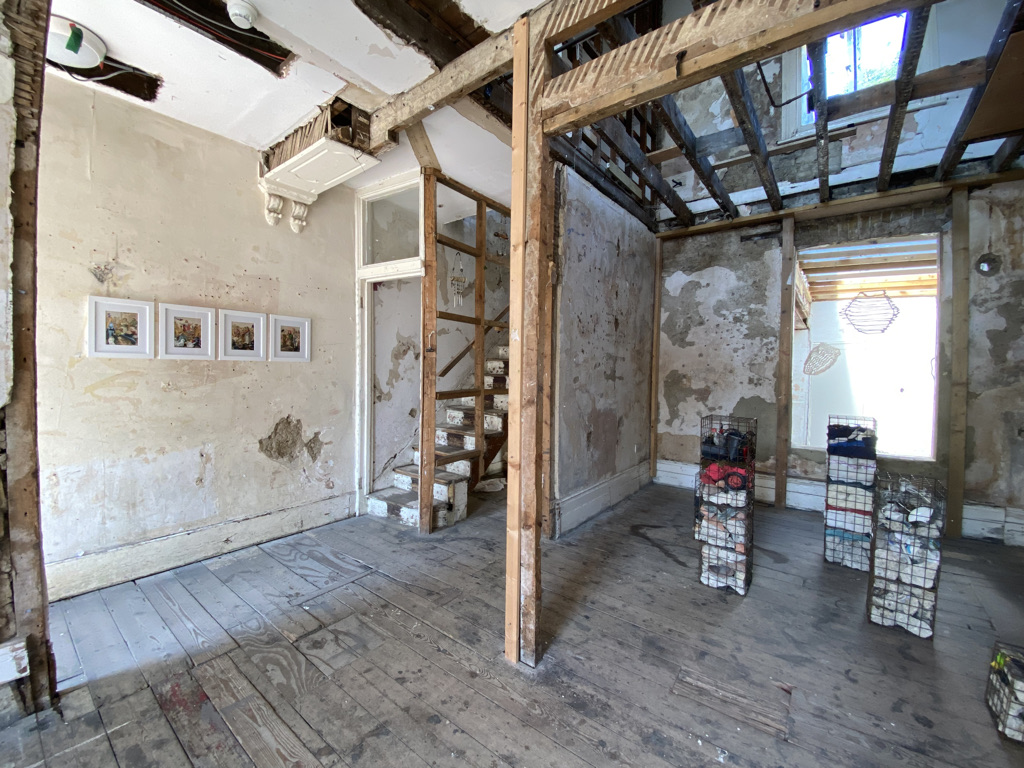
Having shown work in an empty West End shop last month, another opportunity to work with a non-gallery venue has just come to fruition. Maverick Projects in South London manage a series of buildings as locations for art events, including Safehouse 1 in Peckham. This is a stripped down, late Victorian terraced house, wedged between industrial buildings on Copeland Rd. As a group of MA students we were able to raise funds through an artwork auction to supplement the £500 grant from UCA to pay for a week’s hire of the space.

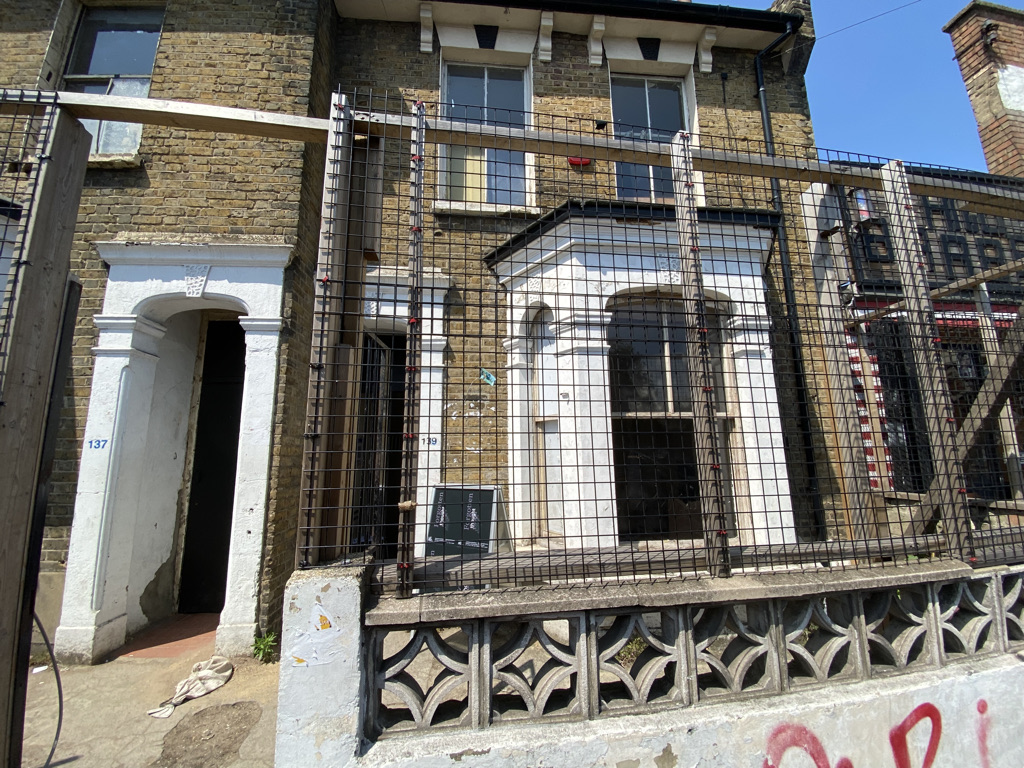
As part of the curatorial team of five, I’ve been involved with the whole process, from deciding on a title through to transportation and installation of the works. We decided on the title Forgotten Though by ballot from a shortlist of suggestions. Each artist submitted text about their work in general terms and specific to the theme that was used to flesh out a press release. With thirteen artists working across different media and with diverse concerns it is a huge challenge to produce text that covers all bases. The work included in the show explored concepts of memory in relation to our brains and nervous system, bodily actions and technology. Some artists did a recce of the venue and responded to the space, making a proposal for a particular part of it.
The work I included in the show was a response to both the theme and the stunning middle room downstairs shown in the photograph above. Attracted to the stripped chimney breast and pitted walls, baring intermittent flakes of silver leaf, my proposal was to work with the more domestic elements of the detritus I collect to realise a grouping of gabion structures gathered around the hearth.
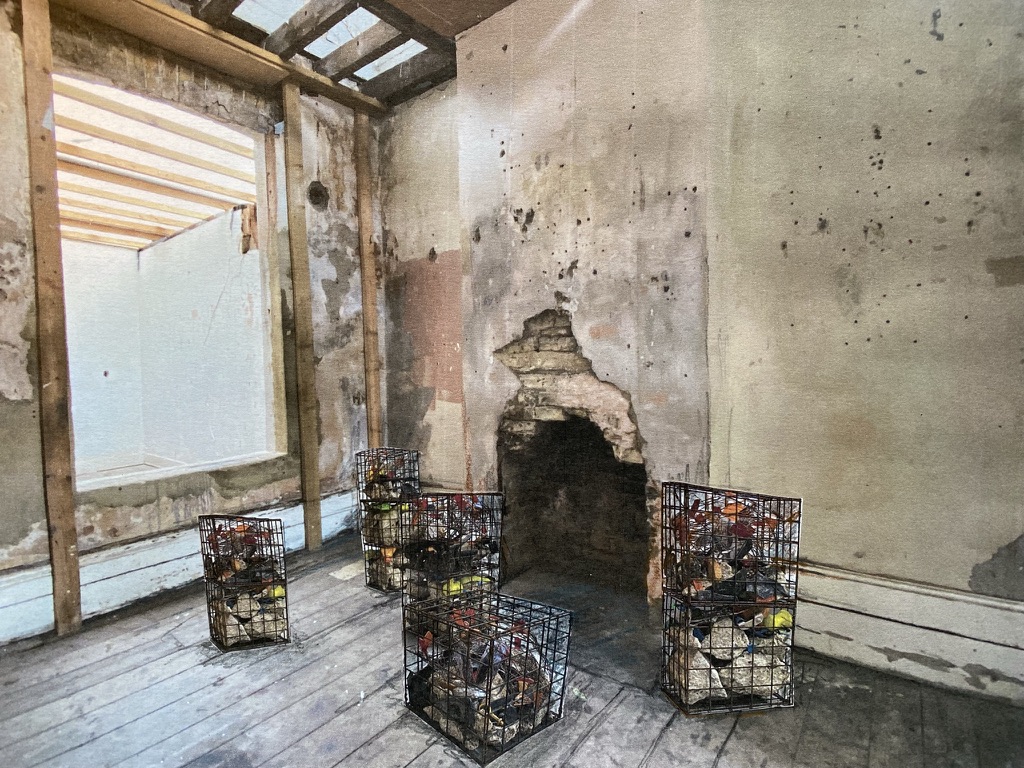
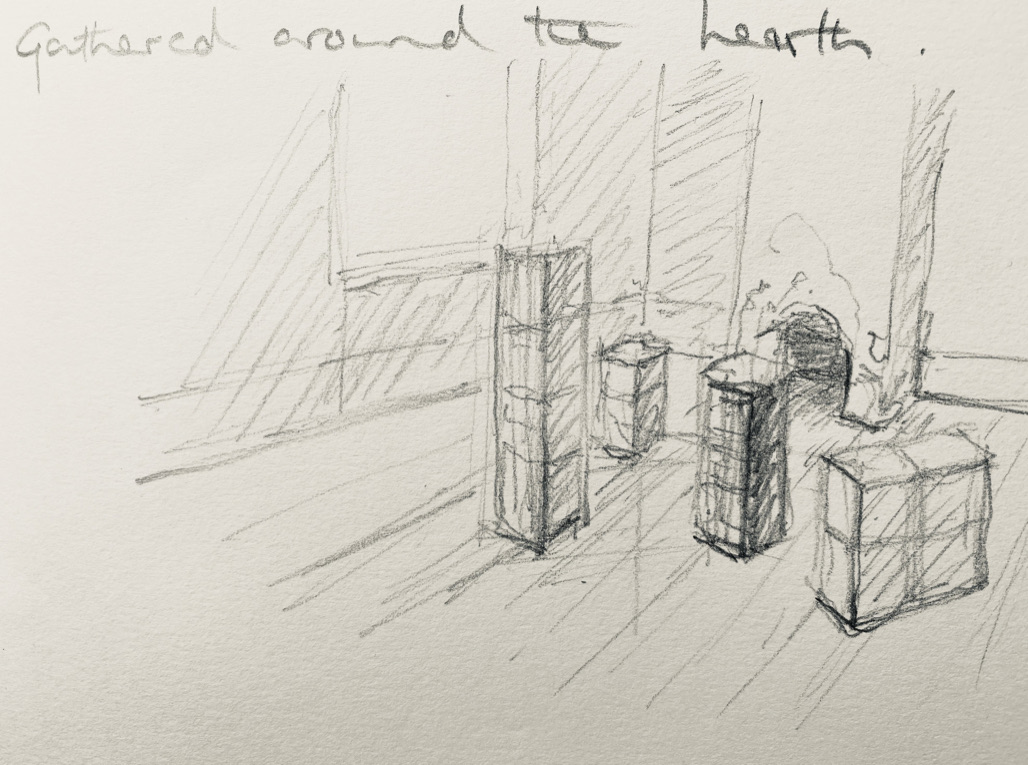
Working with stacks 25cm Gabion baskets, I was able to build five structures in the studio varying in height from 25cm to 150cm. The bases contain concrete and brick providing the stability needed. Layers are built up with reference to the built environment – including drainage ceramics, steel bolts, and plumbing pipes – much of the material having been found discarded in the rural landscape. The configuration of the structures was finalised on site but the individuals were worked on in the studio. They gather around the hearth – the left behind and forgotten, long after the house has been abandoned. They relate to one another through the materials from which they are made and their configuration – reminiscent of a family group. The aesthetic of the work echoes that of the abandoned house. The materials will form part of the Quaternary layer of geology – that of made ground, landfill, and the technofossils of the future.
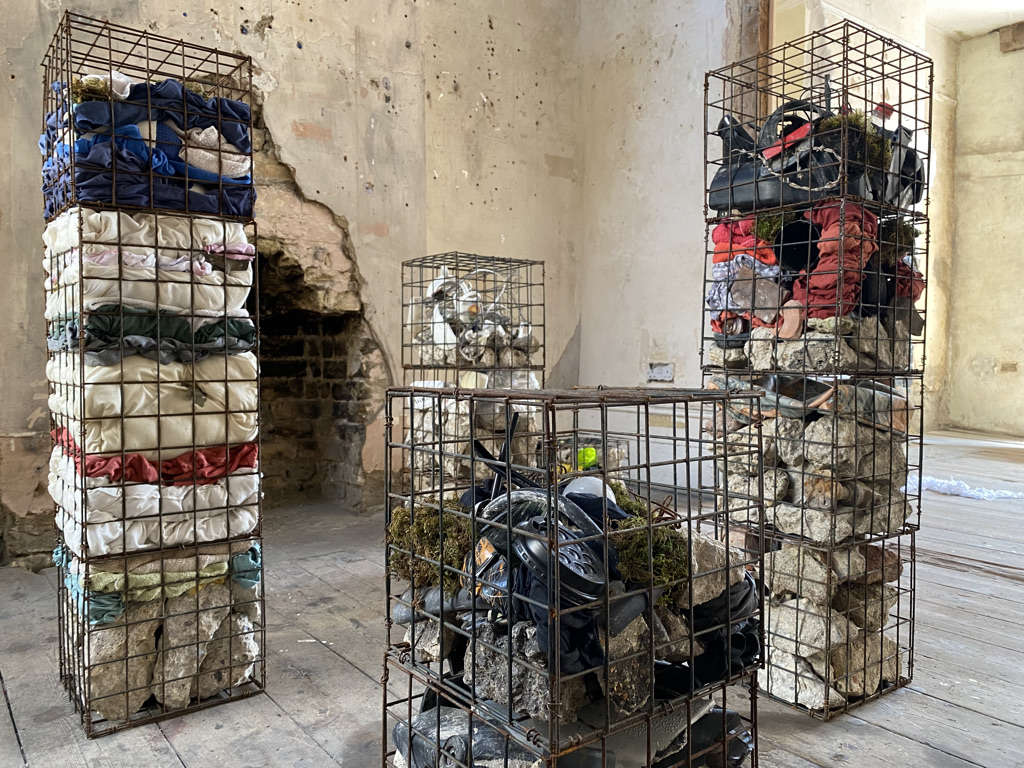
Introducing cloth into the work was an opportunity to reference the domestic and to work with more intense colour – each of the 5 ‘figures’ has an identifying colour. The fabrics used are old pillows, complete with stains, flannels, dishcloths, old T shirts, scraps of sheets, and wipes found in the landscape. The abject remains of clothing, bedding, cleaning activities and garbage. A cushion cover printed with an iconic William Morris design is a reference to the age of the house and also works with the colours in the red structure.
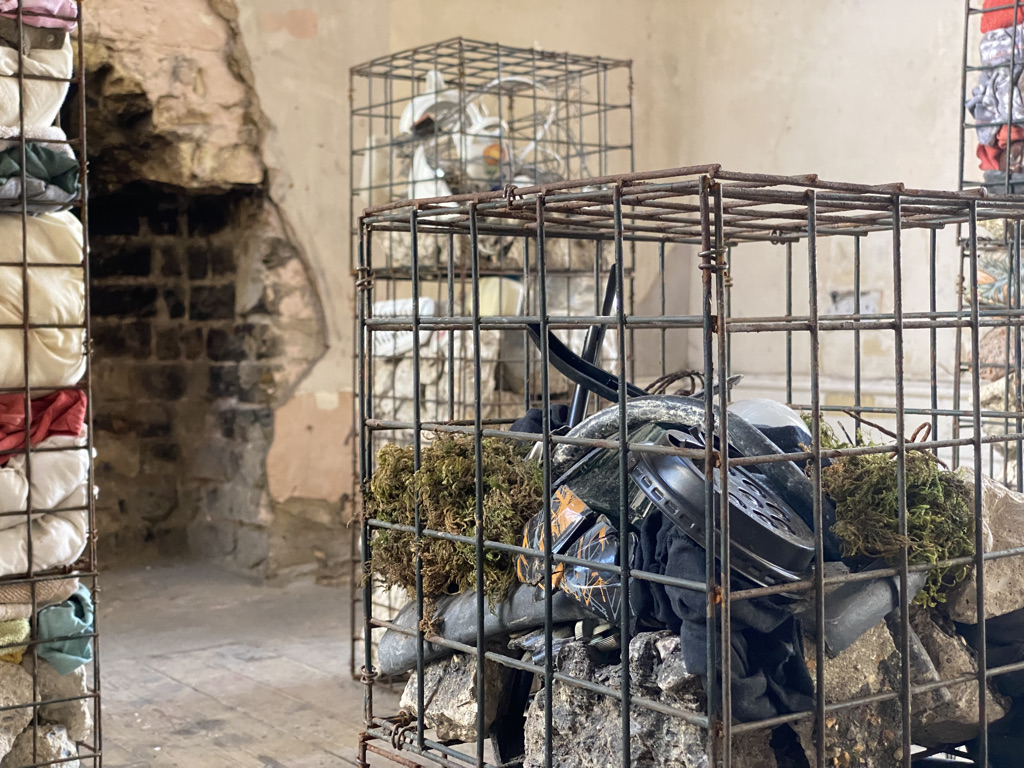

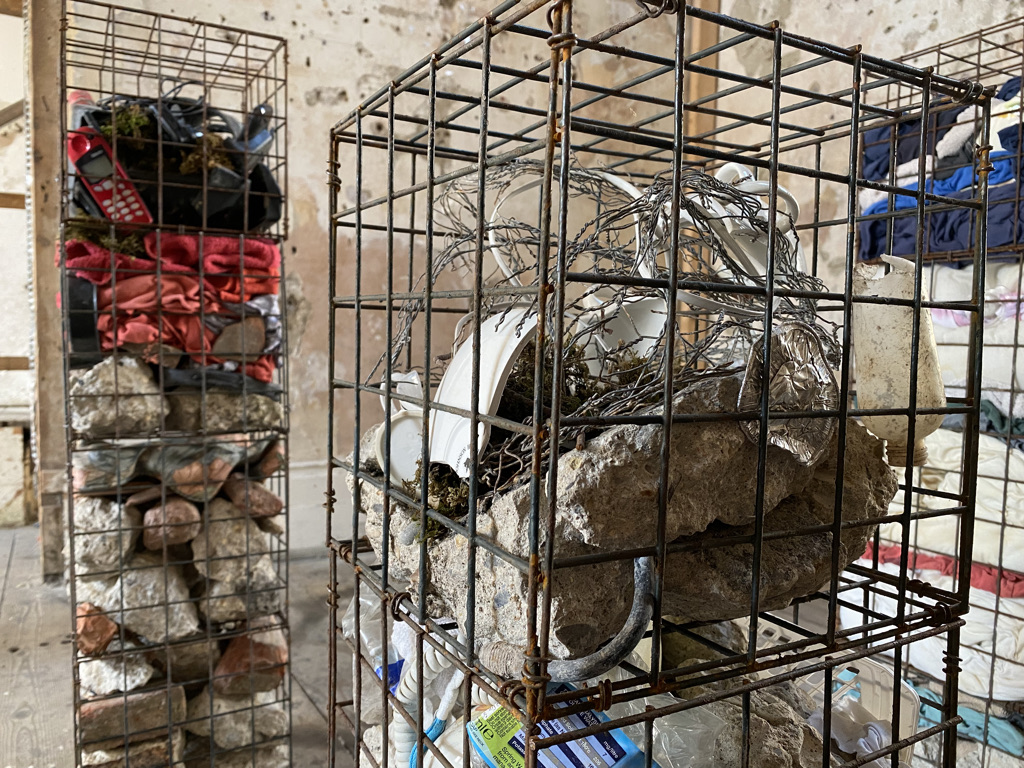
The upper layers of the piece contain a jumble of discarded, broken objects from crockery to packaging, cutlery and toys and a little bit of moss, posing a question as to what will be left and what will recolonise. There is space to walk between the structures and around the group as well. The group fills the room but the scale is rather smaller than human scale. It is interesting how the materials react with those of the house, especially with chimney breast, prompting the question as to where it has all come from. I wonder if making the taller of the structures taller still would have made a greater suggestion of human figures?
A venue like this calls for bold work but still on a domestic scale. The work has to compete with the space in a way that it doesn’t in a ‘white cube’, however, the space adds unexpected elements, be it colour and texture echoes or the remnants of other interventions. There are nooks and crannies for smaller works and because it is a series of rooms, 2 or 3 artists can share a single space. Quite diverse works can be shown together as each can find its own area.


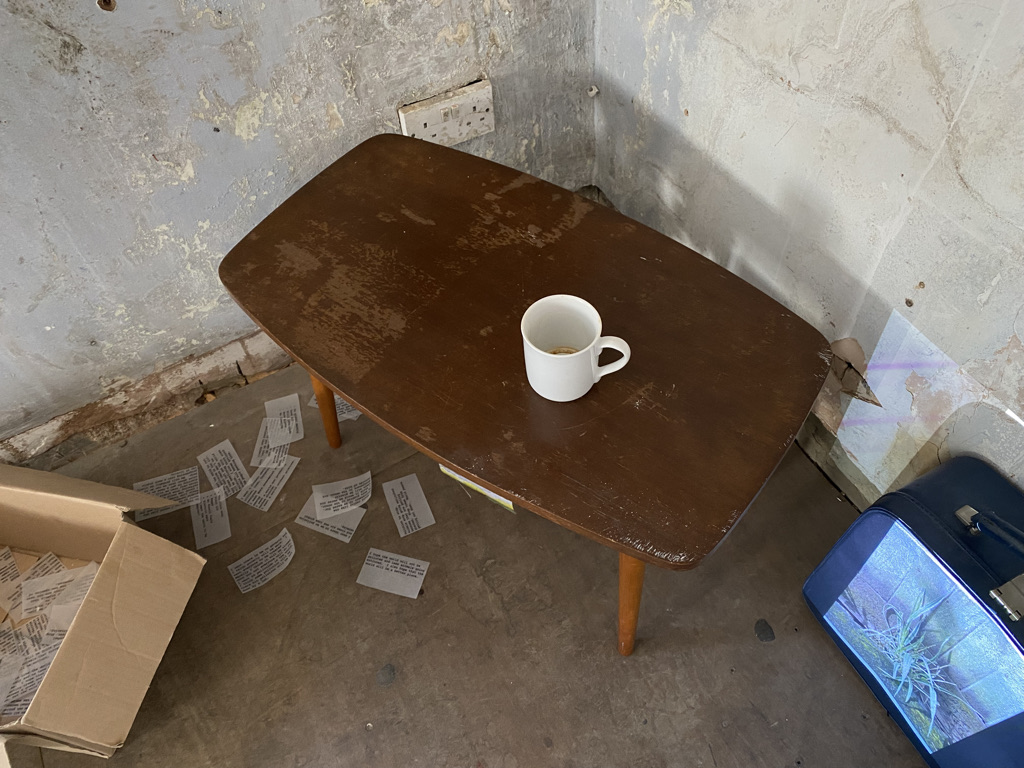
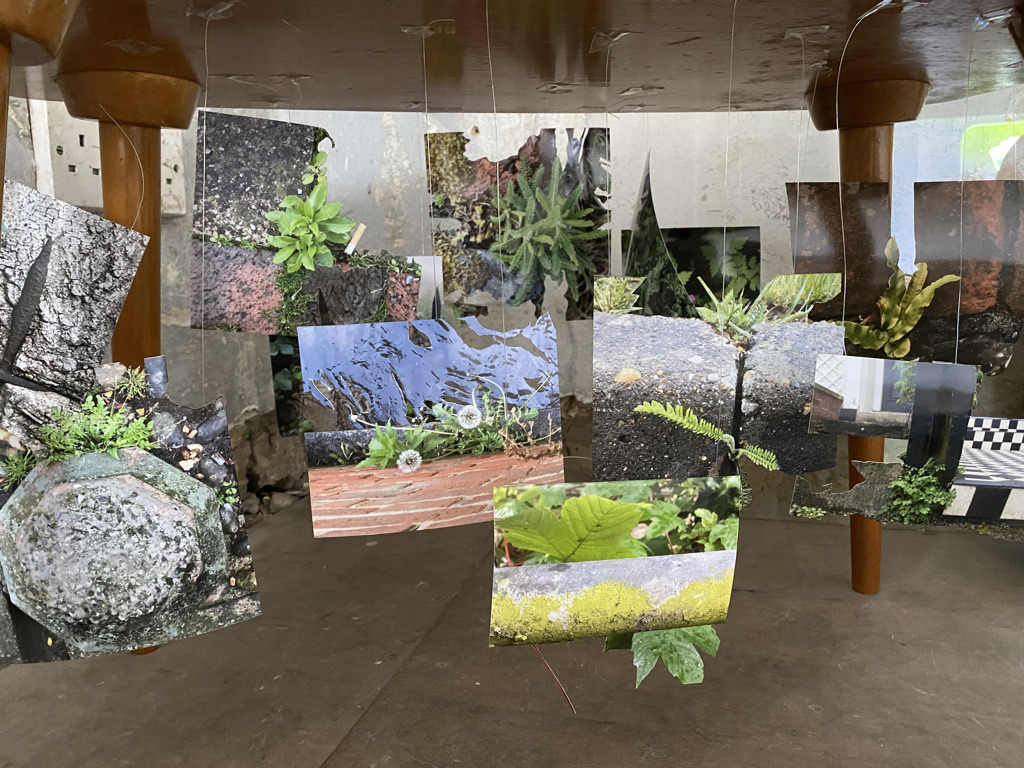
All photographs by Liz Clifford.
 Liz Clifford
What a great account of the exhibition. It was good to read the ideas behind your work. I agree some even taller structures could be an interesting new direction especially in this space.
LikeLiked by 1 person
Also some super images
LikeLiked by 1 person