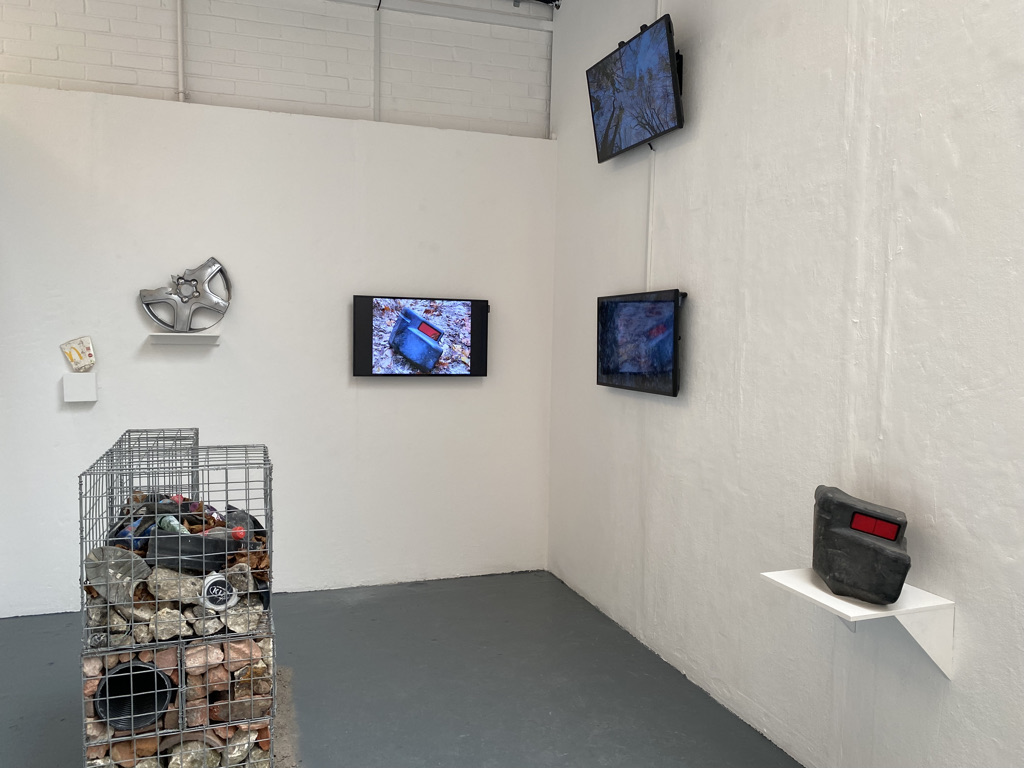
I’ve now had a fantastic opportunity to bring the various strands of work from my time on Byway 745 together in an installation. Byway 745 Observatory is the Final Major Project of my MA at UCA Farnham, and I have had access to a large studio space over the past month in which to figure out how to present the work.
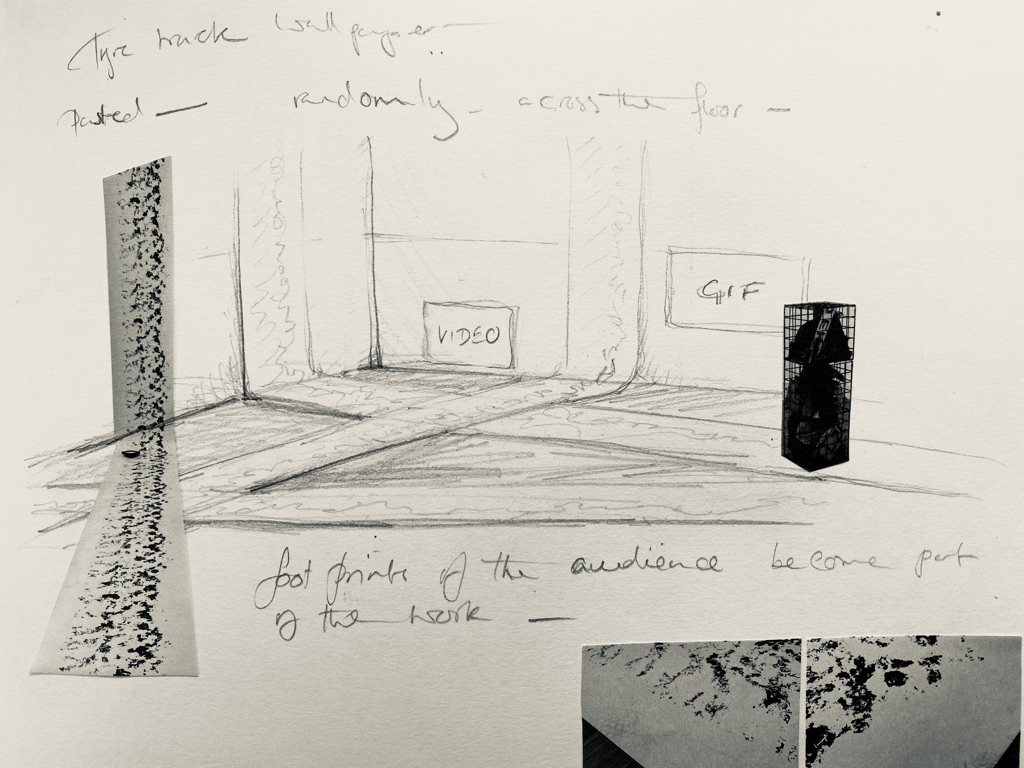
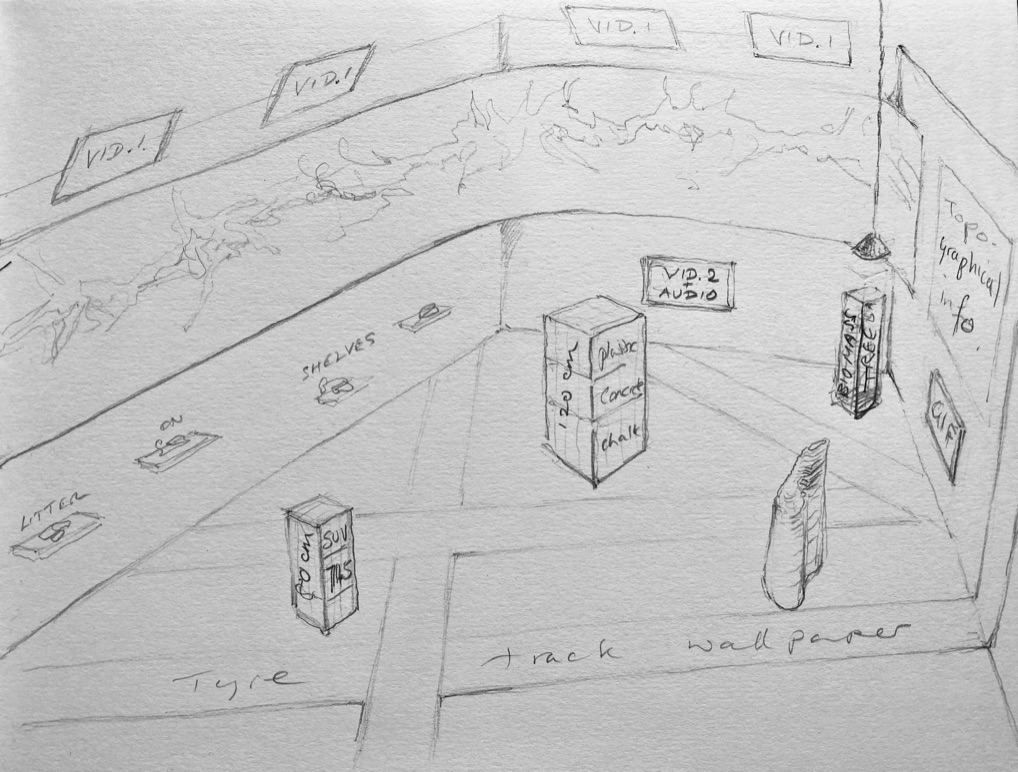
My proposal was to fill the space available with gabion sculptures, drawings, found objects and video screenings. I planned to use the printed tyre track wallpaper on the walls and across the floor and needed to add some topographical information to help contextualise the work.
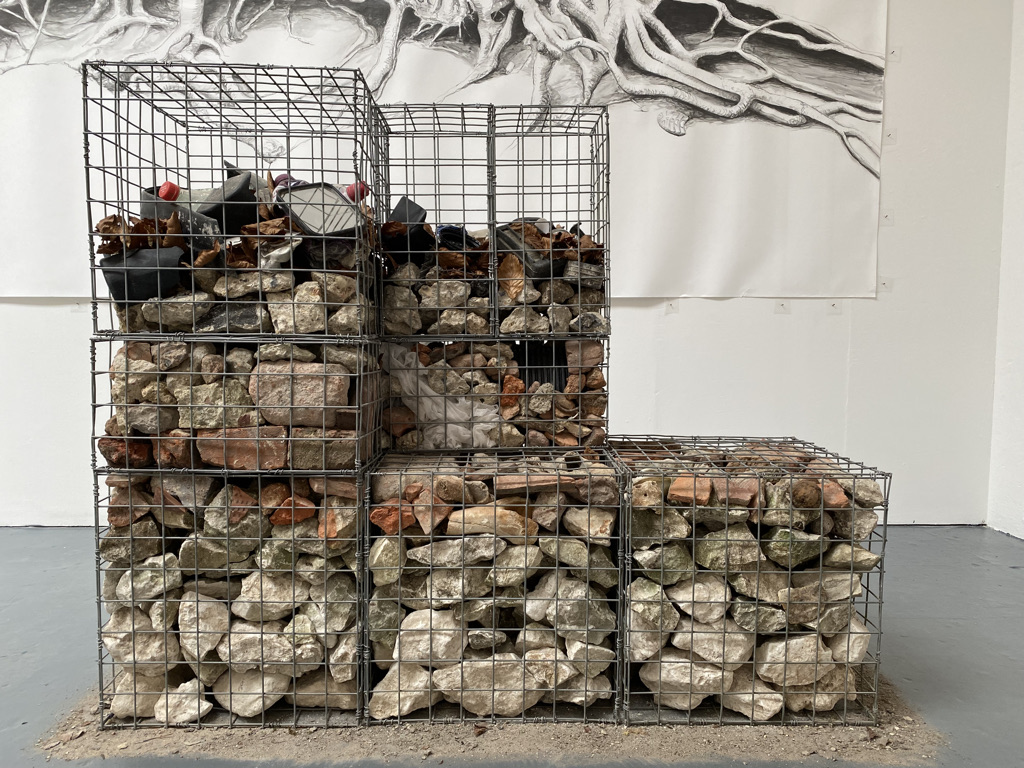
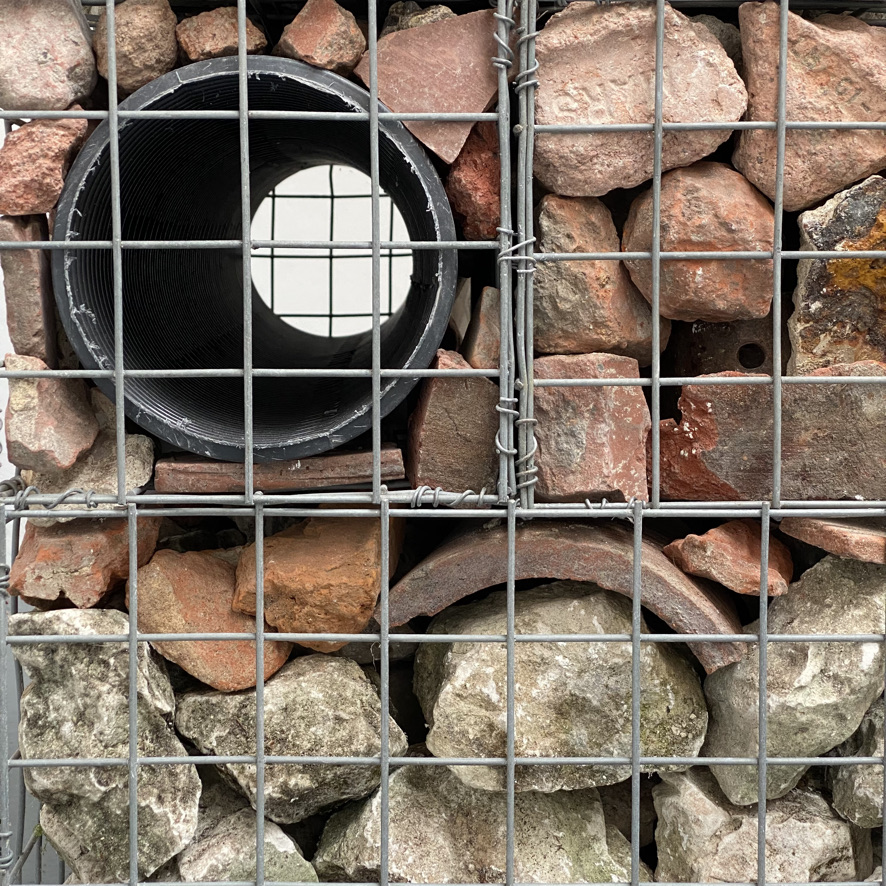
Excited by having a spacious ground floor studio of approximately 780 x 300 cm, I started work on a large gabion structure that would speak about the geology of the Observatory. The piece deals with elements of the Quaternary layer of geology, that of made ground and landfill. A section of French drain, an offcut from the work undertaken on Byway 745, forms the second layer, wrapped in white fabric “membrane” and packed into the gabion with fragments of brick and concrete. The third layer of the sculpture uses concrete underneath objects and leaves.
The rest of the installation began to take shape around this sculpture, with the positioning of the three video screens being the next decision to make. I made mock ups of the screens with black paper to help me decide on the positioning. All three screens run simultaneously for their duration, the slide show of stills being screened on the wall perpendicular to the two videos. A Year Above Byway 745 shows the changes to the canopy of beech trees over the year and is screened high up on the wall. Byway 745 Observatory, which charts changes on the ground is screened at eye level. The audio is emitted from that lower screen, resulting in the viewer being drawn to it but having the other two in their peripheral vision. If they glance away at the other screens, they will catch glimpses of objects that are present in the installation space, as well as recurring references to the geography of the landscape.
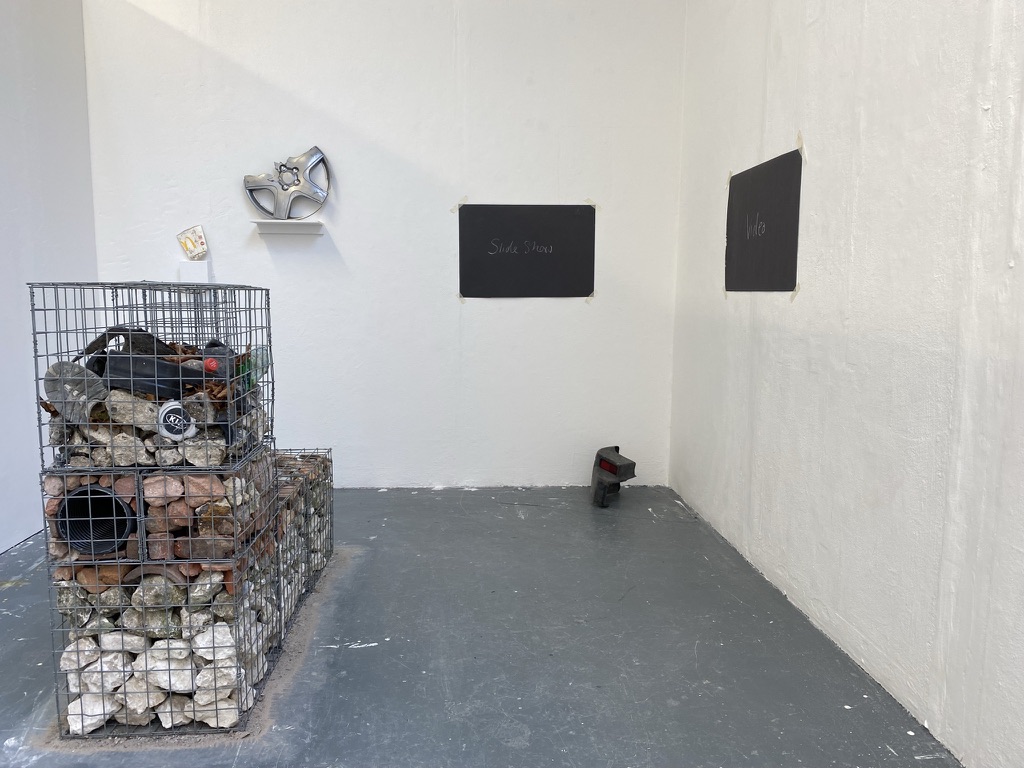
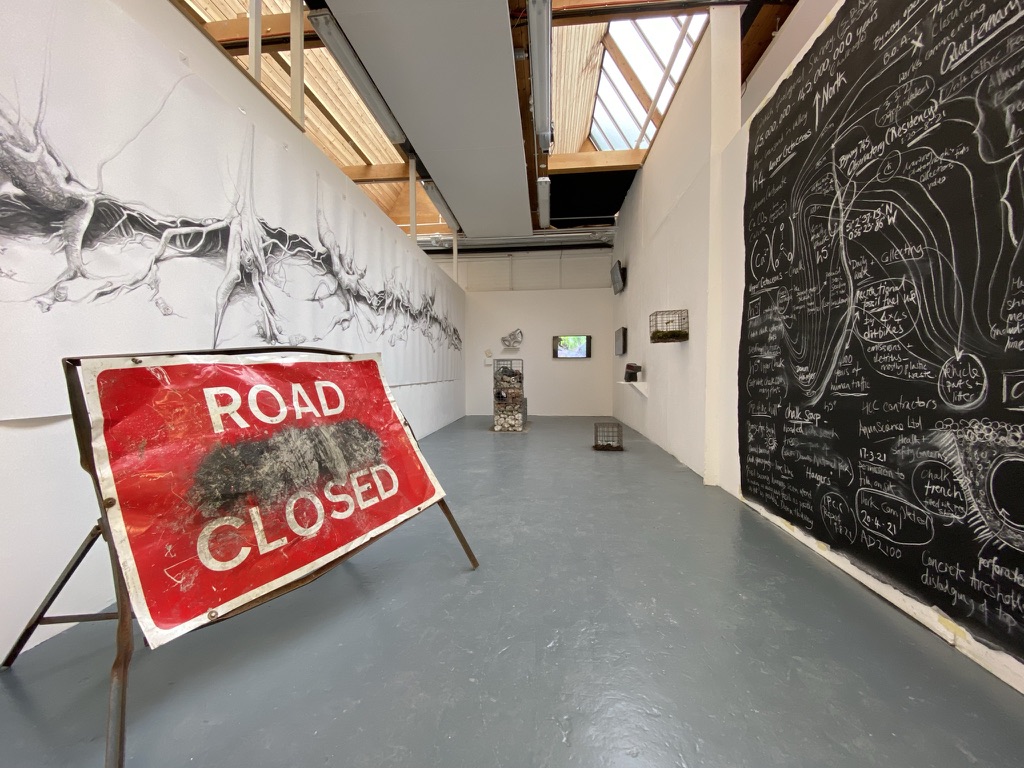
Having gathered all the possible elements of the installation together, an editing process was needed. Found objects had to link several times to the video, the slide show or the large drawing of beech roots and litter to be allowed to stay. Three pieces have been placed on shelves, while others are in the gabion structures. The largest found object is the beaten up Road Closed sign that stands at the entrance. The slide show contains images of many of the objects as they were found in the landscape, including this sign. The images echo the objects in turn.

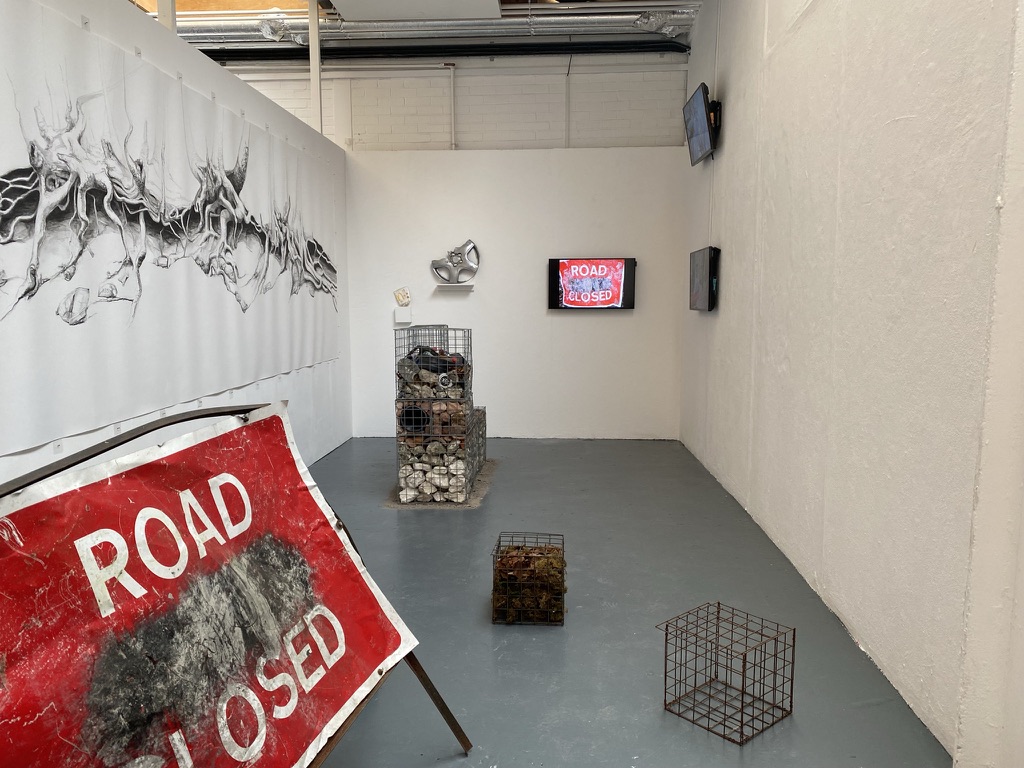
The seven metre long drawing runs along one whole wall, but the tyre track wallpaper had to be edited out as it doesn’t fit with the other pieces. Although it was made from an impression of a tyre on Byway 745, the print is too far removed from that reality. It looks artificial and contrived next to the found objects. It felt difficult to leave it out, especially as I’d spent a lot of time printing it, however it is part of other work and I can continue to experiment with ways of curating it.
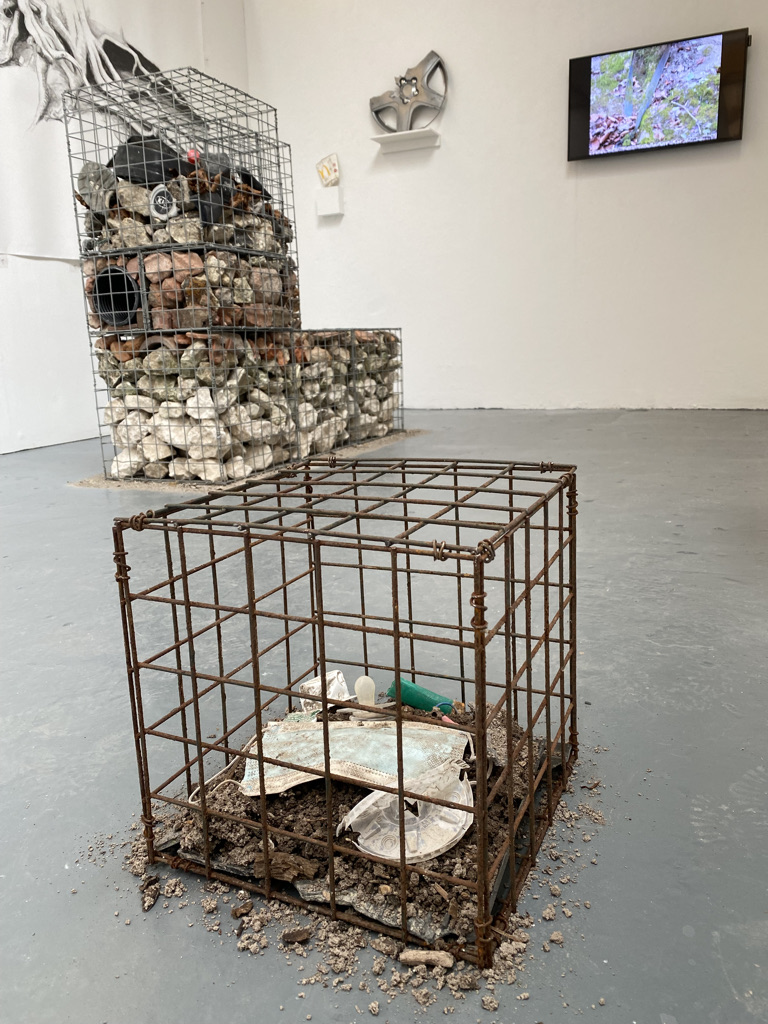
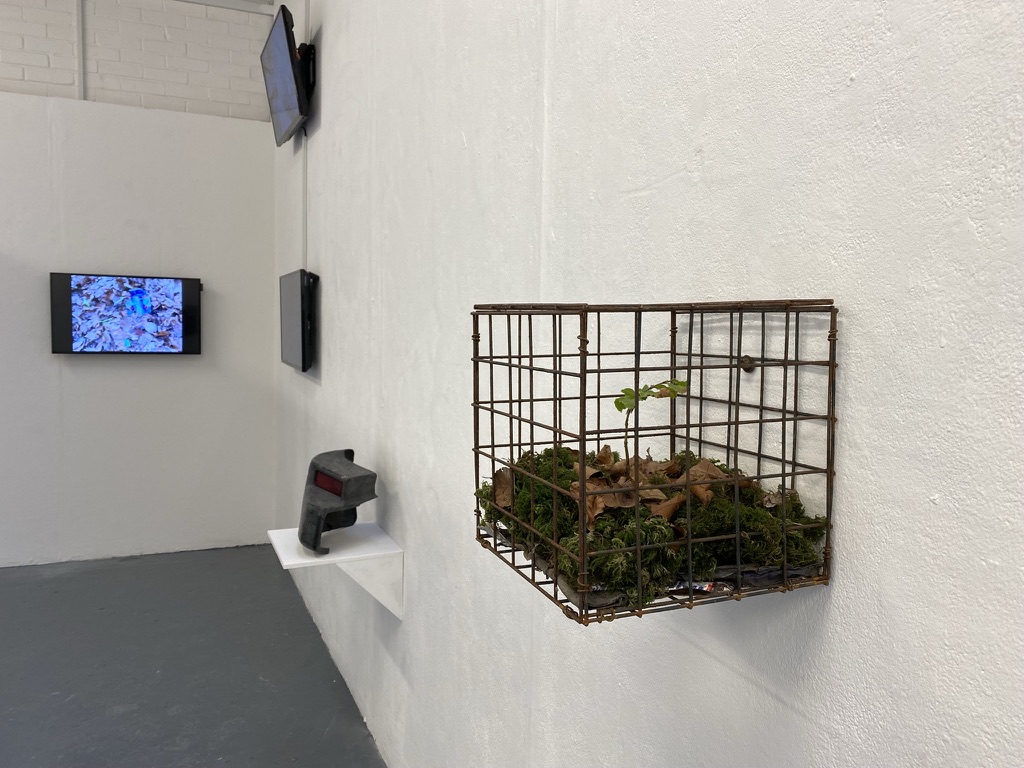
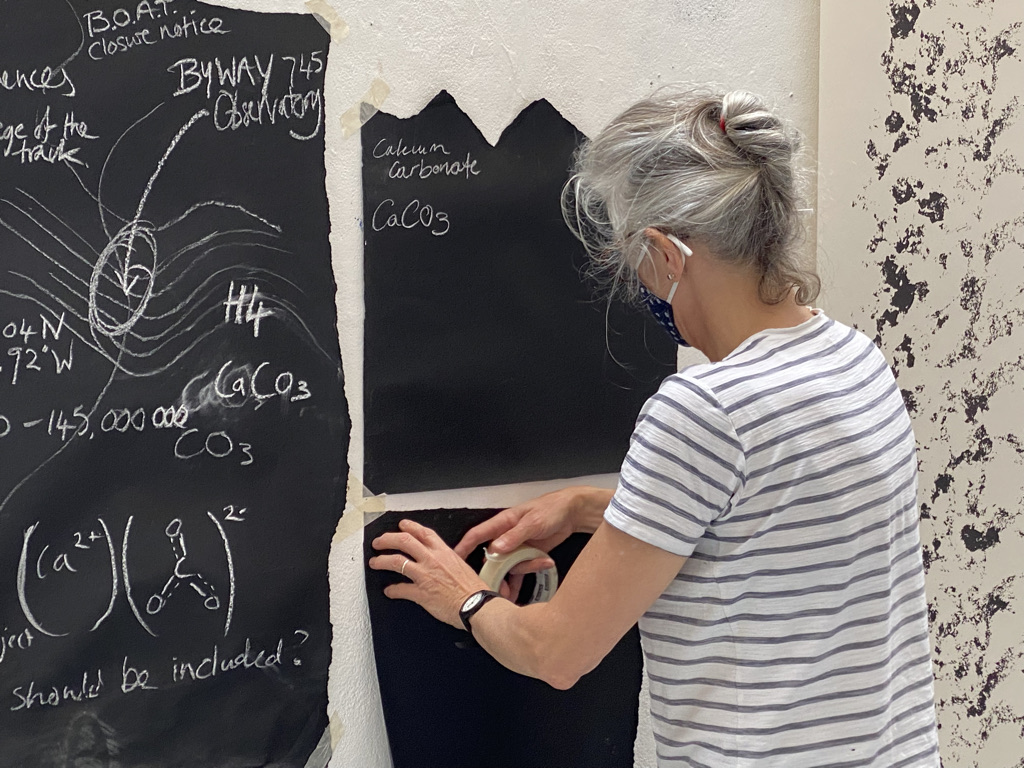
Soil, moss and leaves are contained in the two small gabions, one on the wall and the other on the floor, along with the beech sapling rescued during the first Covid lockdown. I’m hoping that the smell of these materials will invade the space and that the tree can be kept damp enough to survive. The last element of the installation is a large, informal drawing/chart/diagram in chalk on black paper containing information about the topography of Byway 745, its geology, history and key dates of the ‘residency’. The viewer can glance over it and just pick one or two pieces of information. It is too dense to digest in one go.


It all looks great
LikeLiked by 1 person