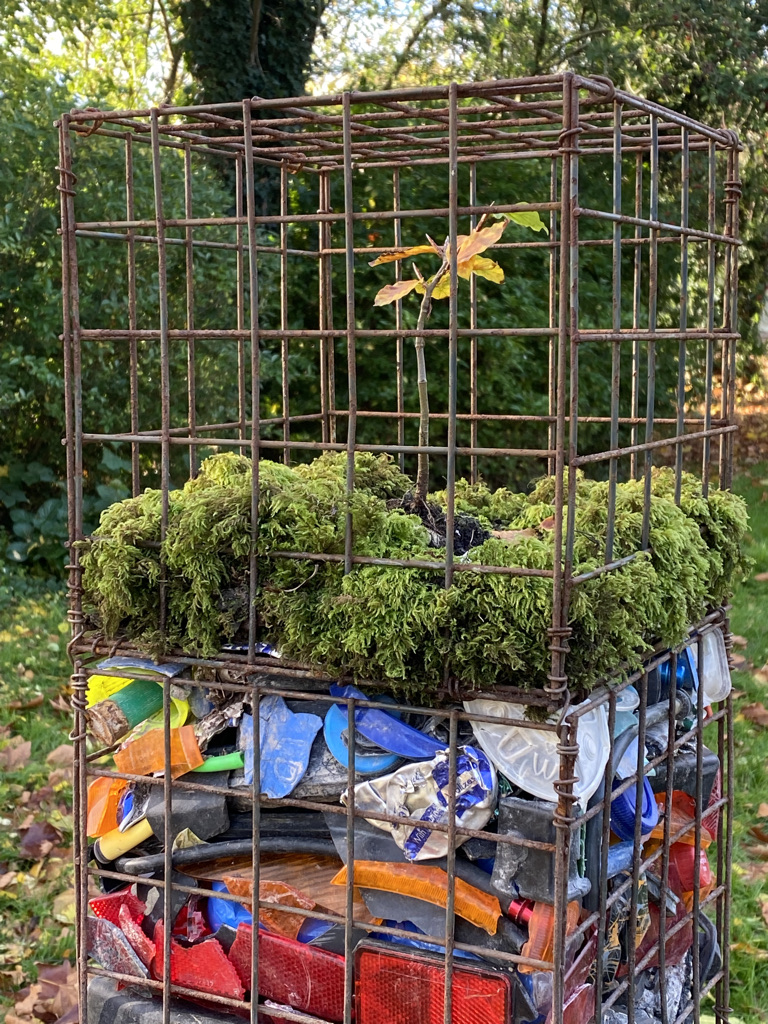
I’ve recently had the opportunity to bring a piece of work together that has been in gestation for nearly two and a half years. In May 2020, in Covid lockdown, I noticed beech seedlings growing in the mud of a rural track normally driven on by off-roaders. Knowing that the vehicles would soon be back I decided to ‘rescue’ one of them with a view to planting it somewhere safer later. A month later the vehicles were back and I was picking up their debris where the beech seedling had been.
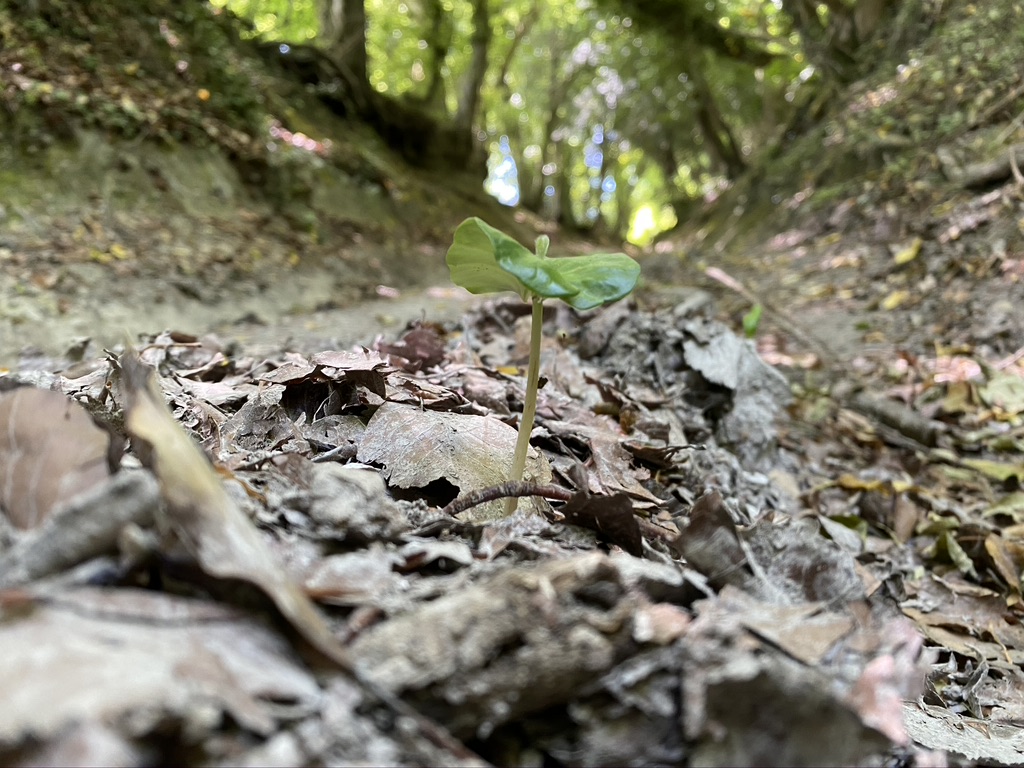
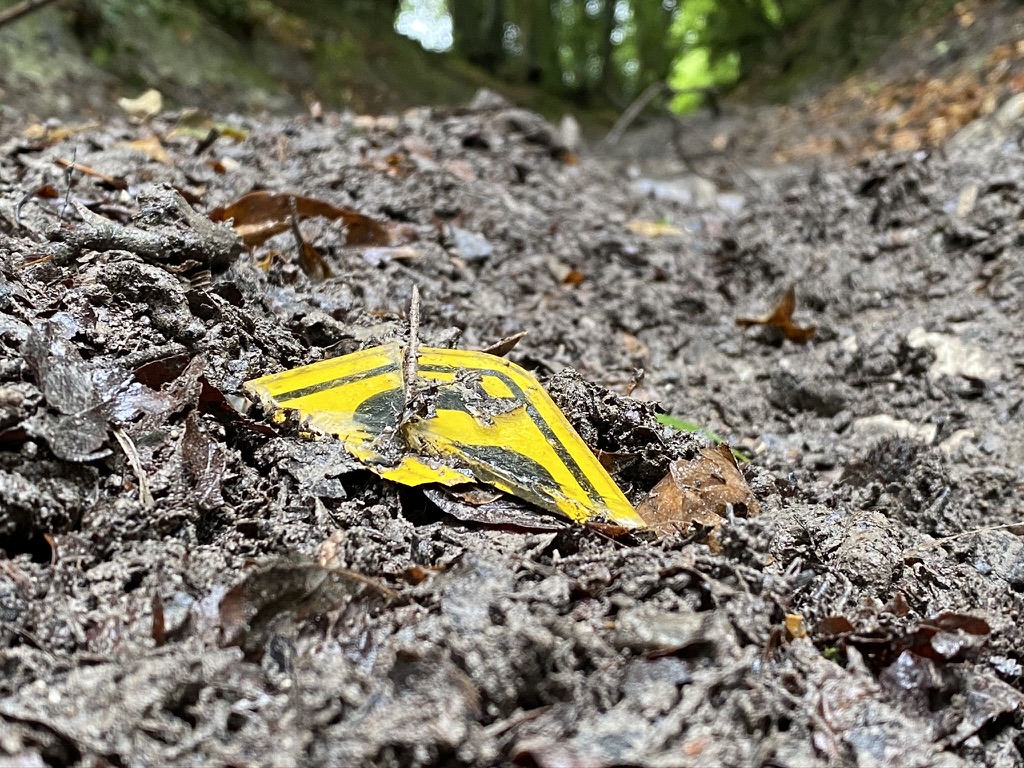
The potted up seedling began to thrive and was used in two pieces of work, Emergence 2020 and Byway 745 Observatory 2021 as a symbol of hope and also as a representative of the depleted flora I had been researching.
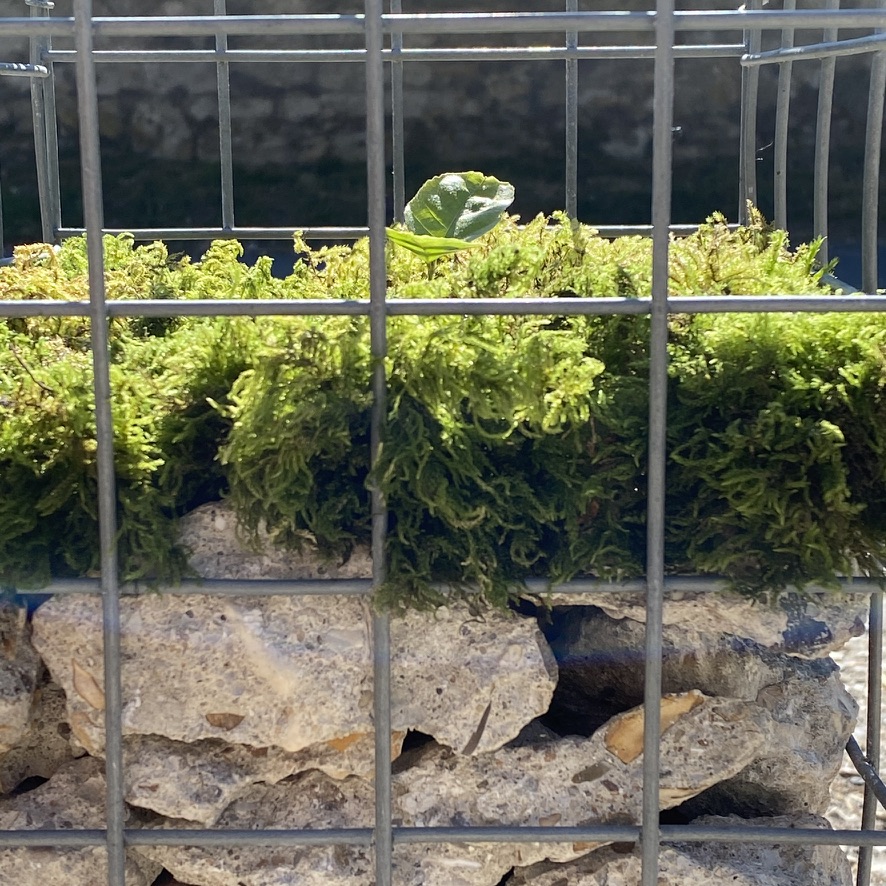
Liz Clifford, Emergence (detail), 2020
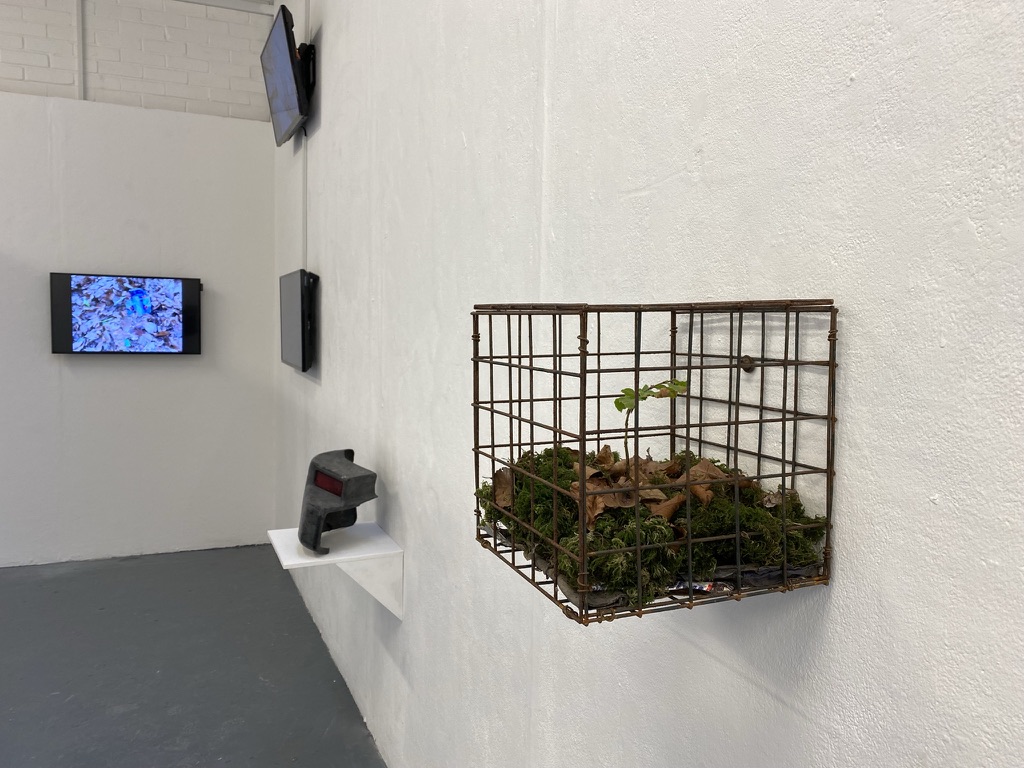
Liz Clifford, Byway 745 Observatory (detail), 2021
Since September 2021 the sapling has remained in the same gabion basket, breaking out of its cut down plant pot and growing on the thin layer of soil I’d spread over plastic detritus collected on the same rural track in the bottom. The moss I’d used to accompany this layer of biomass has really colonised the basket. It is no longer disguising the pot but is part of the ecosystem within the gabion. The tree still fits the space and now is the moment to present its mixture of vulnerability and resilience.
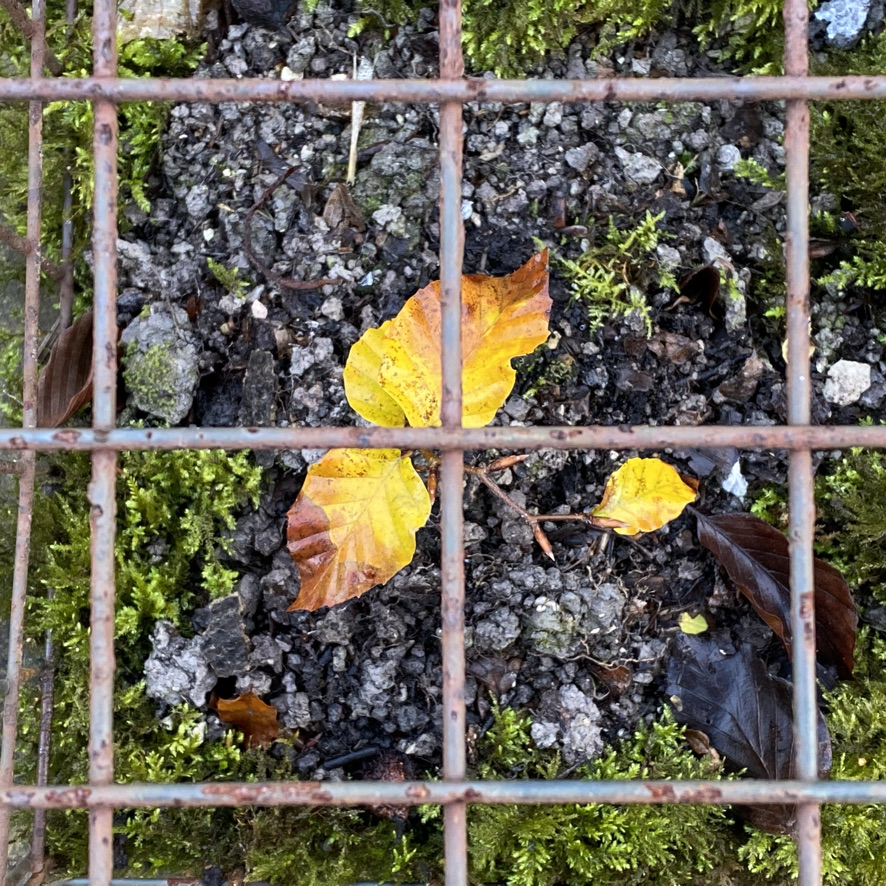

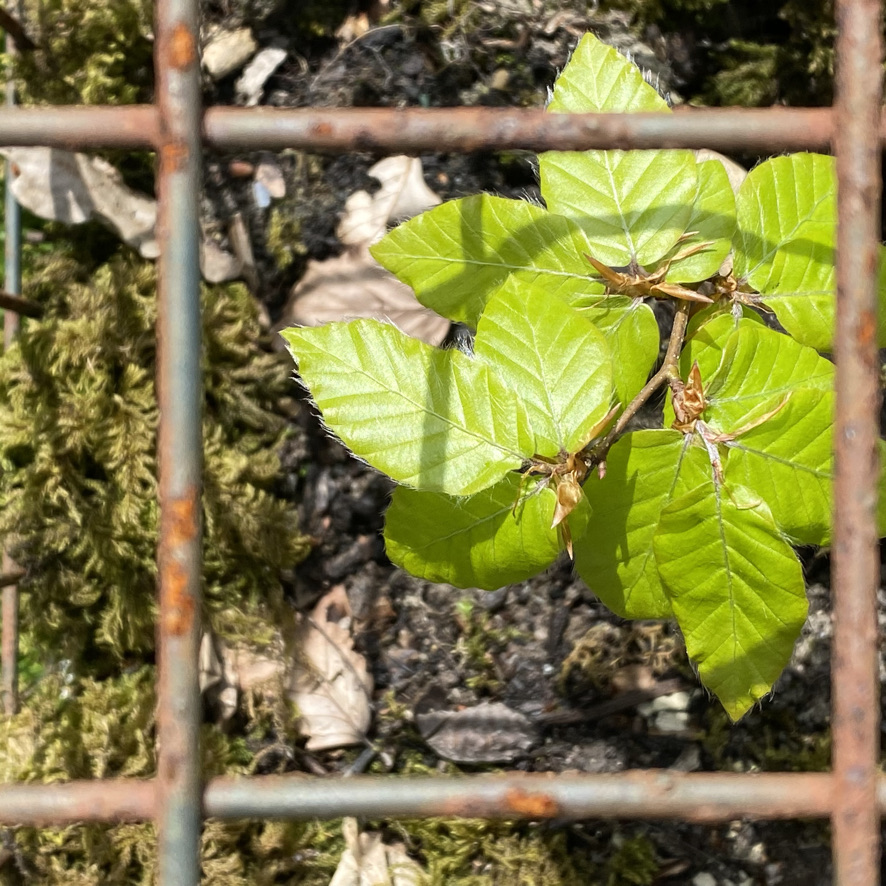
The opportunity to do just that came out of the blue when a group of year 2 BA students at UCA Farnham approached me to contribute to an outdoor sculpture show called Transient Traces. Outdoors would be so much better for showing the tree than a gallery, with the worry of insufficient light and water. I could also use it in conjunction with the reworking of previously used materials as requested by the curators as part of their research into the ephemeral nature of materiality.
The resulting work, On Thin Soil, uses materials found in the landscape whilst on my daily walk. It is a ‘re-working’ and a development of various previous pieces that use the stacks of detritus-filled gabion baskets.
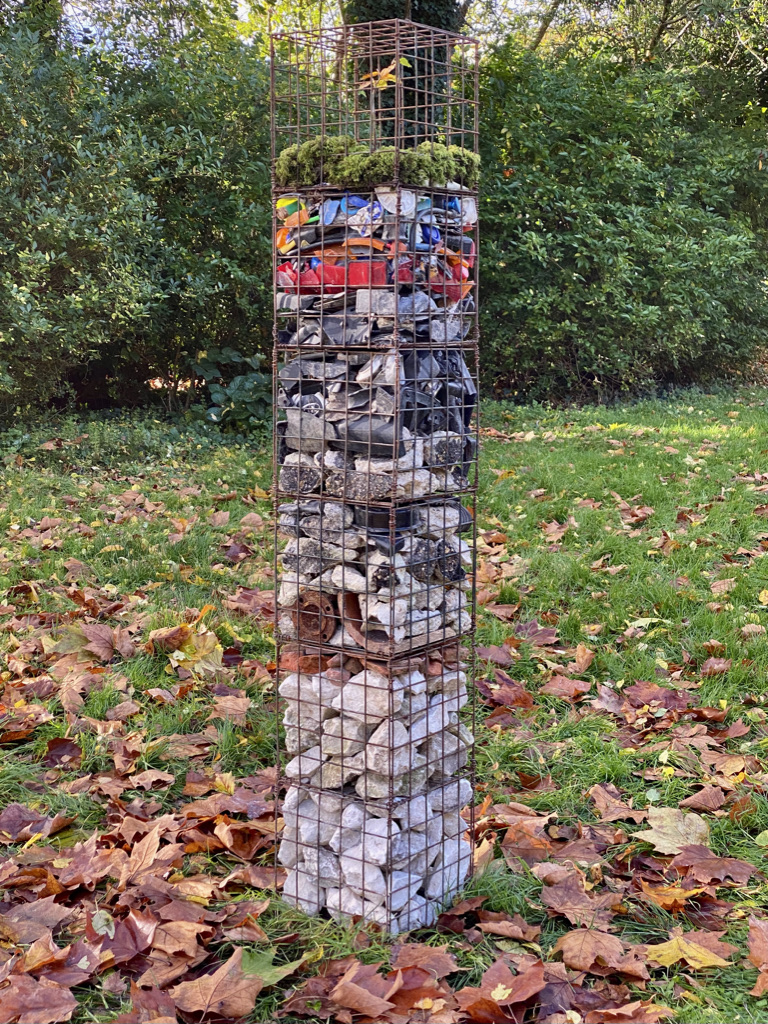
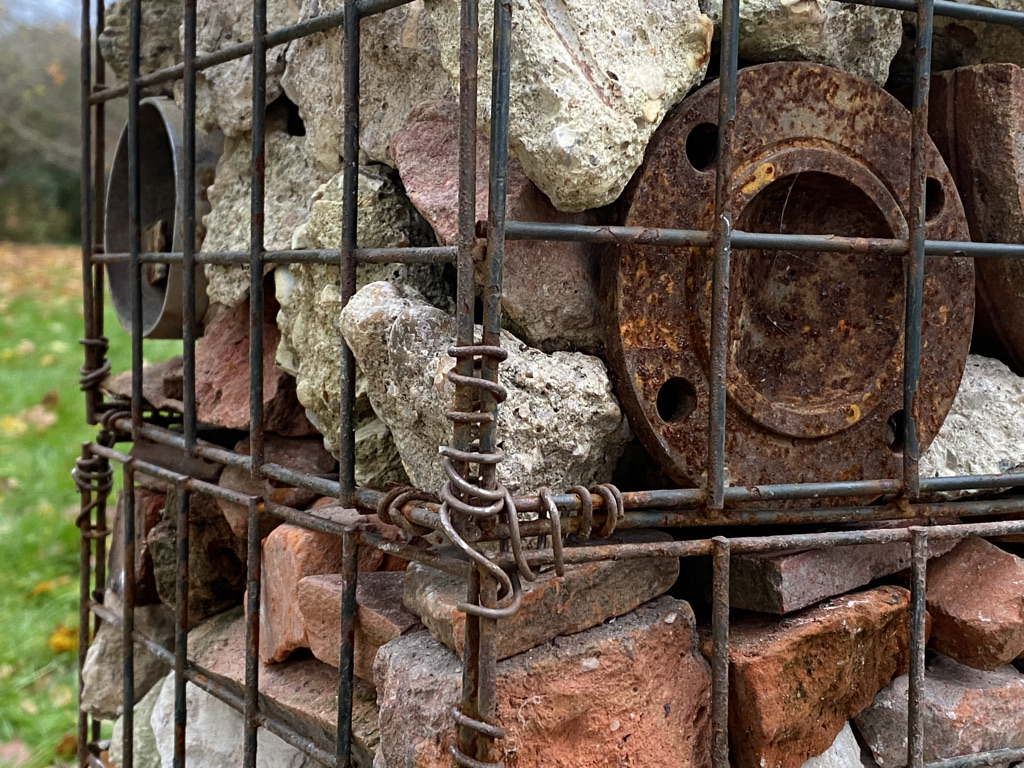
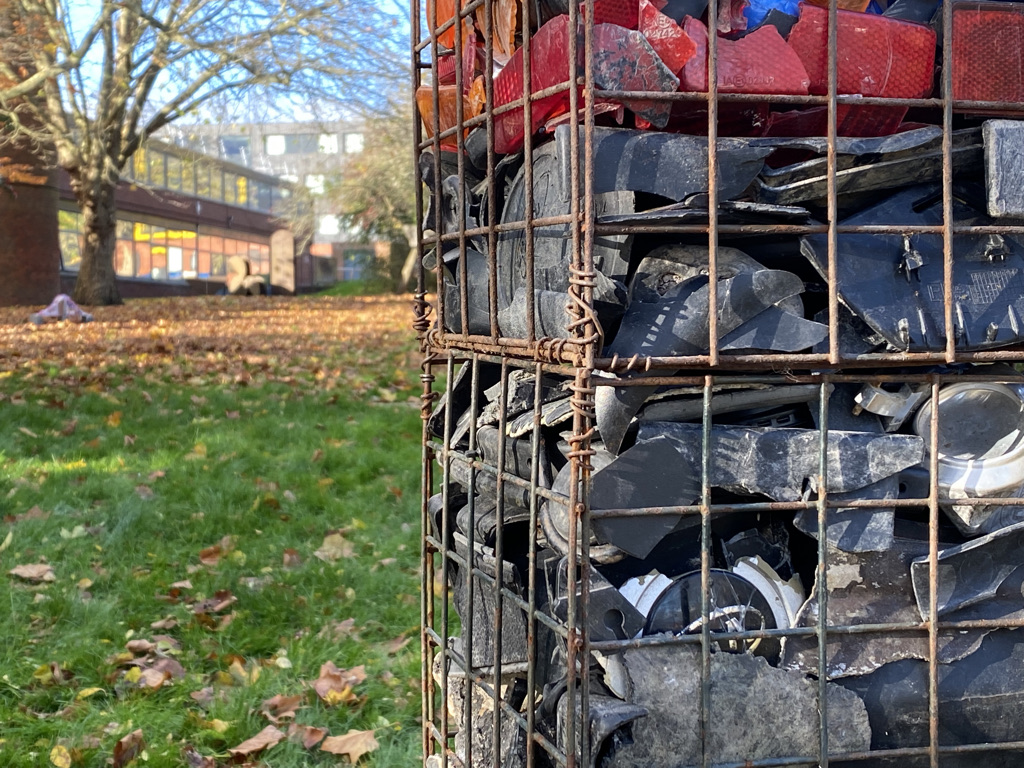
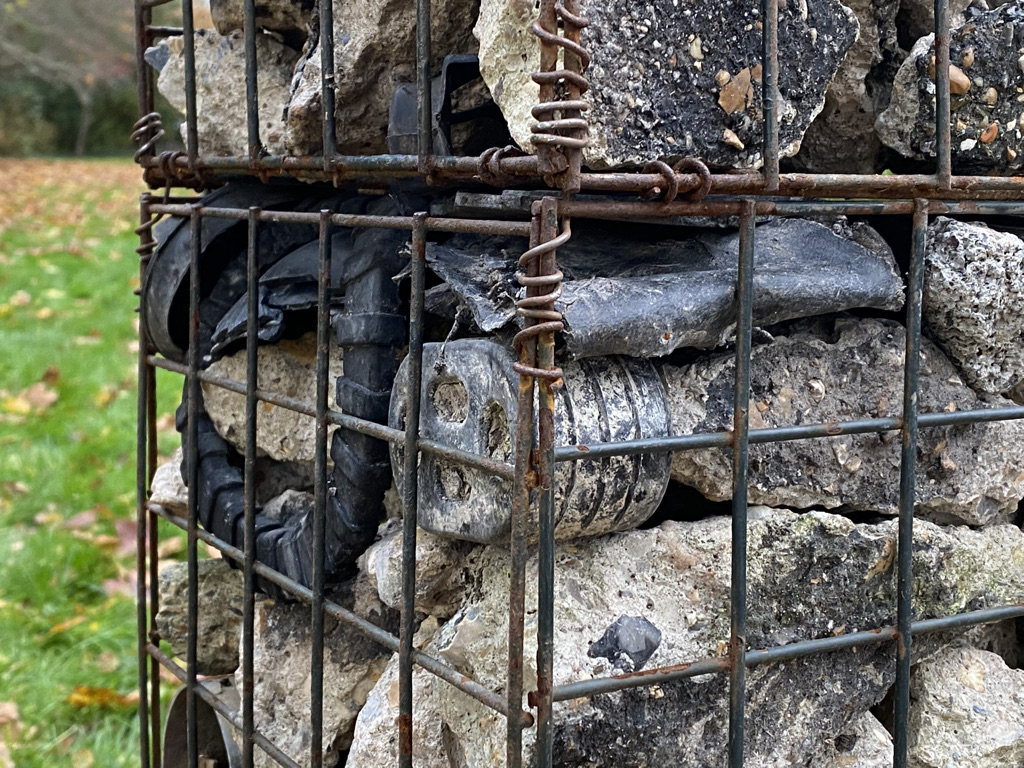
The layers within the work build upwards from chalk (bedrock) through human-generated deposits of brick, steel, concrete and plastic to the thin layer of soil, moss, beech tree and air. It references the ‘critical zone’ as defined by earth system scientists and explored politically by the late Bruno Latour. The zone, a few kilometres thick, between the lower atmosphere and the upper bedrock, in which life on earth occurs.
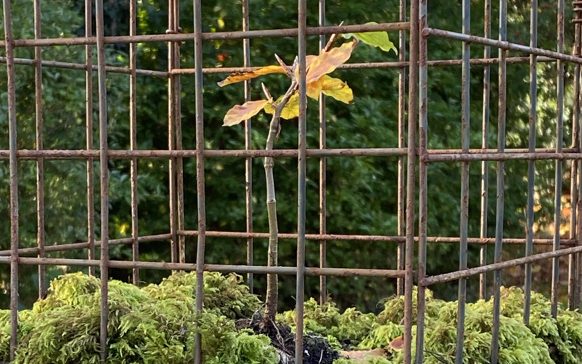
The tree also represents that fragile proportion of biomass to human-generated deposits (1:10) that is present in an average square metre of the Earth’s surface (Jan Zalasiewicz Anthropocene Square Meter). Much of the steel and plastic used is generated by motor vehicles and the concrete pieces have a layer of tarmac on them. I have ordered the materials in layers that reference time, but that time is also distorted, the top layers of concrete and plastic are deeper than the chalk to emphasise the proliferation of human-made deposits that will become evident in the Quaternary layer of geology.

All photographs by Liz Clifford.


Such a stirring and thought provoking work Liz which focuses on several of the problems being experienced in the world today.
LikeLike