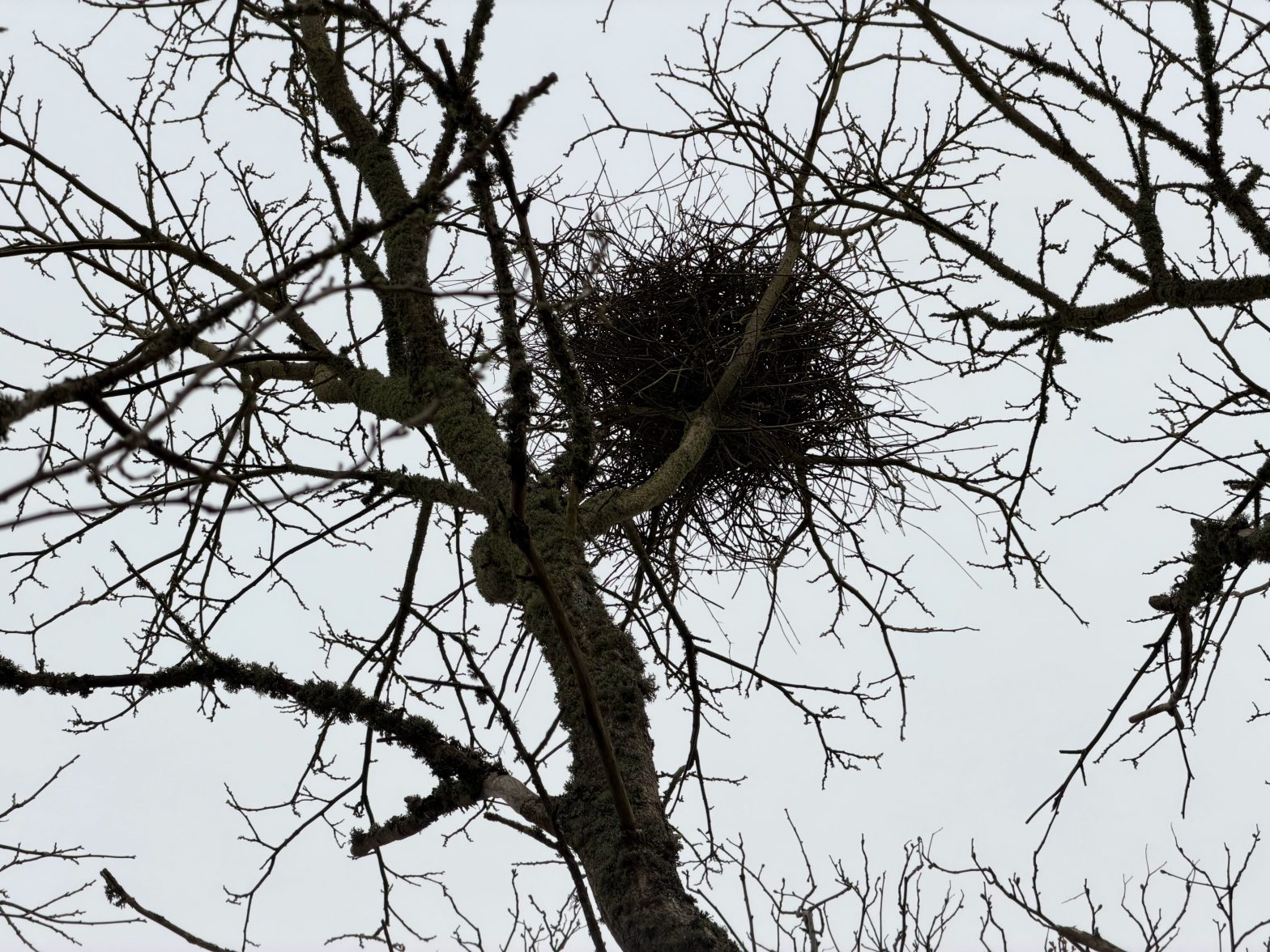
I start with materials – by gathering industrial detritus from my daily rural walk. These materials range from fencing wire, plastic land drain, and agricultural wrapping, to car parts, fly tipped rubbish and agricultural twine. It is a slow process – the materials come to me, and gradually suggest how they might be used. In the interim the collection grows in the studio.
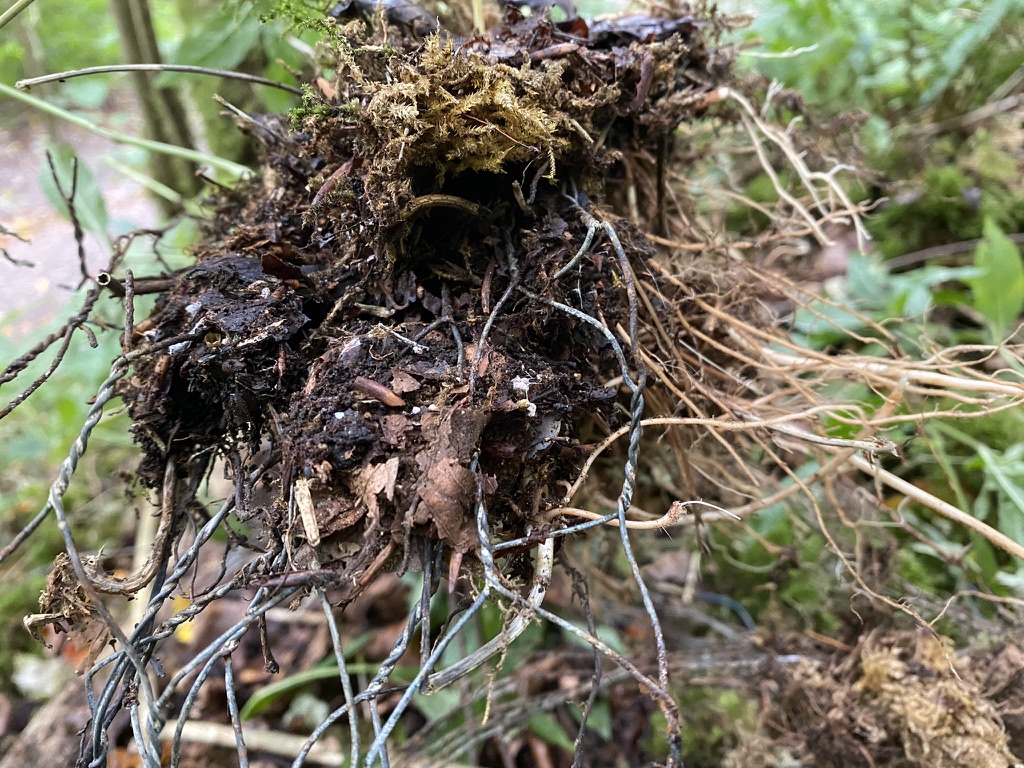
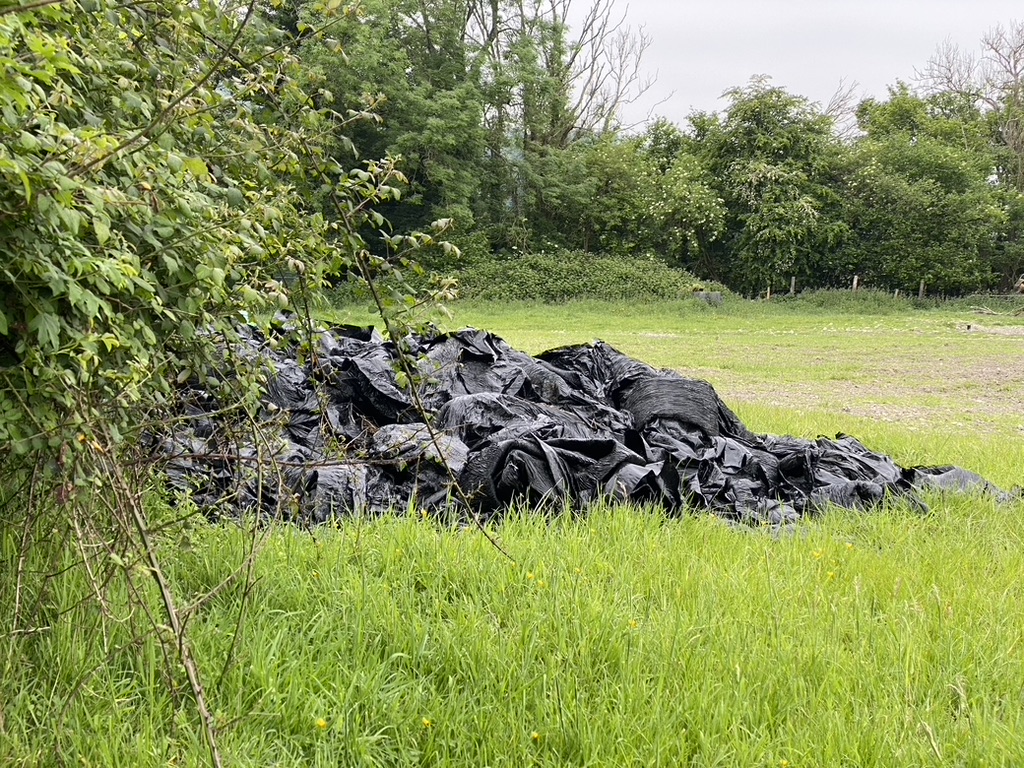
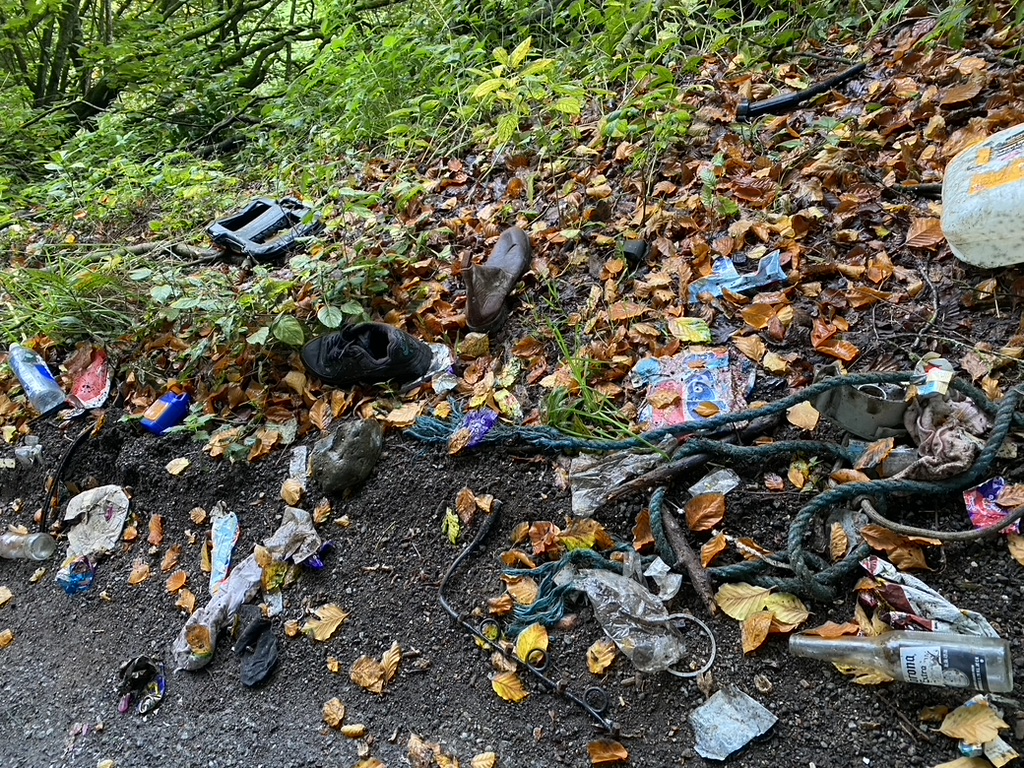
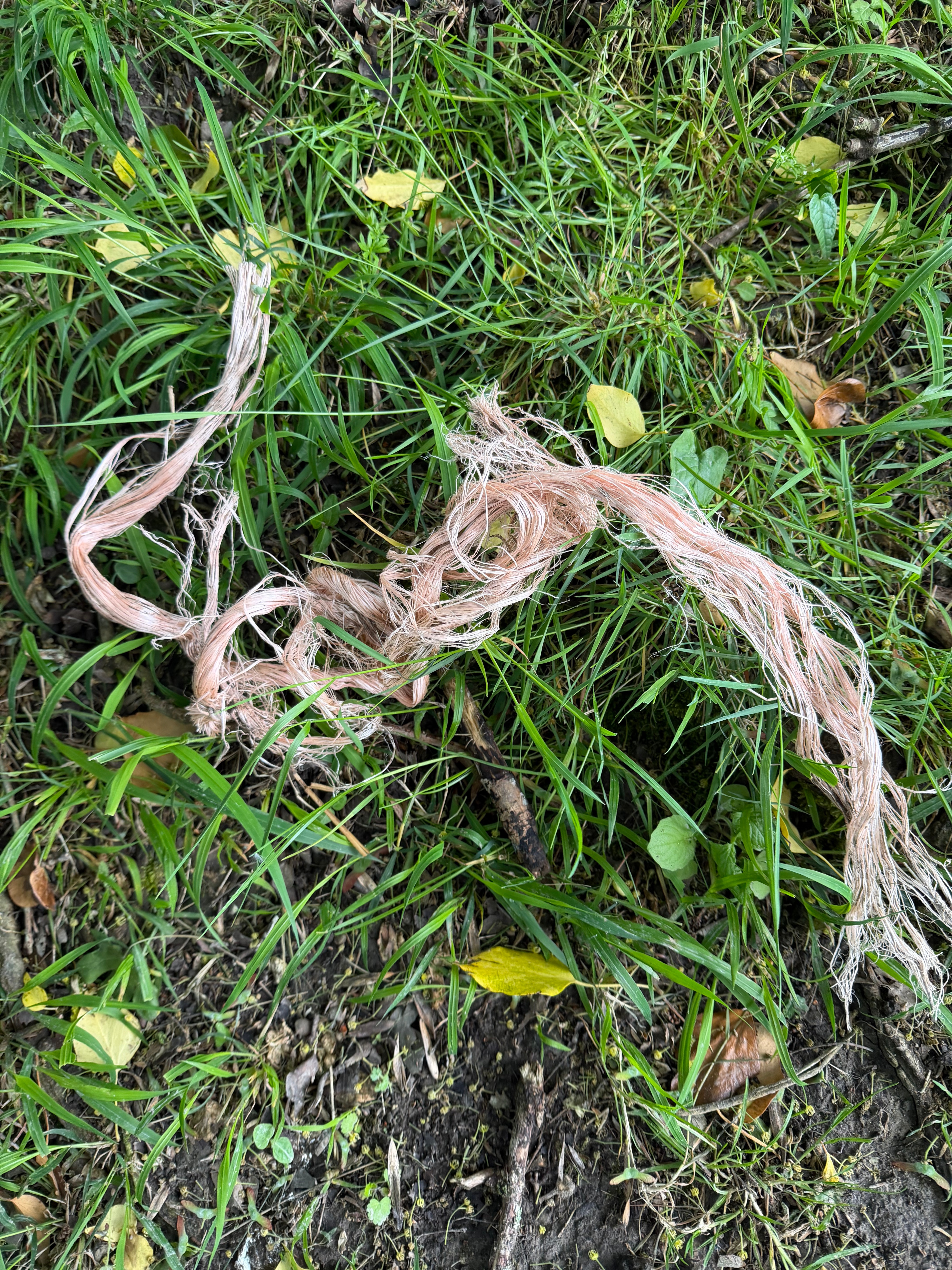
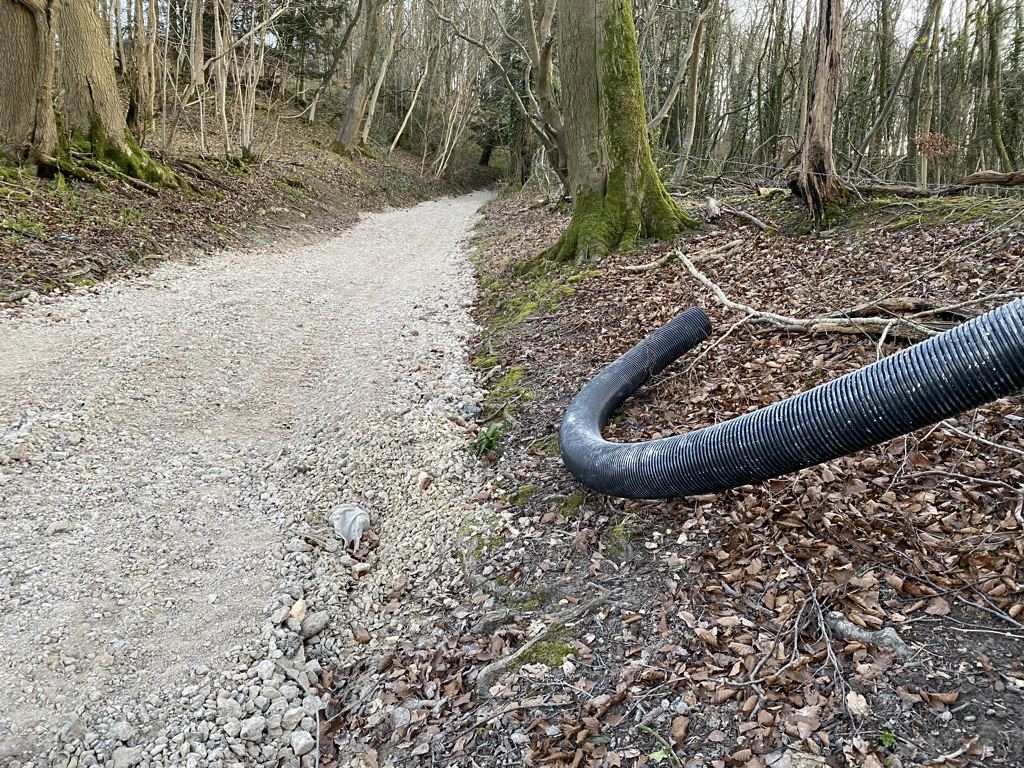
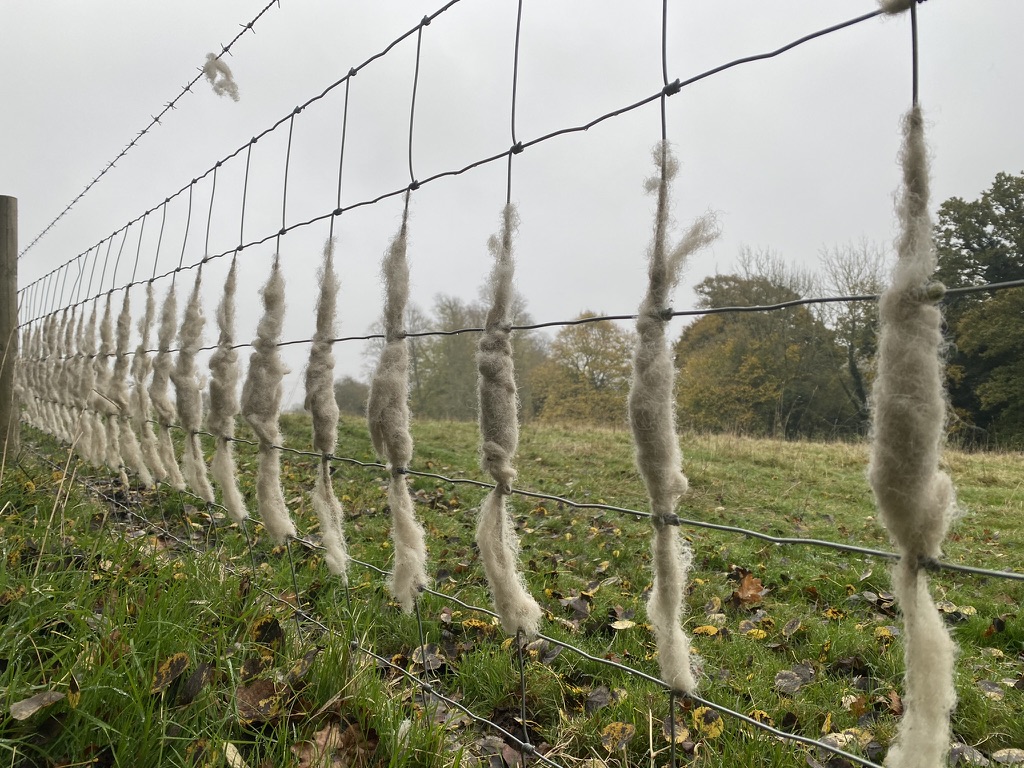
Additional materials have come to me recently. Natural wool to add to the mineral wool found shed from a lorry. Natural wool is often seen caught in and bound around wire in the countryside but that also came my way as discarded packaging from the hospitality industry.
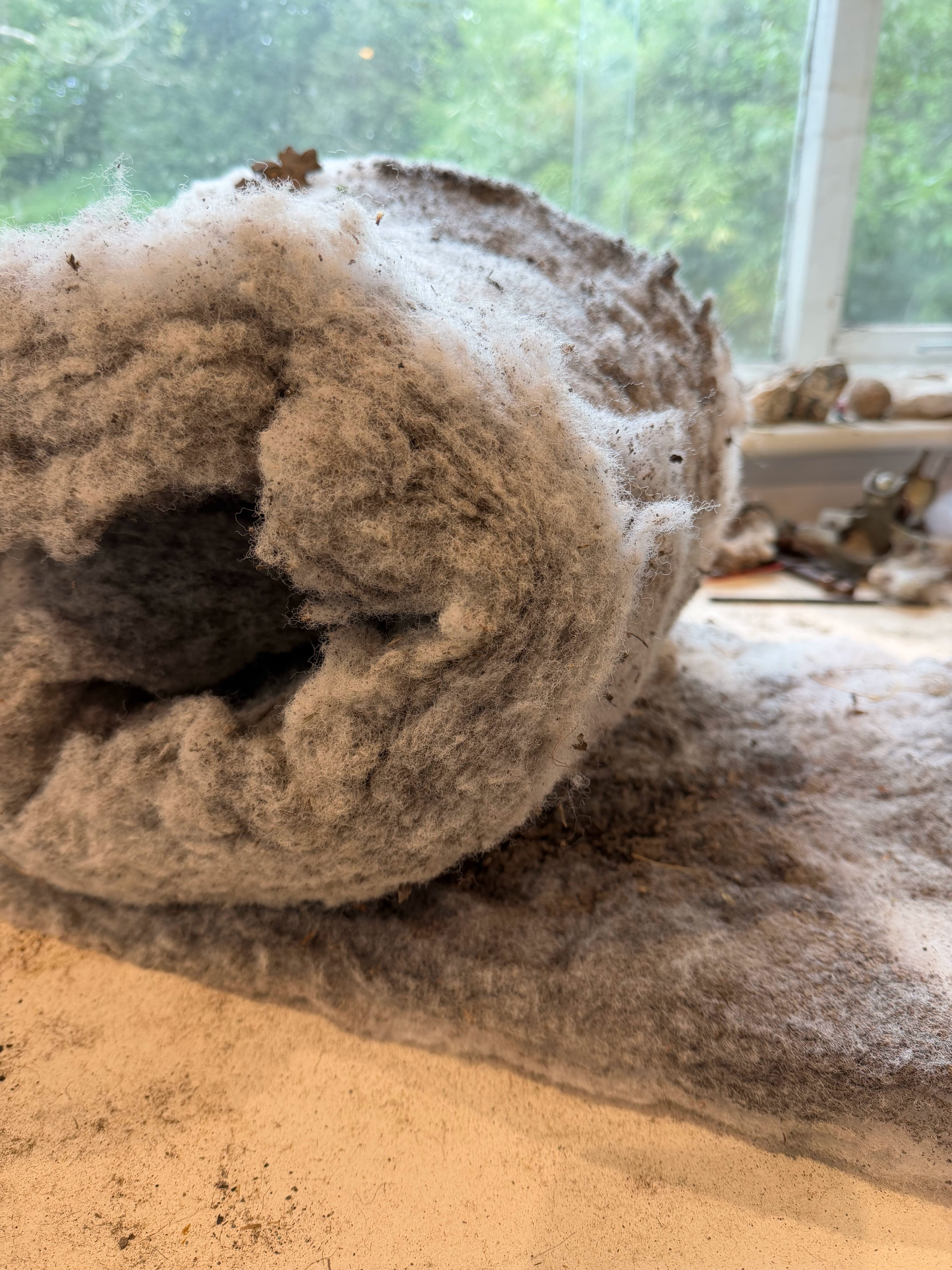
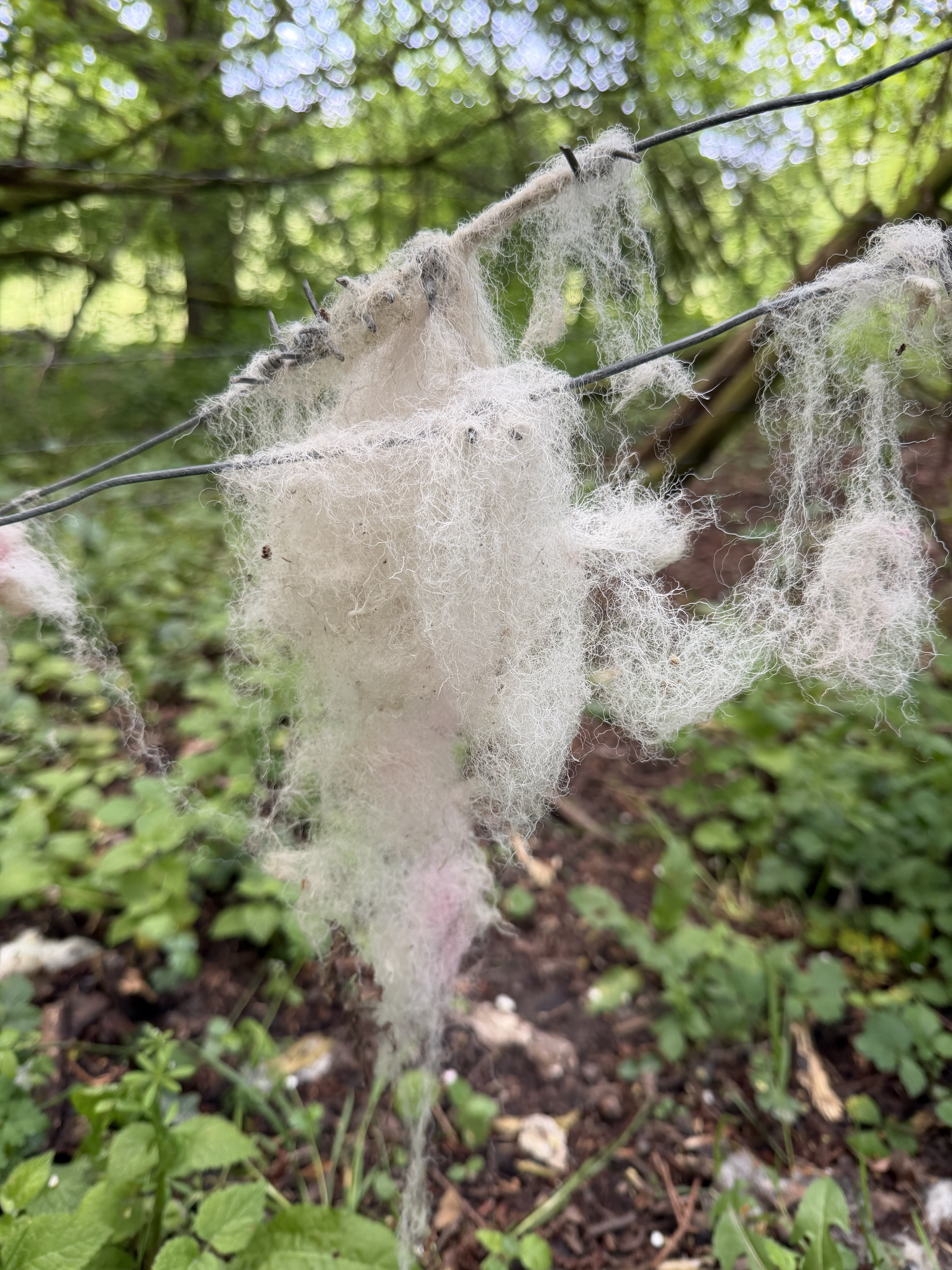
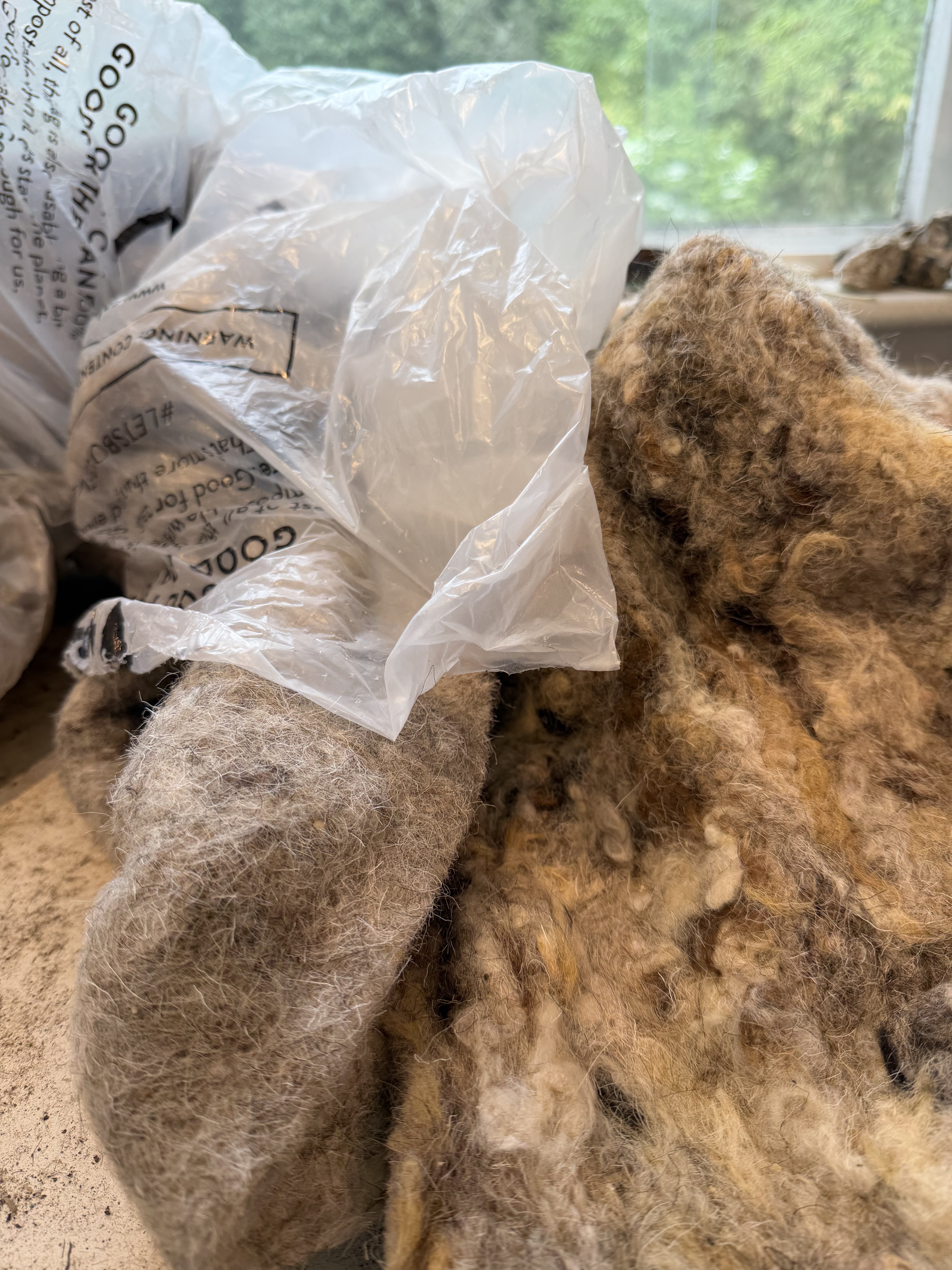
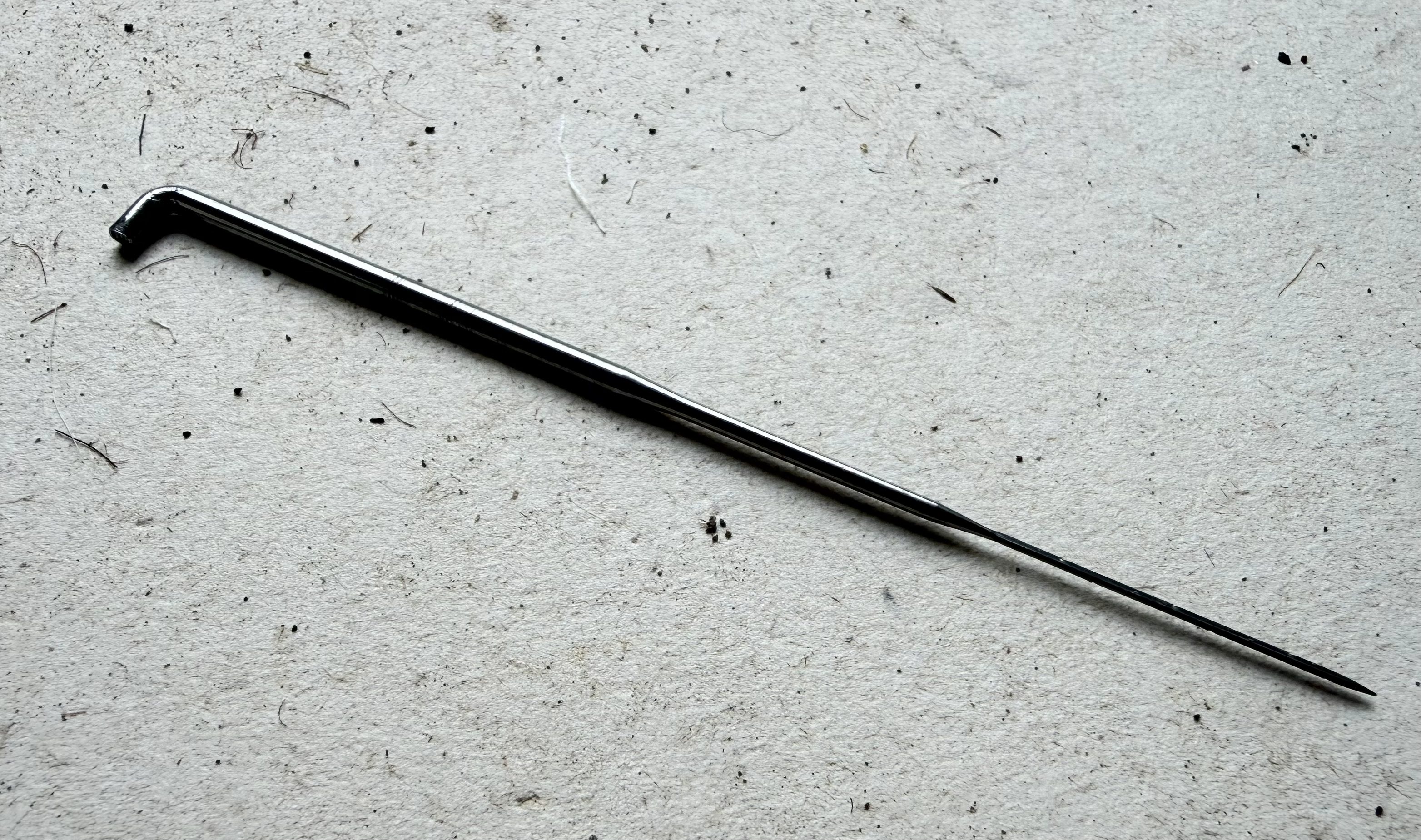
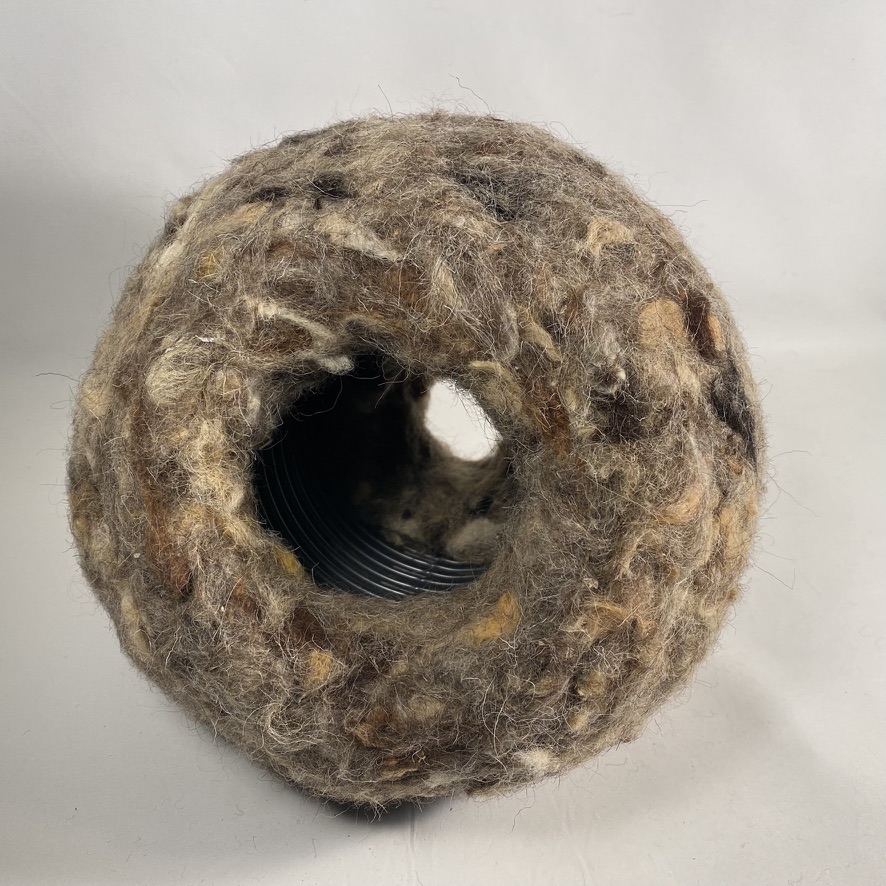
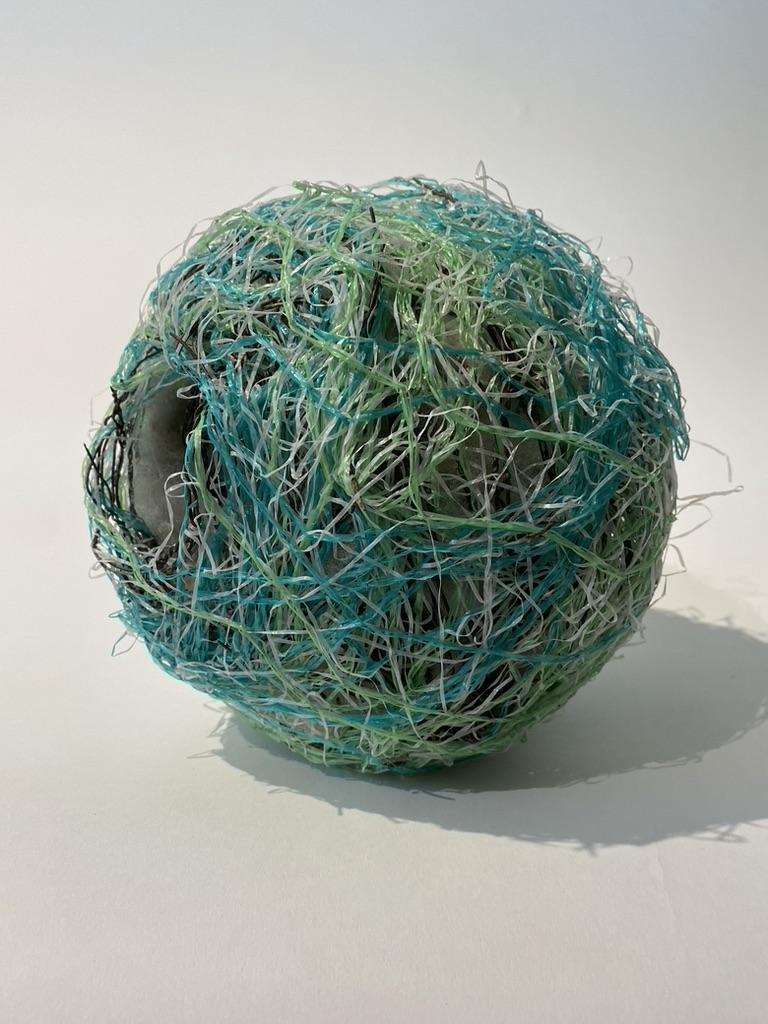
These soft materials suggested a way to create body and bulk that would contrast with the hard materials I collect. An extension of the work with bedding that I have previously been making. I invested in a felting needle and set about experimenting with ways of fusing these wools around hard plastic and rusty steel. Needle-felting is a way of making wool fibres bind together. The barbs on the needle catch the fibres and interlock them. The more stabbing with the needle you do, the denser the material becomes. Below are a couple of those experiments.
I have been working with the hollow form of an empty nest as a metaphor. The piece below uses the breeding nest of the endangered dormouse as a starting point. It is responding to biodiversity loss by using the industrial materials of fencing wire, mineral wool insulation material and agricultural netting, but it is also a response to human young leaving the shelter of home.
The felted sheep’s wool piece around the section of land drain evolved further, incorporating salvaged twine, chicken wire, barbed wire and the mineral wool. Felting is a very immediate way of working, creating bulk very quickly. You can trap other materials in the wool and the mineral wool works in pretty much the same way as sheep’s wool. The result, ‘Burrow’, is featured below.
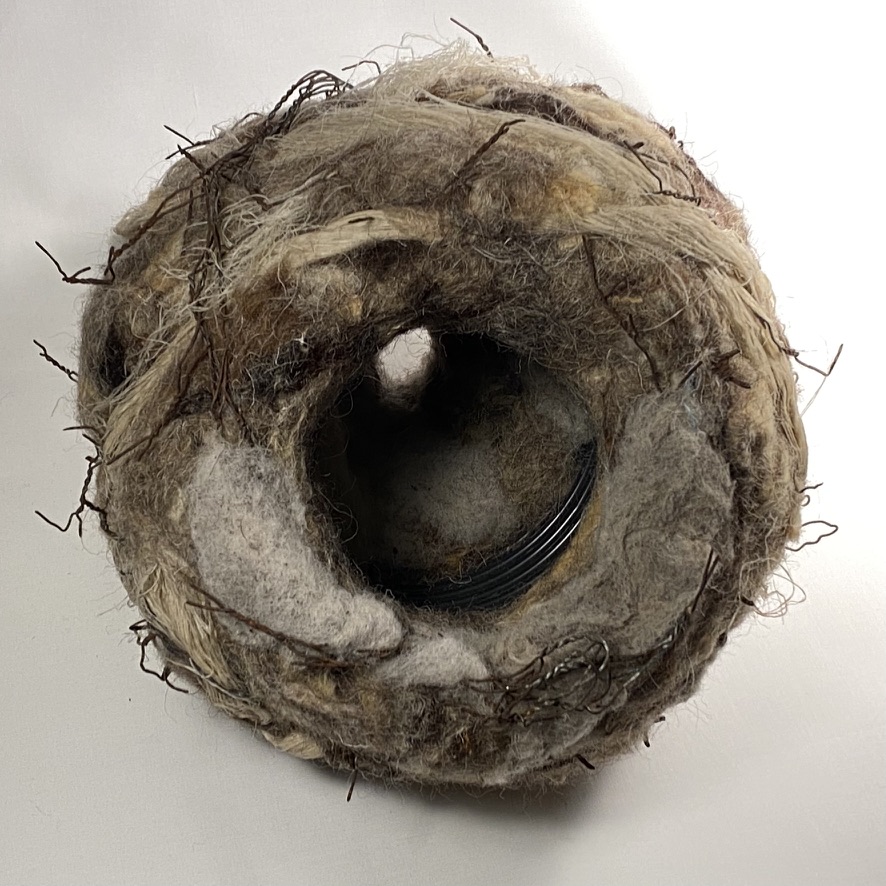
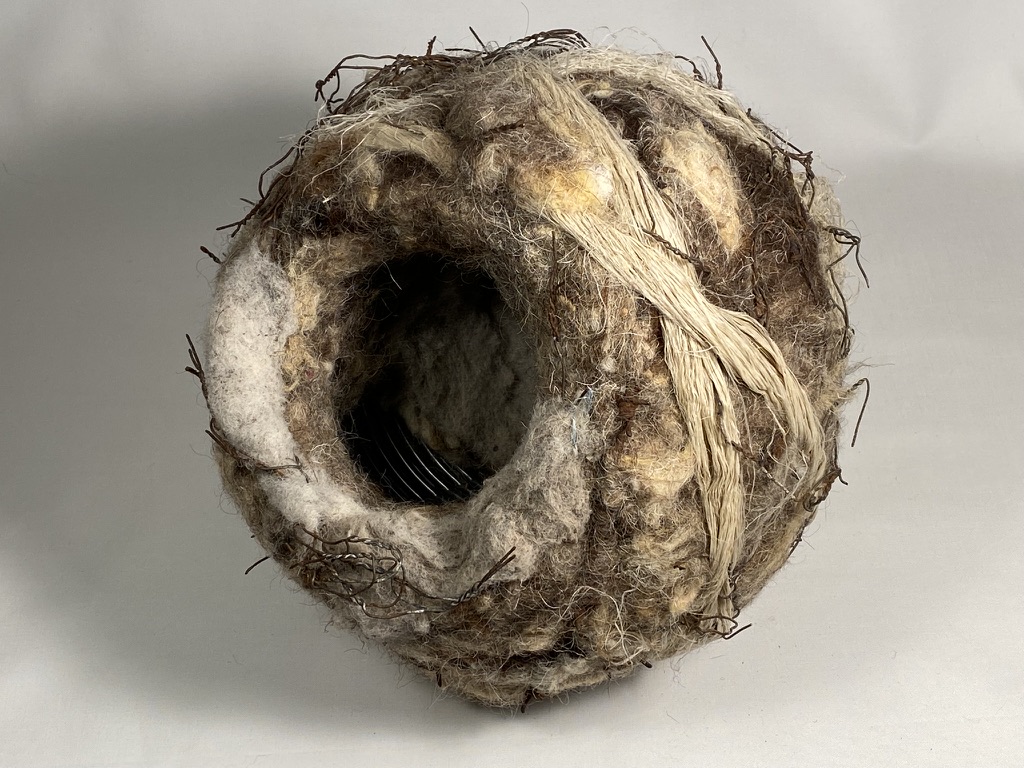
The work suggests the shelter of an ingenious creature that has adapted to the reality of habitat loss by requisitioning new materials it has come across, just as birds have been observed recently using all kinds of industrial materials in their nests. The hollow form is open at both ends creating a hopeful glimpse of light.
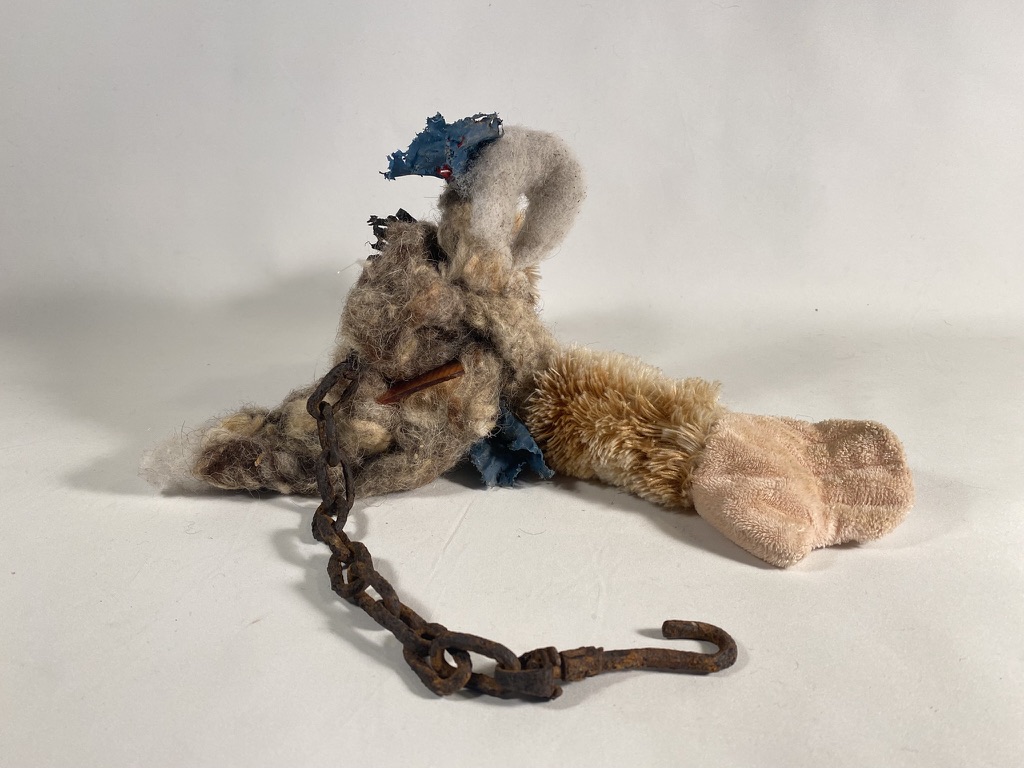
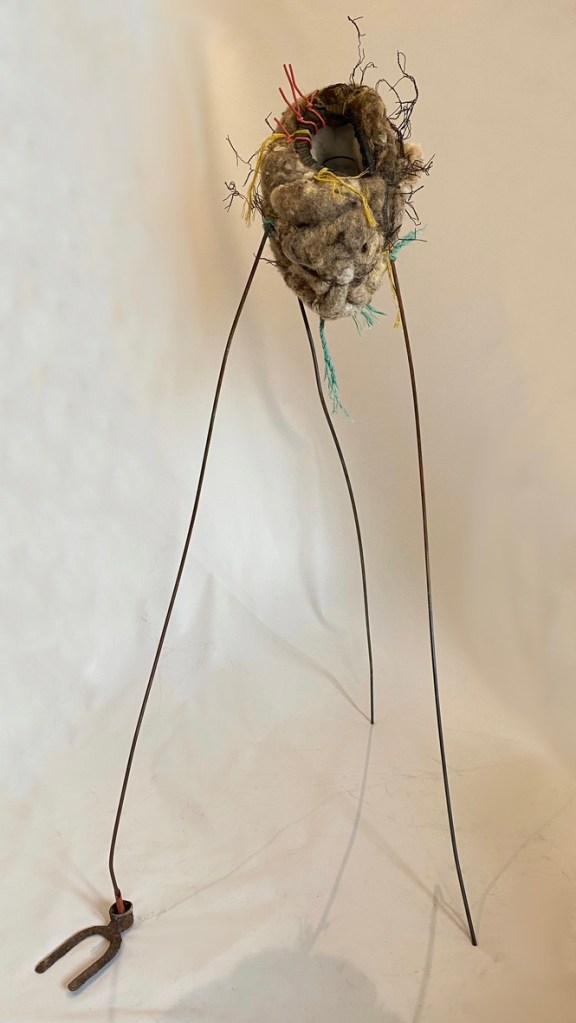
The soft material needs an armature in a traditional sense to support and enable the bulk to be added to. Hard materials including steel roofing rods, vehicle parts and fencing wire are really good for this. The work ‘Symbio-Nest’ below uses a tripod of springy salvaged steel rods for support. This hybrid being centres on a hollow form reminiscent of a nest and a womb. The materials are fused together by way of binding, knotting and felting and include twine, shreds of plastic, the remnants of a stuffed toy, as well as wire and wool. The scale is that of a small human and its springiness suggests potential movement and search for safety, with the rusty object on the floor reading as a foot.
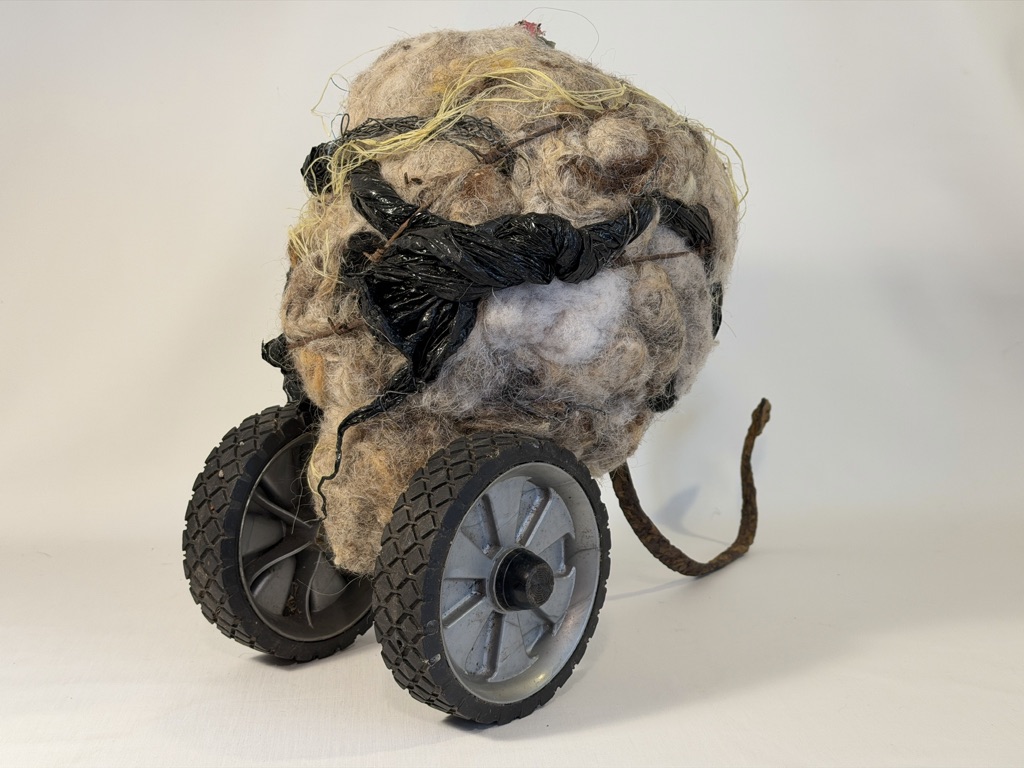
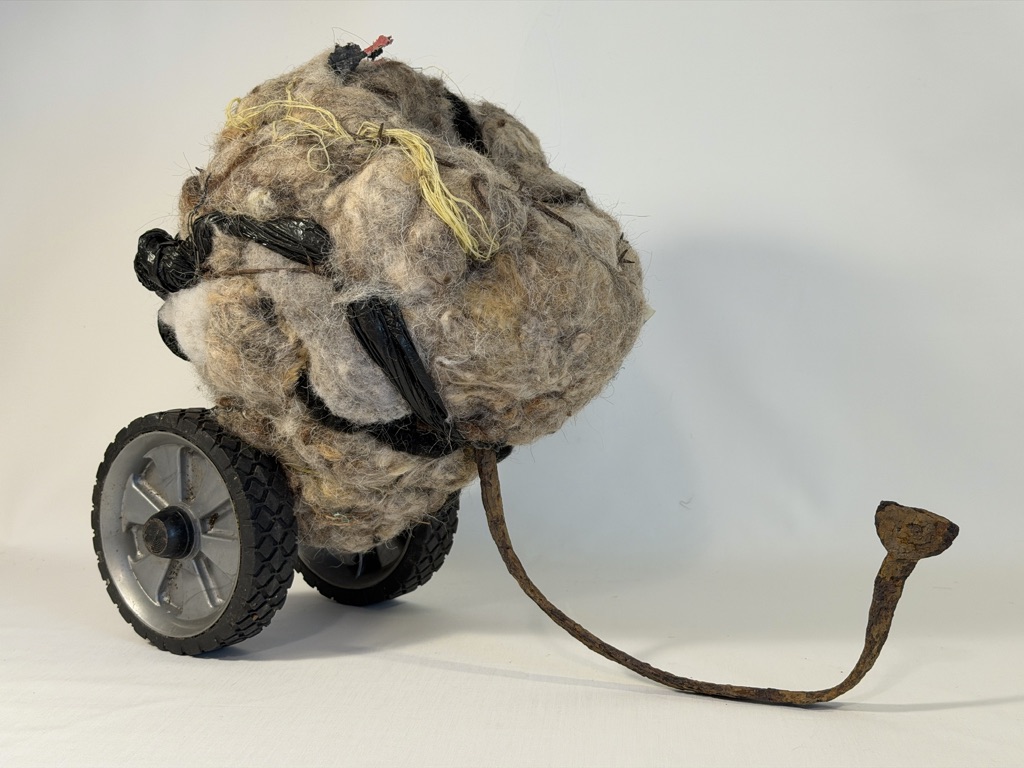
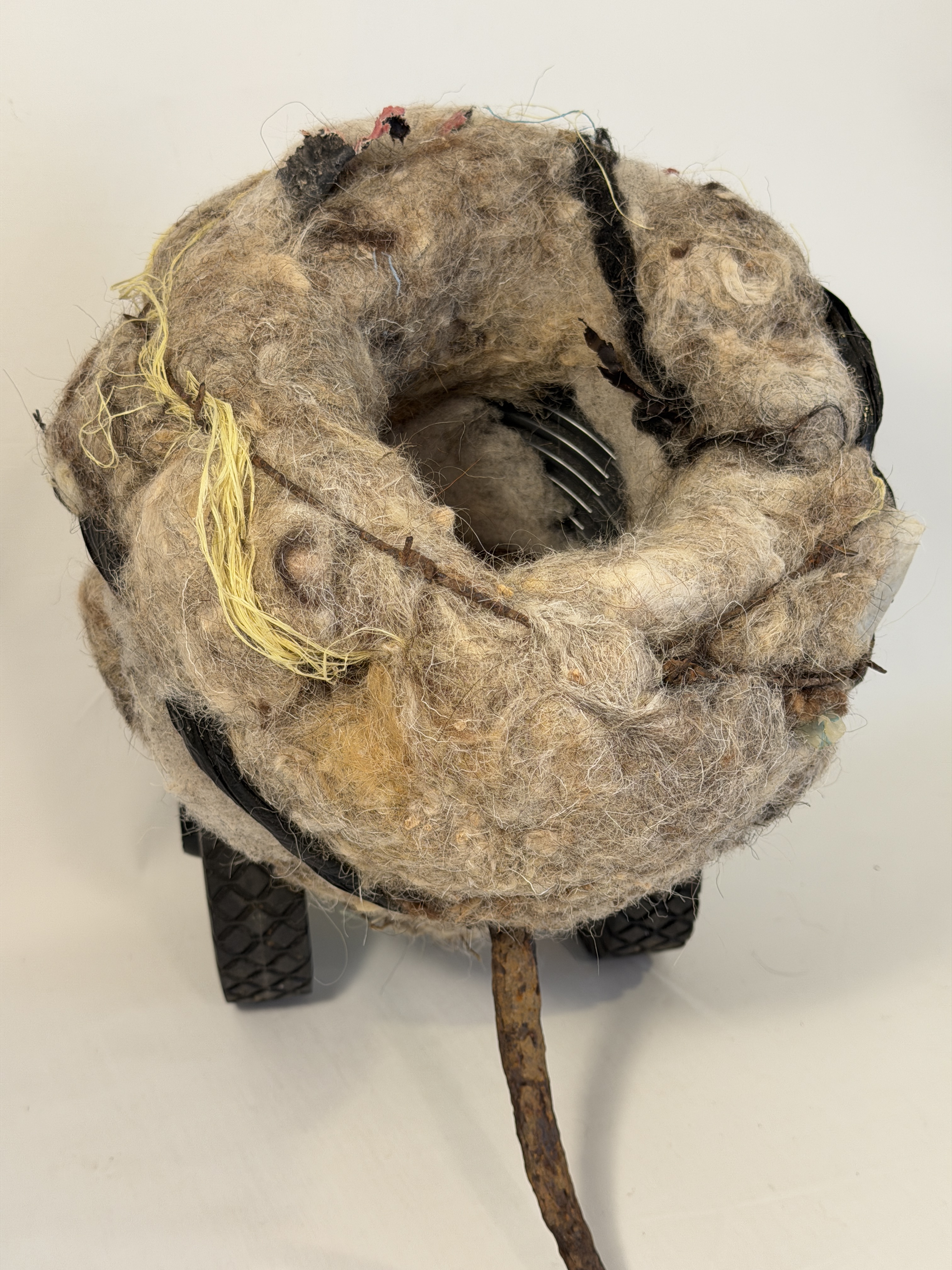
The latest addition to this body of work, ‘Nomad’ featured below, is an assemblage of fused, agricultural detritus, including barbed wire and black plastic bale wrapping, combined with natural and mineral wool insulation, felted around a section of black plastic land drain to make a hollow nest form. This is set on an axle and wheels supported by a rusty bucket handle. The work can actually move and suggests a survival organism, evolving to adapt to habitat loss for both human and non-human inhabitants.
The body of work is ongoing. I’m exploring the accidental juxtapositions of natural and industrial witnessed in the landscape and am aiming to develop a language of post-industrial ecology that hints at hopeful adaptation, future hybrids and co-operation.

